




Executive Overview
The Port of London Authority (PLA)—the statutory body entrusted with managing, maintaining, and regulating 95 miles of the tidal Thames—has announced a significant strengthening of its leadership framework. Effective September 1, Fabienne Viala and Cordi O’Hara OBE FEI have been appointed as Non-Executive Directors. These strategic appointments come at a critical juncture for the United Kingdom’s premier port and its busiest inland waterway, as maritime commerce adapts to rapid technological shifts, heightened regulatory demands, and the urgent imperatives of decarbonisation.
The leadership transition has been carefully orchestrated to ensure continuity while injecting fresh, high-level expertise into the governance of the organisation. Fabienne Viala assumes her post on September 1, directly succeeding Toril Eidesvik, whose tenure concludes on August 31. Appointed formally by the Secretary of State for Transport in accordance with the PLA’s rigorous governance framework, Viala brings over three decades of international engineering, construction, and infrastructure management experience.
Concurrently, Cordi O’Hara joins the board on September 1 in a Non-Executive Director designate capacity. She will transition into her full voting role upon the retirement of Sue Mackenzie, whose distinguished term finishes at the close of the calendar year. O’Hara, currently President of National Grid UK, offers deep expertise in safety-critical operations, large-scale capital investments, and the complex engineering challenges of the UK’s net-zero transition.
These appointments are designed to bolster board oversight across several foundational pillars: maintaining navigational safety on the crowded tidal Thames, supporting sustainable commercial growth at the UK’s largest port, preserving the river environment for future generations, and advancing the long-term ambitions codified in the landmark Thames Vision 2050 strategy.
As global supply chains face unprecedented volatility, environmental pressures mount, and the energy transition accelerates, the inclusion of Viala and O’Hara signals the PLA’s proactive approach to future-proofing its governance structure. This comprehensive review examines the background of these appointments, the strategic trajectory of the PLA, the impressive credentials of the incoming directors, and the broader economic and environmental landscape framing the future of the Thames.
Detailed Chronology and Governance Context
The evolution of the Port of London Authority’s board reflects a deliberate strategy to balance institutional memory with forward-looking industry expertise. The leadership changes unfolding across the second half of the year are the result of structured succession planning designed to maintain absolute stability during a period of transformative change for the maritime sector.
The Transition Timeline
- August 31: Toril Eidesvik steps down from her role as Non-Executive Director upon the completion of her term, having provided crucial guidance through a volatile post-pandemic recovery period and structural shifts in regional supply chains.
- September 1: Fabienne Viala officially assumes office as a Non-Executive Director, appointed via the Secretary of State for Transport. On the same day, Cordi O’Hara takes up her position as Non-Executive Director designate.
- December 31 (Anticipated): Sue Mackenzie concludes her tenure on the Board, having completed a distinguished period of service. At this juncture, Cordi O’Hara transitions seamlessly from her designate status into a full Non-Executive Director role.
This overlapping timeline ensures a smooth transfer of responsibilities, allowing the incoming directors to familiarise themselves with the unique regulatory and operational contours of the tidal Thames before assuming full oversight duties.
The Role of the Secretary of State and PLA Governance
Unlike private commercial enterprises, the Port of London Authority operates as a trust port—a self-financing statutory body that does not have shareholders. Instead, it operates for the benefit of its stakeholders, river users, and the wider public, reinvesting all surpluses back into the port and river operations.
Because of its national significance, the governance of the PLA is subject to specific statutory frameworks. The appointment of Fabienne Viala by the Secretary of State for Transport underscores the strategic importance of the port to national infrastructure, economic security, and international trade. The board comprises executive and non-executive members who bring independent judgment to bear on issues of strategy, performance, risk management, and resource allocation.
Chairman Jonson Cox CBE has overseen a concerted effort to populate the board with individuals possessing deep-domain expertise in nationally critical infrastructure, regulated environments, and safety-critical operations. The departures of Toril Eidesvik and Sue Mackenzie mark the end of notable tenures defined by steady navigation through macroeconomic uncertainty, making the induction of Viala and O’Hara a vital step in maintaining strategic momentum.
Supporting Context & Metrics: The Modern Port of London and the Thames Vision 2050
To understand why the appointments of Viala and O’Hara are so strategically vital, one must examine the scale, economic weight, and operational complexity of the Port of London today.
The Scale of Operations
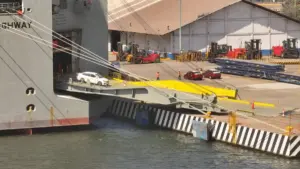
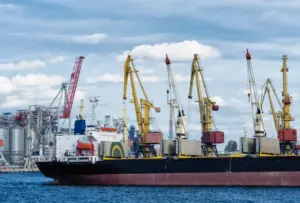
As the UK’s largest port by tonnage, the Port of London is a powerhouse of regional and national trade. It handles tens of millions of freight tonnes annually, sustaining tens of thousands of jobs and generating billions of pounds in economic value. The jurisdiction of the PLA spans 95 miles of the tidal Thames, stretching from Teddington Lock in West London out to the North Sea, encompassing dozens of independent terminals, historic docks, and major deep-water facilities such as London Gateway and the Port of Tilbury.
The port is dynamic and constantly evolving. Recent trade data highlights shifting global trade patterns, underscored by significant surges in specific import corridors—such as a notable 250 per cent increase in direct containerised imports from China entering through London facilities over comparative periods. Managing this intense volume requires sophisticated navigational management, advanced vessel traffic services (VTS), and continuous channel maintenance to accommodate increasingly large container vessels.
Navigational Safety and the Environment
Safety is the absolute priority of the PLA. The tidal Thames is one of the busiest inland waterways in Europe, accommodating a diverse mix of commercial cargo vessels, high-speed passenger ferries, recreational craft, rowing clubs, and tourism boats. Ensuring the safety of navigation across this complex ecosystem demands unyielding regulatory oversight and risk management.
Simultaneously, the PLA is tasked with safeguarding and enhancing the marine environment. The Thames has undergone a remarkable ecological renaissance over recent decades, transforming from a biologically dead river in the mid-20th century into a thriving habitat supporting seals, porpoises, eels, and over 125 species of fish. Balancing this fragile ecosystem with industrial and commercial growth requires delicate, scientifically informed stewardship.
Thames Vision 2050
At the heart of the PLA’s long-term planning is Thames Vision 2050, a comprehensive strategic roadmap designed to guide the future development of the river. The vision outlines ambitious goals across several core areas:
- Net Zero Carbon: Accelerating the transition to zero-carbon river operations, shore power infrastructure, and low-emission vessels, supporting the UK’s wider net-zero targets.
- Trade and Maritime Growth: Expanding sustainable freight capacity, encouraging modal shift from road to river to reduce congestion and carbon emissions, and cementing London’s status as a global maritime hub.
- Environment and Heritage: Enhancing water quality, protecting biodiversity, and improving public access to the foreshore and Thames Path.
- Community and Culture: Maximising the use of the river for passenger transport, leisure, tourism, and community engagement.
Achieving these milestones requires a board capable of providing rigorous oversight on massive capital projects, regulatory compliance, and technological innovation. This is precisely where the professional backgrounds of Fabienne Viala and Cordi O’Hara prove invaluable.
Official Statements and Industry Perspective
The announcement of the new board members has drawn widespread praise from industry leaders, who note that the appointments bring precisely the right mix of engineering acumen and regulatory savvy to the table.
In his official statement welcoming the new directors, Jonson Cox CBE, Chair of the Port of London Authority, articulated the strategic rationale behind the selections:
"I am delighted to welcome Fabienne Viala and Cordi O’Hara to the PLA Board. They each bring outstanding experience from nationally important engineering, infrastructure, regulated and safety-critical environments, and will add valuable insight as we continue to deliver for river users, port customers, communities and the environment."
Cox also paid tribute to the departing board members, acknowledging their instrumental guidance through a transformative era for the port:
"Toril Eidesvik leaves the Board on 31 August and, in anticipation of Sue Mackenzie’s retirement from the Board at the end of this year, we have taken the opportunity to make two appointments now. We thank Toril and Sue for their experience, judgement and commitment as they have helped guide the PLA through an important period for the port and the tidal Thames, and we are grateful for the service they have given."
The appointments have also resonated within the broader UK engineering and maritime communities, where Viala and O’Hara are widely respected as transformative leaders who have successfully navigated some of the most challenging regulatory and operational landscapes in British industry.
Profile of the New Board Members
Fabienne Viala: Engineering Excellence and Infrastructure Governance
Fabienne Viala brings to the PLA a distinguished career spanning more than 35 years in civil engineering, construction, energy, and major infrastructure development across both the United Kingdom and France.
Her executive credentials include serving as Chair and Chief Executive of Bouygues UK, as well as UK Country Manager for Bouygues Construction. In these capacities, she directed complex, high-value, multi-sector programmes encompassing advanced healthcare facilities, educational campuses, mission-critical data centres, and large-scale urban regeneration projects. Her ability to deliver complex engineering projects on time and within strict budgetary parameters is a vital asset for an infrastructure authority overseeing major capital investments.
Beyond her executive leadership, Viala has cultivated a profound governance portfolio. Her board-level experience includes:
- Serving as a Non-Executive Director for HS2 Ltd, the company responsible for delivering the UK’s new high-speed rail network.
- Holding leadership roles with Build UK, the leading representative organisation for the UK construction industry.
- Completing a highly successful six-year tenure as President of the French Chamber of Commerce in Great Britain, where she fostered bilateral trade, investment, and cross-channel economic cooperation.
Viala’s deep expertise in infrastructure investment, rigorous corporate governance, audit processes, and risk management will directly support the PLA as it evaluates capital projects linked to the Thames Vision 2050.
Cordi O’Hara OBE FEI: Managing Safety-Critical Networks and the Energy Transition
Cordi O’Hara OBE FEI is one of the UK’s most prominent energy and infrastructure executives, currently serving as President of National Grid UK. In this demanding role, she is ultimately responsible for the safe, secure, and reliable operation of the nation’s electricity transmission and distribution networks, alongside an extensive portfolio of complex sub-sea interconnectors linking the UK power grid to continental Europe.
O’Hara’s career within National Grid and Centrica is marked by senior operational and strategic leadership roles, including:
- President of National Grid Electricity Distribution, overseeing the delivery of power to millions of homes and businesses across large swathes of England.
- Chief Operating Officer of National Grid’s US Gas Business, managing large-scale operational assets and regulatory relationships overseas.
- Director of the UK System Operator, balancing supply and demand across the national grid in real time.
Recognised as a Fellow of the Energy Institute (FEI) and honoured with an OBE for her services to the energy sector, O’Hara brings exceptional expertise in safety-critical operations. The management of high-voltage electrical grids and high-pressure gas networks shares striking operational parallels with managing a busy tidal waterway: both require uncompromising adherence to safety protocols, predictive risk management, constructive engagement with economic regulators, and long-term capital allocation strategies.
Crucially, O’Hara’s deep involvement in the net-zero transition aligns perfectly with the PLA’s sustainability mandate. As the port works to decarbonise marine logistics, implement shore power for vessels, and encourage sustainable freight transport, O’Hara’s insights into energy systems and infrastructure decarbonisation will be invaluable.
Future Outlook: Navigating the Challenges and Opportunities Ahead
As Fabienne Viala and Cordi O’Hara step into their respective governance roles, the Port of London Authority faces a landscape rich with both formidable challenges and generational opportunities. The strategic decisions made by the board over the coming years will shape the operational viability of the Thames for decades to come.
1. Accelerating Decarbonisation and Green Marine Technology
The transition to net zero is no longer an abstract policy goal; it is an urgent operational necessity. Maritime decarbonisation faces unique hurdles, particularly in scaling alternative fuels—such as green hydrogen, sustainable marine biofuels, and electrification—for commercial shipping and tug fleets. The PLA is actively working to establish the Thames as a leader in green maritime corridors. With O’Hara’s deep background in energy network management and Viala’s experience in sustainable infrastructure deployment, the board is exceptionally well-positioned to guide the PLA’s green investments and infrastructure upgrades.
2. Enhancing Resilience in Global Supply Chains
Geopolitical shifts, fluctuating commodity prices, and evolving trade agreements continue to test the resilience of international supply chains. As demonstrated by shifting import volumes and regional trade reorientations, the Port of London must remain agile, efficient, and capable of handling rapid surges in cargo throughput without compromising safety or environmental standards. Board-level oversight in risk management, audit, and governance—core competencies of Viala—will ensure the PLA maintains its financial and operational resilience.
3. Balancing Commercial Vitality with Environmental Stewardship
The fundamental mandate of the PLA—managing the river in trust for future generations—requires an ongoing balancing act. Increasing commercial freight traffic, passenger riverbus services, and riverside development must be carefully harmonised with ecological protection and navigational safety. The collective expertise of the incoming directors in managing large-scale, safety-critical assets in densely populated or environmentally sensitive areas will provide vital strategic counsel to the executive team.
4. Delivering Thames Vision 2050
Ultimately, all roads lead back to the realization of Thames Vision 2050. Transforming this ambitious roadmap into operational reality requires sustained capital investment, cross-sector partnerships with local authorities and central government, and uncompromising project governance. By bringing in leaders of the caliber of Fabienne Viala and Cordi O’Hara, the PLA has signaled its absolute commitment to world-class governance, ensuring that the Port of London remains a thriving, safe, and sustainable maritime gateway for the United Kingdom well into the 21st century and beyond.