








Executive Overview
Long gone are the days when staying connected on the water meant shouting across a rapid or relying on the fragile, plastic toy "walkie-talkies" of the 1980s. For modern kayakers, canoeists, and kayak anglers, reliable on-water communication is no longer just a luxury—it is a critical safety net. Whether you are scouting a treacherous desert river rapid, scanning an expansive shoreline for a viable campsite, executing a demanding canoe portage, or attempting to guide fishing partners toward an active feeding school, having the right communication gear can mean the difference between a seamless adventure and a logistical nightmare.
Over a rigorous two-month testing period, paddling experts put a diverse lineup of specialized two-way radios and modern communication devices through their paces. These units were subjected to the harsh realities of coastal salt spray, heavy river whitewater, wind-swept mountain lakes, and desert arroyos. The objective: to determine which models excel in real-world paddling environments.
While smartphones have become ubiquitous, relying on them as primary communication devices in the backcountry is a hazardous gamble. Cellular networks are notoriously unreliable near water, batteries drain rapidly when searching for signals, and touchscreens become virtually useless when coated in water. A dedicated, ruggedized two-way radio remains the gold standard for group coordination. This comprehensive review examines the top-performing walkie-talkies and action communicators on the market, analyzing their power, waterproofing, range, and usability to help you select the ideal gear for your next aquatic expedition.
Detailed Chronology & Field Testing Methodology
To provide an authoritative and unbiased evaluation, gear analyst and veteran paddler Jory Brass conducted extensive field tests across the foothills and rugged mountains surrounding Albuquerque, New Mexico, as well as on canyon reservoirs and remote desert rivers throughout New Mexico, Arizona, and Southern Utah.
The evaluation protocol was designed to mirror the severe conditions paddlers face:
- Physical Weigh-In: Each unit was meticulously weighed to assess its impact on personal floatation device (PFD) ergonomics and overall gear load.
- Range and Acoustic Testing: Radios were tested across varied topographical profiles—including twisting river canyons, open lakes, and rolling foothills—to evaluate signal clarity, interference rejection, and actual transmission distances against manufacturer claims.
- Water-Resistance Verification: Units were exposed to simulated wave splashes, heavy downpours, and, where applicable, total submersions to test the integrity of their IP (Ingress Protection) ratings.
- Ergonomic Assessment: Testers evaluated how easily the units could be operated while actively paddling, factoring in button placement, screen legibility in glaring sunlight, and the presence of hands-free transmission modes.
Top-Tier Walkie-Talkies: The Review Lineup
Best Overall Walkie-Talkie: Rocky Talkie Expedition Radio
- Price: $180 USD
- Power Output: 5 Watts
- Licensing Requirement: GMRS License Required
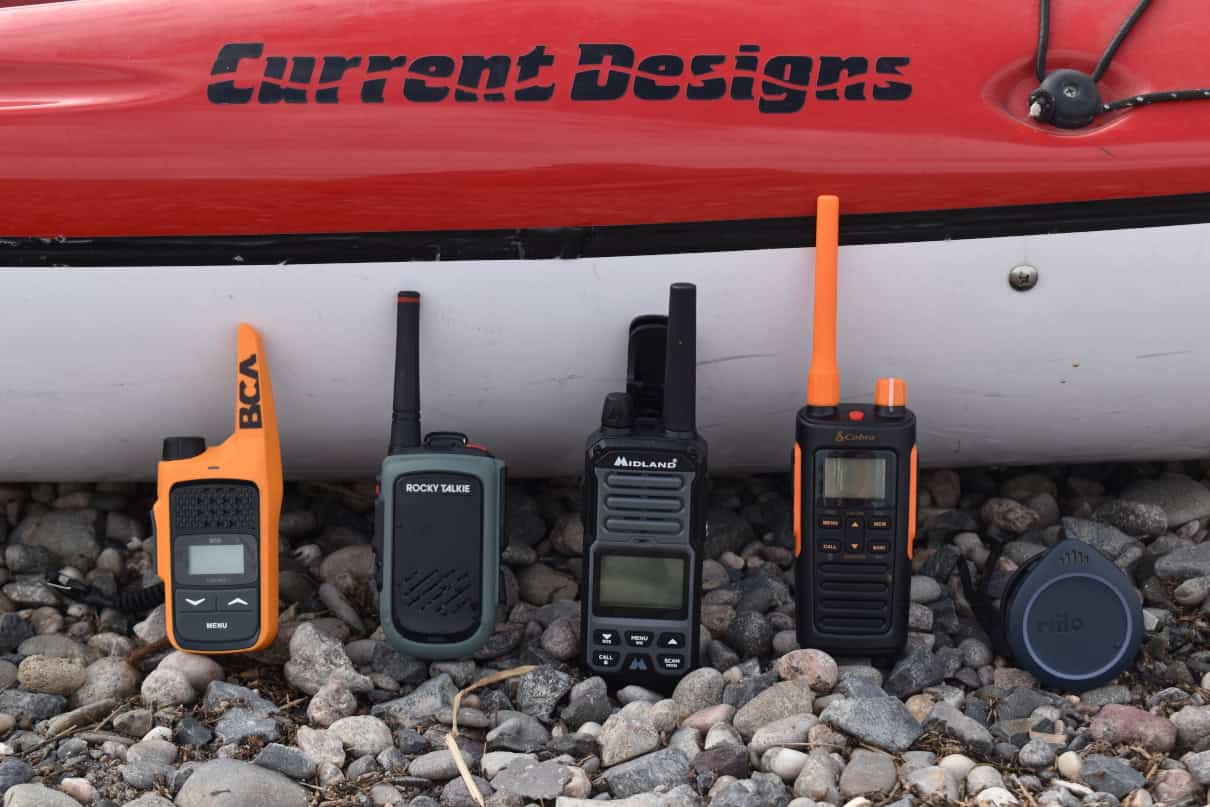
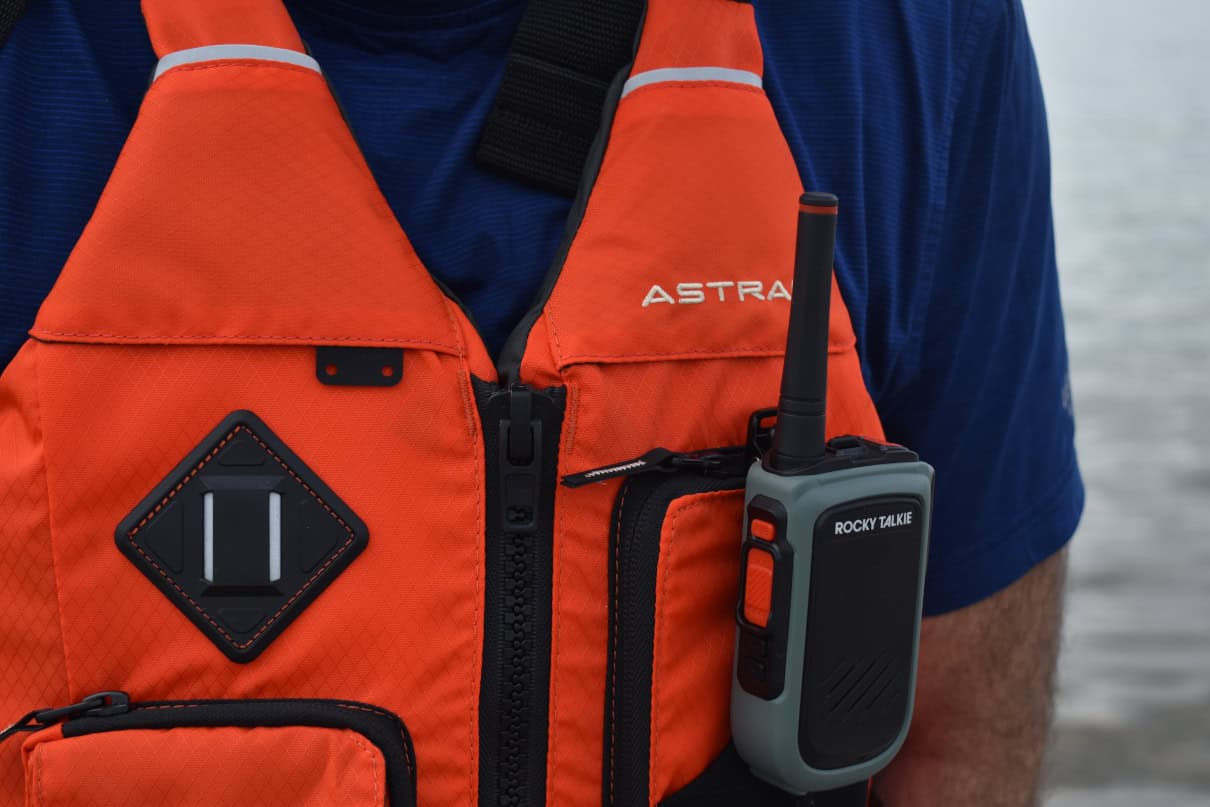
The Rocky Talkie Expedition Radio emerges as the premier choice for serious wilderness and whitewater paddlers, earning our top overall spot. Built specifically for extreme outdoor environments, this robust radio combines exceptional durability with a shatterproof LED screen and an impressive 4 to 6 days of battery life.
Operating at 5 watts of power, the Expedition radio delivers superior range—ranging from 0.5 to 3 miles in dense river canyons, 2 to 8 miles in mountainous terrain, and up to 35 miles under ideal line-of-sight conditions. Compatibility with 8 GMRS repeater channels, along with an included 17mm antenna and an optional whip antenna, allows users to significantly boost transmissions in remote regions. Furthermore, integrated NOAA weather channels provide crucial early warnings for sudden squalls, high winds, and lightning storms.
Hand-tested to IP67 standards, the unit is fully submersible in up to 3 feet of water for 30 minutes. While it is slightly heavier than minimalist units, does not float, and requires an inexpensive, easily obtainable FCC GMRS license, its balance of ruggedness, power, and battery longevity is unmatched.
Most Compact Walkie-Talkie: Backcountry Access BC Link Mini
- Price: $119.95 USD
- Power Output: FRS (2 Watts or lower)
- Licensing Requirement: None (License-Free)
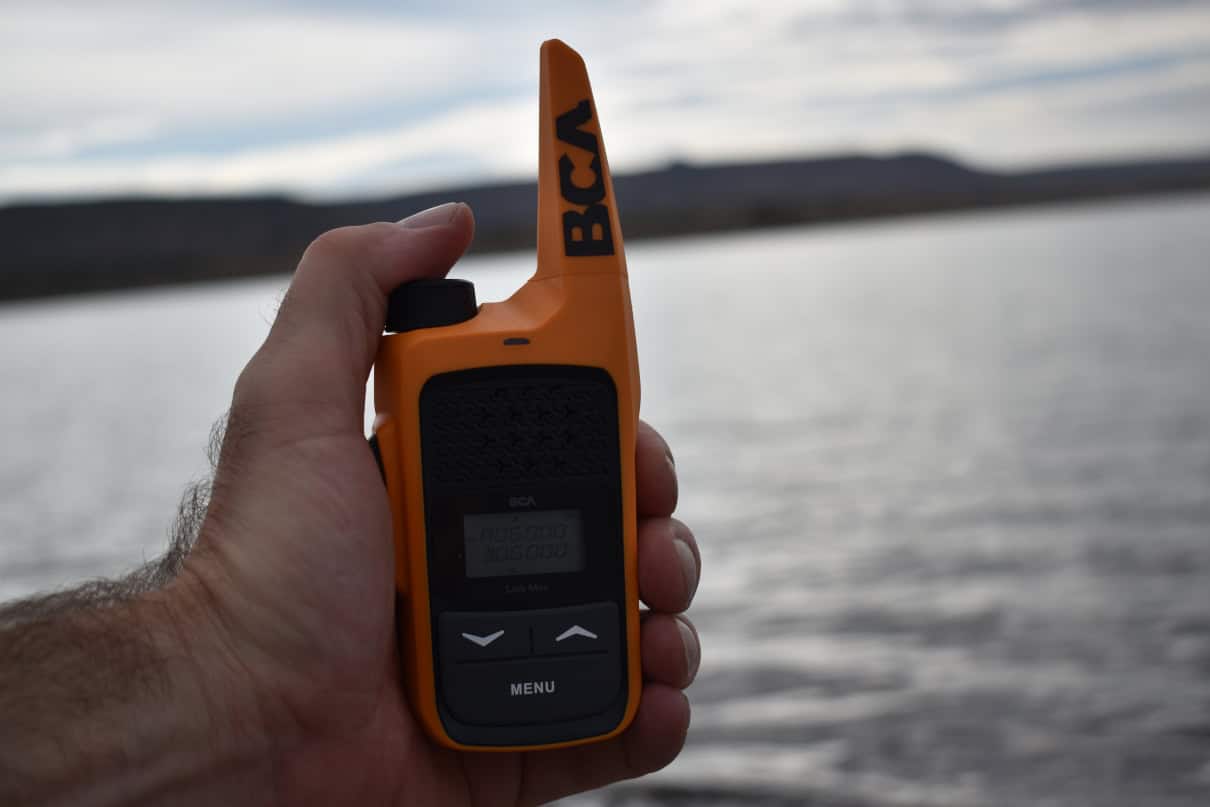
For paddlers prioritizing ultra-lightweight efficiency, the Backcountry Access (BCA) BC Link Mini is an exceptional companion. Tipping the scales at a mere 6 ounces, this compact device feels completely natural in the hand and integrates seamlessly onto a PFD using one of the three included mounting options and a secure leash.
Operating on the FRS (Family Radio Service) frequency band, the BC Link Mini eliminates the need for an FCC license, making it instantly accessible straight out of the box. Its straightforward, intuitive interface earned high praise from testers for ease of use.
However, there are performance trade-offs for its compact form factor. With an IP55 water-resistance rating, it is designed to withstand light spray, rain, and minor splashes, but it cannot handle submersion or heavy wave action. Paddlers running whitewater or tackling big-water environments will need to stow it safely in a dry bag. Its transmission power also lags behind heavier GMRS models, making it best suited for day trips and close-knit paddling groups.
Best Voice-Activated Walkie-Talkie: Midland GXT67 PRO
- Price: $219.99 USD
- Power Output: 5 Watts
- Licensing Requirement: GMRS License Required
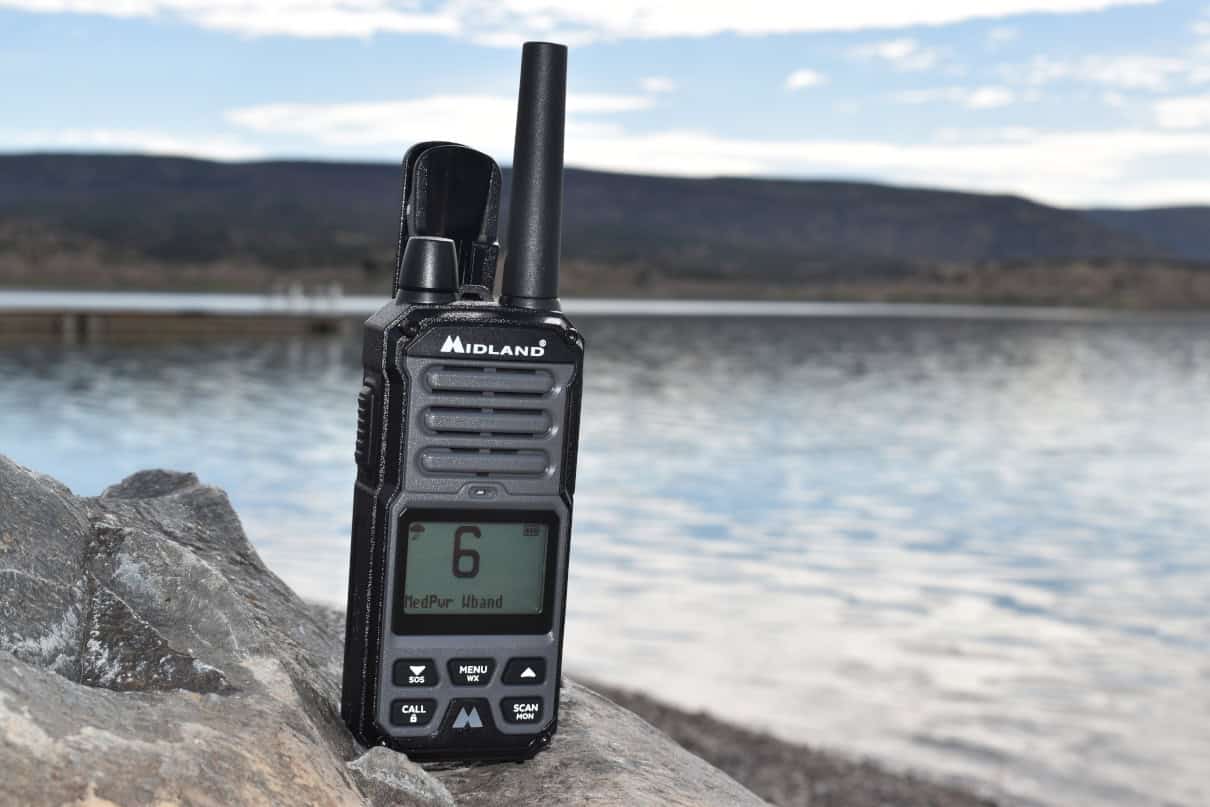
The Midland GXT67 PRO matches many of the premium capabilities of the Rocky Talkie Expedition while introducing a vital feature for paddlers: hands-free VOX (Voice Operated eXchange) transmission. This voice-activated capability allows the radio to broadcast the moment you speak, liberating your hands to maintain total control of your paddle rather than fumbling with a push-to-talk button.
Equipped with 5 watts of power, an IP67 submersible waterproof rating, NOAA Weather Alert functionality, and an automatic noise-cancelling microphone, the GXT67 PRO is purpose-built for aquatic environments. It delivers a reliable 5-mile range in typical conditions, which can be extended via local repeaters. While bulkier and heavier than smaller consumer radios, and requiring a standard GMRS license, its hands-free functionality makes it a top-tier investment for safety-conscious paddlers.
Best Budget GMRS Walkie-Talkie: Cobra Trailblazer 450
- Price: $129.95 USD (Pair)
- Power Output: 2.5 Watts
- Licensing Requirement: GMRS License Required
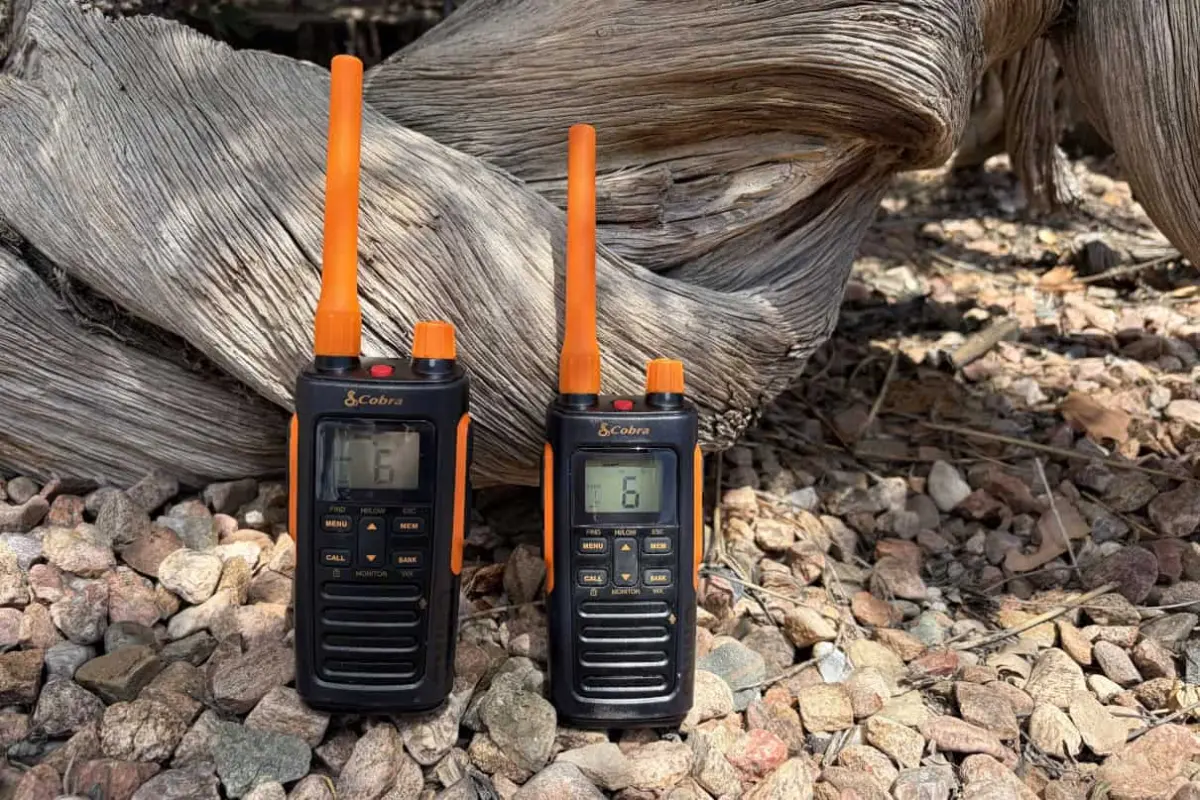
For outdoor enthusiasts working with a strict budget, the Cobra Trailblazer 450 offers an economical entry point into GMRS communication, often costing less than half the price of competing 5-watt models.
Despite its lower price point, the Trailblazer 450 supports removable antennas, repeater channel access, VOX hands-free transmission, and NOAA weather alerts. Weighing relatively little, it proved comfortable during field tests. To achieve this price point, however, concessions were made: the unit carries an IP54 splash-resistant rating (meaning it is not submersible), its 16-hour battery life is sufficient only for day trips, and its 2.5-watt output sits halfway between standard FRS radios and heavy-duty 5-watt GMRS units. Nevertheless, purchasing a pair for less than the cost of a single premium radio makes it a compelling value buy.
Best Group Communicator: Milo Action Communicator
- Price: $249 USD
- Technology: Mesh Network / Hands-Free Group Chat
- Licensing Requirement: None
Breaking away from traditional walkie-talkie paradigms, the Milo Action Communicator functions as a wearable, multi-way mesh intercom. Rather than taking turns on a single channel, everyone in your paddling party can speak simultaneously in an open conference-call format—no buttons required.
Milo units are IP67 waterproof (provided the USB-C port is sealed with its rubber cap) and can be mounted directly to a PFD, clothing collar, or paddle shaft. The primary limitation is range, boasting a standard operating distance of roughly 600 meters. Low-profile seating in kayaks or canoes can occasionally degrade this range in heavy waves. However, for groups that maintain close formations on the water, the Milo offers an unprecedented level of hands-free, social connectivity.
Supporting Context & Technical Metrics
When outfitting yourself for an aquatic journey, understanding the technical specifications of communication gear is essential to making an informed purchase.
Waterproof Ratings (IP Codes)
Electronic devices deployed on water are constantly threatened by moisture, spray, and accidental immersion. The Ingress Protection (IP) rating system provides a standardized measure of a device’s resistance to solid objects and liquids:
- IP54 / IP55: Protected against limited dust ingress and low-pressure water sprays or splashes from any direction. Suitable for light rain or calm lake paddling, but vulnerable to heavy wave action.
- IP67: Protected against dust and capable of withstanding complete submersion in up to 1 meter (approx. 3.3 feet) of water for up to 30 minutes. Essential for whitewater and touring paddlers prone to wet exits or rolls.
- Note: None of the consumer walkie-talkies evaluated carry an IP68 rating, meaning they are not engineered for continuous, deep-water immersion.
FRS vs. GMRS: Understanding the Standards
- FRS (Family Radio Service): These radios operate at lower power outputs (typically 2 watts or less) and do not require an FCC license. They are user-friendly and cost-effective, though their range and penetration through dense terrain are limited.
- GMRS (General Mobile Radio Service): Operating at higher power levels (up to 5 watts or more), GMRS radios offer significantly greater range, clearer signal transmission, and access to repeater channels. While they require an FCC license, the application process is straightforward, costs a nominal fee (around $35 for a 10-year license), covers the operator’s immediate family, and involves no technical examination.
Official Statements & Safety Considerations
Industry experts and safety authorities emphasize a critical distinction regarding on-water communication: Consumer walkie-talkies are not maritime distress devices.
While FRS and GMRS radios are invaluable for maintaining contact with members of your immediate paddling party, they cannot reach VHF (Very High Frequency) marine channels monitored continuously by the U.S. Coast Guard, commercial vessels, and port authorities on coastal waterways, large lakes, and major river systems.
"Carry a dedicated waterproof VHF marine radio for emergency signaling and vessel-to-vessel communication on major waterways, and use your cell phone strictly as a supplementary backup."
Consumer two-way radios must be viewed as tactical group-management tools rather than direct lifelines to emergency rescue services in maritime or major marine environments.
Future Outlook
The market for outdoor communication technology is evolving rapidly, driven by consumer demand for lighter form factors, enhanced battery chemistry, and decentralized mesh networking systems like the technology pioneered by Milo. As digital signal processing improves, future generations of outdoor communicators are expected to bridge the gap between short-range group intercoms and long-range satellite or radio transmissions.
For the modern paddler, investing in a rugged, weather-resistant communication device is an essential component of responsible backcountry preparation. By carefully evaluating your typical paddling environments—whether navigating narrow desert canyons, expansive coastal bays, or rushing whitewater rivers—you can select the ideal tool to keep your crew safe, coordinated, and connected on the water.