For generations, the transition from open-water cruising to tight-quarters marina maneuvering has represented one of the most acute friction points in recreational boating. High-stakes, low-speed navigation—frequently complicated by crosswinds, unpredictable tidal currents, poorly lit slips, and the absence of trusted crew—has earned a notorious reputation among mariners. Whether it is a novice weekend captain or an experienced skipper wrestling a heavy single-screw cabin cruiser without thrusters, the anxiety of the "dockmare" is a universally shared nautical experience.
Enter Simrad Yachting’s AutoCaptain, a landmark technological leap that promises to permanently transform how boaters interact with the hardest part of their journey. By combining machine vision, a proprietary stereo-camera array, machine learning algorithms, and seamless integration with Mercury Marine’s advanced Joystick Piloting system, AutoCaptain delivers fully autonomous docking, undocking, and short-range vessel positioning.
Developed under the umbrella of parent company Brunswick Corporation—which owns both Navico Group (housing Simrad) and Mercury Marine—AutoCaptain stands apart from previous aftermarket driver-assistance systems. It is the world’s first fully factory-integrated, end-to-end autonomous docking solution crafted by a single corporate ecosystem that builds everything from the steering columns and propulsion units to the digital displays and environmental sensors. Initially launching aboard the ultra-premium Boston Whaler 405 Conquest, AutoCaptain represents a fundamental shift in marine engineering, bridging the gap between high-end automotive driver-assistance tech and modern yachting luxury.
Detailed Chronology: The Anatomy of an Autonomous Docking System
To understand how AutoCaptain performs the complex choreography of parking a multi-ton yacht without human hands on the throttle, one must examine the precise hardware and software mechanics working in tandem behind the scenes.
1. Hardware Architecture and Sensor Array
Unlike modular or aftermarket sensor packages that require messy retrofits, custom brackets, and third-party wiring harnesses, AutoCaptain is engineered from the keel up as an original equipment manufacturer (OEM) installation.
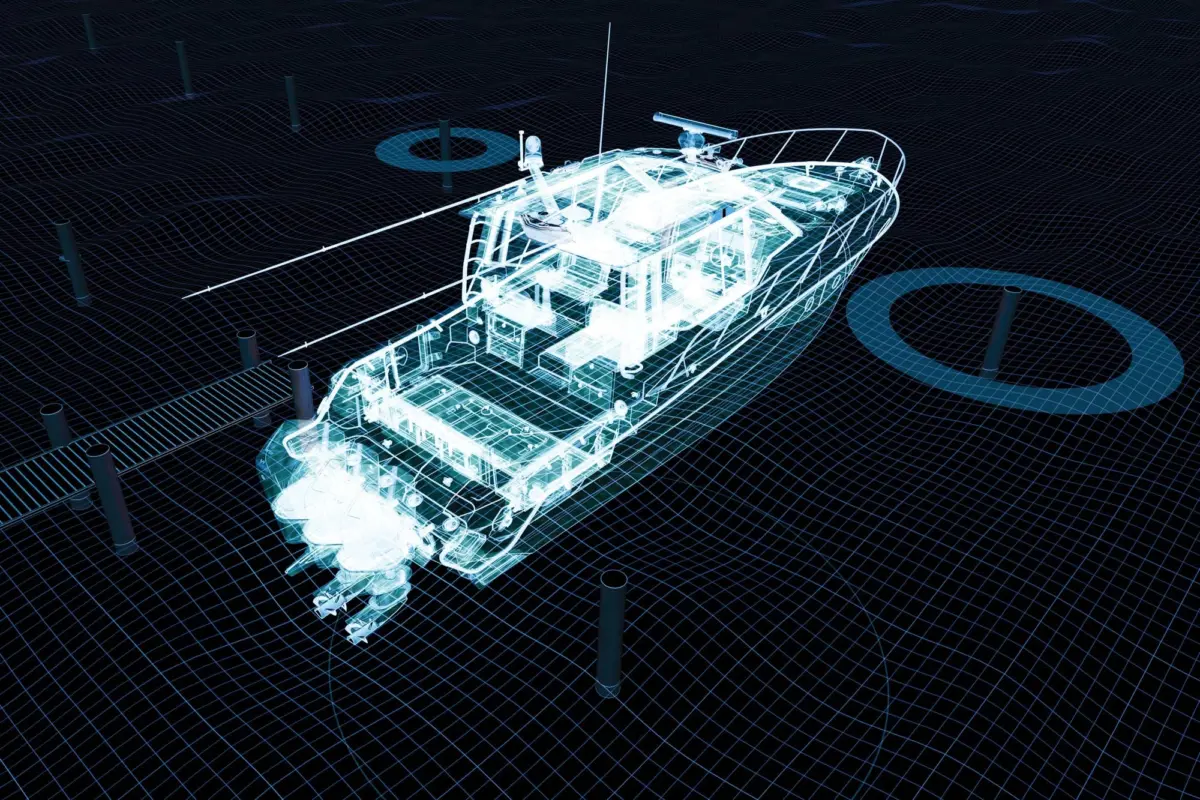
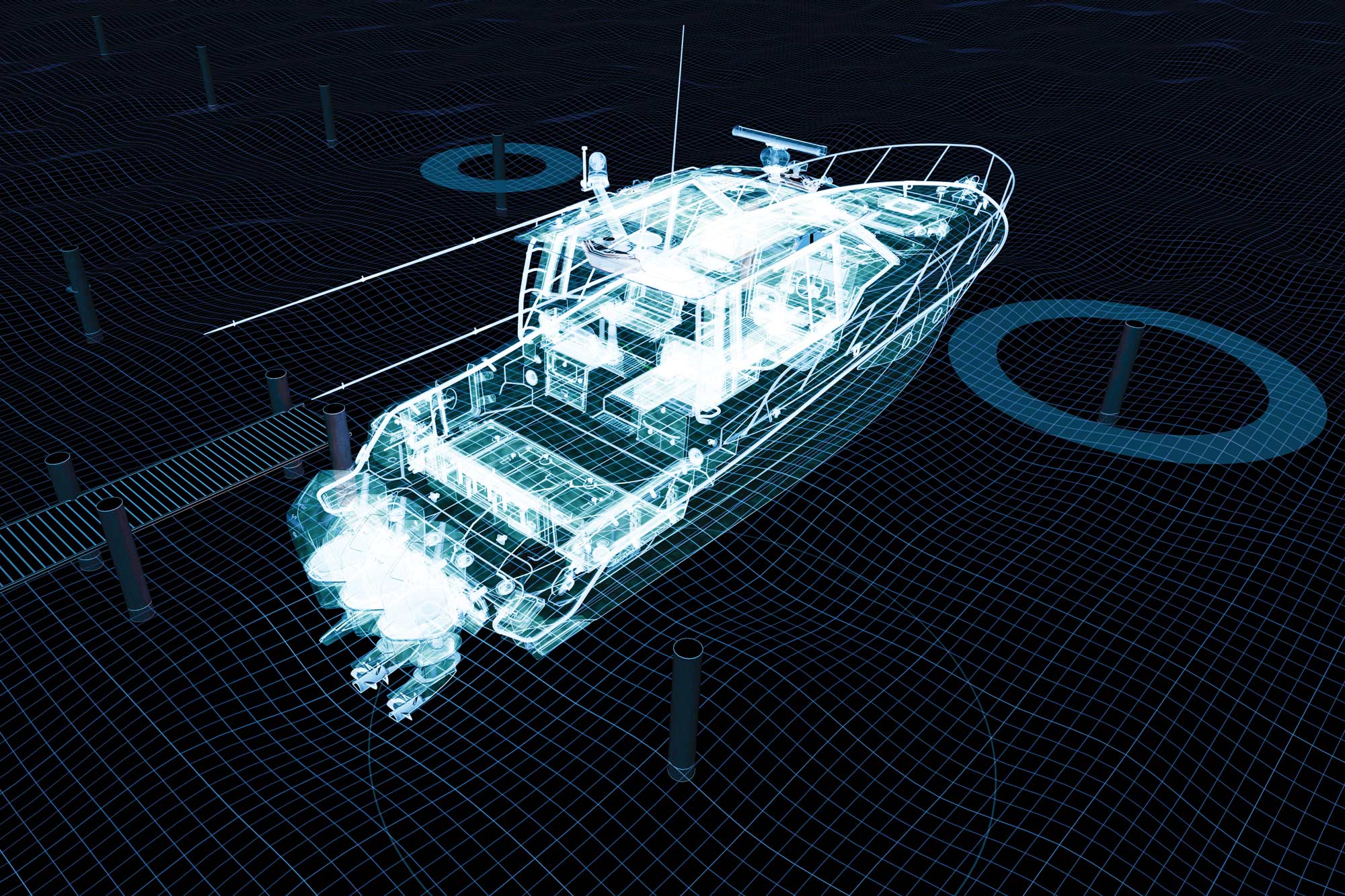
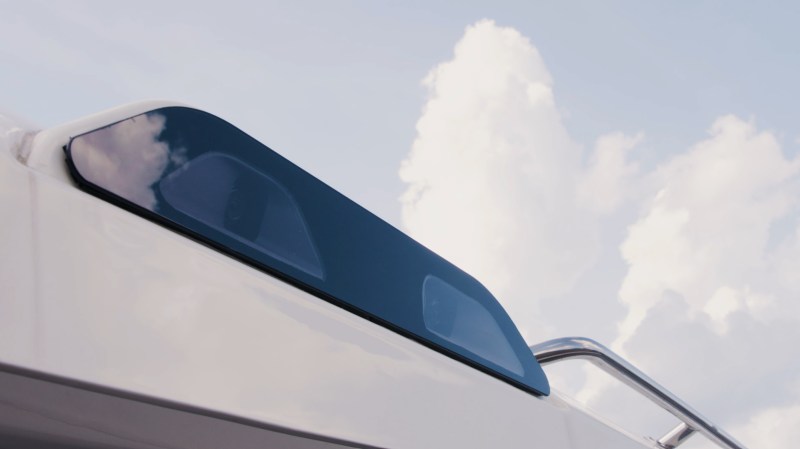
The Vision System: The physical cornerstone of AutoCaptain consists of six ruggedized stereo cameras strategically embedded into the vessel’s hardtop. Unlike monocular cameras, stereo vision utilizes dual lenses to mimic human binocular vision, allowing the system’s processor to calculate precise distances, depths, and spatial relationships within the field of view. These low-light-capable lenses provide uninterrupted 360-degree environmental awareness.
Processing and Positioning: Video streams feed directly into a dedicated high-performance black-box processor. This is paired with an advanced Global Navigation Satellite System (GNSS) receiver that tracks the vessel’s exact geographic coordinates relative to its dynamically generated environment map.
Control Authority: The system commands at least two compatible Mercury outboards integrated with Mercury’s Joystick Piloting technology, frequently supplemented by a bow thruster.
2. Software Architecture and Artificial Intelligence
The software running AutoCaptain is built upon two core pillars: machine vision and machine learning.
Object Detection & Route Planning: Two primary algorithms govern the software—one dedicated to identifying and classifying non-water objects (docks, pilings, bulkheads, and other vessels) and another managing dynamic route planning.
Active Mapping: When a yacht enters a marina for the first time, AutoCaptain uses its stereo cameras to construct a real-time, ground-up vector map of the surroundings. The GNSS receiver anchors this map to real-world coordinates.
Continuous Machine Learning: Because the system incorporates machine learning, its efficiency scales with use. The onboard processor retains marina maps in its local storage. Every subsequent visit to the same marina allows the system to reference past data, refining its spatial awareness and execution speed over time.
3. Step-by-Step Operational Workflow
Operating AutoCaptain is designed to be intuitive, functioning as a high-end supervisory tool rather than an opaque black box.
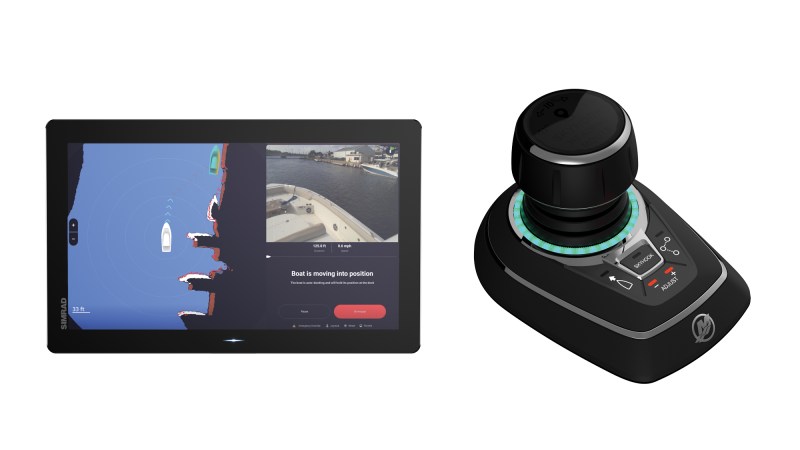
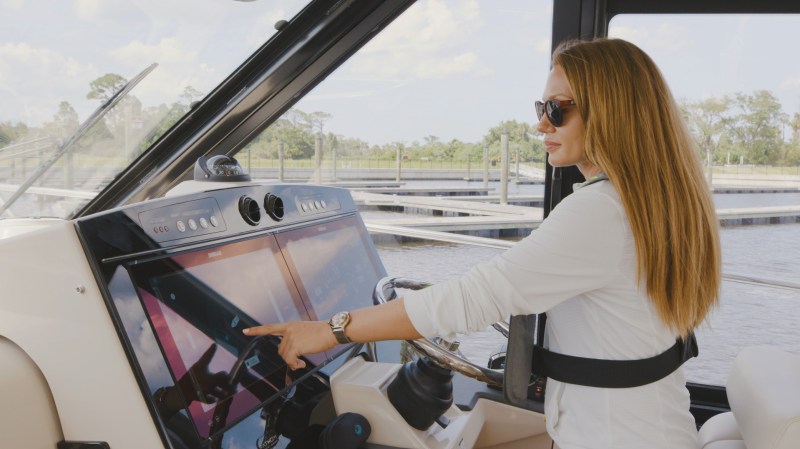
Engagement: The operator approaches the destination, opens the AutoCaptain application on a Simrad NSO 4 or NSS 4 multifunction display, and taps the screen to accept helmside responsibility.
Command Input: Using an interactive touchpad interface, the captain tells the system precisely where and how to position the vessel (e.g., enter slip to starboard, bow facing outward).
Split-Screen Interface: Once engaged, the multifunction display splits into three distinct panes:
Port two-thirds: Displays a real-time, camera-generated vector map of the local vicinity.
Starboard top-one-third: Displays a live camera feed showing the yacht’s exact direction of travel.
Starboard bottom-one-third: Houses critical safety controls, including prominent "Pause" and "Disengage" buttons.
Autonomous Execution & Collision Avoidance: As the boat moves, the system continuously monitors the surrounding area. If an unexpected obstacle enters the path—such as a drifting dinghy or a crossing pedestrian—AutoCaptain recalculates its route instantly. If the system encounters a scenario it cannot definitively resolve, it drops into "Pause Mode."
The Pause Safety Net: Functioning similarly to Mercury’s "Skyhook" digital anchor, the Pause button commands the propulsion system to hold the vessel’s position and orientation to within a one-meter tolerance against wind, current, and tide. If the operator fails to intervene or if conditions degrade further, AutoCaptain systematically hands control back to the human helmsman.
Dock-Hold and Completion: Upon successfully completing the docking sequence, a dock-hold feature maintains the vessel’s position against the slip, buying the captain crucial seconds to step away from the helm and secure the docklines.
Supporting Context & Metrics: Where AutoCaptain Fits in the Industry
The Autonomy Scale in Marine Engineering
According to Brandon Ferriman, Brunswick’s senior director of program management, AutoCaptain currently operates at a Level 2-plus classification on the National Highway Traffic Safety Administration’s (NHTSA) six-tiered autonomy scale. In practical terms, this is a "hands-off, eyes-on" system. The helmsman must remain at the station, ready to assume direct manual input if necessary. Engaging the steering wheel, throttle, or joysticks—or tapping the physical disengage buttons—instantly drops AutoCaptain into a standby monitoring mode.
Target Demographics and Market Placement
AutoCaptain is deliberately positioned at the luxury end of the recreational boating market.
Accessibility vs. Augmentation: Jeremiah Clark, Navico Group’s vice president of product management for electronics solutions, notes that the system serves two distinct user groups: it flattens the intimidating learning curve for novice boaters, while providing effortless precision for seasoned captains dealing with adverse environmental conditions.
Platform Limitations: Because the system requires a rigid hardtop to house its 360-degree stereo camera array and demands factory-level integration with Mercury propulsion, it is currently restricted to premium midsize vessels like the Boston Whaler 405 Conquest. It is not designed as an aftermarket retrofit, nor is it practical for small runabouts lacking overhead structures or multi-outboard joystick architecture.
Official Statements and Industry Insights
The rollout of AutoCaptain underscores a massive strategic advantage for Brunswick Corporation: vertical integration. By owning the navigation electronics (Simrad), the user interface software (Navico Group), the hull construction (Boston Whaler), and the propulsion and steering hardware (Mercury Marine), Brunswick has created a closed-loop technological ecosystem comparable to Apple’s hardware-software integration.
"There’s no aftermarket. There’s no dealer install. The only way to get this is with a new boat."
— Jeremiah Clark, Navico Group VP of Product Management for Electronics Solutions
Clark emphasizes that the system’s growth will be driven purely by software iteration rather than hardware overhauls. Because Simrad and Mercury reside under the same corporate banner, developers enjoy frictionless communication between sensors and processors.
"We’re going to keep investing and iterating and adding features and functionality. We’re open to looking at other sensor technologies. And we don’t need a license to talk to our own sensors."
— Jeremiah Clark
Future software updates are expected to expand AutoCaptain’s sensory inputs by incorporating other proprietary marine tech, such as forward- and side-scanning sonar, Doppler-enabled radar systems, and Automatic Identification System (AIS) transceivers.
Discussing the mechanical foundation of the autonomy stack, Clark highlights the irreplaceable nature of multi-engine vector thrust:
"The joystick system is really what enables the motors to go in different directions, different RPMs, different gears, and using those varying kinds of thrust and vector thrust. You can actually scoot the boat in different directions: sideways, forward, back. Traditional steering wheels and throttles don’t offer the right input controls."
Future Outlook: The Horizon of Marine Autonomy
While AutoCaptain represents a phenomenal leap forward in short-range harbor navigation, industry analysts note clear boundaries in its current iteration. Notably, AutoCaptain is not yet trained on the International Regulations for Preventing Collisions at Sea (COLREGS), nor does it offer the high-speed, long-range collision avoidance capabilities found in commercial maritime autopilot systems. Furthermore, purists and marine educators frequently debate whether over-reliance on automated systems risks eroding fundamental seamanship skills among newer generations of boaters.
However, these philosophical debates do little to diminish the commercial appeal of stress-free marina handling. By effectively eliminating the high-stakes friction of docking, systems like AutoCaptain redefine modern luxury afloat.
As Brunswick Corporation expands factory-installed availability across additional new builds in its portfolio, the days of sweating through a twilight docking maneuver while well-meaning friends offer conflicting advice from the cockpit are officially numbered. For the modern yacht owner, the future of boating is not about removing the captain from the helm—it is about giving the captain a world-class electronic co-pilot that never loses its cool.