






Executive Overview
On the open water, safety is not merely a matter of convenience; it is a critical equation balancing preparation, equipment reliability, and rapid communication. When a marine vessel encounters catastrophic failure, a man-overboard scenario, or severe environmental deterioration, the margin for error narrows to seconds. In these high-stakes moments, visual distress signals (VDS) serve as the ultimate tether between stranded mariners and rescue authorities.
Federal and state regulations mandate specific visual distress equipment depending on vessel size, operating waters, and time of day. However, meeting the legal minimum is only half the battle. True maritime safety requires an exhaustive understanding of how various pyrotechnic, electronic, and physical signals operate, how they must be stored, and when—and more importantly, when not—to deploy them. This report provides an authoritative examination of marine visual distress signals, contextualized within modern maritime search-and-rescue (SAR) frameworks, regulatory compliance, and best practices championed by industry leaders like Sea Tow.
Detailed Chronology: The Evolution and Modern Integration of Distress Signaling
The history of maritime distress signaling spans centuries, evolving from the rudimentary bonfires lit on coastal cliffs to sophisticated, satellite-linked electronic positioning systems. Understanding this chronology highlights why contemporary boaters must utilize a layered approach to safety rather than relying on a single method.
- Pre-20th Century (The Era of Primitive Signals): Early mariners relied on acoustic methods (cannon fire, foghorns, bell ringing) and rudimentary visual cues, such as inverted flags, bonfires, or firing gunpowder into the air. These methods suffered from severe limitations in range, reliability, and precision.
- Mid-20th Century (The Standardization of Pyrotechnics): Following the widespread adoption of mass-produced chemicals and explosives, marine flares became the gold standard for visual distress signaling. Governments established standardized rules regarding red flares, orange smoke, and aerial rockets, creating a universal language of distress visible to both surface vessels and aircraft.
- Late 20th Century (The Electronic Revolution): The introduction of Emergency Position-Indicating Radiobeacons (EPIRBs) and Personal Locator Beacons (PLBs) transformed SAR operations. While these devices did not replace visual signals, they bridged the gap between remote distress and global positioning via satellite arrays.
- The 21st Century (Regulatory Refinement and Modern Tech Integration): Regulatory bodies like the U.S. Coast Guard (USCG) expanded approvals to include electronic visual distress signal devices (eVDSDs) as acceptable nighttime alternatives to pyrotechnics. Simultaneously, on-water assistance networks—such as Sea Tow, founded in 1983—pioneered digital communication channels, allowing boaters to separate non-emergency requests (like routine tows) from genuine life-or-death emergencies, thereby preserving the integrity of true distress signals.
Supporting Context & Metrics: Regulatory Frameworks and Equipment Taxonomy
Navigating the legal mandates surrounding visual distress signals requires adherence to both federal statutes (such as those enforced by the U.S. Coast Guard) and localized state laws.
When Are Visual Distress Signals Required?
Federal requirements generally apply to vessels operating on the Great Lakes, the high seas, territorial seas, and connecting waters directly communicating with them.
- Vessel Size Exceptions: Boats under 16 feet in length, manually propelled craft (canoes, kayaks, rowboats), and open sailboats under 26 feet not equipped with propulsion machinery are typically exempt during daylight hours. However, after dark, all vessels operating in applicable waters must carry approved nighttime distress signals.
- Combination Requirements: Any vessel subject to these rules must carry devices certified for both day and night use, or a combination of devices that independently satisfy daytime and nighttime requirements.
Categorizing the Arsenal: Day vs. Night Signals
A fundamental rule of maritime safety is that daytime signals must possess high visibility against blinding sun and open horizons, while nighttime signals must cut through absolute darkness without causing night blindness or failing in moisture-heavy marine environments.
-
Pyrotechnic Marine Flares:
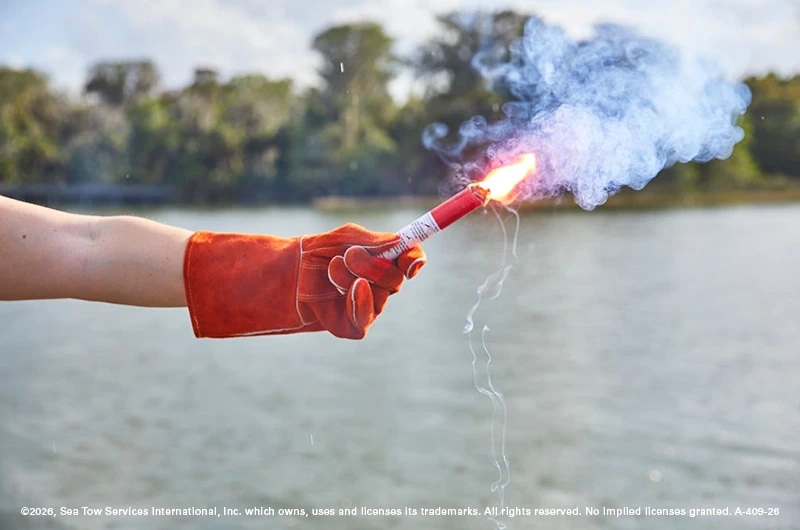
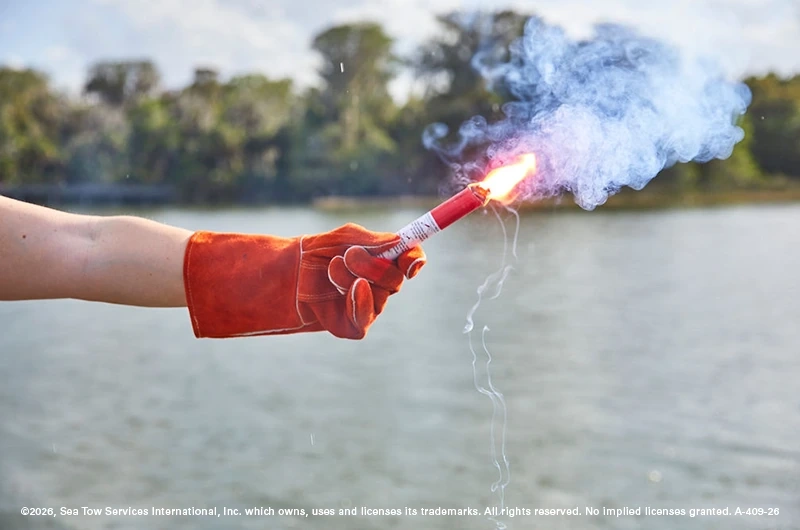
- Handheld Red Flares: Designed primarily for nighttime use, these produce an intense, brilliant red light. Operators must hold them downwind and over the gunwale to prevent burning slag and thick chemical smoke from injuring passengers or damaging rigging and fuel lines.
- Aerial Flares and Meteor Signals: These project high into the atmosphere, expanding the visual horizon significantly. They must be launched strictly according to manufacturer instructions, angled away from crowds, sails, structures, and low-flying aircraft.
- Orange Smoke Signals: Strictly designated for daytime use, orange smoke creates a highly visible plume that aids aircraft and nearby surface vessels in pinpointing position and evaluating local wind drift.
-
Electronic Visual Distress Signal Devices (eVDSDs):
- Modern eVDSDs offer a compelling alternative to traditional pyrotechnics. They produce a repeating, high-intensity light sequence (often matching the SOS Morse code pattern) without open flames, dangerous hot slag, or chemical expiration dates.
- Regulatory Note: To satisfy legal carriage requirements, an eVDSD must bear certification indicating it meets USCG standards. Standard flashlights, mobile phone screens, or makeshift strobes do not qualify. Furthermore, electronic lights fulfill nighttime requirements only; they must be paired with an approved daytime signal (such as an orange flag) to achieve full legal compliance.
-
Orange Distress Flags and Auxiliary Tools:
- The standard orange distress flag features a black square and ball symbol on an international orange background. Reusable and immune to thermal expiration, its effectiveness relies entirely on daylight, wind conditions, and line-of-sight elevation.
- Signal mirrors, high-powered flashlights, reflective materials, and bright clothing act as force multipliers. While they cannot replace primary certified equipment, they drastically improve survivability when integrated into a comprehensive signaling strategy.
-
EPIRBs and PLBs (Rescue Beacons):
- It is vital to distinguish between locating beacons and visual signals. EPIRBs (Emergency Position-Indicating Radiobeacons) and PLBs (Personal Locator Beacons) transmit distress data via satellite networks to rescue coordination centers. They initiate and guide the overall rescue operation, while flares, flags, and strobes provide the final visual confirmation required by crews on the scene.
Official Statements and Industry Insights
Maintaining a professional, authoritative perspective on marine safety requires evaluating guidance from frontline rescue organizations. The consensus across maritime safety authorities emphasizes that equipment ownership is only half of preparedness; tactical deployment and psychological readiness dictate survival outcomes.
"A complete distress signaling plan utilizes a triad of communication, precise location tracking, and visual confirmation. Boaters must carry approved day and night devices tailored to their specific route, meticulously maintain their batteries and pyrotechnics, and ensure every passenger knows where safety gear is stowed and how to deploy it under stress."
— The Sea Tow Safety Directorate
Industry experts frequently emphasize the hazard of "distress signal fatigue" or false alarms. Deploying a pyrotechnic flare for a non-life-threatening mechanical breakdown not only drains vital safety assets but triggers extensive, costly search-and-rescue responses that pull resources away from genuine emergencies.
"Flares communicate grave, imminent danger. If your engine dies on a calm day, do not fire a flare. Use a VHF marine radio, your mobile phone, or dedicated assistance applications like Sea Tow to request a routine tow. Save your pyrotechnics for when the vessel is sinking, on fire, or lives are directly at risk."
— On-Water Assistance Specialists
Future Outlook: The Next Generation of Marine Safety
As maritime technology continues to advance, the landscape of visual and electronic distress signaling is undergoing a profound transformation. Looking toward the horizon, several trends are poised to redefine how boaters prepare for and execute emergency responses:
- Advanced LED and Laser Signalling: Next-generation eVDSDs are becoming smaller, brighter, and more energy-efficient. Manufacturers are developing multi-spectrum laser and high-output LED arrays designed to pierce through heavy fog, blinding rain, and intense glare with unprecedented reliability.
- Integration with Smart-Marine Ecosystems: The integration of IoT (Internet of Things) devices on recreational vessels means future distress systems will automatically sync. When an EPIRB or electronic distress signal is activated, it will instantly broadcast telemetry data—including GPS coordinates, vessel registration, and passenger manifests—directly to local emergency responders and commercial towing networks simultaneously.
- Eco-Friendly Pyrotechnics: With environmental regulations tightening globally, chemical manufacturers are investing heavily in non-toxic, biodegradable pyrotechnic compositions that reduce ocean contamination while maintaining the extreme luminosity required for effective SAR operations.
- Mandatory Safety Education Pathways: Jurisdictions worldwide are moving toward stricter educational requirements for recreational boaters. Future policies are expected to mandate hands-on training simulations for visual distress signal deployment, ensuring that equipment is not just legally present on board, but practically mastered by the captain and crew.
Conclusion
Marine visual distress signals remain a cornerstone of nautical survival. Whether navigating coastal waters or crossing open seas, a boater’s preparedness is measured by the accessibility, condition, and appropriateness of their safety gear. By combining certified day and night pyrotechnics or electronic alternatives with reliable rescue beacons and clear communication protocols, mariners can transform potential tragedies into manageable rescues. Always inspect your equipment, verify current federal and state requirements before departure, and reserve true distress signals strictly for moments when life and safety hang in the balance.