




Executive Overview
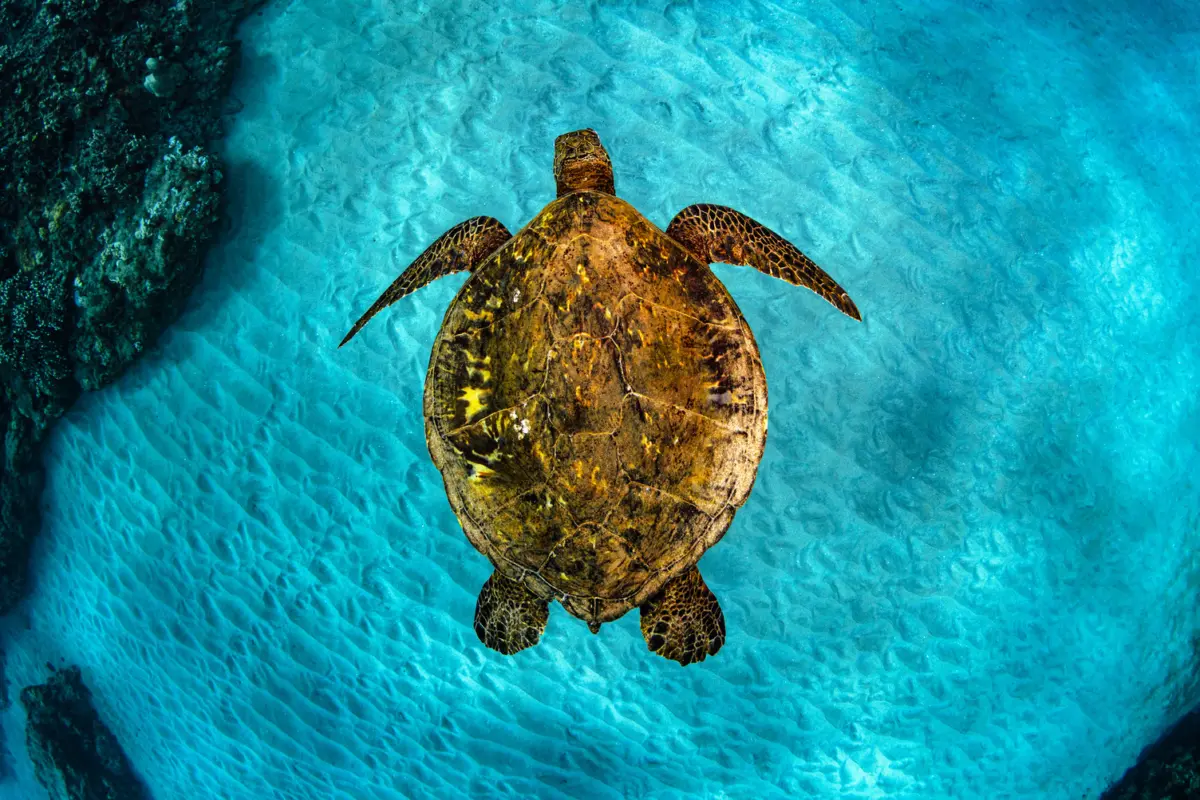
For over 100 million years, sea turtles have served as resilient sentinels of the world’s oceans. Surviving the catastrophic extinction event that claimed the dinosaurs and weathering millennia of dramatic tectonic and climatic shifts, these ancient mariners possess biological adaptations honed by deep time. Among their most miraculous traits is an innate capability for transoceanic navigation. Without the aid of charts, modern instruments, or visible landmarks, female sea turtles traverse thousands of miles of open blue water, unfailingly returning to nest on or near the exact beaches where they hatched decades prior.
Yet, this peerless evolutionary compass is increasingly meeting its match against twenty-first-century hazards. While the biophysics of natal homing and geomagnetic orientation remain a masterclass in natural engineering, sea turtles now find themselves navigating a radically altered landscape. Rapid coastal urbanization, artificial illumination, relentless anthropogenic noise, and the ubiquitous presence of modern plastic pollution present existential threats that evolutionary history could never have anticipated.
This in-depth feature explores the extraordinary science behind sea turtle navigation, examines the mounting anthropogenic pressures threatening their survival, and outlines the urgent conservation imperatives required to safeguard these ancient navigators for future generations.
Detailed Chronology: The Lifecycle and Epic Migrations of Marine Chelonians
To comprehend the navigational marvel of sea turtles, one must first trace the sweeping spatial and temporal arcs of their lifecycles.
[ Hatching & Night Emergence ]
             │
             ▼
[ Frenzy Swim to Open Ocean ]
             │
             ▼
[ The "Lost Years" (Pelagic Drift & Geomagnetic Imprinting) ]
             │
             ▼
[ Coastal Foraging Grounds (Decades of Growth) ]
             │
             ▼
[ Natal Homing Migration (Transoceanic Trek via Magnetic Map) ]
             │
             ▼
[ Return to Birth Beach for Nesting ]
1. The Hazardous Emergence and the "Lost Years"
The journey begins on sandy shorelines under the cover of darkness. Historically, hatchlings rely on a combination of low-horizon silhouettes and natural light gradients to find the sea. Once in the water, they enter a period known colloquially as the "lost years."
During this juvenile phase, young turtles drift into pelagic zones, riding major ocean gyres and current systems. For years, scientists could only guess at the whereabouts of these young animals. Today, tagging studies and satellite telemetry reveal that these juveniles are not simply drifting aimlessly; they are actively utilizing ocean currents while simultaneously logging magnetic coordinates—a process known as magnetic imprinting.
2. Transoceanic Odyssey: The Leatherback Extreme
As they mature, many species undertake monumental migrations between foraging grounds and nesting sites. No species exemplifies this better than the Pacific leatherback (Dermochelys coriacea).
Leatherbacks represent the pinnacle of long-distance marine vertebrate travel. Research documented by federal and academic institutions confirms that Pacific leatherbacks nesting in the Indonesian archipelago routinely migrate more than 10,000 kilometers (approx. 6,200 miles) across the open Pacific to reach the nutrient-rich waters of the West Coast of the United States. This breath-taking journey shatters records as the longest migration undertaken by any air-breathing marine vertebrate, requiring months of continuous swimming against unpredictable currents, variable weather patterns, and shifting thermal fronts.
3. Natal Homing: The Ultimate Return
Equally astonishing is the phenomenon of natal homing. When mature females reach breeding age, they embark on a return migration, navigating back across vast ocean basins to deposit their eggs on the precise stretch of coastline where they hatched.
This degree of spatial precision requires a dual-navigational system combining a "map sense" (determining geographic location relative to a destination) and a "compass sense" (maintaining a constant heading). Marine biologists have steadily unraveled the physiological mechanisms driving this capability, discovering that sea turtles read the Earth’s invisible magnetic architecture like a living map.
Supporting Context & Metrics: The Biophysics of Geomagnetic Navigation
How do sea turtles navigate across featureless expanses of open ocean without losing their way? The answer lies within the planet’s magnetic field.
+--------------------------------------------------------------------------+
|                  THE SEA TURTLE NAVIGATIONAL TOOLKIT                     |
+--------------------------------------------------------------------------+
| 1. Geomagnetic Field Intensity & Inclination Angle                       |
|    - Acts as a global coordinate system (latitude/longitude cues).       |
|    - Enables natal homing by recognizing specific magnetic signatures.   |
+--------------------------------------------------------------------------+
| 2. Oceanic Cue Integration                                               |
|    - Thermal gradients, wave propagation directions, and chemical scents.|
+--------------------------------------------------------------------------+
| 3. Internal Auditory & Visual Systems                                    |
|    - Subsurface acoustic awareness and celestial/horizon orientation.    |
+--------------------------------------------------------------------------+
The Magnetic Map
Earth functions as a gigantic bar magnet, generating a magnetic field whose intensity and inclination angle vary predictably across the globe. Biologists and neuroscientists have demonstrated that sea turtles possess specialized magnetite-based receptors—likely located in the brain and skull tissues—that allow them to detect these subtle nuances in magnetic field strength and angle.
As turtles traverse the globe, they read these spatial variations like coordinates on a global positioning grid. For instance, populations off the coast of Florida or Western Australia use unique regional magnetic signatures to determine how far north or south they are, effectively keeping score of their latitude and longitude.
When young turtles hatch, they imprint upon the specific magnetic signature of their natal beach. Decades later, as adults ready to reproduce, they re-orient themselves using this deeply etched magnetic memory, swimming thousands of miles until the magnetic signature matches the coordinates of their youth.
Sensory Integration
While geomagnetism provides the overarching global grid, turtles also integrate other sensory inputs as they approach land. These secondary cues include:
- Thermal Fronts: Water temperature variations that mark distinct marine ecosystems and current boundaries.
- Wave Direction: The characteristic angle of wave swell propagation, which can guide coastal approaches.
- Olfactory Imprinting: Detecting distinct chemical compounds and coastal organic signatures unique to their natal region during the final stages of their approach.
Official Statements and Research Findings
Despite the evolutionary perfection of these internal navigation systems, the modern marine environment presents obstacles that biological adaptation cannot quickly overcome. Conservation organizations and wildlife agencies have released alarming data regarding the cumulative impact of human activities on marine turtles.
The Light Pollution Crisis
According to recent guidance from the U.S. Fish and Wildlife Service (USFWS), artificial coastal lighting poses a severe threat to both nesting females and emerging hatchlings.
“Artificial lighting not only discourages nesting females from coming ashore but also has a harmful impact on hatchlings, which historically emerge from their nests at night and orient toward the brightest horizon,” notes USFWS conservation literature.
On an unaltered, pristine beach, the brightest horizon is naturally the starlit or moonlit reflection over the open ocean. However, intense commercial and residential lighting along developed coastlines overwhelms these ancient visual cues. Hatchlings crawling inland instead of seaward face imminent dehydration, exhaustion, predation, and mortality on roadways.
Acoustic Pollution in the Marine Realm
Beyond the shoreline, the physical medium of the ocean itself is changing. The National Oceanic and Atmospheric Administration (NOAA) Fisheries division has increasingly emphasized the impacts of underwater noise pollution.
Sea turtles possess internal ears capable of detecting low-frequency acoustic vibrations underwater. Industrial activities—including heavy vessel traffic, seismic airgun surveys for oil and gas exploration, coastal construction, and military sonar—generate unprecedented levels of anthropogenic noise.
“Human-generated sound can cause stress, disrupt normal behaviors, or even force marine animals to move from preferred habitats or divert from migratory paths,” NOAA Fisheries warns. These acoustic disruptions can disorient turtles, interfering with their migratory transit and disrupting crucial foraging behaviors.
The Micro- and Macro-Plastic Threat
Perhaps the most pervasive and insidious threat facing sea turtles is marine plastic pollution. Ocean Conservancy has dedicated substantial research to documenting the devastating toll of discarded synthetic materials on marine life.
“A recent Ocean Conservancy study of more than 10,000 marine animal autopsies found that nearly half of the sea turtles studied had ingested plastic,” researchers report.
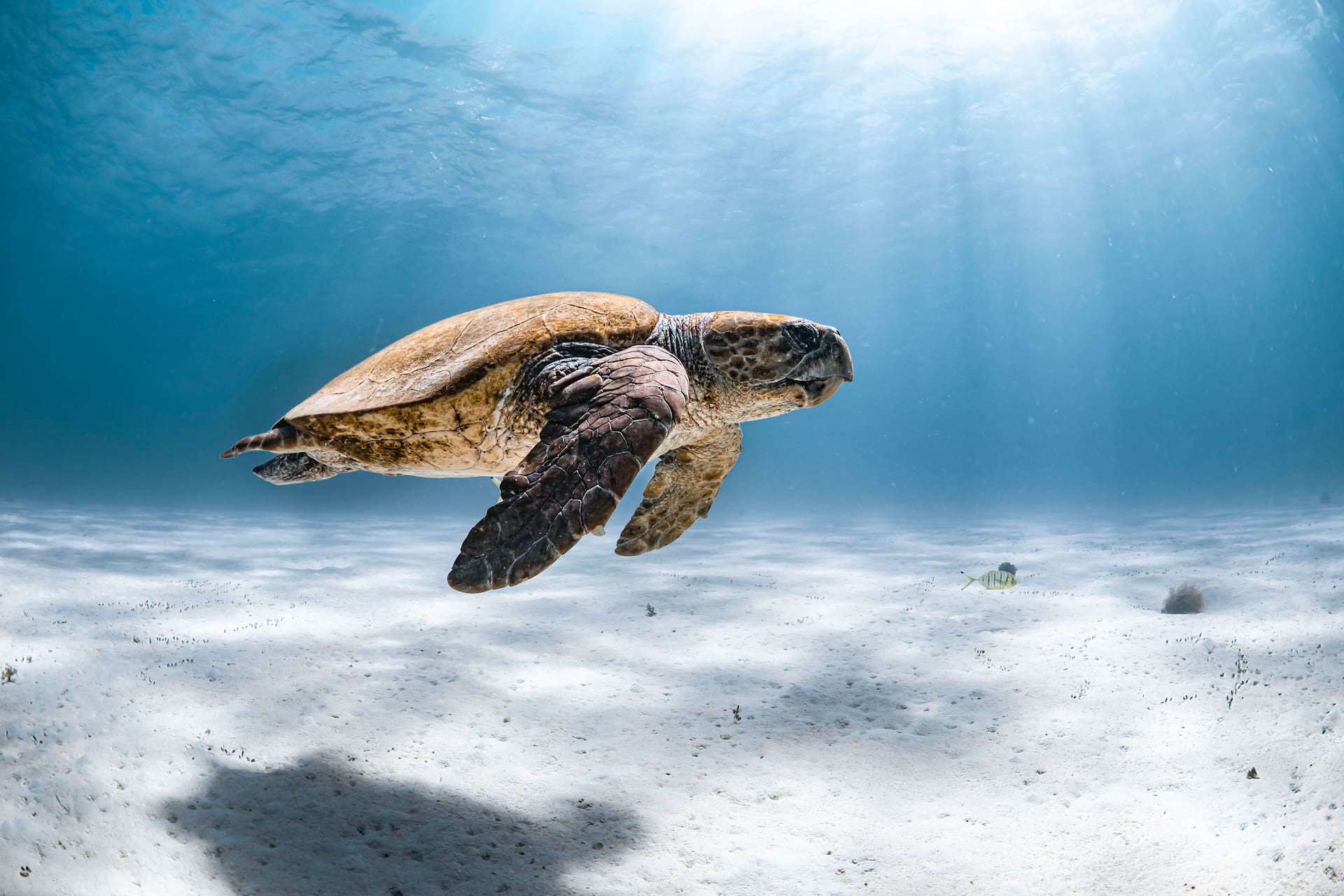
Even more staggering is the threshold of lethality. Scientists discovered that for adult loggerhead turtles (Caretta caretta), swallowing a quantity of plastic equivalent to just one and a half times the volume of a standard golf ball was enough to cause mortality in 50% of cases.
Soft plastics, floating bags, balloons, and packaging films mimic the visual appearance of jellyfish—a primary prey item for many species. Because sea turtles evolved over tens of millions of years in an environment devoid of synthetic polymers, their digestive systems are entirely unprepared for materials that take centuries to break down. Once ingested, plastics obstruct digestive tracts, perforate internal organs, and cause fatal systemic starvation.
Future Outlook: The Path Forward for Marine Conservation
Sea turtles have outlived shifting continents, fluctuating sea levels, and planetary mass extinctions. Yet, the rapidity of modern anthropogenic disruption has outpaced their evolutionary capacity for adaptation.
The survival of these ancient mariners is not a matter of biological inevitability; it is an active choice dependent on human intervention and global policy reform. Conservation frameworks must target three critical areas:
+--------------------------------------------------------------------------+
|                        CONSERVATION ACTION PILLARS                       |
+--------------------------------------------------------------------------+
| 1. Habitat & Shoreline Protection                                        |
|    - Enforcing dark-sky ordinances for coastal developments.             |
|    - Restricting shoreline armoring (seawalls) and managing beach access.|
+--------------------------------------------------------------------------+
| 2. Plastic Pollution Mitigation                                          |
|    - Reducing single-use plastics at the municipal and global scales.    |
|    - Expanding coastal and open-ocean debris cleanup initiatives.        |
+--------------------------------------------------------------------------+
| 3. Ecosystem & Policy Defense                                            |
|    - Regulating underwater acoustic disturbance from shipping and sonar. |
|    - Supporting international treaties safeguarding migratory corridors. |
+--------------------------------------------------------------------------+
Transforming Passion into Impact
The journey of a sea turtle serves as a profound reminder of the intricate complexity of the natural world. While these animals possess a remarkable ability to find their way across thousands of miles of open ocean, it is our collective responsibility to ensure that the marine and coastal habitats awaiting them at the end of their journey remain intact, welcoming, and safe.
Organizations like Ocean Conservancy continue to champion comprehensive marine protection initiatives—from grassroots beach cleanups and plastic reduction legislation to the defense of critical nesting sanctuaries.
By taking targeted action—such as supporting dark-sky lighting initiatives, reducing personal consumption of single-use plastics, and advocating for robust ocean protection policies—humanity can ensure that the oldest navigators of the deep blue continue to find their way home for millions of years to come.