

Executive Overview
As the global energy transition accelerates, the frontier of offshore wind is shifting rapidly from shallow waters to deep-sea environments. In this high-stakes arena, floating offshore wind (FOW) technology has emerged as the critical unlock for nations possessing vast deep-water coastlines. Brazil, traditionally a powerhouse of hydroelectricity and deep-water oil and gas extraction, is positioning itself to become a Latin American leader in this next-generation renewable sector.
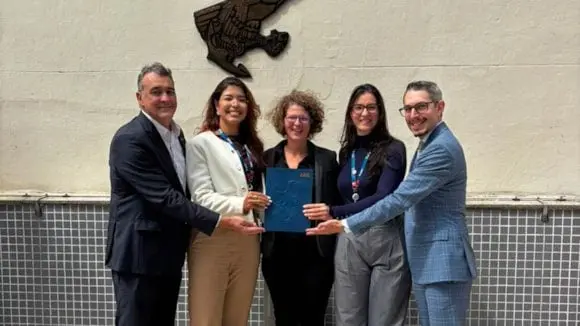
In a significant step forward for the region’s green energy ambitions, the American Bureau of Shipping (ABS), a leading global classification society, has signed a Memorandum of Understanding (MOU) with Brazilian energy developer JB Energy. This strategic partnership aims to conduct comprehensive technical and environmental feasibility studies for the proposed Aura Sul Wind Project—a pioneering floating offshore wind pilot planned off the coast of the southern state of Rio Grande do Sul.
The scope of this collaboration goes far beyond simple turbine installation. Recognizing that the long-term viability of offshore wind depends on robust maritime infrastructure and circular-economy principles, the ABS-JB Energy partnership targets two critical areas: the comprehensive decarbonization of the Port of Rio Grande and the lifecycle engineering—specifically the preliminary decommissioning and recycling strategies—of JB Energy’s proprietary "Raijin Float" platform, an innovative concrete-based, semi-submersible floating wind foundation.
By addressing port infrastructure readiness and end-of-life disposal during the earliest stages of project design, ABS and JB Energy are attempting to solve some of the most persistent bottlenecks plaguing the global floating wind industry. This proactive, lifecycle-oriented methodology is designed to de-risk the investment, satisfy increasingly stringent environmental regulations, and establish a repeatable blueprint for sustainable floating wind developments across the global South.
Detailed Chronology and Technical Scope
The partnership between ABS and JB Energy represents a structured, multi-phase approach to project development, transitioning the Aura Sul Wind Project from a conceptual pilot into a technically and financially bankable venture.
[MOU Signed: ABS & JB Energy]
       │
       ├─► [Phase 1: Port of Rio Grande Decarbonization Study]
       │     ├─ Shore Power & Electrification
       │     ├─ Low-Carbon Logistics & Supply Chain
       │     └─ Clean Fuel Infrastructure (e.g., Green Hydrogen)
       │
       └─► [Phase 2: Raijin Float Lifecycle & Decommissioning Study]
             ├─ Towing, Transport & Marine Operations
             ├─ Dismantling & Structural Demolition
             └─ Concrete Recycling & Material Reuse
Phase 1: Decarbonizing the Port of Rio Grande
The Port of Rio Grande serves as the industrial and logistical gateway for the state of Rio Grande do Sul. Under the newly established MOU, ABS will conduct extensive technical studies to transform this vital maritime hub into a low-carbon logistics center capable of supporting the high demands of offshore wind construction, assembly, and maintenance. The decarbonization studies will focus on several critical pathways:
- Port Electrification and Renewable Integration: Evaluating the electrical grid infrastructure of the port to support high-capacity shore power (cold ironing) for vessels, reducing auxiliary engine emissions while docked. The study will also explore integrating local renewable energy sources, such as solar and onshore wind, directly into the port’s microgrid.
- Low-Carbon Logistics and Supply Chain Optimization: Mapping the carbon footprint of transport corridors, heavy machinery, and assembly operations within the port terminal, identifying opportunities to transition to electric or hydrogen-powered cargo-handling equipment.
- Clean Fuel Infrastructure: Assessing the feasibility of establishing bunkering and storage infrastructure for alternative, low-to-zero-carbon fuels (such as green ammonia or methanol), positioning the Port of Rio Grande as a regional hub for the decarbonized shipping fleets of the future.
Phase 2: Lifecycle and Decommissioning of the Raijin Float Platform
Floating offshore wind projects require specialized floating foundations to support massive, top-heavy wind turbines in deep waters. JB Energy has developed the "Raijin Float," a concrete-based, semi-submersible floating foundation. Concrete foundations offer distinct advantages, including high durability, lower maintenance requirements in harsh marine environments, and the ability to utilize local supply chains and materials, which significantly reduces the initial carbon footprint associated with steel production and long-distance transport.
However, concrete structures present unique challenges at the end of their operational life. Unlike steel structures, which can be readily melted down and recycled, concrete foundations require specialized dismantling, crushing, and reuse strategies to prevent them from becoming industrial waste.
ABS’s technical advisory team will collaborate with JB Energy to address these challenges through a comprehensive "cradle-to-grave" study focusing on:
- Removal Concepts and Marine Operations: Developing safe, reliable methods for disconnecting the Raijin Float from its mooring lines and dynamic subsea cables, followed by de-ballasting operations to prepare the structure for transit.
- Towing and Transport Logistics: Analyzing the hydrodynamic stability of the concrete platform during towing operations from the deep-water offshore site back to the Port of Rio Grande or a specialized dismantling facility.
- Dismantling and Port Logistics: Designing the onshore or near-shore dismantling sequence, ensuring that heavy lifting, structural cutting, and material separation can be executed safely without disrupting active port operations.
- Recycling and Circular Economy Opportunities: Investigating methods to crush and process the recovered concrete to reuse it as aggregate in new construction projects, roadbeds, or coastal defense structures, thereby achieving a closed-loop lifecycle.
Supporting Context and Metrics
To fully appreciate the significance of the Aura Sul Wind Project, it is essential to understand the broader macroeconomic and environmental landscape of Brazil’s energy sector.
Brazil’s Offshore Wind Potential
Brazil possesses one of the most attractive offshore wind profiles in the world. According to the state-run Energy Research Office (EPE), Brazil’s technical offshore wind potential exceeds 700 gigawatts (GW) in waters up to 50 meters deep. When extending into deeper waters suitable for floating wind technologies, this potential expands exponentially.
| Region / Parameter | Wind Speed (m/s) | Dominant Depth Profile | Primary Technology |
|---|---|---|---|
| Northeast Coast | 8.5 – 9.5 | Shallow to Medium (Bottom-fixed) | Monopiles / Jackets |
| Southern Coast (RS) | 8.0 – 9.0 | Deep / Transition Zone (Floating) | Semi-submersible / Tension Leg |
The state of Rio Grande do Sul, situated in the far south, experiences strong, highly consistent oceanic wind patterns driven by Antarctic weather systems. However, the continental shelf in this region drops off relatively quickly, making floating wind technologies like the Raijin Float essential for capturing the best wind resources.
The Concrete Advantage vs. Steel in Floating Wind
While the majority of early-stage floating wind prototypes have utilized steel hulls, concrete semi-submersibles are gaining significant traction among developers for several key reasons:
- Local Content and Economic Impact: Steel fabrication for offshore structures requires highly specialized shipyards, which are currently concentrated in East Asia and Europe. Concrete fabrication, by contrast, relies on standard civil engineering materials (cement, water, aggregate, reinforcing steel) that can be sourced locally in Brazil. This maximizes local job creation and aligns with national industrial development policies.
- Corrosion Resistance: Concrete does not suffer from the same corrosion fatigue as steel in salt-water environments, theoretically extending the design life of the foundation beyond 30 years and reducing the frequency of costly offshore inspections and maintenance campaigns.
- Capital Expenditure (CAPEX) Mitigation: By leveraging local concrete supply chains, developers can shield themselves from the volatile global steel markets, improving the predictability of project financing.
Environmental Licensing and the Regulatory Hurdle
As of late 2024, Brazil’s environmental protection agency, IBAMA, had received licensing applications for over 200 GW of offshore wind projects across the country. While the pipeline is massive, the regulatory framework remains in a state of development.
The Brazilian Congress is currently debating Bill 576/2021, which aims to establish the legal framework for the authorization, bidding, and concession of offshore energy generation. By integrating advanced environmental studies, port decarbonization plans, and decommissioning strategies early, the Aura Sul Wind Project is positioning itself to easily meet the stringent criteria expected to emerge from this legislative process.
Official Statements
The strategic alignment between ABS and JB Energy is reflected in the statements from the leadership of both organizations, emphasizing safety, technological innovation, and environmental stewardship.
Representing the technical advisory and classification side, Rob Langford, ABS Vice President, Global Offshore Markets, highlighted the critical role of infrastructure in the viability of floating wind:
"Floating offshore wind development depends on strong regional infrastructure and clear life-cycle planning from the outset. Through this collaboration with JB Energy, ABS will support studies that advance safe, sustainable and economically viable offshore wind development in Brazil."
This sentiment was echoed by the developer, emphasizing that sustainability must be engineered into the project from its inception rather than treated as an afterthought. Rodolfo Gonçalves, CEO of JB Energy, stated:
"One of the most sustainable offshore wind structures is the one whose entire lifecycle has been considered from day one. Together with ABS, we are integrating port decarbonization, lifecycle thinking, and innovative decommissioning strategies into the Aura Sul Wind Project from its earliest stages. This collaboration will help establish new benchmarks for the sustainable development of floating offshore wind, not only in Brazil but for future projects worldwide."
Future Outlook
The collaboration between ABS and JB Energy on the Aura Sul Wind Project comes at a critical juncture for the international offshore wind market. As developers globally grapple with rising material costs, high interest rates, and supply chain bottlenecks, the industry is increasingly focusing on standardized, localized, and easily constructible solutions.
The Road to Commercialization
The immediate next steps for the Aura Sul Wind Project involve executing the technical studies outlined in the MOU. The findings from the Port of Rio Grande decarbonization study will likely serve as a foundational document for the port authority’s long-term master plan, helping to attract public and private investment for green infrastructure upgrades.
Concurrently, the engineering validation of the Raijin Float’s decommissioning strategy will provide crucial data to financial institutions and insurance underwriters. In the offshore wind sector, the cost of decommissioning is a major variable in the calculation of the Levelized Cost of Energy (LCOE). By presenting a fully costed, technically validated end-of-life strategy utilizing local recycling infrastructure, JB Energy can significantly lower the risk profile of the project, unlocking lower-cost capital.
A Blueprint for the Global South
If successful, the Aura Sul pilot will prove that deep-water wind resources can be harvested sustainably in emerging markets without relying on imported heavy-steel fabrication. The lessons learned from adapting the Port of Rio Grande for low-carbon operations and recycling concrete semi-submersibles will be highly applicable to other maritime nations in Latin America, Africa, and Southeast Asia that possess similar coastal profiles and industrial capacities.
By combining the technical rigor and safety-first methodology of ABS with the regional expertise and innovative engineering of JB Energy, the Aura Sul Wind Project is poised to transition from a regional pilot into a globally recognized benchmark for the sustainable, circular-economy-driven development of floating offshore wind.