




Executive Overview
Framed by the rugged expanse of the Northern Rockies and towering mountain peaks, Montana—affectionately known as the Treasure State—is a sanctuary for water enthusiasts. While landlocked geographically, its massive hydrological footprint shatters any preconceptions of aridity. The state boasts more than 3,223 officially named lakes and reservoirs, alongside hundreds of uncharted, glacier-carved subalpine tarns shaped over millennia by relentless weather patterns and shifting ice sheets.
For residents and visiting adventurers alike, water is not merely a scenic backdrop; it is the central axis of the local lifestyle. Whether navigating technical whitewater or paddleboarding across the soothing, crystal-clear waters of western valley lakes, the state’s aquatic ecosystems offer an unparalleled wilderness experience. Thanks to a unique constitutional mandate, this aquatic wealth is preserved for the public: under the Montana Constitution, all surface waters belong to the state for the use of its citizens, guaranteeing perpetual public access.
Drawing from years of navigating these diverse waters, this curated guide offers an authoritative examination of Montana’s top flatwater destinations for canoeing, stand-up paddleboarding (SUP), and kayaking. It provides essential navigational insights, historical context, and regulatory frameworks required for a safe and responsible journey across the state’s most compelling aquatic landscapes.
Detailed Chronology and Geological Formation
Montana’s modern lake systems are the direct descendants of the Pleistocene epoch, shaped by massive continental ice sheets and localized alpine glaciers that scoured deep valleys and deposited terminal moraines. Understanding the origins of these water bodies enriches the paddling experience, revealing the dynamic forces that continue to shape the regional landscape.
1959: The Birth of Quake Lake
Among Montana’s major waterways, Earthquake Lake (or Quake Lake) possesses the most dramatic and precisely dated origin story. On August 17, 1959, at 11:37 p.m., a catastrophic 7.3-magnitude earthquake struck southwestern Montana. The seismic event triggered an 80-million-ton mountainside landslide that hurtled down the Madison River canyon at speeds exceeding 100 miles per hour, instantly killing 28 people and creating a massive natural earthen dam.
Within weeks, the blocked Madison River filled the canyon, submerging the valley floor and creating a six-mile-long, 125-foot-deep lake. Today, paddlers traversing Quake Lake navigate through a haunting “ghost forest”—the skeletal remains of dead trees that pierce the surface, offering a poignant, tactile reminder of sudden geological transformation.
Mid-20th Century to Modern Era: Engineered Reservoirs
While natural glacial scourings account for the majority of the state’s aquatic gems, the mid-20th century marked an era of significant hydrological engineering aimed at flood control, irrigation, and recreation. Hyalite Reservoir, situated 10 miles up Hyalite Canyon near Bozeman, was originally constructed in the 1940s and subsequently enlarged in 1993. Similarly, Hebgen Lake—established via damming—transformed the upper Madison River basin into a premier aquatic habitat. These engineered environments have seamlessly integrated into Montana’s wilderness, providing vital habitats for native species and world-class recreation areas.

Supporting Context & Metrics: The Top Paddling Destinations
Flathead Lake: The All-Day Adventure
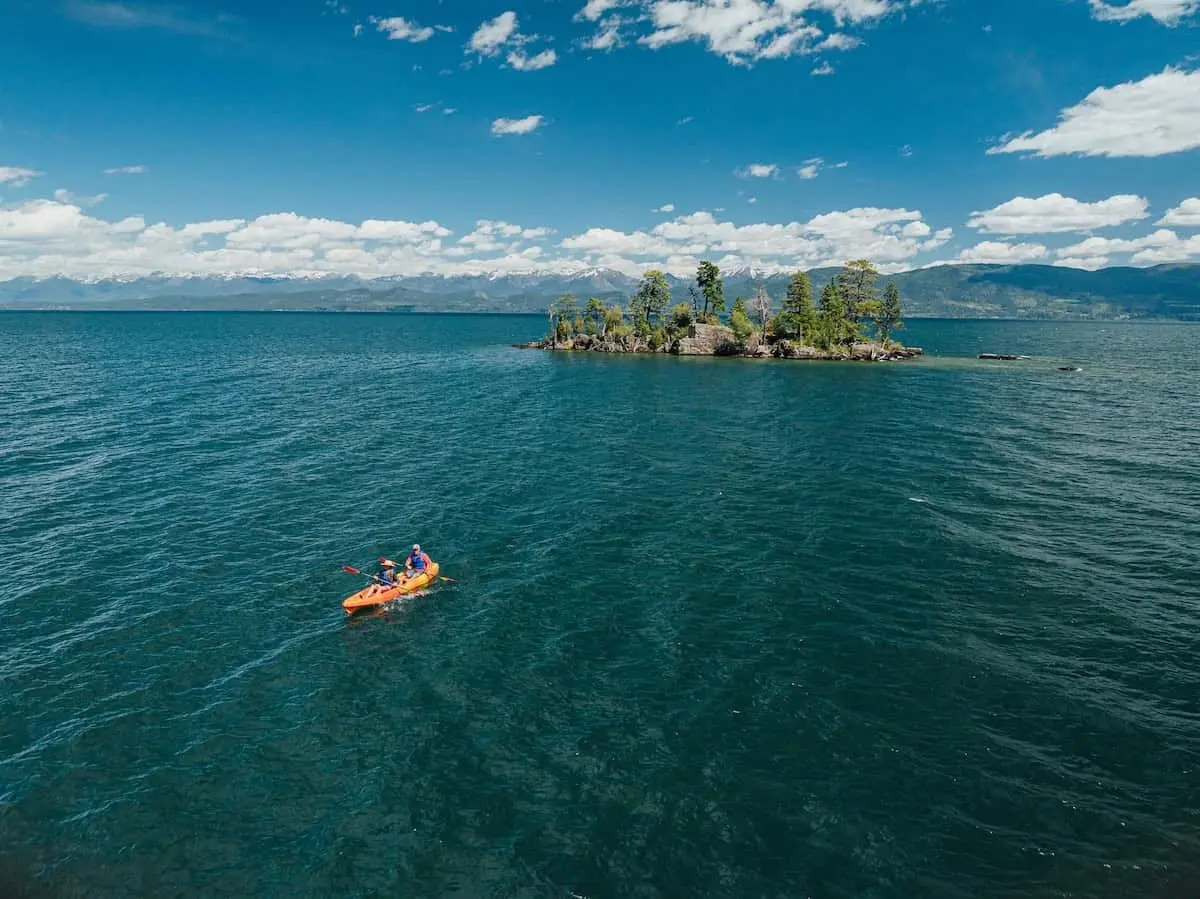
You cannot discuss Montana’s waters without examining Flathead Lake. Tucked into the northwestern corner of the state and encompassing over 200 square miles, Flathead is the largest natural freshwater lake west of the Mississippi River within the Lower 48 states.
- Shoreline: 185 miles of diverse coastline featuring residential developments, cherry orchards, and public state parks.
- Geography: Framed by the Mission Mountains on the east—which provide afternoon shade and cooler water—and rolling hills with panoramic mountain views on the west.
- Highlight: A paddle to Wild Horse Island, a 2,164-acre unit of Flathead Lake State Park. Historically used by the Kootenai and Salish tribes to pasture and protect their horses, the island today sustains a population of wild horses, bighorn sheep, mule deer, bald eagles, and ospreys.
- Navigational Hazard: Montana weather can shift within minutes; Flathead is notorious for sudden high winds and choppy, unpredictable waves.
Lake McDonald: The National Park Icon
Located within Glacier National Park, Lake McDonald is the park’s largest body of water, stretching across 10 miles of shoreline and plunging to depths exceeding 470 feet.
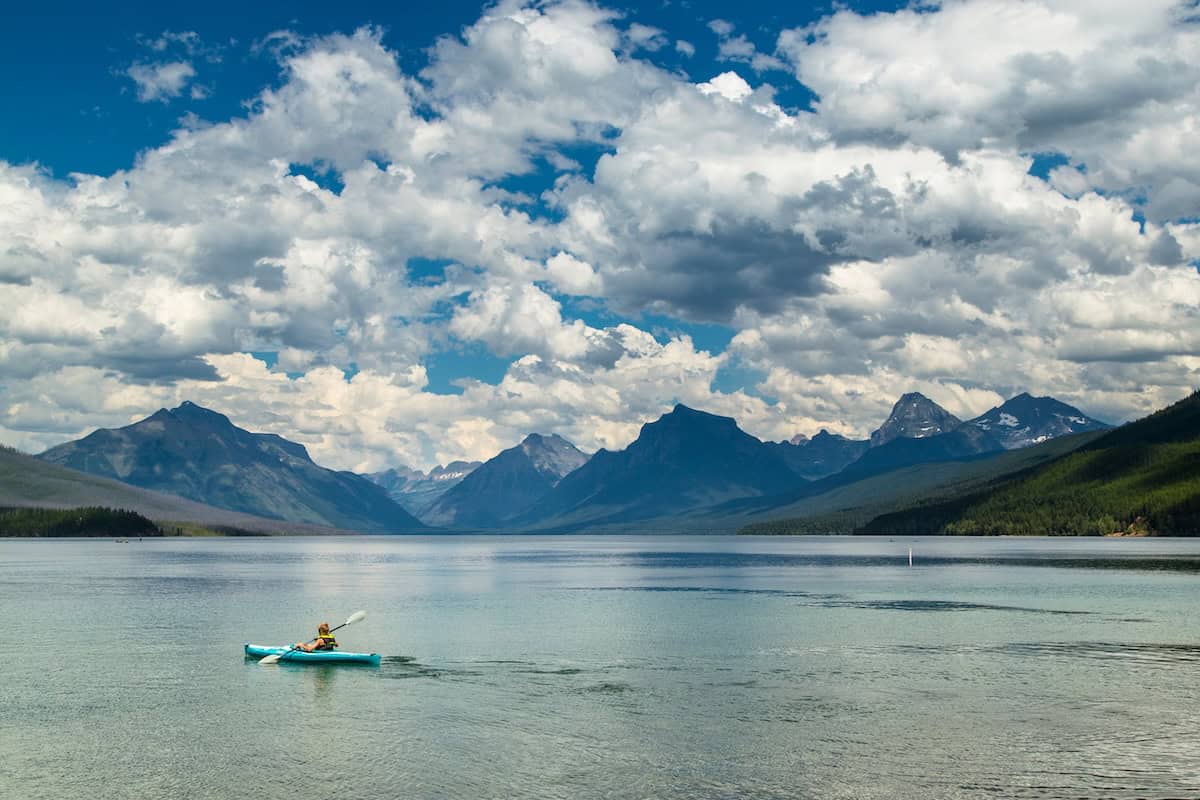
- Water Clarity: Fed by glacial runoff and snowmelt, visibility reaches up to 80 feet. The lakebed is paved with smooth argillite pebbles in vibrant shades of green, blue, red, and purple.
- Access Points: Rentals and launches are available near Apgar Village and the historic Lake McDonald Lodge, a 1913 Swiss-chalet-style hotel on the eastern shore.
- Best Time to Paddle: Early morning hours offer mirror-like water conditions and prime opportunities for wildlife viewing, including bighorn sheep and bears.
Whitefish Lake: The Beginner’s Sanctuary
Situated a 40-minute drive north of Flathead Lake at the base of Whitefish Mountain Resort, Whitefish Lake offers a more intimate alpine paddling experience.
- Characteristics: Surrounded by steep mountains that block prevailing winds, maintaining consistently calm conditions. The lake empties into the Whitefish River, a lazy 2.5-mile waterway winding through the town of Whitefish.
- Suitability: Ideal for novices, families, and those seeking a relaxed, sheltered excursion away from heavy motorized boat traffic.
Hyalite Reservoir: The Alpine Trailhead
Located 10 miles up Hyalite Canyon, this 206-acre reservoir near Bozeman sits at the center of dramatic granite peaks.
- Regulations: Designated as a strict no-wake zone, making it exceptionally hospitable for paddleboarders, canoeists, and kayakers seeking tranquility.
- Combined Adventure: Easily paired with regional hiking trails, such as the 1.1-mile out-and-back trek to Palisade Falls in the Gallatin Mountain Range.
Hebgen Lake: The Angler’s Retreat
Located northwest of West Yellowstone, this 16-mile-long, 4-mile-wide man-made reservoir is a premier destination for combined kayaking and fly-fishing excursions.
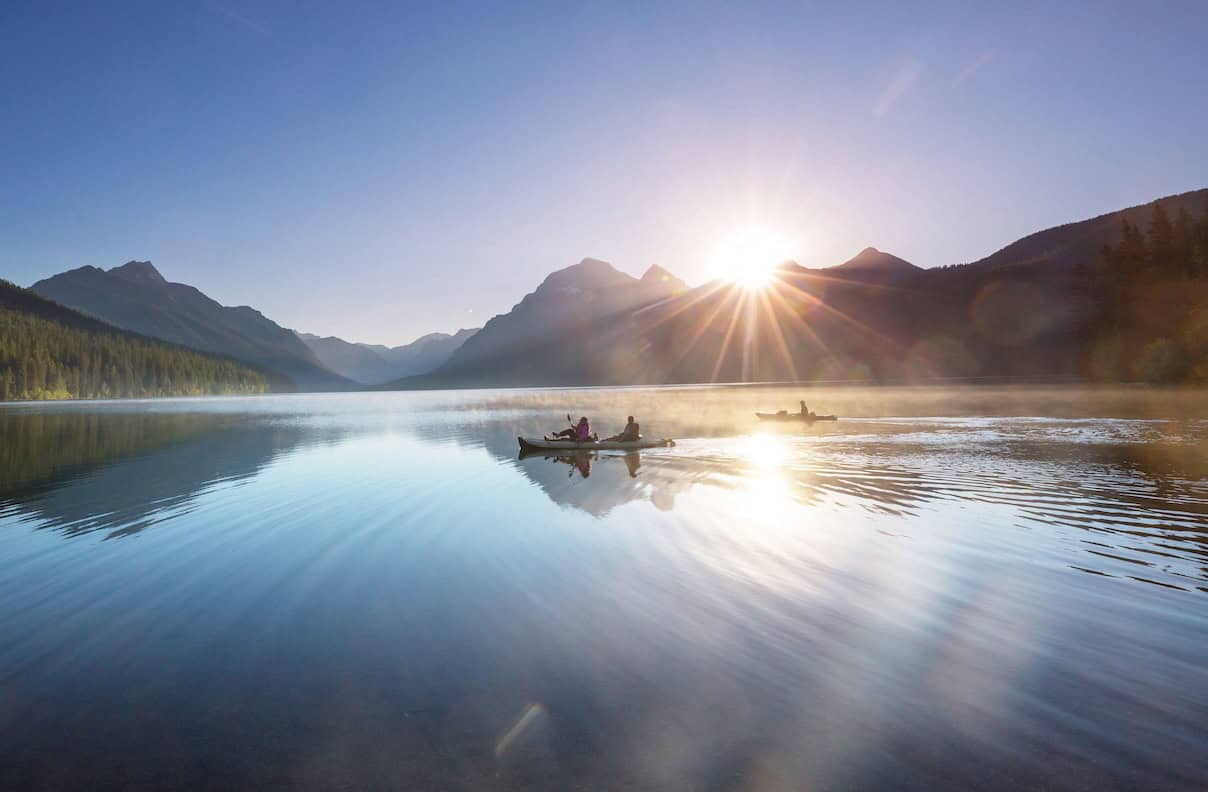
- Fishery: Renowned for trophy-class rainbow and brown trout, with peak surface-feeding activity driven by chironomid hatches from late May through mid-July.
Official Statements and Regulatory Frameworks
Managing thousands of sprawling water bodies in an ecologically sensitive ecosystem requires rigorous oversight from state, tribal, and federal authorities.
Public Access and Constitutional Protections
Montana’s legal framework regarding water is uniquely egalitarian. State officials frequently emphasize the protections enshrined in the Montana Constitution, which dictates that all surface waters belong to the state for the use and enjoyment of its people. Public access is treated as an inherent right, distinguishing Montana from many other states where riparian landowners control streambeds and shoreline access.
Tribal Jurisdictions
Paddlers must remain cognizant of jurisdictional boundaries. For instance, the southern half of Flathead Lake lies entirely within the boundaries of the Confederated Salish and Kootenai Tribes (CSKT) Flathead Reservation.
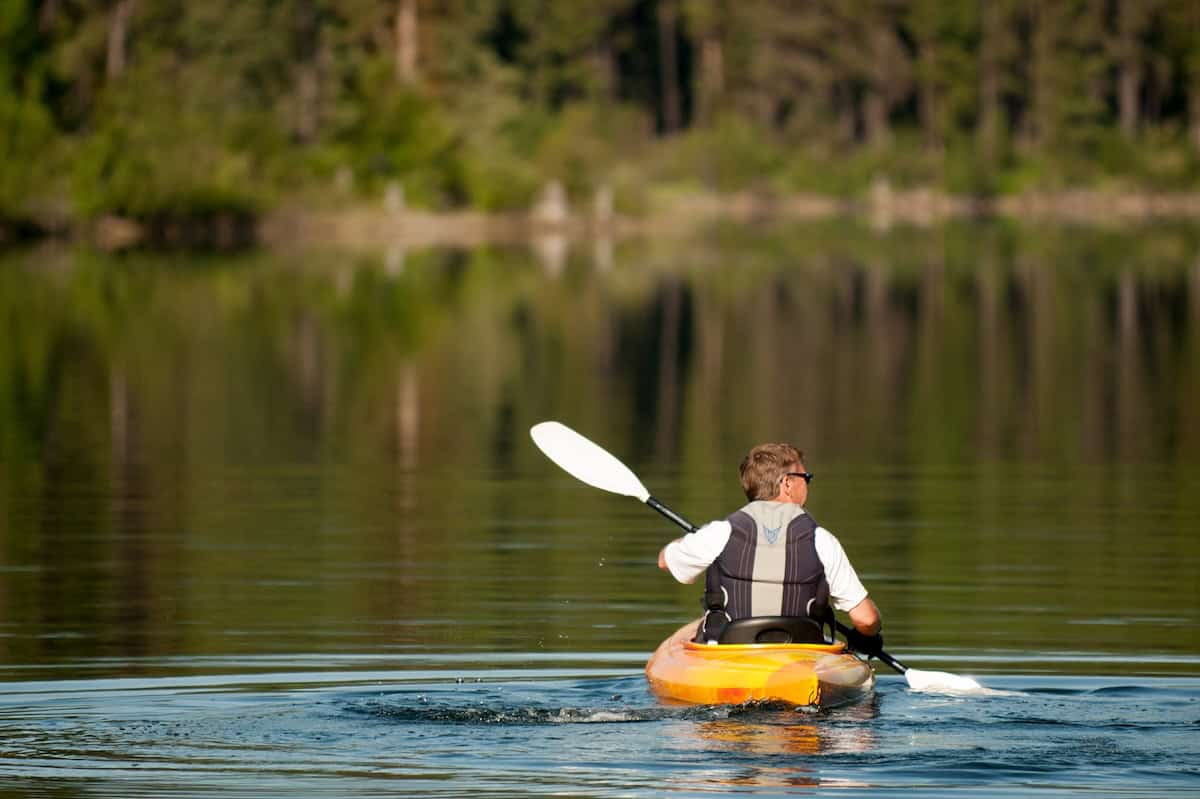
"Recreationists utilizing waters under tribal jurisdiction are legally required to secure the appropriate tribal recreation permits prior to embarking," notes regional wildlife management documentation. Respecting these sovereign boundaries is essential for preserving positive relations between local tribes and the outdoor recreation community.
Invasive Species Prevention and Mandatory Inspections
To protect Montana’s pristine watersheds from aquatic invasive species (AIS) such as zebra and quagven mussels, state law is uncompromising.
- Mandatory Inspections: All watercraft—motorized and non-motorized, including kayaks, canoes, and SUPs—must be inspected prior to launching in many regional waters, particularly when entering Glacier National Park or crossing state lines.
- Nonresident Permits: Nonresidents of Montana are required to purchase a specific AIS prevention pass for non-motorized watercraft. Organizations like Clean Drain Dry (cleandraindry.org) work in tandem with the Montana Department of Fish, Wildlife and Parks (FWP) to enforce these protocols rigorously at roadside check stations across the state.
Future Outlook: Conservation and Sustainable Recreation
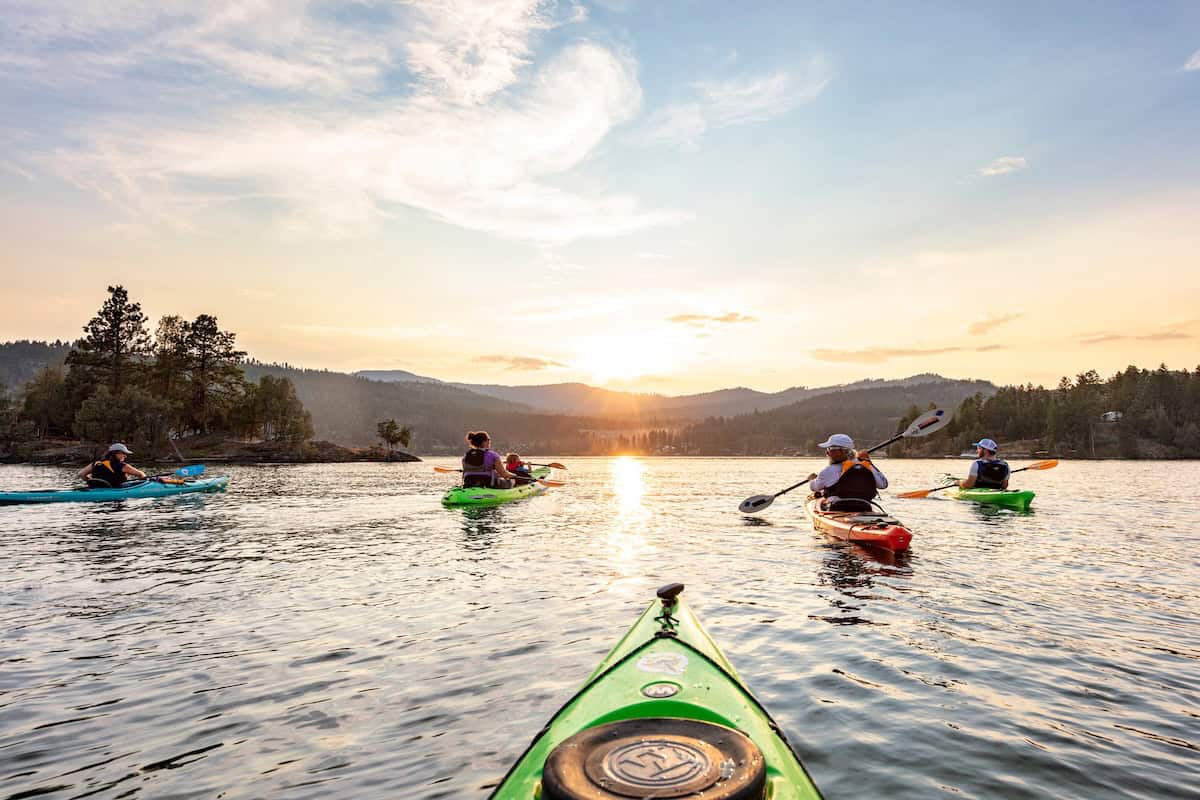
As Montana experiences a sustained surge in tourism and population growth, the future of its aquatic ecosystems hinges on proactive conservation and responsible stewardship. Local outfitters, conservation groups, and state agencies face the dual challenge of promoting outdoor recreation while safeguarding fragile alpine habitats from over-use and environmental degradation.
Climate Pressures on Glacial Waters
The glacial runoff that feeds iconic water bodies like Lake McDonald is increasingly vulnerable to changing climatic patterns. As regional glaciers recede, the thermal profiles and hydrological inputs of subalpine lakes face long-term alterations. Conservation scientists emphasize the importance of monitoring water temperatures and mitigating urban runoff to preserve the native cold-water fisheries, including westslope cutthroat trout and Arctic grayling.
Promoting Leave No Trace Principles
State tourism boards and recreational coalitions are intensifying educational campaigns centered on Leave No Trace ethics for on-water recreation. Key focal points for the coming decade include:
- Strict Compliance with AIS Protocols: Ensuring 100% compliance with watercraft inspection stations to prevent the introduction of foreign pathogens and invasive species.
- Wilderness Etiquette: Encouraging paddlers to respect wildlife buffer zones—particularly around nesting ospreys, bald eagles, and island sanctuaries like Wild Horse Island.
- Infrastructure Adaptation: Upgrading day-use parking facilities, waste disposal sites, and launch ramps at high-traffic zones like Somers Beach State Park and Apgar Village to manage visitor volume without degrading riparian zones.
By balancing rigorous regulatory oversight with a deep-seated cultural respect for the natural environment, Montana remains a premier global destination for paddlers. For those willing to respect the sudden fury of mountain squalls, adhere to inspection laws, and honor tribal sovereignties, the Treasure State’s three thousand-plus lakes will continue to offer timeless, crystalline adventures for generations to come.