


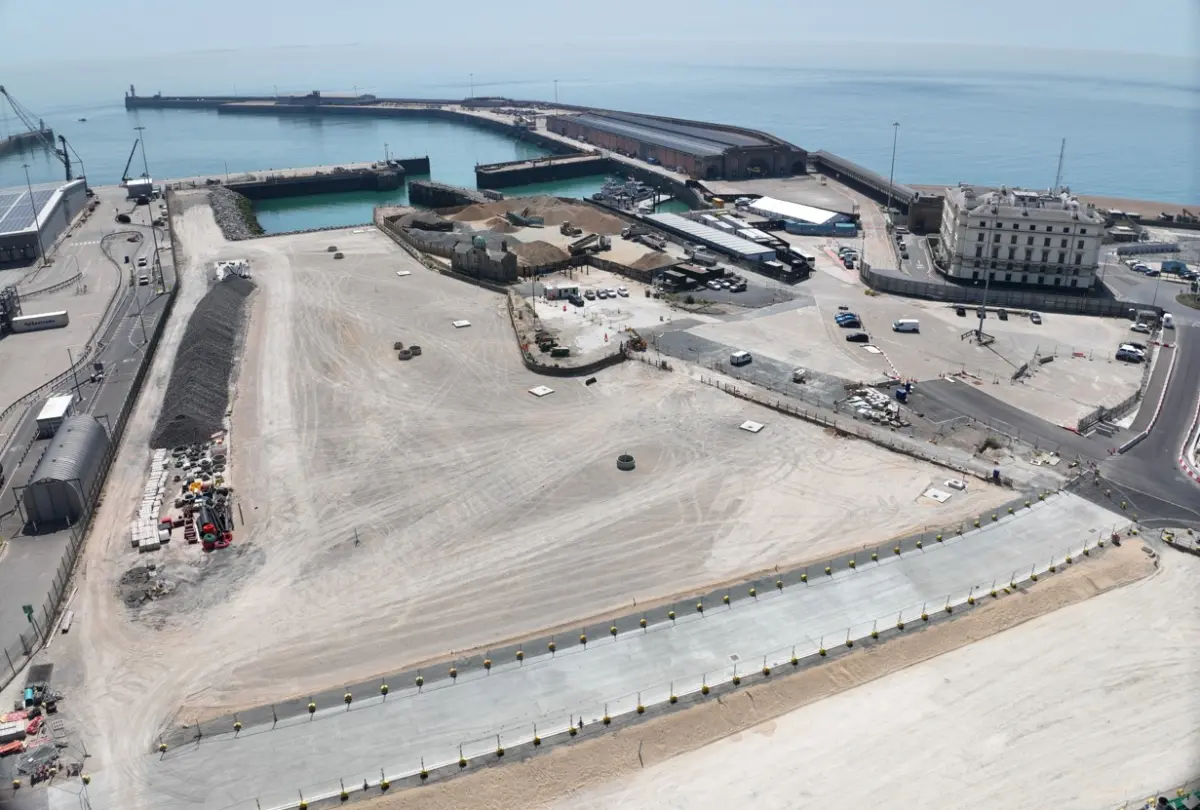
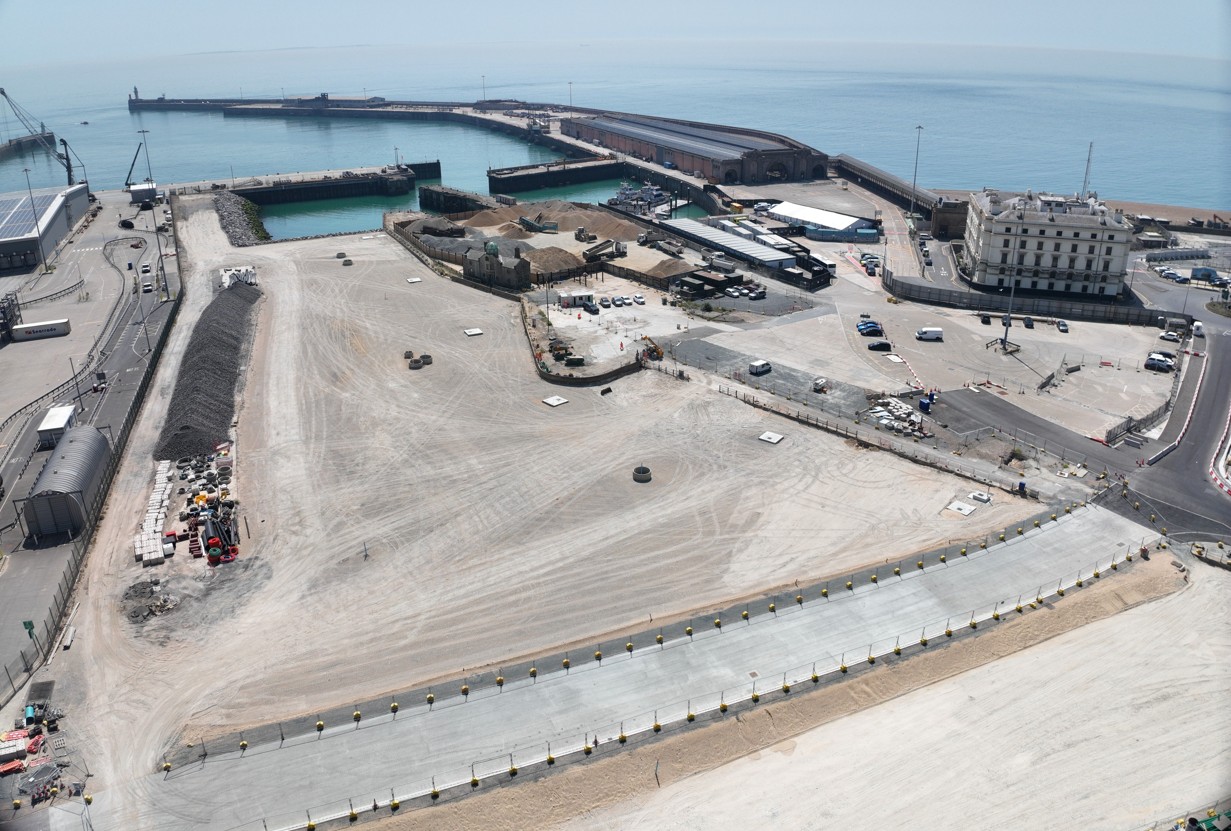
DOVER, UK — In a milestone achievement for European maritime logistics and coastal engineering, the joint venture partnership between industry giants Boskalis Westminster and McLaughlin & Harvey has officially completed a major land reclamation project at the Port of Dover.
The £53 million initiative—officially designated as the Dover Western Docks Revival (DWDR) Stage 3B project—represents a pivotal moment in the modernization of the United Kingdom’s busiest cross-channel ferry port. By successfully reclaiming and repurposing historically underutilized marine spaces, the collaborative venture has unlocked 10 hectares of prime port land, fundamentally reshaping the operational landscape of the Kent coast.
Commencing in 2024, the multi-faceted engineering feat required advanced dredging expertise, rigorous environmental management, complex demolition sequences, and comprehensive civil infrastructure development. With the physical reclamation works now finalized, the Port of Dover stands poised to accommodate future trade demands, boost supply chain resilience, and expand its footprint as an indispensable nexus for international commerce.
Executive Overview: A New Era for the Port of Dover
The completion of the DWDR Stage 3B project marks the culmination of years of strategic planning, engineering design, and meticulous execution. The Port of Dover handles millions of passengers, freight vehicles, and billions of pounds worth of trade annually, making it a critical gateway between the UK and continental Europe. To maintain this competitive edge and adapt to shifting geopolitical and economic landscapes, port authorities initiated the phased revival program to optimize cargo-handling capabilities, improve traffic flow, and modernize marine facilities.
The core objective of the Boskalis Westminster and McLaughlin & Harvey joint venture was to reclaim significant tracts of marine territory within the Wick Channel, the Tidal Basin marinas, and the historic Granville Dock. McLaughlin & Harvey served as the principal contractor, overseeing land-based civil works, demolition, and infrastructure installation, while leveraging Boskalis’ world-class marine dredging and reclamation capabilities.
Over the course of two years, the project team deployed heavy marine plant, specialized dredging vessels, and sophisticated engineering techniques to transform 10 hectares of water into valuable, load-bearing land. The successful delivery of the £53 million undertaking reinforces the UK’s commitment to world-class maritime infrastructure, demonstrating that complex civil engineering projects can be executed within constrained operating environments without disrupting ongoing port operations.
Detailed Chronology and Engineering Scope
The journey from initial concept to the triumphant delivery of Stage 3B was defined by intricate logistical challenges and heavy civil engineering milestones.
Phase 1: Mobilization and Marine Clearance (2024)
Following the formal award of the contract and the selection of McLaughlin & Harvey as principal contractor, the project kicked off in 2024. Before any infill material could be introduced, the site required extensive preparatory clearance.
The initial phase involved the meticulous removal of legacy marine infrastructure within the Tidal Basin and Granville Dock. Project teams extracted complex networks of floating pontoons, pedestrian gangways, utility connections, and associated marine equipment. Concurrently, heavy demolition machinery was brought in to dismantle obsolete quay wall structures. This included the strategic demolition of the North Pier and the Ferry Jetty—historic structures that no longer aligned with the modern operational layout required by the port.
Phase 2: Infilling and Capital Dredging
With the marine basins cleared and structural boundaries modified, the joint venture initiated the heavy earthworks phase. Raising the underwater bed of the docks to a functional grade required an astronomical volume of material.
Over the course of the project, approximately 900,000 cubic metres of infill material was placed into the Wick Channel, Tidal Basin, and Granville Dock. This massive influx of material was engineered to raise the former dock beds to an elevation of approximately 0.5 metres below the level of the existing quay walls. This precise grading allowed for subsequent sub-base stabilization, paving, and the installation of heavy-duty surface pavements capable of withstanding the punishing loads of modern freight haulage and port operational equipment.
Phase 3: Infrastructure Integration and Stormwater Management
Reclaiming land is only half the battle in modern port development; turning a newly formed landmass into an operational asset requires dense integration of utilities, roads, and environmental controls.
Following the stabilization of the 10-hectare site, civil teams set to work installing extensive sub-surface utility networks, including high-capacity electrical power feeds, telecommunications conduits, potable water mains, and industrial wastewater systems. Given the low-lying nature of reclaimed coastal land and the high-volume rainfall typical of the British climate, a massive civil undertaking was required for site drainage. The project scope included extensive subterranean drainage works capped by the construction of a complex, high-capacity stormwater pumping station. This facility ensures that the newly created land remains flood-resilient and fully operational under severe weather conditions.
Supporting Context and Metrics
To fully appreciate the scale of the Boskalis and McLaughlin & Harvey achievement, it is necessary to examine the hard metrics and the broader context of the Dover Western Docks Revival.
| Project Metric / Detail | Specification |
|---|---|
| Project Title | Dover Western Docks Revival (DWDR) Stage 3B |
| Total Investment | £53 Million |
| Contractors | Boskalis Westminster & McLaughlin & Harvey (Joint Venture) |
| Principal Contractor | McLaughlin & Harvey |
| Project Commencement | 2024 |
| Completion Date | August 2026 |
| New Land Created | 10 Hectares (approx. 24.7 acres) |
| Infill Volume Placed | ~900,000 Cubic Metres |
| Target Grade Elevation | ~0.5 metres below existing quay walls |
| Key Zones Involved | Wick Channel, Tidal Basin Marinas, Granville Dock |
| Infrastructure Highlights | Demolition of North Pier & Ferry Jetty; Stormwater Pumping Station; New Utilities & Road Networks |
The Wider Strategic Picture
The completion of Stage 3B is not an isolated event; it represents a major chapter in the broader multi-million-pound master plan to regenerate the Port of Dover’s western cargo terminal. Historically, the port’s infrastructure was heavily skewed toward passenger ferry services. However, market shifts, the demands of Brexit-related border checks, and the continuous growth in ro-ro (roll-on/roll-off) freight and cargo handling necessitated a fundamental reconfiguration of available space.
By creating 10 hectares of contiguous, heavy-duty real estate immediately adjacent to deep-water berths, the Port of Dover has dramatically increased its cargo handling capacity, staging areas, and logistics processing potential. This spatial expansion provides port operators with the flexibility to segregate traffic streams, reduce vessel turnaround times, and offer enhanced logistics services to shipping lines and cargo owners across Europe.
Industry Collaboration and Expertise
The success of the DWDR Stage 3B project underscores the immense value of strategic joint ventures in modern maritime engineering. Executing complex civil works within an active, highly secure, and weather-sensitive international port environment requires a rare blend of specialized skill sets.
Boskalis Westminster, a subsidiary of Royal Boskalis Westminster N.V., brought world-leading expertise in capital dredging, coastal protection, and maritime infrastructure development. Drawing on its global fleet of specialized trailing suction hopper dredgers and heavy marine construction vessels, Boskalis ensured the precise sourcing, transport, and placement of the 900,000 cubic metres of infill material required to elevate the marine basins.
McLaughlin & Harvey, acting as the principal contractor, applied its decades-long pedigree in heavy civil engineering, building, and fit-out works. The company managed the intricate land-based operations, including the high-stakes demolition of the North Pier and Ferry Jetty, the coordination of complex utility installations, and the construction of the advanced stormwater management systems.
The seamless coordination between the two firms minimized operational downtime for the Port of Dover, safeguarding the continuous flow of cross-channel traffic while simultaneously executing one of the most demanding civil engineering undertakings in the UK port sector this decade.
Future Outlook: Unlocking Economic Potential
With the physical completion of the land reclamation and infrastructure installation, the focus at the Port of Dover now shifts toward operational activation and commercial integration.
The newly minted 10-hectare expanse is destined to become a hive of economic activity. Port planners anticipate that the additional land will be utilized for a variety of critical functions, including:
- Expanded Cargo Staging Areas: Providing buffer space for heavy goods vehicles (HGVs) and freight units, thereby smoothing out peak traffic pulses and reducing congestion on local arterial roads.
- Logistics and Warehousing Hubs: Creating opportunities for value-added logistics, customs processing facilities, and freight-forwarding operations directly on the port estate.
- Enhanced Berth Connectivity: Integrating the newly flattened topography with adjacent deep-water berths to facilitate faster, safer, and more efficient transfer of goods between ship and shore.
As global supply chains continue to evolve under the pressures of technological innovation, environmental mandates, and shifting trade routes, ports must remain agile, resilient, and physically expansive. The successful delivery of the Dover Western Docks Revival Stage 3B project by Boskalis and McLaughlin & Harvey ensures that the Port of Dover remains a premier, future-proofed European gateway. By turning water into strategic real estate, the project has laid a rock-solid foundation—literally and figuratively—for decades of sustainable maritime commerce and regional economic growth.