







Executive Overview
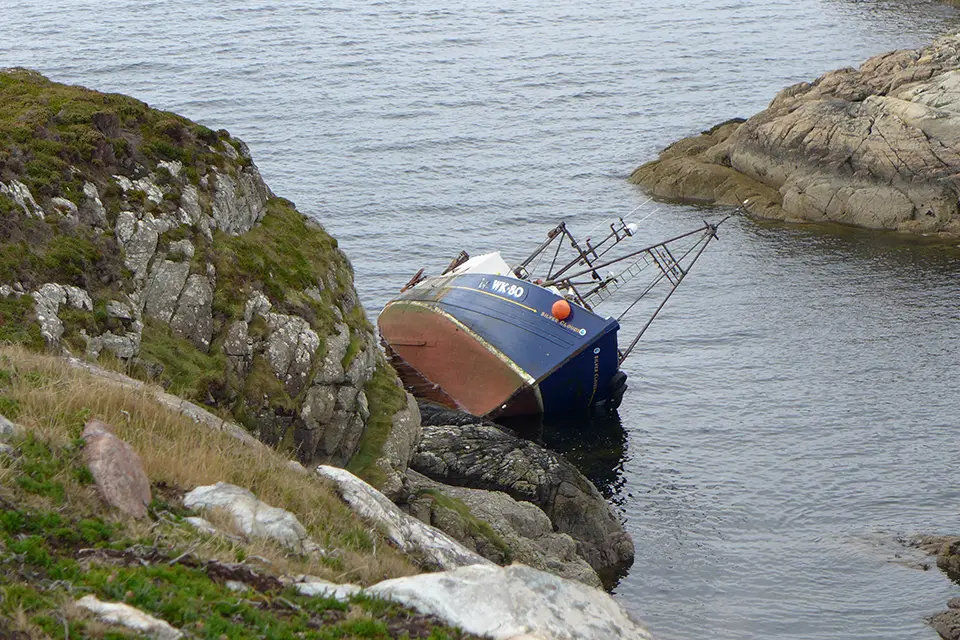
Maritime authorities have released the definitive accident investigation report detailing the harrowing final hours, grounding, and subsequent total loss of the commercial fishing vessel Silver Cloud II (WK 80). The incident, which unfolded on October 14, 2025, near Rubha Rodha, Lochinver, Scotland, serves as a stark reminder of the unforgiving nature of the North Atlantic coastline and the persistent operational hazards faced by modern commercial fishermen.
The Silver Cloud II, a registered fishing vessel operating out of Scottish ports, found herself in catastrophic peril before striking the rocky shoreline of Rubha Rodha. While the incident thankfully did not result in loss of human life—testament to the rapid response of local search and rescue infrastructure and the survival instincts of the crew—the vessel itself could not be saved. The physical destruction of the hull, coupled with the complete environmental write-off of the asset, triggered an immediate, multi-agency statutory investigation led by national maritime safety officials.
This newly published report does not merely chronicle the final moments of a sinking ship; it provides a forensic dissection of the compounding human, mechanical, and environmental factors that transformed a routine transit or fishing operation into a marine disaster. Investigators have painstakingly reconstructed the vessel’s final voyage, analyzing bridge resource management, navigational decision-making, local tidal streams, meteorological conditions, and the structural integrity of the hull upon impact.
By bringing these findings to light, maritime regulators aim to alter industry practices, reinforce the critical importance of situational awareness, and prevent similar tragedies along the treacherous northern coasts of the United Kingdom. For an industry where safety margins are notoriously narrow, the Silver Cloud II report stands as an essential educational document, highlighting systemic vulnerabilities that continue to plague small-to-medium commercial fishing operations.
Detailed Chronology
Reconstructing the timeline of a marine casualty requires piecing together radar logs, radio transmissions, VDR (Voyage Data Recorder) metrics where available, and testimonies from the survivors. The sequence of events on October 14, 2025, highlights how rapidly a maritime situation can deteriorate when compound pressures—ranging from fatigue to navigational miscalculation—converge on a single vessel.
Phase One: Departure and Routine Operations
In the early hours of October 14, 2025, the Silver Cloud II (WK 80) cast off to engage in standard commercial fishing operations off the northwestern coast of Scotland. Weather conditions at the time of departure were typical for the late-autumn transition period: brisk winds, moderate visibility, and a heavy, rolling swell characteristic of the Minch and surrounding waters.
The crew, experienced in these notoriously fickle waters, settled into their operational rhythm. The vessel’s systems were functioning within normal parameters, and the skipper charted a course designed to navigate the intricate coastal topography characteristic of the Lochinver region. For the initial hours of the deployment, operations proceeded without incident. Gear was handled, and routine watchkeeping duties were established.

Phase Two: The Shift in Conditions and Navigational Divergence
As the afternoon progressed, the environmental conditions began to deteriorate noticeably. Localized wind shears, combined with a rising tide and complex coastal currents, exerted unexpected drift pressures on the Silver Cloud II. Investigators noted that during this critical window, the vessel’s track began to subtly diverge from its intended safety corridor.
Bridge resource management came under intense scrutiny in the investigation report. With the crew divided between deck operations and watchkeeping responsibilities, the cognitive load on the bridge increased significantly. Subtle warnings—such as radar return anomalies, GPS cross-track errors, and visual cues from the rapidly approaching shoreline—were either misread or dismissed amidst the competing demands of vessel handling.
Phase Three: The Approach to Rubha Rodha
By late afternoon, the Silver Cloud II was operating in dangerously close proximity to the hazards of Rubha Rodha, near Lochinver. Coastal waters in this region are defined by hidden reefs, jagged granite outcroppings, and punishing bathymetric contours that create violent localized wave patterns.
According to the investigation timeline, the bridge team realized the severity of their positional error far too late. Evasive maneuvers—including a sudden helm hard-over and an emergency engine acceleration—were initiated, but the vessel’s momentum, combined with the push of the incoming swell, rendered the response futile.
Phase Four: The Grounding and Abandonment
At a speed that left structural damage inevitable, the Silver Cloud II struck the submerged and semi-submerged rocks of Rubha Rodha. The impact breached the hull plates, compromising watertight integrity almost instantaneously. Flooding of the engine room and forward compartments occurred at a rate that overwhelmed the vessel’s fixed bilge pumping capacities.
Recognizing that the ship was doomed, the skipper immediately broadcast a Mayday distress call, alerting HM Coastguard rescue coordination centers. Within minutes, local lifeboat assets and rescue helicopter units were scrambled to the scene. The crew executed a disciplined evacuation, deploying life rafts and abandoning ship into the freezing Scottish waters as the Silver Cloud II was systematically battered apart by the relentless surf.
Rescue personnel successfully pulled all crew members from the survival craft and the surrounding waters, treating them for mild hypothermia and shock before transporting them ashore. Meanwhile, the Silver Cloud II remained fast upon the rocks, eventually breaking up and sinking entirely, leaving behind a debris field and environmental remediation challenges for local authorities.
Supporting Context & Metrics
To fully comprehend the significance of the Silver Cloud II disaster, one must examine the broader statistical and operational landscape of the UK commercial fishing sector. Fishing remains consistently identified by health and safety executives as one of the most hazardous civilian occupations in the world.
The Statistical Reality of Commercial Fishing Safety
Data compiled across the maritime sector underscores that groundings and structural losses are rarely isolated anomalies; rather, they are the terminal points of a hazard chain.
- Fatigue and Human Factors: Over 60% of groundings investigated by maritime safety bodies over the past decade trace back to human error exacerbated by acute or chronic fatigue. The unpredictable, grueling schedules of commercial fishermen routinely push crews past optimal cognitive endurance thresholds.
- Navigational Reliance vs. Situational Awareness: The widespread adoption of Electronic Chart Display and Information Systems (ECDIS) and advanced GPS units has revolutionized navigation, but it has also fostered a false sense of security. Skippers occasionally suffer from "screen fixation," trusting digital waypoints over visual confirmation and traditional cross-bearings, particularly in tight coastal waters like those around Lochinver.
- Vessel Demographics: The UK fishing fleet features a high proportion of aging hulls. While well-maintained vessels can operate safely for decades, the structural resilience of older fiberglass and steel frames when subjected to high-energy groundings is severely limited compared to modern, compartmentalized designs.
Environmental and Geographic Hazards of Lochinver
The waters surrounding Lochinver and the broader northwest coast of Scotland present a masterclass in navigational complexity.
- Bathymetric Surprises: The seabed topography rises abruptly from deep marine trenches to shallow, razor-sharp reefs within mere ship-lengths.
- Tidal Streams: Tidal gates in this region generate cross-currents that can easily catch an unwary vessel off-guard, pushing it sideways even when the bow is pointed safely into open water.
- Meteorological Volatility: Rapidly shifting weather fronts can reduce visibility to zero in minutes, transforming a clear coastal transit into an exercise in blind navigation.
Official Statements and Regulatory Response
The publication of the official accident investigation report has prompted strong reactions from maritime authorities, safety advocates, and industry representatives. The findings are intended not to apportion blame for punitive measures, but to uncover systemic weaknesses that require immediate rectification across the fleet.
In the official release accompanying the report, lead maritime investigators emphasized that safety culture must evolve alongside technological advancements. "The total loss of the Silver Cloud II is a sobering reminder of how rapidly coastal waters can turn hostile," noted a senior investigator close to the file. "While we commend the exemplary professionalism of the rescue services and the composure of the crew during the abandonment phase, our focus must remain on the chain of events that put the vessel on those rocks in the first place. Navigation is an active, continuous discipline that requires absolute vigilance, particularly in challenging environments like Rubha Rodha."
Fishermen’s federations have also weighed in, acknowledging the report’s gravity. Representatives noted that the economic pressures facing modern skippers—driven by fluctuating catch quotas, soaring fuel costs, and tight profit margins—can inadvertently foster a culture of risk-taking, where rest is sacrificed to maximize operational windows. The industry bodies have pledged to review the report’s safety recommendations closely and disseminate its key lessons across regional port hubs.
Furthermore, environmental protection agencies have monitored the aftermath of the sinking closely. While fuel oil containment and debris recovery operations managed to avert a major ecological catastrophe, the incident has reignited debates regarding the rapid removal of wreck hazards from sensitive Scottish marine conservation zones.
Future Outlook
The sinking of the Silver Cloud II (WK 80) will undoubtedly leave a lasting imprint on safety protocols within the Scottish fishing fleet. As the maritime community digests the comprehensive findings of the investigation report, several crucial pathways emerge for future risk mitigation and regulatory evolution.
1. Enhancing Bridge Resource Management (BRM) Training
One of the core recommendations stemming from modern marine investigations is the mandatory enhancement of BRM training for skippers and mates of smaller commercial vessels. Traditionally, formal BRM courses were restricted to large merchant shipping and passenger vessels. However, incidents like the Silver Cloud II prove that small-vessel crews face equally complex multitasking environments. Future training regimens will likely place greater emphasis on workload distribution, cross-checking navigational inputs, and combating confirmation bias on the bridge.
2. Technological Integration and Fail-Safes
Regulators are increasingly looking at how automated safety barriers can be integrated into coastal fishing vessels. This includes the wider adoption of advanced proximity alarms linked directly to electronic chart systems, autonomous track-monitoring tools, and improved Voyage Data Recorders (VDRs) designed specifically for under-24-meter vessels. These tools are intended to provide an unyielding digital safety net when human situational awareness falters.
3. Re-evaluating Fatigue Management Guidelines
The human element remains the most critical variable in maritime safety. Industry stakeholders are pushing for more realistic, enforceable guidelines regarding rest periods for fishing crews. By addressing the root causes of chronic fatigue—such as extended working hours during peak seasonal windows—maritime bodies hope to drastically reduce the cognitive lapses that precede groundings and collisions.
4. Continued Access and Ongoing Support
The published report remains accessible to all mariners, vessel owners, and safety professionals via the official government portal [link provided in official notices]. By keeping these findings transparent and accessible, maritime authorities ensure that the hard lessons learned from the loss of the Silver Cloud II are translated into actionable, life-saving practices across the entire maritime sector.
Contact & Media Information
For further information, official press inquiries, or detailed technical breakdowns concerning the Silver Cloud II accident investigation report, accredited media organizations may contact the designated authorities through the following channels:
- Office Hours Media Enquiries (Telephone Only): 01932 440015
- Out of Hours Media Enquiries: 0300 7777878
- Official Report Access: GOV.UK Marine Accident Investigation Branch Reports