











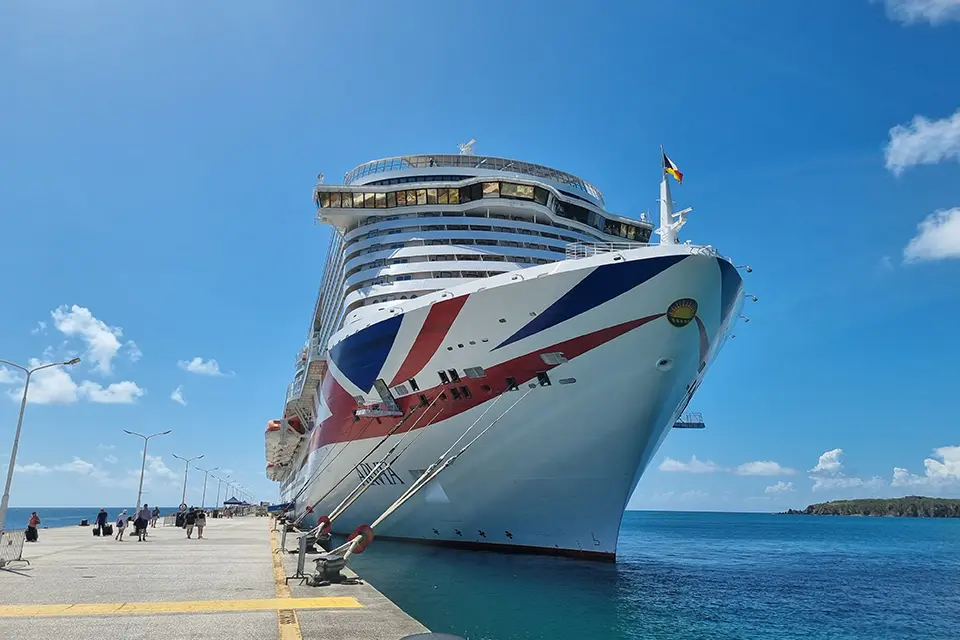
SOUTHAMPTON, UK — In a comprehensive report released today, maritime safety authorities have shed light on the tragic circumstances surrounding the death of a crew member aboard the Bermuda-registered passenger cruise vessel Arvia. The fatal incident occurred on October 26, 2025, while the modern mega-ship was navigating international waters on a routine transit from Southampton, England, to Santa Cruz de Tenerife in the Canary Islands, Spain.
The formal investigation was spearheaded by the United Kingdom’s Marine Accident Investigation Branch (MAIB). Due to the vessel’s flag state jurisdiction, the probe was conducted on behalf of the Bermuda Ship Registry. Bermuda operates as a member of the prestigious Red Ensign Group (REG), and the collaborative inquiry was executed under a formal Memorandum of Understanding (MoU) designed to streamline safety investigations across associated maritime administrations.
The publication of this report brings renewed attention to the persistent occupational hazards faced by seafarers, even aboard some of the world’s most technologically advanced passenger vessels.
Executive Overview
The published MAIB report provides an unsparing look into the operational realities, safety protocols, and human factors that contributed to the fatal accident on board the Arvia. While modern cruise ships are often celebrated for their towering atriums, luxury amenities, and state-of-the-art passenger comforts, they simultaneously function as massive industrial workplaces. Hundreds of crew members operate heavy machinery, execute complex mooring and maintenance operations, and navigate hazardous maritime environments around the clock.
According to the initial summaries released by the MAIB, the incident on October 26, 2025, underscores the critical importance of rigorous risk assessments, clear communication hierarchies, and unwavering adherence to established safety management systems (SMS). Although the complete technical breakdown within the report details specific mechanical and procedural breakdowns, the overarching narrative remains a sobering reminder of the inherent dangers of life at sea.
This executive overview outlines the high-level findings of the investigation, setting the stage for a granular examination of the voyage, the response mechanisms deployed by the ship’s command, and the broader implications for the global cruise industry. As maritime regulators continue to push for a "zero-accident" culture, the lessons drawn from the Arvia investigation are expected to trigger a review of safety practices across multiple cruise lines operating under Red Ensign Group jurisdictions.
Detailed Chronology of Events: October 26, 2025
To fully understand the sequence of events that led to the tragedy, investigators reconstructed the timeline of October 26, 2025, down to the minute. The day began like any other transatlantic repositioning voyage for the Arvia, which was heading south toward the sun-drenched ports of the Canary Islands after departing the bustling maritime hub of Southampton.

Morning Operations and Routine Transit
At the time of the incident, the vessel was well into its passage across the Bay of Biscay and down the Iberian coast. Weather conditions varied, presenting standard oceanic variables that the crew was well-trained to handle. Routine maintenance and operational tasks were being carried out across various departments, a standard requirement for maintaining a vessel of this scale during extended passages.
The crew member involved—whose identity has been withheld out of respect for the family and in accordance with privacy protocols—was engaged in scheduled duties. The MAIB report details the specific workspace and equipment involved in the operation, highlighting the precise moment when standard procedures diverged into an emergency scenario.
The Critical Incident
The accident occurred during daylight hours. Investigators meticulously mapped the physical layout of the incident location, analyzing equipment status, environmental factors, and the actions of personnel in the immediate vicinity. According to the timeline established by the MAIB:
- Pre-Incident Phase: Preparations for the task were undertaken. The investigation evaluated whether all pre-operational safety checklists were properly signed off and if the personnel involved possessed the requisite certifications and briefings.
- The Emergency Event: A sudden failure in the operational sequence or an unforeseen interaction with equipment resulted in catastrophic injuries to the crew member.
- Immediate Response: Colleagues and safety personnel in the area reacted swiftly, halting operations and raising the alarm across the ship’s internal communication network.
Medical Intervention and Shipboard Response
Upon the notification of the emergency, the vessel’s medical team—comprising qualified doctors and nurses stationed onboard modern cruise ships—was immediately mobilized. The medical staff rushed to the scene with emergency trauma gear, initiating life-saving protocols and stabilization efforts.
Concurrently, the bridge team notified the company’s shoreside designated person ashore (DPA) and prepared to coordinate with external search and rescue (SAR) authorities if an emergency evacuation via helicopter became necessary. However, despite the rapid intervention and sustained medical efforts of the shipboard team, the crew member succumbed to their injuries.
The master of the Arvia altered course momentarily to evaluate medical evacuation options in consultation with telemedical maritime assistance services (TMAS), but the severity of the trauma meant that onboard resuscitation efforts were ultimately unsuccessful.
Supporting Context & Metrics: The Arvia and Maritime Safety
To contextualize the accident, it is vital to examine the profile of the vessel involved and the broader statistical landscape of maritime occupational safety.

Vessel Profile: The Arvia
The Arvia is a colossal presence in the modern cruise fleet. Delivered to its operators as a pinnacle of contemporary marine engineering, the ship boasts:
- Gross Tonnage: Approximately 185,000 GT, making it one of the largest cruise ships in the world. Passenger capacity exceeds 5,000 guests, supported by a dedicated crew of over 1,700 personnel.
- Flag and Registry: Registered in Hamilton, Bermuda, operating under the Red Ensign Group, which subjects the vessel to rigorous UK-aligned maritime standards.
- Operational Profile: Designed primarily for warm-water cruising, transatlantic repositioning voyages, and Mediterranean itineraries, requiring continuous technical upkeep while at sea.
Occupational Safety Metrics in the Cruise Industry
While passenger safety on cruise ships receives overwhelming regulatory and media attention, crew safety remains an ongoing challenge for the maritime sector. According to data from the International Maritime Organization (IMO) and various flag state administrations:
- High-Risk Sectors: Routine maintenance, mooring operations, and technical spaces (such as engine rooms and cargo/stores handling areas) account for the majority of severe crew injuries.
- Human Element: Statistics consistently show that over 75% of marine accidents involve human factors, ranging from communication breakdowns and fatigue to inadequate risk assessment before task execution.
- Regulatory Compliance: The Maritime Labour Convention (MLC, 2006) sets strict standards for crew working hours, living conditions, and safety training. Investigations by bodies like the MAIB serve to test the real-world efficacy of these international frameworks.
Official Statements and Regulatory Response
The release of the MAIB report has prompted formal responses from the investigating bodies, the flag administration, and industry stakeholders.
The MAIB Perspective
In releasing the findings, the Chief Inspector of Marine Accidents emphasized the independence and thoroughness of the investigation. The official statement highlighted that the primary goal of the MAIB is not to assign blame or liability, but rather to determine the causes and circumstances of marine accidents to prevent recurrence.
"Our investigation into the fatal accident on board the Arvia has uncovered critical lessons regarding operational safety and procedural compliance during routine maritime transits. We urge all operators to review their safety management systems in light of our recommendations to ensure that the workplace safety of seafarers remains paramount."
Bermuda Ship Registry and the Red Ensign Group
As the flag state administration, the Bermuda Ship Registry worked closely with the MAIB throughout the evidence-gathering phase. Representatives reiterated their commitment to maintaining the highest standards of safety across their fleet.
"The loss of a seafarer is a profound tragedy for the maritime community," a spokesperson for the registry noted. "We are reviewing the specific safety recommendations issued in the report and will work in tandem with the ship’s operators to ensure that all corrective actions are implemented swiftly and comprehensively."
Operator Response
The management company operating the Arvia released a separate statement expressing deep sorrow over the incident.
"Our entire organization is heartbroken by the loss of our colleague. The safety and well-being of our crew and guests remain our absolute highest priority. We are carefully studying the MAIB report, cooperating fully with all regulatory bodies, and taking immediate steps to reinforce our safety protocols and training programs across our entire fleet."
Future Outlook: Industry Implications and Recommendations
The publication of the MAIB report on the Arvia incident is expected to reverberate across the global cruise industry, prompting several key operational shifts.
1. Enhanced Safety Management Systems (SMS)
Cruise operators are expected to conduct internal audits of their Safety Management Systems, specifically focusing on high-risk tasks conducted during passenger vessel transits. Regulators will likely scrutinize how companies balance the demands of tight operational schedules with the imperative of thorough safety briefings and risk mitigations.
2. Technological and Procedural Safeguards
The investigation’s recommendations point toward a need for improved equipment design, clearer safety demarcation in workspace zones, and enhanced communication protocols between shipboard departments. Implementing these changes will require both financial investment and cultural shifts within maritime workforces.
3. Continuous Training and Human Factors Awareness
Addressing the "human element" remains the most complex challenge in maritime safety. Future training paradigms across Red Ensign Group vessels—and the wider international fleet—will likely place increased emphasis on situational awareness, stop-work authority for crew members who spot hazards, and peer-to-peer safety interventions.
Conclusion
The tragic events of October 26, 2025, aboard the Arvia serve as a somber reminder of the vulnerabilities inherent in life at sea. While cruise ships will continue to offer luxury and leisure to millions of passengers, the invisible workforce driving these floating cities relies entirely on uncompromising safety standards. Through the rigorous investigation conducted by the MAIB and the subsequent implementation of its safety recommendations, the maritime community moves forward with a renewed dedication to ensuring that every seafarer returns home safely.


