







Executive Overview
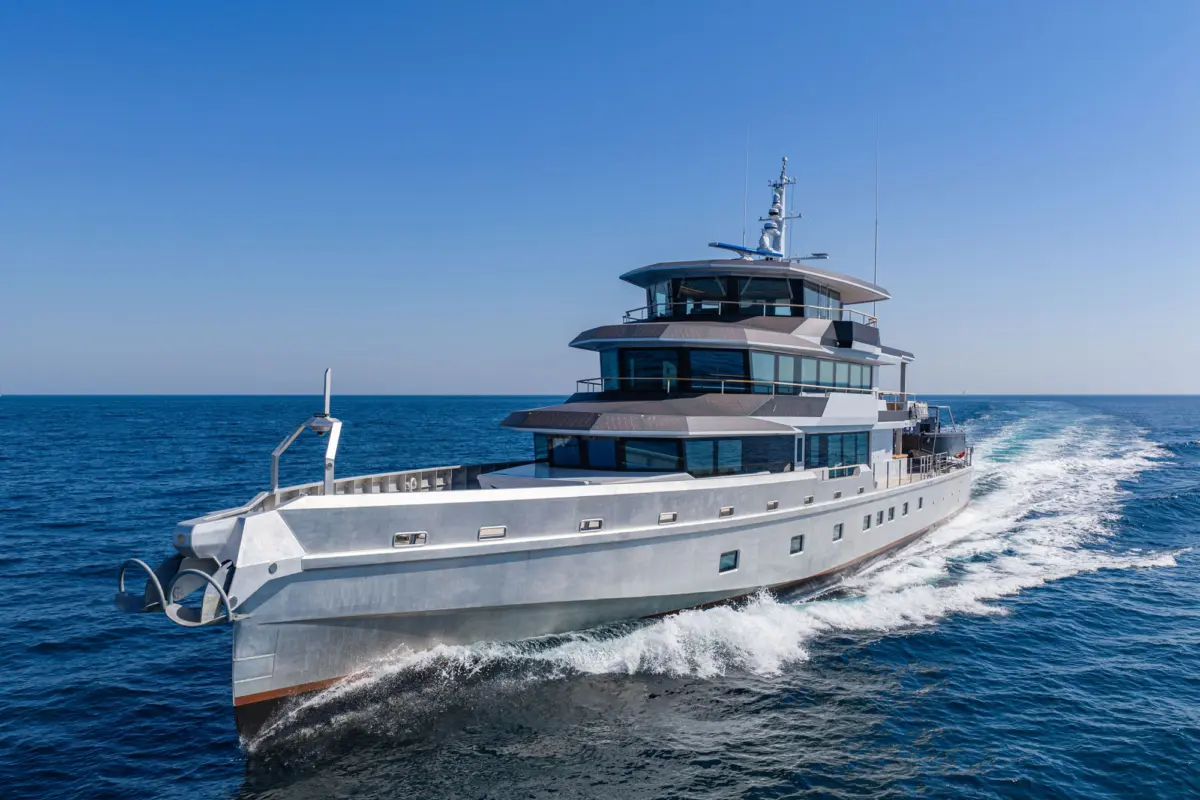
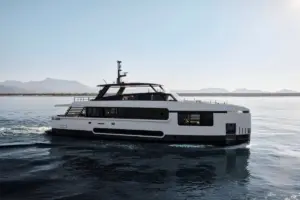
In a milestone achievement for French custom shipbuilding, JFA Yachts has officially delivered Canoa, a groundbreaking 164-foot (50-meter) explorer yacht that pushes the boundaries of transoceanic capability, environmental stewardship, and modern naval architecture. Developed in close collaboration with the renowned UK-based studio Humphreys Yacht Design, Canoa stands today as the largest vessel ever constructed by the prestigious Concarneau-based shipyard.
At her core, Canoa is an uncompromising long-range voyager designed to venture into the planet’s most remote and demanding cruising grounds. Yet, she achieves this formidable capability without sacrificing luxury, efficiency, or ecological sensitivity. By pairing a robust, lightweight aluminum hull with an advanced composite superstructure, the engineering team has optimized weight distribution to maximize hydrodynamic efficiency.
Perhaps most notably, Canoa embraces the future of yachting propulsion through a sophisticated parallel hybrid system. Combining twin MTU diesel engines with high-output electric motors, a substantial battery bank, and supplemental solar energy harvesting, the yacht is engineered to navigate delicate ecosystems with minimal acoustic and exhaust signatures. Accommodating up to 10 guests and nine crew members across four expansive decks, Canoa represents the pinnacle of contemporary custom superyacht engineering—harmonizing the rugged utility of a true go-anywhere explorer with the refined aesthetics of a world-class luxury residence on water.
Detailed Chronology: From Concept to Delivery
The realization of Canoa is a masterclass in project management, engineering precision, and international collaboration. The genesis of the project began years prior to her physical delivery, stemming from an owner’s brief that demanded a vessel capable of autonomous, long-range global cruising while offering a sophisticated, modern living environment.
Phase One: Conceptualization and Naval Architecture
JFA Yachts, widely respected for its pedigree in building rugged custom aluminum sailing and motor yachts, was selected to bring the visionary project to life. To engineer a hull capable of traversing over 5,000 nautical miles efficiently, the shipyard partnered with Humphreys Yacht Design. The studio was tasked with developing a fast-displacement hull form that could slice through heavy ocean swells while maintaining exceptional fuel economy at lower cruising speeds.
During this initial phase, the structural engineering parameters were established. The decision to utilize a marine-grade aluminum hull paired with a glass/epoxy composite superstructure was locked in. This hybrid construction method required meticulous coordination between the naval architects and the shipyard’s structural engineers to ensure seamless bonding and structural integrity across diverse materials.
Phase Two: Hull Fabrication and Outfitting
Construction commenced at JFA Yachts’ specialized facilities in Concarneau, France. The fabrication of the aluminum hull demanded expert welding and stringent quality control, as aluminum offers an ideal strength-to-weight ratio crucial for an explorer-class vessel. Concurrently, the composite superstructure components were meticulously crafted to reduce weight aloft, a critical design choice that directly influences stability and reduces rolling motion in heavy seas.
As the structural shell took shape, integration of the complex engineering systems began. The parallel hybrid propulsion setup—requiring the intricate synchronization of MTU diesel engines, electric propulsion motors, shaft lines, power management systems, and a high-capacity battery bank—was mapped out and installed within the engine room spaces.
Phase Three: Interior Architecture and Customization
While the structural and mechanical backbone of Canoa was being assembled, the interior design studio m2atelier was entrusted with shaping the onboard living spaces. Working hand-in-hand with the owner and the shipyard, m2atelier conceived an interior layout that reflects modern elegance, warmth, and practicality. The four-deck arrangement was optimized to ensure smooth operational flow for the nine-person crew while providing complete privacy and indulgence for the 10 guests.
Phase Four: Sea Trials and Official Delivery
Following exhaustive dockside testing of all onboard systems, navigation electronics, and safety protocols, Canoa embarked on her sea trials off the coast of France. These rigorous trials tested the vessel across various operational profiles: evaluating the performance of the fast-displacement hull in open water, measuring noise and vibration levels, verifying the efficacy of the fin and gyroscopic stabilization systems, and testing the seamless transition between diesel and electric hybrid drive modes.
Having successfully surpassed all performance benchmarks, Canoa was officially handed over to her owner, marking a triumphant chapter for JFA Yachts and cementing the shipyard’s status as a global leader in custom explorer yacht construction.
Supporting Context & Metrics: Engineering and Design Specifications
To truly understand the engineering achievement that Canoa represents, one must examine the precise metrics and technological systems that govern her performance, comfort, and autonomy.
Propulsion and Hybrid Architecture
Canoa utilizes a state-of-the-art parallel hybrid propulsion system designed to bridge the gap between traditional transoceanic diesel endurance and emission-free coastal cruising.
- Primary Power: Twin MTU 12V 2000 M72 diesel engines provide the heavy-duty muscle required for high-speed passages and deep-water voyaging.
- Electric Drive: Integrated electric motors allow for ultra-quiet, zero-emission operations during harbor maneuvers, anchorage repositioning, and low-speed wildlife viewing in ecologically sensitive marine protected areas.
- Energy Storage and Generation: A substantial lithium-ion battery bank stores electrical energy generated by shaft generators and an array of strategically integrated solar panels. This setup drastically reduces generator run-time while at anchor, eliminating nighttime noise and vibration for guests.
- Range: At an optimized cruising speed of 12 knots, Canoa boasts a transoceanic range exceeding 5,000 nautical miles, enabling unassisted crossings of major oceans.
Hull Construction and Stability
- Materials: The hull is constructed from robust, corrosion-resistant marine-grade aluminum, while the superstructure utilizes advanced glass/epoxy composite materials. This combination successfully lowers the vessel’s overall center of gravity and reduces weight aloft, minimizing the roll moment.
- Hydrodynamics: The fast-displacement hull designed by Humphreys Yacht Design features a fine entry to pierce waves efficiently, widening gradually to provide generous internal volume without sacrificing fuel efficiency.
- Stabilization: To ensure maximum guest comfort both underway and at anchor, Canoa is outfitted with a comprehensive stabilization package combining active fin stabilizers and advanced gyroscopic stabilization technology.
- Station-Keeping: A dynamic positioning (DP) system is integrated into the yacht’s navigation suite, allowing Canoa to maintain its exact GPS coordinates without dropping anchor in areas where seabed preservation is paramount.
Layout, Accommodation, and Tender Operations
- Capacity: The yacht comfortably accommodates up to 10 guests across a series of meticulously appointed cabins, supported by a professional crew of nine to ensure a high ratio of personalized service.
- Deck Spaces: Spanning four distinct decks, the layout offers a balanced mix of sheltered al fresco dining areas, sun-drenched lounging spaces, and private owner retreats.
- Tender Management: A generously proportioned aft deck has been engineered to host and deploy two large tenders, allowing guests to explore shallow coastlines, coral reefs, and remote fjords with ease.
Official Statements and Industry Perspectives
The delivery of Canoa has generated significant acclaim throughout the international superyacht community, highlighting the synergy between French craftsmanship, British naval architecture, and Italian interior design.
"Delivering Canoa is a historic moment for JFA Yachts," noted a senior representative of the French shipyard. "As the largest yacht we have ever built, she represents the culmination of decades of technical expertise, craftsmanship, and a bold vision for the future of custom yachting. Collaborating with Humphreys Yacht Design and m2atelier allowed us to push our boundaries and deliver a vessel that meets the exact, uncompromising demands of her owner."
Naval architects at Humphreys Yacht Design emphasized the unique engineering challenges overcome during the design of the fast-displacement platform:
"Designing an explorer yacht of this caliber requires a delicate balance between rugged seaworthiness and refined efficiency," explained a lead designer from the studio. "By pairing our advanced fast-displacement hull geometry with a hybrid propulsion framework and an optimized aluminum-composite build, we have created a vessel that is equally at home crossing stormy high latitudes or cruising silently through pristine tropical anchorages."
Interior designers m2atelier reflected on the human-centric philosophy embedded within Canoa‘s living spaces:
"Our goal for Canoa was to create an interior environment that feels grounded, warm, and deeply connected to the marine surroundings," stated representatives from m2atelier. "Every material, texture, and sightline was curated to offer a seamless transition between the rugged exterior capability of an explorer and the serene luxury expected aboard a world-class superyacht."
Future Outlook: Setting a New Standard for Sustainable Exploration
As the superyacht industry increasingly pivots toward sustainable innovation without compromising performance, Canoa serves as a defining archetype for the next generation of explorer vessels. Owners are no longer content with traditional, fuel-heavy displacement yachts that limit access to pristine environments; instead, the modern explorer demands autonomy, reduced acoustic footprints, and the ability to operate in ecologically sensitive zones without leaving a heavy carbon footprint.
JFA Yachts’ successful delivery of Canoa proves that independent European shipyards can successfully integrate complex hybrid architectures into custom, high-end platforms. The technologies refined during Canoa‘s construction—ranging from advanced battery management and solar integration to weight-saving aluminum-composite construction—are poised to influence future builds across the shipyard’s portfolio.
Furthermore, as global cruising trends shift toward off-the-beaten-path destinations—such as the high latitudes of the Arctic and Antarctic, or remote Pacific archipelagos—vessels like Canoa will lead the charge. Offering the self-sufficiency of a commercial research vessel paired with the uncompromising luxury of a boutique hotel, Canoa does not merely travel across the oceans; she points the way toward a more responsible, capable, and visionary future for yachting.