







Executive Overview
Jamaica’s tourism engine is running at a breathtaking pace, proving the sheer resilience of the Caribbean destination in the face of adversity. Through the end of August, the island nation has welcomed an impressive 2.34 million visitors, pulling in a staggering $2.5 billion USD in tourism earnings. What makes these figures truly remarkable is that they have been achieved while the island operates at roughly 70 percent of its pre-storm hotel room capacity.
The island has been on a deliberate and aggressive recovery path following the devastation left in the wake of Hurricane Melissa, which struck in October 2025. Rather than buckling under the weight of lost infrastructure, Jamaica’s tourism authorities, hospitality partners, and international carriers have collaborated to turn a crisis into a masterclass in destination management. The pent-up global demand for the "Land of Wood and Water" has not only cushioned the blow of the disaster but has also set the stage for a massive, multi-billion-dollar revitalization of the island’s resort landscape.
As the remaining 30 percent of accommodations prepare to come back online between late 2026 and the first quarter of 2027, Jamaica is poised for a record-breaking winter tourism season. With high-profile hotel restorations, significant airline expansions, and forward-thinking strategic investments, the destination is not merely rebuilding to what it once was—it is building back better, more luxurious, and more competitive than ever before.
Detailed Chronology of Recovery and Reopenings
The journey from the immediate aftermath of Hurricane Melissa in October 2025 to the vibrant tourism landscape of late 2026 has been marked by strategic milestones, targeted capital injections, and phased hotel reopenings.
Phase One: The Initial Shock and Stabilization (Late 2025)
When Hurricane Melissa struck Jamaica in October 2025, it severely impacted the island’s physical infrastructure, knocking out nearly a third of its hotel room inventory. Properties across key tourism hubs—most notably Montego Bay, Negril, and the South Coast—sustained varying degrees of wind and water damage.
Immediate disaster response protocols initiated by the Ministry of Tourism, coupled with private-sector resilience, ensured that unaffected properties and localized infrastructure were stabilized rapidly. This allowed the island to keep a baseline of 70 percent capacity functional, ensuring that the tourism economy did not experience a complete halt.
Phase Two: Early Resurgences and Iconic Restorations (Early to Mid-2026)
The spring and summer of 2026 marked the true turning point for Jamaica’s hospitality sector, characterized by high-profile reopenings that injected immediate confidence back into the market.
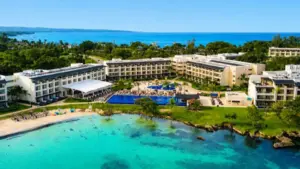
- March 2026: Sandals Resorts International announced a sweeping $200 million investment across three of its premier Jamaican properties—Sandals Montego Bay, Sandals South Coast, and the reimagined Sandals Caribbean Cay (formerly Sandals Royal Caribbean). This bold financial commitment signaled to the global travel market that top-tier brands viewed Jamaica’s long-term prospects as unimassailable.
- April 2026: While some brands accelerated timelines, others took a methodical approach to ensure perfection. Several Hyatt all-inclusive resorts announced planned target reopenings shifted to the first quarter of 2027, prioritizing comprehensive, future-proof renovations over rushed deadlines.
- July 2026: The historic Half Moon resort in Montego Bay officially welcomed guests back following an extensive, meticulous restoration project. Known for its storied legacy of luxury, Half Moon’s reopening served as a beacon for high-end travelers. Simultaneously, a wave of five Marriott-affiliated Royalton resorts began reopening their doors across Negril and Montego Bay, rapidly restoring family and all-inclusive inventory to the western and northern coasts.
Phase Three: The Upcoming Winter Surge (Late 2026 to Q1 2027)
With foundational properties now fully operational, the final leg of the recovery is underway. The remaining 30 percent of the island’s accommodations are on track to return by the end of 2026 or during the first quarter of 2027. This synchronized wave of inventory re-entry will coincide perfectly with the peak winter travel season, giving Jamaica an unprecedented surplus of fresh, renovated, and modernized hotel product just as international travelers look to escape colder climates.
Supporting Context & Metrics: Decoding the Numbers
To fully grasp the magnitude of Jamaica’s tourism performance in 2026, one must analyze the underlying metrics that define the sector. Earning $2.5 billion USD from 2.34 million visitors while operating at a 30 percent deficit in room stock highlights an incredible leap in visitor yield and overall expenditure efficiency.
High Yield and Resilient Demand
Historically, volume has been the primary metric of Caribbean tourism success. However, the post-Melissa landscape has forced a pivot toward high-value tourism. With fewer rooms available, average daily rates (ADR) and revenue per available room (RevPAR) have seen natural upward adjustments, driven by unwavering global demand. Travelers eager to support Jamaica or simply unwilling to compromise on their Caribbean vacation choices have absorbed these rates, directly translating into the robust $2.5 billion earnings reported through August.
The Airlift Equation: Expanding Connectivity
A hotel room can only be filled if travelers can physically reach the destination. Recognizing this, Jamaica’s tourism leadership worked closely with international carriers to aggressively expand air connectivity, offsetting capacity constraints with increased flight frequencies and new routes.
Canada has emerged as a particularly strong growth market for Jamaica in 2026:
- Porter Airlines launched new flights connecting Toronto, Ottawa, and Hamilton directly to Montego Bay’s Sangster International Airport.
- Air Canada expanded its footprint by introducing new non-stop services from Edmonton and Winnipeg, opening up the Canadian Prairies to seamless Caribbean travel.
Meanwhile, the United States market remains a bedrock of stability and growth. Notably, Southwest Airlines announced the highly anticipated return of its seasonal Nashville-Montego Bay route, scheduled to resume next spring, further solidifying the destination’s accessibility from key U.S. interior hubs.
Official Statements and Industry Perspective
The remarkable recovery of Jamaica’s tourism sector has not happened by accident; it is the result of visionary leadership, relentless public-private collaboration, and a refusal to let natural disaster define the nation’s economic trajectory.
Tourism Minister Edmund Bartlett has been vocal about the underlying strength of the island’s tourism product. Reflecting on the year’s performance, Minister Bartlett stated:
"This performance indicates robust demand for Jamaica’s tourism product despite operating with a reduced room stock following the passage of Hurricane Melissa in October 2025. Our ability to generate $2.5 billion in earnings with nearly a third of our rooms offline speaks volumes about the enduring appeal of our culture, our people, and our hospitality."
Minister Bartlett emphasized that the crisis served as an unexpected catalyst for modernization. Properties that might have phased upgrades over a decade were forced to fast-track modern amenities, hurricane-resilient architectural updates, and enhanced sustainability measures.
Donovan White, Jamaica’s Director of Tourism, echoed these sentiments, highlighting the vital role of trade partnerships in maintaining momentum. According to White, the unyielding loyalty of travelers has allowed the Jamaica Tourist Board to maintain and strengthen critical alliances with international airlines, major cruise lines, tour operators, and retail travel advisors.
"Traveler demand has been our anchor," White noted. "Because our guests continue to choose Jamaica, our partners in the aviation and travel trade have remained fully committed to our shared success. As we head into the winter season with a drastically expanded inventory, these foundational relationships will ensure our resorts are not just open, but filled."
Future Outlook: The Horizon Beyond 2026
As Jamaica looks past the immediate horizon of the upcoming winter season, the long-term outlook for the island’s tourism industry is exceptionally bright. The destination is executing a comprehensive, multi-pillar strategy designed to secure sustainable, long-term growth.
Infrastructure and Investment
The billions of dollars currently being poured into property enhancements—such as Sandals’ $200 million multi-resort overhaul and the comprehensive upgrades across Marriott and Hyatt portfolios—are just the beginning. Institutional investors recognize that Jamaica possesses a deeply entrenched brand equity that transcends temporary weather events. Future development pipelines include not only traditional all-inclusive mega-resorts but also boutique eco-lodges and sustainable cultural tourism nodes that disperse visitor spend deeper into local communities.
Diversification and Sustainability
In alignment with global tourism trends, Jamaica is aggressively pushing forward with diversification initiatives. While sun-and-sand tourism remains the primary draw, the island is heavily marketing its rich gastronomic heritage, adventure tourism, wellness retreats, and music history. Furthermore, rebuilding efforts have prioritized sustainable building codes and environmental preservation, ensuring that Jamaica’s natural assets—its coral reefs, lush interior mountains, and pristine beaches—are protected for generations of travelers to come.
The Winter Season and Beyond
The immediate test and triumph for Jamaica will be the upcoming winter season. Entering this peak travel window with a rapidly expanding inventory positions the island to capture maximum market share just as northern hemisphere travelers seek refuge from winter weather. With airlines adding capacity, iconic resorts fully restored, and a proven track record of economic resilience, Jamaica is not just recovering—it is setting a new standard for Caribbean tourism excellence.