








Executive Overview
The global maritime industry stands at a critical technological juncture. As artificial intelligence (AI) promises to revolutionize customer service, yield management, and operational logistics, a stark reality faces the passenger shipping sector: deploying sophisticated AI algorithms on top of antiquated, decades-old reservation systems is built on a foundation of sand.
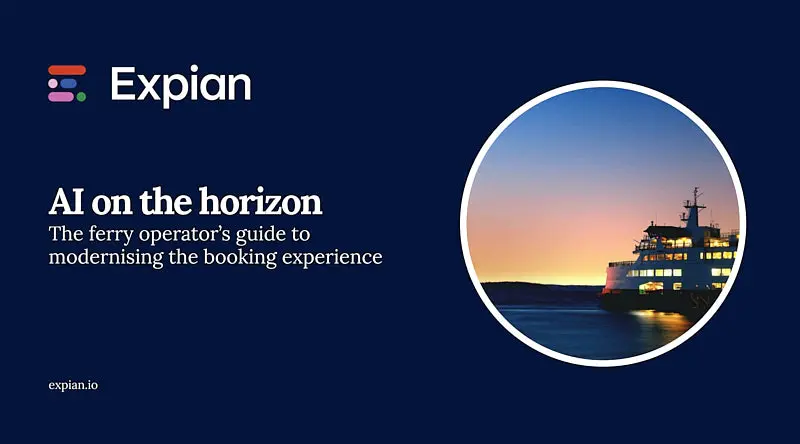
A seminal report released by reservation platform provider Expian, titled AI on the Horizon: The Ferry Operator’s Guide to Modernising the Booking Experience, delivers an urgent wake-up call to ferry executives. The report warns that despite widespread interest in cutting-edge AI features—such as automated disruption management, real-time dynamic pricing, and conversational booking engines—many operators are hindered by fragmented data architectures and legacy booking platforms.
The economic stakes are massive. Citing market intelligence from Lloyd’s Register, the report highlights that the global maritime AI market reached £4.13 billion in 2024 and is projected to expand at a 23% compound annual growth rate (CAGR) through 2029. Yet, while capital flows rapidly into maritime technology investments, Expian argues that rushing to implement AI without first modernizing core transaction engines risks exacerbating operational friction, degrading passenger trust, and heightening cybersecurity and compliance vulnerabilities.
To bridge the gap between legacy operations and intelligent automation, the industry must shift its immediate focus toward fundamental modernization: consolidating siloed databases, adopting cloud-native microservices, and establishing robust governance frameworks before adopting generative and predictive AI tools.
       MARITIME AI MARKET GROWTH (2024–2029)
       Source: Lloyd's Register / Expian Report

   £12B +--------------------------------------------------+
        |                                                  |
   £10B |                                            [£11.6B]*
        |                                         *        |
    £8B |                                  *               |
        |                           *                      |
    £6B |                    *                             |
        |             *                                    |
    £4B |  [£4.13B]*                                       |
        +--------------------------------------------------+
           2024     2025     2026     2027     2028     2029

           *Projected growth based on 23% CAGR
Detailed Chronology: The Digital Evolution of Maritime Ticketing
To understand why modern ferry operators struggle with AI readiness, it is necessary to trace the technological evolution of maritime passenger management over the past four decades. Unlike commercial airlines, which standardized global distribution systems (GDS) such as Sabre and Amadeus in the late 20th century, the ferry sector developed in a highly fragmented, localized ecosystem.
+-------------------------------------------------------------------------------+
|                       EVOLUTION OF FERRY BOOKING TECH                         |
+-------------------------------------------------------------------------------+
| 1980s–1990s: Legacy Mainframes                                                |
| - Paper ticketing, fixed seasonal tariffs, local on-premise databases.        |
+-------------------------------------------------------------------------------+
                                       |
                                       v
+-------------------------------------------------------------------------------+
| 2000s–2010s: Web Middleware & Patchwork Integration                           |
| - Custom web wrappers over monolithic backends; basic online booking forms.   |
+-------------------------------------------------------------------------------+
                                       |
                                       v
+-------------------------------------------------------------------------------+
| 2010s–2020: Omnichannel Pressures & Freight-Passenger Hybrids                 |
| - Point-to-point APIs; complex yield rules for mixed vehicle/deck inventory.  |
+-------------------------------------------------------------------------------+
                                       |
                                       v
+-------------------------------------------------------------------------------+
| 2023–Present: The Generative AI Rush & Cloud Modernization                    |
| - Urgency to deploy AI models; friction with legacy infrastructure bottlenecks.|
+-------------------------------------------------------------------------------+
1. The On-Premise Monolith Era (1980s–1990s)
Early digital booking platforms were built on bespoke, on-premise mainframe architectures designed primarily to replace physical ledgers. These systems managed static, seasonal fare tables and simple manifest requirements. Data was stored locally within individual port terminals, making real-time cross-network synchronization nearly impossible.
2. The Web Wrapper Patchwork (2000s–2010s)
With the rise of internet travel planning, ferry operators rushed to build customer-facing web interfaces. However, rather than replacing aging transactional backends, most operators built custom middleware interfaces over existing monolithic code. This created brittle system architectures where online reservations had to sync asynchronously with core operational databases, leading to double-bookings, latency, and fragmented customer data profiles.

3. The Omnichannel and Dynamic Yield Push (2010s–2020)
As aviation and hospitality industries transformed customer expectations with personalized offers, flexible seat selection, and algorithmic dynamic pricing, ferry operators faced mounting consumer pressure to offer similar digital conveniences. Achieving this proved uniquely difficult due to the multi-modal complexity of ferry operations, where platforms must calculate pricing for variable vehicle lengths, freight dimensions, foot passengers, cabin inventory, and onboard services simultaneously.
4. The AI Gold Rush (2023–Present)
The emergence of commercial generative AI and advanced predictive analytics triggered a new wave of technology deployments. Eager to reduce call-center costs and maximize capacity utilization, operators began testing AI chatbots and predictive algorithms. However, these tools frequently stumbled against legacy infrastructure, exposing missing data fields, poor API connectivity, and unstandardized databases. This structural mismatch led to the publication of Expian’s report, urging the industry to pause and re-order its technical priorities.
Supporting Context & Metrics: Unpacking the Maritime Tech Landscape
The push toward AI adoption is driven by powerful market forces and changing passenger expectations. However, a closer look at the data shows that structural technology debt remains a significant bottleneck across the ferry and maritime transport sectors.
Economic Drivers & Market Velocity
The £4.13 billion valuation of the maritime AI sector in 2024 reflects broad investments across vessel autonomy, fuel optimization, predictive maintenance, and passenger management systems. According to Lloyd’s Register projections, the market’s 23% CAGR through 2029 will be driven by operational cost pressures, tightening environmental regulations (such as International Maritime Organization decarbonization targets), and the need for enhanced yield optimization.
| Key Metric / Market Parameter | Value / Metric | Data Source | Strategic Implication |
|---|---|---|---|
| Global Maritime AI Market (2024) | £4.13 Billion | Lloyd’s Register | Rapid capital inflows across vessel operations and commercial technology. |
| Projected Market Growth (2024–2029) | 23% CAGR | Lloyd’s Register | Accelerated divergence between tech-forward and legacy operators. |
| Primary System Bottlenecks | Siloed Data, Monolithic Core Systems | Expian Industry Survey | Inability to feed real-time contextual data into AI engines. |
| Core Target Operational Areas | Dynamic Yield, Automated Disruption | AI on the Horizon | High ROI potential hampered by legacy technological debt. |
The Unique Architectural Complexities of Ferry Travel
To understand why legacy booking platforms fail under modern AI workloads, one must appreciate how fundamentally different ferry operations are from standard point-to-point airline journeys:
                  +-----------------------------------+
                  |   FERRY RESERVATION COMPLEXITY    |
                  +-----------------------------------+
                                    |
       +----------------------------+----------------------------+
       |                            |                            |
       v                            v                            v
+------------------+       +------------------+       +------------------+
| VEHICLE DYNAMICS |       | CABIN & FREIGHT  |       | REGULATORY & PORT|
| - Height/Length  |       | - Mixed Payload  |       | - SOLAS Manifests|
| - Lane Meterage  |       | - Berths/Cabins  |       | - Dangerous Goods|
| - Weight Distribution    | - Commercial Cargo|      | - Passport/Border|
+------------------+ +------------------+ +------------------+- Dynamic Space Allocation: A commercial airliner sells static seats. A passenger ferry sells linear lane-meters on vehicle decks alongside foot-passenger inventory, private vehicles of varying dimensions, motorhomes, and dangerous commercial freight.
- Complex Fleet & Seasonal Routing: Schedules vary drastically based on weather conditions, tidal constraints, variable port slot availability, and sharp seasonal demand spikes.
- Operational Dependency: Booking systems must maintain real-time bidirectional integration with port gate barrier controls, automated check-in kiosks, onboard point-of-sale (POS) systems, and mandatory Safety of Life at Sea (SOLAS) passenger manifest databases.
When operators deploy AI tools on top of legacy infrastructure, these interdependencies can create failure points. A predictive pricing engine, for instance, cannot accurately optimize deck space if the underlying database cannot distinguish in real time between standard cars and long-wheelbase vans during check-in.
Official Statements & Architectural Analysis
The core thesis of Expian’s report centers on avoiding premature technology deployment. Rather than viewing AI as a plug-and-play solution, maritime executives are urged to recognize that artificial intelligence is an advanced operational capability that depends directly on the quality of underlying enterprise software.
+-----------------------------------------------------------------------+
|                       THE DANGER OF PREMATURE AI                      |
+-----------------------------------------------------------------------+
|                                                                       |
|   [ UNSYNCHRONIZED LEGACY DATA ] + [ ADVANCED AI ENGINE ]             |
|                                                                       |
|                                  =                                    |
|                                                                       |
|   [ Hallucinated Schedules ]   [ Regulatory Non-Compliance ]          |
|   [ Dynamic Pricing Errors ]   [ Cybersecurity & Data Breaches ]      |
|                                                                       |
+-----------------------------------------------------------------------+
Executive Perspective
Emphasizing the strategic danger of adopting AI without foundational upgrades, Yiannis Maglaras, CEO of Expian, stated:
"Rushing to add complexity or tick a tool off your checklist is a recipe for disaster. AI-readiness is about understanding your system today and what you want it to do for you tomorrow."
Maglaras’s warning addresses a growing trend across travel executive suites: purchasing third-party AI interfaces to show immediate innovation to shareholders, without resolving back-end operational limitations.
Technological and Compliance Risks
The report emphasizes that deploying AI algorithms over non-unified legacy platforms introduces severe operational and legal vulnerabilities:
- Hallucination & Service Disruption: Large Language Models (LLMs) used for customer service can generate inaccurate schedule adjustments or refund guarantees if they pull data from outdated, un-synchronized backends.
- Regulatory & Compliance Failure: Ferry operators are subject to strict maritime safety and data privacy frameworks, including European Union General Data Protection Regulation (GDPR) standards and SOLAS manifest rules. Unsecured AI pipelines feeding off unstructured, unencrypted historical customer data create data exposure risks.
- Yield Management Anomalies: Automated dynamic pricing tools operating on fragmented data models can misprice deck space, selling high-margin freight capacity to low-yield passenger vehicles during peak operational windows.
Detailed Breakdown: The Four Pillars of AI Readiness
Expian’s report outlines a structured path forward for ferry operators seeking to modernize their operations responsibly. The report defines Four Pillars of AI Readiness that must be satisfied before implementing intelligent automation engines.
                     +---------------------------------+
                     | THE FOUR PILLARS OF AI READINESS|
                     +---------------------------------+
                                      |
         +------------------+---------+---------+------------------+
         |                  |                   |                  |
         v                  v                   v                  v
+------------------+ +------------------+ +------------------+ +------------------+
|  CONNECTED DATA  | |    FLEXIBLE      | |  ORGANISATIONAL  | |   GOVERNANCE     |
|                  | |  INFRASTRUCTURE  | |    READINESS     | |                  |
| Unified Single-  | | Cloud-Native,    | | Upskilled Staff, | | Data Privacy,    |
| Source-of-Truth  | | API-First      | | Cross-Functional | | Regulatory       |
| Data Pipelines   | | Microservices    | | Operations       | | Compliance Audit|
+------------------+ +------------------+ +------------------+ +------------------+
Pillar 1: Connected Data
AI engines require clean, structured, and real-time data inputs. Operators must aggregate disparate data silos—including historical booking patterns, real-time port manifest updates, onboard concession spending, passenger loyalty profiles, and weather forecasts—into a unified single-source-of-truth pipeline. Without consolidated data, machine learning engines cannot produce accurate predictive insights.
Pillar 2: Flexible Infrastructure
Modern AI platforms rely on cloud-native microservices and open Application Programming Interfaces (APIs). Monolithic booking environments that depend on batch processing must be migrated to modular architectures. Modern APIs allow third-party tools to fetch real-time deck inventory, push price adjustments back to the engine instantaneously, and streamline third-party distributor access without degrading system latency.
Pillar 3: Organisational Readiness
Technology upgrades require corresponding organizational shifts. Cross-functional alignment between IT departments, maritime operations, port staff, and commercial revenue teams is essential. Staff must be upskilled to interpret AI-generated outputs, manage edge cases, and maintain oversight over automated systems.
Pillar 4: Governance
Robust governance frameworks must dictate how data is gathered, processed, and maintained. Operators must establish strict boundary conditions for algorithmic decision-making, ensuring that dynamic pricing systems comply with consumer protection regulations and that customer data remains safe against breaches across all integration points.
Future Outlook: The Operational Impact of Modernized Ecosystems
When ferry operators successfully upgrade their transactional foundations, the combination of modern platform architecture and targeted AI integration creates significant operational efficiencies across the maritime value chain.
+----------------------------------------------------------------------------------+
|                    THE MODERNIZED MARITIME RESERVATION STACK                     |
+----------------------------------------------------------------------------------+
| AI LAYER: Conversational Assistants | Yield Algorithms | Disruption Management   |
+----------------------------------------------------------------------------------+
                                       ^
                                       | Real-Time Event Bus / Open APIs
                                       v
+----------------------------------------------------------------------------------+
| MODERN ENGINE: Cloud Microservices | Dynamic Inventory | Unified Manifest Core   |
+----------------------------------------------------------------------------------+
                                       ^
                                       | Bidirectional System Integration
                                       v
+----------------------------------------------------------------------------------+
| OPERATIONAL TOUCHPOINTS: Port Gates | Onboard POS | Kiosks | Freight Logistics   |
+----------------------------------------------------------------------------------+
1. Automated Disruption Management
Adverse weather, mechanical issues, and port delays frequently disrupt ferry schedules. In a modern ecosystem, an integrated AI engine can monitor real-time weather alerts and AIS (Automatic Identification System) tracking data. If a sailing is canceled, the system can automatically re-accommodate thousands of passengers based on priority logic, re-issue cabin allocations, update port check-in queues, and dispatch personalized SMS or app notifications—all without requiring manual intervention from overwhelmed port staff.
2. Hyper-Granular Dynamic Pricing and Inventory Yield
Modernized architectures allow AI yield engines to continuously evaluate deck space efficiency. By combining historical booking trends, seasonal demand metrics, vehicle dimension profiles, and real-time route conditions, systems can dynamically adjust price points for targeted vehicle types. This maximizes deck meter utilization and optimizes revenue per available lane-meter.
3. Conversational Booking and Personalized Experiences
With unified customer profiles and modernized reservation APIs, generative AI booking concierges can handle complex, multi-modal trip planning. Passengers can interact with conversational agents to book composite journeys—combining vehicle transport, pet-friendly cabins, specific meal preferences, and lounge access—through simple natural language prompts, receiving instant, perfectly routed bookings.
Conclusion: Moving Beyond the Hype
The findings in Expian’s report send a clear message to the passenger shipping industry: the path to an AI-powered maritime future runs directly through foundational platform modernization.
While the projected growth of the maritime AI sector to £4.13 billion and beyond underscores immense commercial potential, technology investments must be strategically sequenced. Ferry operators that take the time to untangle legacy code, unify data pipelines, and adopt open, API-driven core platforms will be uniquely positioned to harness AI successfully. Conversely, those that attempt to deploy advanced AI capabilities over fragile legacy systems risk operational disruptions and missed growth opportunities in an increasingly competitive, digital-first travel landscape.
Key Resources & Downloads
- Full Industry Report: The complete research document, AI on the Horizon: The Ferry Operator’s Guide to Modernising the Booking Experience, is published by Expian and available for industry download via Expian’s Official Portal.