











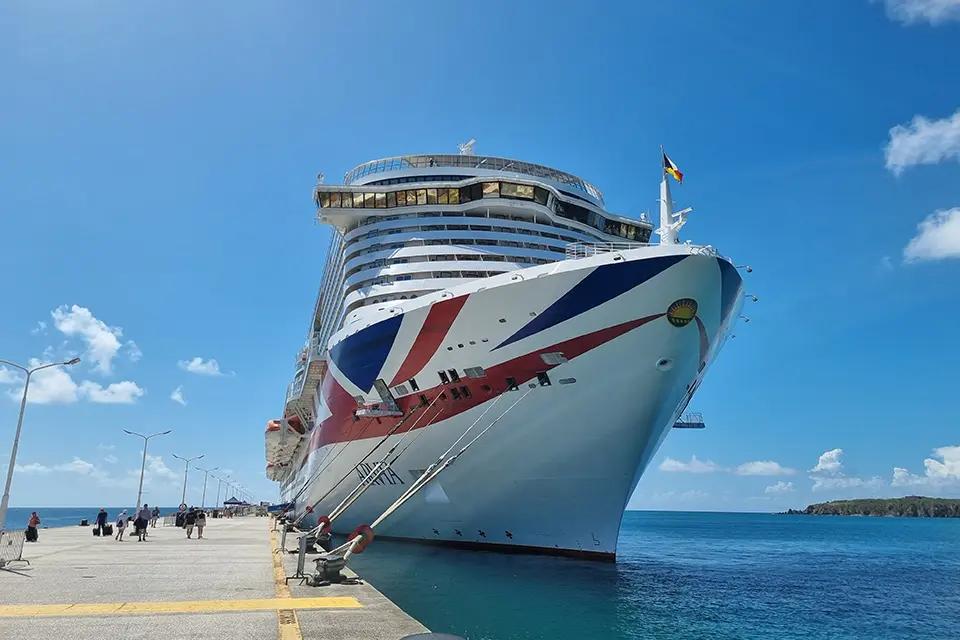
UNITED KINGDOM — Maritime authorities have released their official findings regarding a tragic accident that claimed the life of a crew member aboard the Bermuda-registered passenger vessel Arvia. The incident occurred on October 26, 2025, while the modern cruise mega-ship was navigating open waters on a voyage from Southampton, England, to Santa Cruz de Tenerife in the Canary Islands, Spain.
The investigation was spearheaded by the United Kingdom’s Marine Accident Investigation Branch (MAIB), operating on behalf of the Bermuda Ship Registry. As Bermuda falls under the umbrella of the Red Ensign Group (REG), the probe was conducted under a formal memorandum of understanding established between the MAIB and various REG member administrations, ensuring rigorous international oversight and adherence to global maritime safety standards.
Executive Overview
The publication of the MAIB accident report marks a critical moment for maritime safety advocates, cruise line operators, and regulatory bodies worldwide. While the commercial cruise industry heavily promotes the leisure and luxury experienced by passengers, the operational reality behind the scenes relies on a vast, round-the-clock workforce operating complex machinery in often hazardous marine environments.
The incident aboard the Arvia—one of the newest and largest vessels in contemporary cruise fleets—underscores the persistent dangers faced by maritime personnel. Despite stringent International Maritime Organization (MIO) regulations, technological advancements, and comprehensive safety management systems (SMS), human-machine interfaces and high-pressure operational environments continue to present severe vulnerabilities.
This comprehensive report examines the sequence of events leading up to the tragedy, explores the regulatory and jurisdictional frameworks governing the ship, analyzes industry-wide metrics regarding occupational safety at sea, and considers the broader implications for the future of cruise industry labor practices and onboard safety protocols.
Detailed Chronology of Events
Departure from Southampton
On the morning of October 26, 2025, the Arvia cast off from its berth at the port of Southampton, England, setting a southerly course across the English Channel and into the Bay of Biscay. The voyage was a standard repositioning and leisure cruise itinerary bound for the popular Atlantic island destination of Santa Cruz de Tenerife.
The atmosphere on board was typical for the beginning of a major voyage: thousands of holidaymakers were settling into their staterooms, exploring the ship’s extensive entertainment venues, and attending mandatory safety drills. Concurrently, the ship’s multi-national crew members were executing their routine post-departure duties, securing equipment, conducting engineering checks, and managing hotel services.

The Critical Incident
As the vessel cruised through international waters south of the UK mainland, an operational task involving a crew member went catastrophically wrong. While the specific mechanical or deck operations have been detailed within the confidential technical annexes of the MAIB report, the outcome was immediate and severe.
Emergency medical responders and shipboard safety officers were dispatched to the scene within minutes of the alarm being raised. First aid and advanced trauma care were administered on-site before the crew member was transferred to the ship’s advanced medical facility for continued critical intervention. Despite the rapid response of the onboard medical team, the injuries sustained by the crew member proved fatal.
Immediate Aftermath and Divergence Protocols
Following the declaration of the fatality, the ship’s master initiated standard crisis management protocols. The incident was reported immediately to the relevant flag state authorities—the Bermuda Ship Registry—as well as the MAIB and maritime rescue coordination centers.
While the ship maintained its course toward the Canary Islands to ensure the ongoing comfort and safety of the passenger complement, the shipboard management team cooperated fully with incoming digital data requests from investigators. Upon arrival in Santa Cruz de Tenerife, local authorities, alongside designated maritime inspectors, boarded the vessel to conduct preliminary forensic examinations, gather witness testimonies from fellow crew members, and secure relevant operational logs and CCTV footage.
Supporting Context & Metrics: Occupational Safety in the Cruise Sector
The Arvia: A Floating Metropolis
To understand the context of the accident, one must examine the sheer scale of the vessel involved. Delivered in late 2022, the Arvia is a colossal Excel-class cruise ship operated by P&O Cruises (a subsidiary of Carnival Corporation & plc). Grossing approximately 185,000 GT, the ship has a length of 344.5 meters and can accommodate upwards of 5,200 passengers serviced by a dedicated crew of around 1,800 personnel.
Operating a vessel of this magnitude is akin to managing a small, self-sustaining city complete with heavy industrial power plants, complex hotel infrastructure, complex waste management systems, and intricate mooring and tender operations. The density of industrial activity occurring simultaneously in close proximity to thousands of civilian passengers creates a uniquely challenging workplace.

Analyzing Maritime Safety Data
Statistics compiled by international maritime labor organizations and flag state registries indicate that while passenger safety on modern cruise ships is exceptionally high—bolstered by strict adherence to the International Convention for the Safety of Life at Sea (SOLAS)—the occupational safety metrics for crew members lag behind.
- Hazardous Environments: Seafaring consistently ranks among the most hazardous civilian occupations globally. Crew members routinely work in dynamic environments characterized by vessel motion, heavy machinery, high-pressure fluid systems, and demanding shift schedules.
- Fatigue and Operational Pressures: Turnaround days in ports, combined with continuous navigation at sea, often result in extended working hours. While the Maritime Labour Convention (MLC, 2006) sets strict limits on hours of work and rest, compliance enforcement across diverse multi-national operational teams remains a perpetual challenge for auditors.
- Comparative Risk: Studies from agencies such as the European Maritime Safety Agency (EMSA) show that occupational accidents—ranging from slips, trips, and falls to machinery entanglement and enclosed space incidents—represent a significant proportion of total reported casualties in the commercial shipping sector.
Regulatory Frameworks and Investigatory Jurisdiction
The Role of the MAIB and the Red Ensign Group
The investigation into the Arvia fatality highlights the complex international legal frameworks that govern modern commercial shipping. Because the vessel is flagged in Bermuda, Bermuda holds primary responsibility under international law (specifically the United Nations Convention on the Law of the Sea, or UNCLOS) for investigating marine casualties involving its flagged fleet.
However, flag states often lack the dedicated, independent investigative infrastructure possessed by major maritime nations. To bridge this gap, Bermuda—as a member of the Red Ensign Group (which comprises the UK, the UK Crown Dependencies, and the UK Overseas Territories)—utilizes formal agreements to delegate marine safety investigations to the United Kingdom’s Marine Accident Investigation Branch (MAIB).
The MAIB is globally recognized as an independent, non-partisan statutory body whose sole objective is the prevention of future marine accidents through the rigorous determination of causal and contributory factors, rather than the allocation of liability or blame.
International Conventions and Compliance
The investigation report evaluates the incident against several foundational international instruments:
- SOLAS (Safety of Life at Sea): Ensuring that shipboard structural designs, safety equipment, and emergency procedures comply with international baselines.
- ISM Code (International Safety Management): Assessing whether the operating company’s Safety Management System (SMS) provided adequate risk assessments, standard operating procedures (SOPs), and safety briefings for the task being performed.
- STCW (Standards of Training, Certification and Watchkeeping): Examining whether the involved personnel held the appropriate competency certificates, specialized training endorsements, and familiarization records required for their specific duties.
Official Statements and Industry Response
Statements from Regulatory and Operating Bodies
In a formal release accompanying the publication of the report, the MAIB emphasized that the primary purpose of the investigation is not punitive, but educational and preventative.
"Our investigative mandate is singularly focused on uncovering the underlying systemic and operational factors that allow tragic accidents to occur," a spokesperson for the MAIB stated. "By sharing these findings with the international maritime community, we aim to drive necessary changes in safety culture, equipment design, and procedural compliance across the global cruise fleet."
Representatives from Carnival Corporation and P&O Cruises issued statements expressing profound grief over the loss of their crew member. The company reiterated its absolute commitment to crew welfare and safety, noting that they have cooperated transparently with the MAIB and Bermuda Ship Registry throughout every stage of the inquiry.
"The safety, health, and well-being of every single crew member and guest on our ships is our highest operational priority," a company representative noted. "We are carefully reviewing the safety recommendations contained within the MAIB report to ensure that all feasible measures are implemented immediately across our broader fleet."
Seafarer Welfare Organizations React
Global seafarer advocacy groups, including the International Transport Workers’ Federation (ITF) and Mission to Seafarers, have used the release of the report to call for renewed attention to occupational safety standards in the cruise sector.
While passengers enjoy state-of-the-art stabilizers, advanced navigation suites, and luxurious amenities, advocacy groups argue that crew quarters, working decks, and engineering spaces must receive an equivalent level of modernization, ergonomic design, and safety oversight. They stress that reducing fatigue, enhancing safety communication across language barriers, and empowering crew members to halt work in unsafe conditions are vital steps toward eliminating workplace fatalities at sea.
Future Outlook: Preventing Future Tragedies
Key Recommendations from the Report
While the specific technical recommendations of the MAIB report target the exact mechanics of the October 2025 incident, industry analysts expect the findings to catalyze broader changes across the cruise industry:
- Enhancement of Risk Assessments: Operators will likely be urged to review existing task-level risk assessments (TLRAs) for non-routine or hazardous deck and engineering operations, ensuring that potential failure points are clearly understood by all executing personnel.
- Human Factors Engineering: Greater emphasis must be placed on designing machinery and workspaces that minimize the potential for human error, accounting for factors such as fatigue, restricted line-of-sight, and physical strain caused by vessel movement.
- Safety Culture and Empowerment: Strengthening "safety management reporting" cultures where junior and senior crew members alike feel fully empowered to challenge unsafe practices or request additional safety interventions without fear of professional repercussions.
- Continuous Training Enhancements: Integrating real-world incident case studies—such as the findings from the Arvia report—into mandatory recurrent safety training modules for all newly embarked and rotating maritime personnel.
Conclusion
The tragic death aboard the Arvia serves as a sobering reminder of the inherent risks borne by the maritime workforce that powers the global cruise industry. As the MAIB report is digested by ship operators, flag states, and international regulators, the ultimate metric of its success will not be the thoroughness of its prose, but the tangible, lasting improvements it inspires in onboard safety protocols. For the family, friends, and colleagues of the fallen crew member, these reforms represent a vital legacy born from an irreplaceable loss.


