










Executive Overview
For decades, the global travel industry has suffered from a collective obsession. Venture capital, corporate strategy, executive summits, and massive marketing budgets have consistently targeted a single phase of the consumer journey: discovery, search, and booking. Trillions of dollars have been spent building sleek interfaces, optimizing search algorithms, and fighting for the initial transaction.
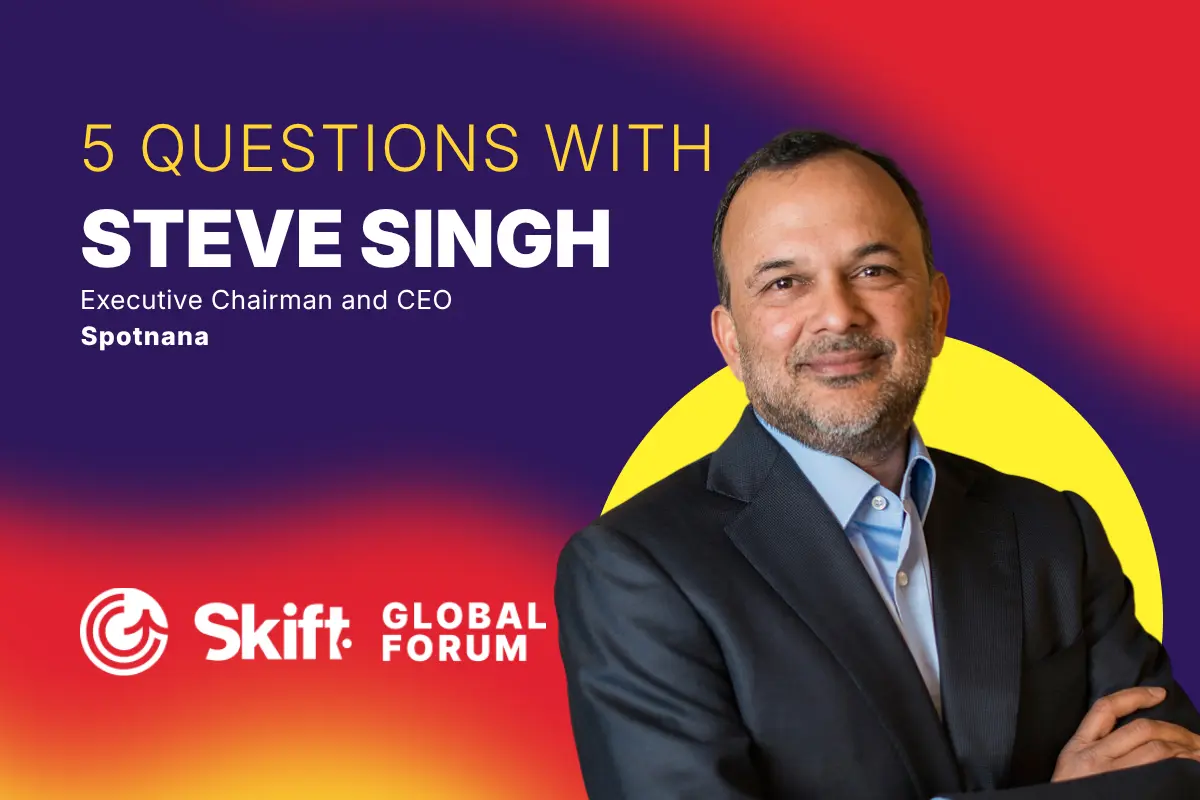
Yet, according to Steve Singh, Executive Chairman and CEO of cloud-based travel management platform Spotnana, the industry is looking in the wrong direction. The real battleground—and the sector’s most significant untapped profit center—lies past the point of purchase. It sits squarely in the unglamorous, highly manual world of post-booking travel servicing.
As artificial intelligence rapidly transforms enterprise software, Singh is making a bold, counter-intuitive bet. He argues that AI is quietly dismantling the traditional economics of travel operations, shifting the burden of routine tasks—such as cancellations, flight ticket reissuances, and complex refunds—from human agents to intelligent systems. In doing so, Singh projects that corporate travel providers and management companies can slash their servicing labor costs by 50% or more. More importantly, he believes this technological shift will elevate the traveler experience, transforming reactive, frustrating customer service interactions into proactive, personalized touchpoints that build long-term brand trust.
Ahead of his keynote appearance at the Skift Global Forum in New York City, Singh sat down to dissect the shifting paradigms of travel technology. From the emergence of conversational front-ends to the absolute necessity of direct content integrations, his insights paint a portrait of an industry on the precipice of an operational revolution.
Detailed Chronology: The Evolution from Manual Queues to Autonomous AI
To understand the magnitude of Spotnana’s current strategy, one must examine how the architecture of corporate travel has evolved over the past decade, and why the "after-booking" phase has historically been treated as a costly operational afterthought.
The Legacy Era: Manual Processing and Fragmented Systems
Historically, the travel agency and corporate travel management (TM) landscape relied on legacy Global Distribution Systems (GDS) built in the 1960s and 70s. When a traveler booked a flight, hotel, or car, the transaction generated a PNR (Passenger Name Record). However, if an itinerary required a modification—due to a delayed flight, a canceled meeting, or a missed connection—the operational workflow ground to a halt.
Human travel agents were forced to manually comb through cryptic command-line interfaces, manually calculate penalties, reissue tickets, and process refunds. This resulted in massive operational queues, exorbitant labor overhead, and high burnout rates among customer support staff. If a traveler made a change through one channel, it frequently failed to synchronize with another, creating a fractured experience where customer trust was systematically eroded.

The Cloud Disruption and Content Fragmentation
As the travel ecosystem expanded, airlines began introducing New Distribution Capability (NDC) standards, and hotel aggregators proliferated. This created an unprecedented content fragmentation problem. Travelers wanted the ability to shop from a boundless universe of options, but managing that content downstream became an administrative nightmare.
Spotnana entered the market with a foundational cloud-native infrastructure designed to make any source of content simultaneously bookable and serviceable. Rather than patching legacy systems together, Spotnana built a unified architecture where a change made in any channel would instantly reflect across all systems.
The AI Inflection Point
The most recent chapter in this chronological evolution is the integration of autonomous and conversational artificial intelligence. Over the past twenty-four months, generative AI and machine learning models have evolved from simple chatbots into autonomous agents capable of executing complex administrative workflows.
Spotnana’s latest AI deployments no longer merely suggest answers to human agents; they actively take over routine operational queues. Today, Spotnana’s AI agents autonomously handle canceled segments, unticketed flights, and complex refund calculations. This shift has fundamentally rewritten the internal operational data metrics at companies like Spotnana, proving that a vast majority of issues that once clogged agent queues no longer require human intervention.
Supporting Context & Metrics: The Economics of the "Other Half"
The travel industry’s financial models have long accepted high operational overhead as a cost of doing business. Singh refers to this neglected operational space as "the half nobody talks about"—the post-booking lifecycle where customer loyalty is genuinely earned or lost.
Analyzing the 50% Cost Reduction Metric
The most striking metric highlighted by Singh is the potential to reduce travel servicing costs by 50% or more. To understand how this is achievable, one must break down the traditional cost structure of a Travel Management Company (TMC):
- Labor Allocation: Historically, up to 70% of a TMC’s operational expenses are tied to human labor—specifically, agents managing repetitive, low-complexity tasks like processing standard refunds, updating loyalty numbers, or handling simple date changes.
- Time-to-Resolution: Manual ticket reissuances can take anywhere from 15 minutes to over an hour depending on airline rules and fare classes.
- Error Rates: Manual entry in legacy systems frequently leads to debit memos—costly financial penalties issued by airlines to agencies due to ticketing errors.
By deploying AI agents capable of interpreting complex airline tariffs and executing system-level changes instantaneously, the operational bottleneck disappears. Routine requests are processed in seconds rather than hours, virtually eliminating human error and drastically lowering the cost-per-transaction for travel providers.
+-------------------------------------------------------------------+
|                  THE SHIFT IN TRAVEL SERVICING                    |
+-------------------------------------------------------------------+
| LEGACY MODEL (Manual & Fragmented)                                |
| • Routine work sits with human agents (cancellations, refunds)    |
| • High labor costs, long queue times, high error rates            |
+-------------------------------------------------------------------+
                                  │
                                  ▼
+-------------------------------------------------------------------+
| MODERN AI-POWERED MODEL (Spotnana Approach)                       |
| • Routine servicing shifted entirely to AI agents                 |
| • Human agents pivot to high-value, empathetic problem-solving    |
| • 50%+ reduction in operational servicing costs                   |
+-------------------------------------------------------------------+
The Consumer Expectation Gap
Modern consumers, accustomed to the instantaneous, frictionless digital experiences provided by fintech apps and modern e-commerce platforms, have little patience for legacy travel bureaucracy. When a flight is canceled, today’s traveler expects real-time resolution without being placed on hold for forty minutes.
Furthermore, traveler expectations have evolved to demand omnichannel fluidity. A consumer believes that if they purchased a ticket through an enterprise platform, they should be able to seek assistance from any connected provider or system throughout their journey, and that modification must seamlessly synchronize globally.
Official Statements and Insights from Steve Singh
To capture the depth of Singh’s philosophy on the future of enterprise travel, his perspectives on curation, conversational front-ends, and trust are detailed below:
On the Illusion of Search vs. The Reality of Servicing
"We talk endlessly about search, distribution, and booking. What really matters is what happens after the trip is purchased. Spotnana is seeing tremendous savings in labor costs across our customers and partners due to the combination of AI and investments in automating servicing workflows across a wide range of content sources. I believe we can reduce servicing costs by 50% or more while making traveler experiences dramatically better through servicing that is much more personalized and proactive."
On Redefining the Role of Human Agents
"It’s surprising how much of what landed in a travel agent’s queue a few years ago doesn’t need a human agent anymore. Spotnana now has AI agents handling cancelled segments, unticketed flights, and refunds, for example, and we can see how the need for humans to handle routine tasks is decreasing. Human agents can now focus more of their time on higher value services, where a human touch makes all the difference."
On Trust and the Omnichannel Experience
"Anyone can sell a ticket. The hard part is delivering service, and service is where trust is earned or lost. The traveler grades all of us on every interaction. The companies that build the best relationships with customers will be the ones that make all aspects of a traveler’s journey as seamless as possible."
On Conversational AI and Curation
"One of the great benefits of conversational AI booking experiences is that travelers can use natural language to describe what they want. Rather than being constrained by the fields in a form, they can run a search for a hotel room that is on a high floor, includes a view of the ocean, and is at a hotel that offers early check-in. This means that the bar is now higher for every travel provider to deliver rich product information with accurate details on rates, fares, ancillary services, and amenities."
Future Outlook: The Next Frontier in Travel Technology
As the travel industry looks toward the remainder of the decade, the implications of Singh’s vision extend far beyond corporate expense management. Several structural shifts will define the next era of travel tech:
1. The Rise of Natural Language Travel Planning
The traditional matrix of drop-down menus, filter checkboxes, and multi-tab flight comparison engines is rapidly giving way to conversational front-ends. Travelers no longer want to translate their complex personal preferences into rigid database queries. By using natural language prompts—such as “Find me a business-class flight with a layover under two hours, paired with a boutique hotel that has reliable high-speed Wi-Fi and a 24-hour gym”—consumers are forcing platforms to completely rethink how content is curated and displayed.
2. The 95% Curation Standard
As conversational AI interfaces present a sharply curated handful of tailored recommendations rather than an overwhelming list of hundreds of flight options, the criteria for algorithmic inclusion will become intensely competitive. Singh notes that platforms must aim for a standard where the AI presents the exact options a traveler would have chosen at least 95% of the time, had they manually reviewed the entire global inventory. This places an extraordinary premium on clean, real-time metadata and direct Application Programming Interface (API) integrations with airlines and hoteliers.
3. Direct Integrations as the Ultimate Moat
In a fragmented content landscape, third-party screen-scraping and legacy intermediaries will struggle to keep pace with real-time ancillary pricing, dynamic seat selection, and immediate policy synchronization. Companies that have invested heavily in native, direct connections—ensuring that inventory, pricing, and servicing logic are harmonized across every touchpoint—will control the economics of the enterprise travel market.
Conclusion
Steve Singh’s thesis serves as a sharp wake-up call for an industry overly enamored with the gloss of initial booking engines. By recognizing that customer trust is forged in the crucible of post-booking operations, and by weaponizing artificial intelligence to drive down the cost of servicing while elevating personalization, Spotnana is carving out a blueprint for the future. In the new landscape of travel technology, the winners will not simply be those who sell the ticket—they will be the ones who master what happens after the ink is dry.