











Executive Overview
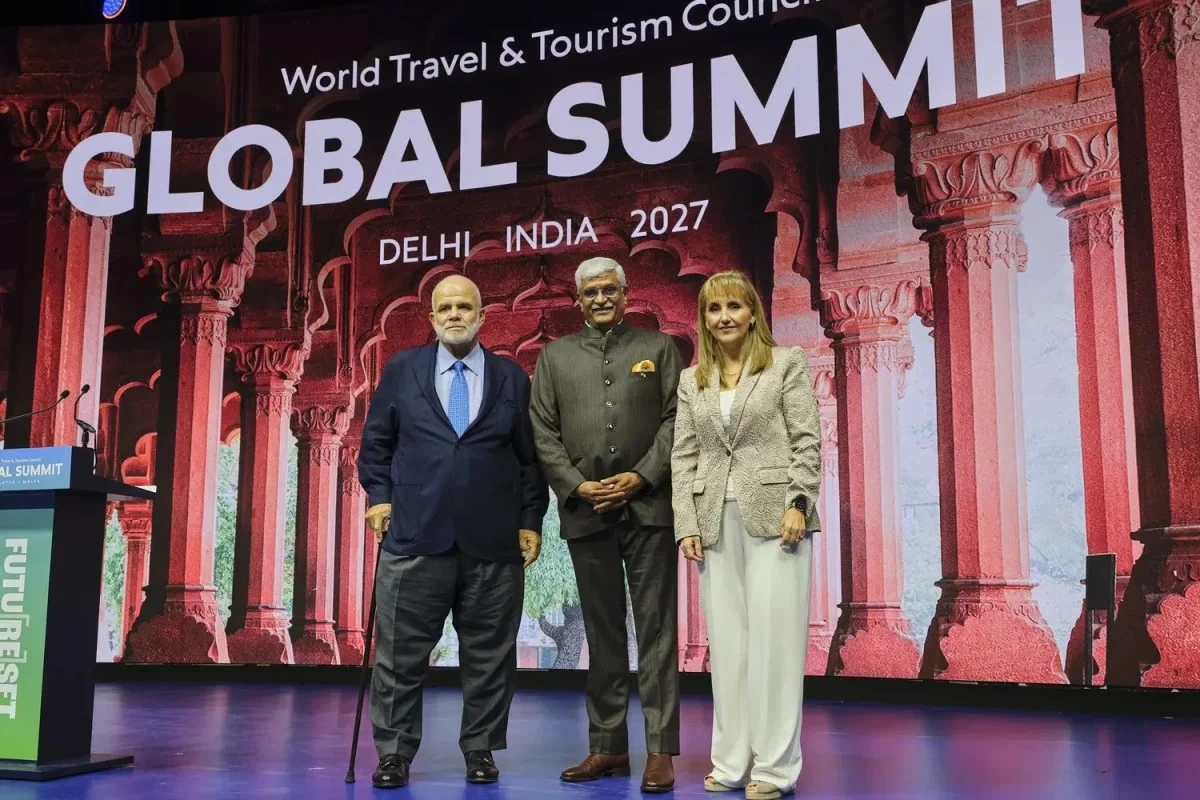
At the prestigious World Travel and Tourism Council (WTTC) Global Summit in Malta, Indian Tourism Minister Gajendra Singh Shekhawat stood before an assembly of international travel titans to deliver an audacious proclamation. India, he announced, is on a definitive trajectory to scale its inbound international tourism arrivals from a modest 9.2 million to an astonishing 100 million by the year 2047—the centenary of the nation’s independence.
To achieve this monumental tenfold expansion over the next two decades, Shekhawat outlined a strategic framework anchored on four foundational pillars: political will, public spending, strategic partnerships, and Jan Bhagidari (people’s participation). The vision presented in Malta was one of boundless potential, painting a picture of India as an economic juggernaut and an essential cornerstone of the future global travel ecosystem.
However, the contrast between this long-term optimism and the immediate state of Indian tourism could hardly be more stark. Behind the optimistic projections shared on the international stage lies a troubled near-term reality. Official figures show that India welcomed just 9.2 million foreign tourists in 2025—representing a concerning 9.4% decline compared to 2024, and sitting roughly 17% below the pre-pandemic peak of 10.9 million recorded in 2019.
Worse still, this drop marks the second consecutive year of contracting arrivals. Projections for 2026 suggest an even steeper descent. A recent report by the PHD Chamber of Commerce and Industry (PHDCCI) estimates that inbound tourism to India could plummet by an additional 15% to 20% this year. The primary catalyst for this slump is not a lack of marketing or cultural allure, but rather a severe geopolitical crisis: the ongoing Iran War, which has effectively severed critical air corridors relied upon by long-haul visitors from Europe and the Americas.
To bridge the chasm between a 2025 baseline of 9.2 million arrivals and a 2047 target of 100 million, India must sustain an average annual growth rate of 12% or higher for the next twenty-one years. In an industry currently buffeted by geopolitical shocks, airspace closures, and structural headwinds, achieving this sustained trajectory will require far more than ministerial ambition; it demands an immediate, radical overhaul of the nation’s tourism infrastructure, crisis management frameworks, and aviation resilience.
Detailed Chronology: From Pre-Pandemic Heights to the Malta Summit
To understand the scale of Minister Shekhawat’s challenge, it is essential to trace the timeline of Indian tourism over the past decade, highlighting the systemic vulnerabilities and external shocks that have repeatedly derailed its growth trajectory.
2018–2019: The Pre-Pandemic Apex
Before the global health crisis brought international mobility to a standstill, Indian tourism was experiencing a steady, if conservative, upward trend. In 2019, the country welcomed a record 10.9 million foreign tourist arrivals (FTAs), generating significant foreign exchange earnings and accounting for a vital slice of national employment. Government initiatives like the expansion of the e-Visa scheme to over 160 countries and targeted campaigns like Incredible India 2.0 were beginning to bear fruit, positioning the South Asian subcontinent as a must-visit destination for cultural, spiritual, and heritage travelers.

2020–2022: The Pandemic Vacuum and Zero-Growth Years
The arrival of COVID-19 in early 2020 brought inbound travel to an abrupt halt. International borders closed, flights were grounded, and the hospitality sector faced an existential crisis. While domestic tourism experienced sporadic waves of recovery during inter-wave lulls, international arrivals remained negligible through 2020 and 2021. Even as global travel resumed through 2022, India’s reopening was perceived as slower and more bureaucratically cumbersome compared to regional competitors in Southeast Asia, which aggressively dismantled entry restrictions to capture pent-up global demand.
2023–2024: A Fragile, Incomplete Recovery
By 2023, inbound numbers began a slow climb, yet they consistently lagged behind global averages. The recovery was heavily reliant on regional travelers, particularly from neighboring South Asian nations and the diaspora, while lucrative long-haul markets from Western Europe and North America recovered at a sluggish pace. By the close of 2024, hopes for a complete return to the 2019 benchmark were dashed as structural impediments—ranging from visa processing bottlenecks to rising hotel tariffs—began to cap growth potential.
2025: The Twin Shocks and Contraction
The year 2025 proved to be a watershed of decline. Official data revealed that international arrivals slumped to 9.2 million—a 9.4% year-on-year drop. This contraction was driven by a confluence of negative factors: inflationary pressures in key Western source markets, shifting consumer preferences toward closer-to-home destinations, and, most critically, the brewing geopolitical instability in the Middle East that began to choke vital aviation pipelines.
Early 2026: The Geopolitical Freeze and the Malta Declaration
Entering 2026, the outlook for Indian inbound tourism turned grim. The escalation of the Iran War severed primary air corridors connecting Europe to South Asia, forcing airlines to reroute flights, burn excess fuel, and drastically inflate ticket prices. It was against this backdrop of contraction and crisis that Tourism Minister Gajendra Singh Shekhawat arrived in Malta for the WTTC Global Summit. Sharing the stage with WTTC Chairman Manfredi Lefebvre d’Ovidio and President & CEO Gloria Guevara, Shekhawat pivoted away from immediate tactical crises to cast a bold, long-range vision for 2047, reframing current setbacks as temporary tremors along a historic growth path.
Supporting Context & Metrics: The Anatomy of a Declining Market
A closer examination of the metrics reveals deep structural vulnerabilities that threaten to undermine India’s grand 2047 projections unless addressed with immediate policy interventions.
The Mathematics of 100 Million: Breaking Down the 12% Growth Imperative
To appreciate the scale of Minister Shekhawat’s vision, one must analyze the compound annual growth rate (CAGR) required. Starting from the 2025 baseline of 9.2 million arrivals, reaching 100 million by 2047 (a 22-year span) requires an average annual growth rate exceeding 12%.
For context, over the decade preceding the pandemic (2010–2019), India’s inbound tourism grew at a CAGR of roughly 6.5% to 7%. Doubling that historical growth rate consistently for over two decades—through economic cycles, pandemics, and geopolitical shifts—is an unprecedented feat. It requires not just incremental improvements, but a radical transformation in how India attracts, processes, and accommodates global travelers.
[2025 Baseline: 9.2M] ---> (Requires >12% CAGR for 22 Years) ---> [2047 Target: 100M]The 2026 Slump: The Impact of the Iran War on Air Corridors
The immediate barrier to this long-term vision is the ongoing conflict in the Middle East. The PHD Chamber of Commerce’s warning that inbound tourism could contract by 15% to 20% in 2026 is directly tied to aviation geography.
India’s tourism model relies heavily on long-haul connectivity originating from Europe, the UK, and North America. Historically, a vast percentage of these flights transit through Middle Eastern hubs or utilize airspace over Iran and the Persian Gulf. The closure and militarization of these skies have forced carriers to adopt circuitous southern routes, significantly extending flight times and driving up operational costs.
- Surging Airfares: Long-haul ticket prices to Indian hubs like New Delhi (DEL) and Mumbai (BOM) have spiked by 30% to 45%.
- Capacity Reductions: Several international carriers have trimmed flight frequencies to India, prioritizing higher-yield transatlantic routes where geopolitical risks are lower.
- Traveler Hesitancy: The psychological barrier of flying near conflict zones has further dampened enthusiasm among leisure travelers, who are increasingly opting for destinations in Latin America, Africa, or safer pockets of Asia.
Structural Bottlenecks Beyond Geopolitics
Beyond the immediate shockwaves of the Iran War, India’s tourism sector suffers from chronic structural challenges that have historically limited its yield and volume:
- The Infrastructure Gap: While primary airports in major metros have undergone massive modernizations, tier-2 and tier-3 cities—the gateways to India’s rich cultural heartland—often lack the international airport connectivity, road infrastructure, and upscale hotel inventory required by global travelers.
- Visa Friction: Despite the introduction of e-Visas, travelers frequently report bureaucratic hurdles, processing delays, and complex documentation requirements compared to the frictionless entry models implemented by competitors like Thailand, Vietnam, and Malaysia.
- Destination Management and Over-Tourism: Iconic sites like the Taj Mahal, Varanasi, and select palaces in Rajasthan face severe infrastructural strain during peak seasons, while hundreds of equally breathtaking heritage sites remain virtually unmarketable due to a lack of basic tourist amenities and promotion.
- Safety and Sanitation Perceptions: Persistent international media narratives regarding street sanitation, safety for solo female travelers, and tourist scams continue to act as deterrents for high-spending demographic segments from Western nations.
Official Statements: The Four Pillars of the 2047 Vision
At the Malta summit, Minister Gajendra Singh Shekhawat did not shy away from the magnitude of India’s tourism ambitions. Addressing the global elite of the travel industry, he laid out a strategic blueprint structured around four distinct "P"s designed to transform the nation’s tourism landscape over the next generation.
+-----------------------------------------------------------------+
|                  MINISTER SHEKHAWAT'S FOUR "P"S                 |
+-------------------+-------------------+-------------------------+
| 1. Political Will | 2. Public Spending| 3. Strategic Partnership|
+-------------------+-------------------+-------------------------+
| 4. People's Participation (Jan Bhagidari)                       |
+-----------------------------------------------------------------+
1. Political Will
Shekhawat emphasized that tourism can no longer be treated as a peripheral portfolio within government administration. Achieving 100 million arrivals requires the highest levels of executive backing, cutting across federal and state jurisdictions to streamline policies, cut red tape, and prioritize tourism as a core driver of foreign exchange, job creation, and soft power. This political will must translate into cohesive national tourism policies that survive electoral cycles and remain focused on long-term infrastructure creation.
2. Public Spending
Acknowledging that private capital alone cannot shoulder the immense cost of modernizing India’s tourism ecosystem, the minister underscored the necessity of robust public investment. This includes direct government outlays for mega-destination development, the expansion of regional aviation networks under schemes like UDAN, the preservation of archaeological and heritage assets, and the creation of world-class digital public infrastructure tailored for travelers.
3. Strategic Partnership
No single government agency or domestic private enterprise can capture the global market share required to reach 100 million arrivals. Shekhawat called for deep, institutionalized partnerships between the central government, state tourism boards, international hospitality chains, global airlines, and travel technology platforms. Leveraging foreign direct investment (FDI) in hotel infrastructure and co-marketing campaigns with international carriers will be vital to reopening and expanding key source markets.
4. People’s Participation (Jan Bhagidari)
Perhaps the most culturally resonant pillar of Shekhawat’s address was the concept of grassroots ownership. Drawing on India’s socio-political lexicon, Jan Bhagidari posits that sustainable tourism cannot be imposed from above; it must be embraced by local communities. By empowering rural clusters, training local youth as certified guides, promoting homestay tourism, and fostering a cultural ethos of Atithi Devo Bhava (The Guest is God), India aims to ensure that the economic benefits of tourism permeate down to the village level, transforming every citizen into a stakeholder in the nation’s hospitality narrative.
WTTC leadership, including Chairman Manfredi Lefebvre d’Ovidio and President & CEO Gloria Guevara, welcomed India’s long-term vision, noting that the country represents one of the most explosive growth opportunities in the global travel economy—provided short-term operational hurdles are decisively cleared.
Future Outlook: Can India Realize Its Centennial Vision?
As the global travel industry digests the dual realities of a soaring 2047 ambition and a contracting 2026 marketplace, experts agree that India stands at a critical crossroads. The journey from 9.2 million to 100 million arrivals is neither impossible nor guaranteed; it is an exercise in strategic execution, resilience, and adaptability.
Short-Term Imperatives (2026–2030): Weathering the Storm
To prevent the projected 15% to 20% contraction in 2026 from causing permanent structural damage, the Ministry of Tourism and the Ministry of Civil Aviation must act in concert:
- Diversifying Air Corridors: Accelerating bilateral air service agreements with carriers from unaffected regions—such as Central Asia, Southeast Asia, East Asia, and Latin America—to offset capacity losses from the Middle East.
- Subsidizing and Supporting Connectivity: Working with domestic carriers to establish direct long-haul routes that bypass volatile airspace, thereby stabilizing ticket prices for European and North American travelers.
- Aggressive Source-Market Pivoting: Shifting marketing budgets toward short-haul and medium-haul markets where travel sentiment remains robust, including ASEAN nations, Japan, South Korea, and Australia.
Medium-Term Reforms (2030–2040): Building the Foundation
Once immediate geopolitical storms subside, India must execute the structural reforms promised in Shekhawat’s four-pillar framework:
- The Digital Frontier: Expanding and refining India’s digital public infrastructure (such as unified payments interfaces and seamless e-Visa portals) to make travel within the country as frictionless as digital transactions.
- Tier-2 Destination Development: Actively dispersing tourist footfall away from congested heritage sites by developing alternative circuits in the Northeast, the Western Ghats, and rural hinterlands, backed by international-standard hospitality infrastructure.
- Human Capital Investment: Scaling hospitality and culinary training programs to prepare millions of frontline workers for an influx of high-spending international tourists.
Long-Inbound Horizon (2040–2047): The Centennial Payoff
If India successfully navigates the turbulent decade of the 2020s and commits steadfastly to public spending, political alignment, and community participation, the 2047 target of 100 million arrivals becomes attainable. By then, demographic shifts, rising global middle classes, and a fully modernized transport grid could position India not merely as a regional tourism player, but as one of the top three most-visited nations on earth.
Minister Gajendra Singh Shekhawat’s address in Malta was a declaration of faith in India’s limitless cultural and economic pull. Yet, as the industry looks toward the grim ledger of 2026, the message to policymakers in New Delhi is clear: the road to 2047 is paved not with slogans, but with the unglamorous, urgent work of securing skies, modernizing infrastructure, and making the world feel safely and frictionlessly welcome in the heart of Incredible India.


