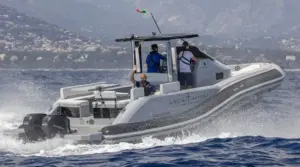
The global transition toward sustainable maritime mobility is accelerating at an unprecedented pace, and at the forefront of this industrial shift is ExploMar. Boasting an expanding portfolio of international partners, dealers, and affiliates spanning more than 20 countries, the company is scaling its footprint to meet surging worldwide demand for high-performance electric water transportation. Far from being confined to niche recreational markets, ExploMar’s cutting-edge electric outboard systems are proving their mettle across diverse, demanding commercial and leisure applications worldwide.
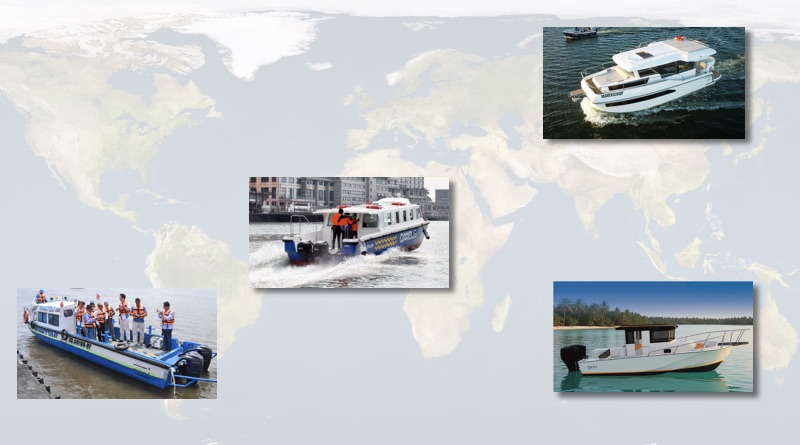
From luxury charter yachts navigating the inland glacial lakes of Poland and high-capacity urban commuter ferries cutting through the congested waters of Lagos, Nigeria, to commercial fishing fleets in Indonesia and aquaculture workboats operating off the coast of Chile, ExploMar technology is demonstrating that electric propulsion can match—and frequently surpass—the capabilities of conventional internal combustion engines.
By prioritizing a zero-emission, low-noise, and economically viable long-term operational model, ExploMar is successfully steering the maritime industry away from fossil fuels. Central to this global strategy is the innovative "ExploMar Electric Boating Experience" (EEBE)—an immersive retail and test-piloting concept designed to demystify electric mobility, build consumer confidence, and transition sustainable boating from an intriguing concept into an undeniable market choice.
ExploMar’s expansive global rollout is best understood through its multi-regional implementations, each tailored to the unique regulatory, geographical, and operational demands of local waterways.
Poland: Redefining Inland Waterway Charters in the Masurian Lake District
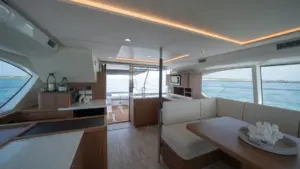
In the heart of Poland’s Masurian Lake District—a breathtaking mosaic of over 2,000 bodies of water designated as a finalist for the New 7 Wonders of Nature—LAMDO Houseboats has embraced marine electrification. Known for manufacturing spacious 10-meter (33-foot) luxury charter vessels designed by renowned naval architect Tony Castro, LAMDO introduced its fossil-fuel-powered LY30+ Open and LY30+ Fly Trawler models in 2023.
Engineered as European C Category vessels, these floating apartments are built for coastal and inland cruising, capable of withstanding moderately strong winds up to 27 knots (force 6) and waves reaching two meters in height. LAMDO has since pivoted toward sustainability by constructing two LY30 units outfitted with ExploMar WAVE 70+ electric outboard systems, followed by a third unit equipped with the heavy-duty WAVE 300 system.
The integration process was executed in close collaboration with ExploMar, leveraging the manufacturer’s turnkey service model, which encompasses vessel design, technical installation, and rigorous on-water commissioning.
Nigeria: Alleviating Urban Gridlock with Solar-Powered Ferries
In stark contrast to the tranquil lakes of Poland, Lagos, Nigeria, presents a high-intensity urban mobility challenge. Following the city’s hosting of the high-profile E1 Electric Speedboat Championships, Lagos has cemented its commitment to climate resilience, maritime safety, and long-term cost efficiency. With a metropolitan population surging past 100 million, commuters are desperately seeking alternatives to chronically congested roadways and the severe health hazards associated with airborne vehicular pollution.
A 30-kilometer (18-mile) lagoon network weaves through Lagos, connecting it directly to the Port of Guinea. ExploMar is playing a pivotal role in a visionary regional transit master plan that aims to deploy up to 70 electric and hybrid ferries alongside 25 modern marine terminals. At the China International Boat Show (CIBS), ExploMar signed a landmark agreement with project backer Caverton Offshore Support Group for 20 electric propulsion systems and accompanying 5S energy station chargers.
The partnership represents the culmination of two years of intensive joint research, development, and real-world testing. A prototype 28-seat, 12-meter (40-foot) passenger ferry named OMIBUS—featuring a Fibre Reinforced Plastic (FRP) hull paired with twin ExploMar WAVE 300 outboards—has successfully completed initial pilot passenger trials. The vessel slashes the grueling two-hour commute from Ikorodu to Lagos Island down to a mere 30 minutes. To support this fleet, the newly developed 5S Energy Station integrates a robust 300 kW solar system capable of generating up to 1,500 kWh daily, fully recharging the ferry’s twin 125 kWh High Energy Density Batteries (HEDB) in just one hour.
Southeast Asia, Europe, and the Americas: Broadening the Global Footprint
ExploMar’s international footprint extends far beyond Poland and Nigeria:
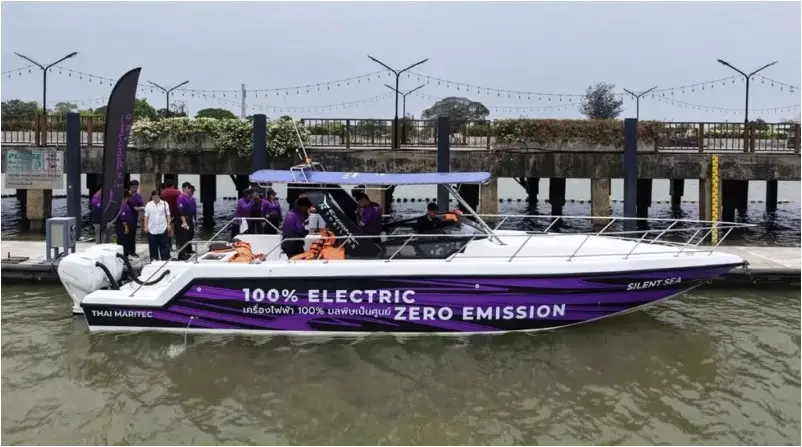
Thailand: In partnership with local dealer Thai Maritec, ExploMar established its first international Electric Boating Experience center in Bangkok. This flagship facility gives prospective buyers intimate access to high-performance electric outboards, comprehensive consultations, and practical training on energy management and marine charging infrastructure.
Germany: Appointed as the exclusive national distributor, Yacht & Technik is developing a dedicated EEBE facility on Chiemsee Lake. The operation has already deployed a 6.5-meter (21-foot) ZAR Formenti RIB powered by an ExploMar Wave 150+ electric outboard for immediate test-piloting.
Hungary: Summer Wind Kft has taken the helm as the exclusive distributor for Hungary, targeting the pristine, environmentally regulated waters of Lake Balaton, renowned for its stringent sustainability mandates.
France, Monaco, and the Caribbean: SAS Opensea—a division of the Vanguard Yachts Group—has secured distribution rights covering France, Monaco, and French-speaking Caribbean territories including Guadeloupe, Martinique, Saint Barthélemy, and Saint Martin. Joel Amor, President of SAS Opensea, validated the hardware firsthand during sea trials at ExploMar’s flagship Chinese facility.
Indonesia and South America: In Southeast Asia, ExploMar collaborated with dealer Komponen, distributor Apollo Marine, and shipyard Kapal Listrik Internasional to deliver a commercial fishing vessel (Saalima08) equipped with dual WAVE 70+ electric outboards. Meanwhile, Greman Corporation in Lima, Peru, is spearheading South American market penetration, complemented by a newly deployed 7-meter aquaculture workboat utilizing the WAVE 70+ off the coast of Chile.
Supporting Context & Technical Metrics
To fully appreciate the commercial viability of ExploMar’s expansion, one must examine the precise engineering specifications underpinning their proprietary motor and battery arrays. Electric marine propulsion is often misunderstood regarding range, torque, and continuous operational output. ExploMar addresses these performance thresholds directly through tiered hardware configurations.
Hardware Specifications
System Model
Continuous Power
Peak Power
Estimated Energy Consumption
Typical Battery Pairing & Range
Primary Use Case
WAVE 70+
40 kW (~55 hp)
80 kW (~108 hp)
~1.0 kWh / km
60 kWh NMC Battery (~60 km range)
Inland charter yachts, aquaculture workboats, small commercial fishing vessels.
WAVE 150+
Proprietary Scale
Proprietary Scale
Optimized Medium Load
High-Capacity Lithium-Ion Arrays
Sport RIBs, coastal cruising, medium-speed utility craft.
The efficiency of these systems alters the operational economics for fleet managers. By eliminating internal combustion engine (ICE) maintenance cycles—such as oil changes, complex transmission overhauls, and winterization—commercial operators realize substantial reductions in total cost of ownership (TCO). Furthermore, the integration of high-density lithium-ion chemistry ensures minimal degradation over thousands of charging cycles, even under rigorous daily commercial routines.
Official Statements & Industry Perspectives
The rapid scaling of ExploMar’s dealer and distributor network has been met with enthusiastic endorsement from key industry stakeholders who view electrification not merely as an environmental checkbox, but as an urgent commercial necessity.
Olabode Makanjuola, CEO of Caverton Offshore Support Group, emphasized the transformative potential of the Lagos ferry initiative:
"The future of Nigeria’s waterways is electric. Cities like Lagos are defined by water, yet millions of residents remain trapped in road congestion while vast waterway networks lie underutilized. Conventional petrol and diesel-powered ferries are costly to operate and increasingly difficult to justify in dense urban environments. This partnership sets out to validate an entirely new operating model under real-world conditions."
Alex Dong, Chief Executive Officer of ExploMar, articulated the foundational philosophy driving the company’s global customer engagement strategy:
"We are building a global user perception network where electric boats are no longer just a trend, but are truly experienced, utilized and validated across different markets and real-world scenarios. As global water mobility transitions toward low-carbon and intelligent solutions, this approach provides a clearer pathway for electric boats to move from being ‘understood’ to being ‘chosen’."
Highlighting the unique geopolitical and environmental imperatives of island nations, Rudy Kurniawan, Director of Kapal Listrik Internasional in Indonesia, noted:
"Indonesia is the largest maritime nation in the world, so as Indonesians, we feel called not just to be spectators, but to play a leading role in electric boating technology. The advantages of the ExploMar systems make them relevant not only for activities like fishing and inter-island transportation, but also for developing the marine tourism sector, one of our country’s greatest assets."
Future Outlook & Strategic Roadmap
As ExploMar solidifies its market presence across Europe, Africa, Asia, and South America, the company’s trajectory points toward aggressive consolidation and institutional scaling. The upcoming competitive season serves as a prime proving ground for this technological dominance; ExploMar is preparing to return to the prestigious Monaco Energy Boat Challenge (scheduled for July 8–11), where partner teams will seek to defend their hard-won title from the rigorous Monaco-Ventimiglia electric endurance race.
Concurrently, corporate leadership is actively charting its entry into the complex North American market. Unlike centralized European or Asian markets where national directives often dictate maritime standards, North America requires a nuanced, state-by-state and province-by-province commercial approach. Strategic discussions with prospective regional distributors and marine dealers are currently underway.
By combining robust, industrial-grade engineering with consumer-centric educational hubs like the Electric Boating Experience, ExploMar is successfully bridging the gap between technological novelty and mass-market adoption. As municipal authorities grapple with urban gridlock and commercial operators face tightening environmental regulations worldwide, ExploMar’s comprehensive ecosystem of silent, clean, and economical outboards stands ready to lead the global fleet into a sustainable maritime future.