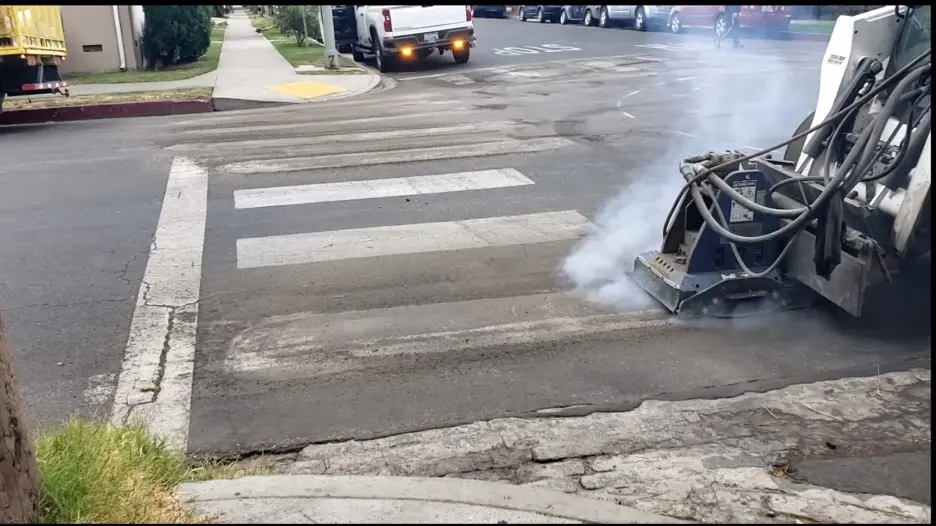
In the sprawling, car-dominated expanse of Los Angeles, where asphalt corridors often prioritize high-speed vehicular throughput over human life, communities are increasingly reaching a boiling point. The systemic lag in municipal infrastructure updates has birthed a contentious movement of tactical urbanism, most prominently embodied by groups like the Crosswalk Collective Los Angeles. These civic activists take matters into their own hands, painting unapproved crosswalks across dangerous, high-traffic intersections where pedestrians risk their lives daily.
However, the friction between citizen-led safety initiatives and municipal bureaucracy remains stark. As captured in recent reports by Streetsblog USA, city crews routinely deploy to swiftly erase these unauthorized crosswalk markings, prioritizing strict adherence to municipal codes over immediate pedestrian preservation. This ongoing saga highlights a profound philosophical and practical chasm in modern American urban planning: When official channels move at a glacial pace while preventable traffic fatalities mount, who truly owns the right-of-way?
This investigative feature examines the rise of guerrilla crosswalks in Los Angeles, the motivations driving citizens to engage in "criminal mischief" for the sake of public safety, the city’s rationale for eradicating these life-saving interventions, and the broader implications for the nationwide movement to end car dependency.
Detailed Chronology: From Grassroots Frustration to Municipal Erasure
The phenomenon of unauthorized tactical urbanism in Los Angeles did not emerge in a vacuum. It is the cumulative result of decades of car-centric infrastructure policies that have left vast swaths of the city functionally hostile to anyone not encased in two tons of steel.
The Spark of Direct Action
Frustrated by endless bureaucratic red tape, unresponsive city council districts, and multi-year feasibility studies that yield zero physical improvements, residents began organizing under banners like the Crosswalk Collective Los Angeles. Operating anonymously and under the cover of night, these urban activists target wide, poorly lit, and notoriously perilous intersections. Armed with masonry paint, rollers, and stencils, they replicate standard Department of Transportation (DOT) crosswalk striping in a matter of minutes.
These are not whimsical art projects; they are calculated, functional safety interventions. By demarcating pedestrian paths across multi-lane stroads, these groups aim to alter driver psychology, establishing a visual cue that reminds motorists pedestrians have a legal—and now visible—right to cross.
The Response: Swift Municipal Erasure
Despite the immediate utility reported by local pedestrians and neighborhood associations, the City of Los Angeles maintains a zero-tolerance policy for unauthorized pavement markings. City road crews are dispatched to scrub, sandblast, or black out the guerrilla paint with a dispatch efficiency that often eclipses the city’s routine pothole-repair timelines.
Municipal authorities argue that allowing citizens to paint their own traffic controls introduces catastrophic liability issues, creates inconsistency in street signage, and undermines the authority of trained traffic engineers. Yet, for community members watching friends and neighbors get struck down on unprotected asphalt, the city’s rapid response to remove paint—contrasted with its lethargic pace in installing official crosswalks—feels like a tragic misplaced priority.
Supporting Context & Metrics: The Crisis on American Streets
To understand why citizens are risking criminal charges to paint lines on asphalt, one must examine the grim statistical reality of pedestrian safety in Los Angeles and across the United States.
The Pedestrian Safety Crisis in Los Angeles
Los Angeles adopted the Vision Zero initiative in 2015, pledging to eliminate all traffic deaths by 2025. As the deadline passed, the city fell woefully short of its goals. Traffic fatalities, particularly among pedestrians and cyclists, have remained stubbornly high or even climbed in vulnerable, historically underinvested neighborhoods.
Infrastructural Deficits: Many Los Angeles neighborhoods lack sidewalks, pedestrian signals, and crosswalks spaced at safe intervals. Pedestrians are frequently forced to walk a half-mile or more just to reach a designated, signalized crossing.
The "Stroad" Danger: Wide, multi-lane arterial roads designed to move vehicles quickly through residential and commercial districts act as physical barriers, encouraging excessive speeding and creating lethal collision zones.
Vulnerable Demographics: Studies consistently show that pedestrian fatalities disproportionately impact low-income communities of people of color, where municipal infrastructure investment has historically lagged behind affluent enclaves.
Tactical Urbanism as a Democratic Imperative
Proponents of tactical urbanism argue that temporary, low-cost interventions serve as crucial proofs of concept. When citizens paint a crosswalk and traffic speeds noticeably drop, it provides empirical data that safety can be achieved rapidly and cheaply. Guerrilla crosswalks function as visual petitions—demands written directly on the canvas of the street, forcing local governments to acknowledge hazardous conditions they might otherwise ignore.
Official Statements and Perspectives
The battle lines between tactical urbanists and city officials reveal fundamentally opposing views on public safety, liability, and the rule of law.
The Municipal Perspective: Liability and Engineering Standards
City transportation departments operate within a strict framework of federal and state manuals, such as the Manual on Uniform Traffic Control Devices (MUTCD). Officials maintain that traffic calming and crosswalk placement must adhere to rigorous engineering studies to ensure they do not create unintended hazards.
A spokesperson for municipal public works departments previously emphasized the legal dimensions of the issue:
"While we share the community’s goal of safe streets, unauthorized pavement markings create significant legal liabilities for the city. Traffic controls must be installed by certified professionals who can guarantee they meet standardized visibility, placement, and engineering criteria. Allowing unregulated modifications sets a dangerous precedent."
The Activist Perspective: Saving Lives Now
Conversely, groups like the Crosswalk Collective view the city’s reliance on bureaucratic process as a lethal luxury. Their philosophy centers on the premise that human life outweighs municipal liability concerns.
In statements shared through digital channels, tactical urbanists argue that if the city cannot protect its residents within a reasonable timeframe, the community has an ethical obligation to step in:
"When a crosswalk is painted by residents, it is a cry for help and an act of survival. The city treats a bucket of paint applied by citizens as a crime, yet remains immune to the human toll exacted by its own failure to build safe infrastructure. A painted line saves lives tonight; a city study takes three years."
Future Outlook: The Path Forward for Urban Mobility
As cities grapple with the intersecting crises of climate change, traffic congestion, and pedestrian safety, the tension between guerrilla urbanism and institutional bureaucracy is unlikely to dissipate soon.
Bridging the Gap Between Citizens and City Hall
Several progressive municipalities across the globe are beginning to recognize the value of tactical urbanism, establishing "quick-build" programs that allow communities to propose temporary safety interventions that city engineers then review, formalize, and maintain. Los Angeles, however, remains locked in a more adversarial dynamic.
For real progress to occur, municipal leaders must evolve beyond reflexive punitive measures. Erasure of safety paint does nothing to address the underlying danger that prompted citizens to act in the first place. Until the Los Angeles Department of Transportation (LADOT) and city council districts can dramatically accelerate their deployment of physical safety infrastructure—such as raised crosswalks, bulb-outs, and rapid-flashing beacons—the impulse toward civil disobedience and guerrilla urbanism will persist.
Conclusion: Who Owns the Street?
The ongoing war over crosswalks in Los Angeles is ultimately about the democratization of public space. Streets take up the vast majority of public land in modern cities, yet they have been overwhelmingly ceded to the automobile. When residents take up rollers and paintbrushes under the cover of night, they are reclaiming that space for the human body. Whether municipal authorities choose to view these actions as criminal mischief or as an urgent wakeup call will determine the future human cost of America’s car-dependent landscape.