











Executive Overview
The public transportation sector stands at a critical human capital crossroads. As a wave of veteran professionals approaches retirement, transit agencies across North America face an urgent imperative: cultivating the next generation of industry leaders, engineers, planners, and operators. Traditionally, agencies relied on passive recruitment pipelines, posting entry-level vacancies on job boards and hoping for qualified applicants. Today, that approach is no longer viable. In an intensely competitive labor market where private sector tech, engineering, and logistics firms aggressively court top-tier university talent, public transit must reinvent how it attracts, engages, and retains young professionals.
At the heart of this workforce evolution lies the modern internship program. Far from being a mere seasonal stopgap for administrative overflow or a make-work summer project, a well-structured internship program functions as the lifeblood of an agency’s talent pipeline. It serves as an extended, real-world interview, a brand-building exercise, and a proving ground for future innovators.
Yet, building a high-impact internship program requires far more than simply onboarding a cohort of students for ten weeks between semesters. It demands deliberate strategy, institutional commitment, cross-departmental collaboration, and a culture that values fresh perspectives.
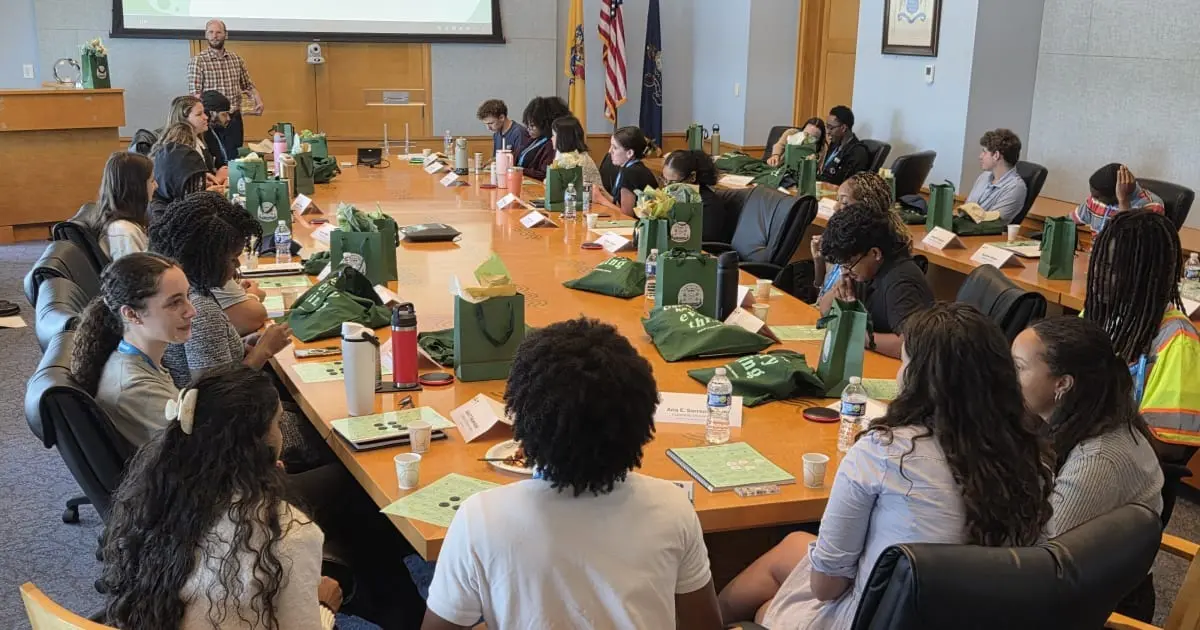
Recent insights drawn from the Delaware River Port Authority (DRPA) and the Port Authority Transit Corporation (PATCO)—highlighted in METRO Magazine’s feature, “More Than a Summer Job: Building the Next Generation of Transit Talent”—provide an illuminating blueprint. The DRPA/PATCO model demonstrates that when transit agencies treat interns as valued assets rather than temporary clerical help, both the organization and the students reap extraordinary benefits.
This comprehensive report examines the structural imperatives of transit workforce development, analyzes seven core strategies for building an optimal internship program derived from the DRPA/PATCO framework, explores the broader socioeconomic context of public sector recruitment, and outlines a future outlook for talent retention in the mass transit industry.
Detailed Chronology: The Evolution of Transit Workforce Development
To understand the current emphasis on robust internship programs, it is necessary to examine how public transit agencies historically approached talent acquisition and how external pressures forced a paradigm shift.
Phase 1: The Era of Passive Recruitment (Pre-2010s)
For decades, public transit agencies enjoyed steady, reliable pools of applicants. Civil service protections, robust pension plans, and the inherent stability of public sector employment acted as powerful magnets for job seekers. During this era, workforce development was largely reactive. When a position opened, human resources departments posted the vacancy, reviewed resumes from local applicants, and filled the seat.
Internships, where they existed at all, were unstructured and decentralized. Individual departments might bring on a family member of an employee or a local engineering student for the summer, tasking them with filing, data entry, or shadowing. Little thought was given to conversion rates, institutional branding, or structured mentorship. The goal was simply to get through the summer months with a bit of extra help.
Phase 2: The Demographic Cliff and the War for Talent (2010s–2020)
As the "Baby Boomer" generation began reaching retirement age, the transit industry confronted a looming demographic crisis. Suddenly, agencies realized they were losing decades of institutional knowledge faster than they could replace it. Compounding this challenge was the rapid evolution of transportation technology. The emergence of smart mobility, intelligent transportation systems (ITS), data analytics, zero-emission fleets, and cyber-physical security meant that modern transit agencies required a fundamentally different skill set than their predecessors.
At the same time, public sector agencies found themselves locked in a fierce "war for talent" with the private sector. Tech startups, green-energy firms, and consulting monoliths offered higher starting salaries, flexible hybrid work models, and dynamic corporate cultures that traditional transit bureaucracies struggled to match. Agencies quickly realized that passive recruitment was failing; top graduates in civil engineering, urban planning, and computer science were bypassing public transit entirely.
Phase 3: The Modern Strategic Internship Paradigm (Present)
In response to these existential labor pressures, forward-thinking transit agencies began treating talent acquisition through the lens of strategic marketing and long-term pipeline development. Pioneering organizations recognized that the best way to recruit top-tier permanent staff was to intercept them early in their academic careers.
This modern paradigm shift is exemplified by agencies like the Delaware River Port Authority (DRPA) and PATCO. Rather than viewing summer programs as an administrative burden, these organizations designed immersive, holistic experiences that immerse students in the complex ecosystem of regional mobility. By focusing on intentional recruitment, structured mentorship, real-world project ownership, and comprehensive professional development, these agencies transformed the traditional summer internship into a premier talent incubation engine.
Supporting Context & Metrics: The Business Case for Transformational Internships
The urgency of reforming transit internship programs is underscored by mounting workforce data across the transportation and public sectors. According to transportation labor studies, upwards of 40% of the legacy transit workforce became eligible for retirement over the past decade. Simultaneously, higher education institutions report a steady demand among students for experiential learning opportunities that offer social impact, technological engagement, and clear pathways to employment.
The Conversion Metric: ROI on Early Talent
Industry benchmarks consistently show that converting interns into full-time employees is significantly more cost-effective and successful than traditional external hiring.
- Reduced Time-to-Productivity: A converted intern already understands the agency’s culture, organizational structure, acronyms, and operational nuances. They require far less onboarding time than an external hire.
- Lower Turnover Rates: Studies in human resources management indicate that employees hired through structured internship conversion programs exhibit higher first- and second-year retention rates compared to cold hires. They accept positions with realistic expectations of the workplace.
- Employer Branding: Satisfied interns become powerful brand ambassadors on university campuses. Positive word-of-mouth spreads organically among student engineering societies, planning associations, and alumni networks, reducing future recruitment advertising costs.
The DRPA and PATCO Benchmark
The DRPA and PATCO model detailed in METRO Magazine illustrates how mid-to-large-scale transit agencies can operationalize these principles. Operating a complex bi-state network encompassing bridge infrastructure, toll facilities, and rapid transit rail operations requires an exceptionally diverse array of professional disciplines—from structural engineering and financial auditing to operations control and cyber security.
By analyzing how DRPA and PATCO structure their developmental programs, industry observers can distill seven foundational pillars necessary to build an optimal internship framework.
Seven Pillars to Build an Optimal Internship Program
Translating the success of high-performing agencies into actionable policy requires a systematic approach. Below are the seven core strategies transit organizations must implement to construct robust, high-yielding internship pipelines.
1. Build a Learning Experience (Not Just a Summer Job)
The foundational flaw of unsuccessful internship programs is transactional thinking: trading low-cost labor for menial tasks. To attract ambitious students, agencies must reframe the internship as an intensive, accelerated educational journey.
- Establish Clear Learning Objectives: Before a student steps foot in the office, supervisors must define what core competencies the intern will acquire by the end of the term.
- Integrate Theory with Practice: Ensure students are not merely observing, but actively applying academic theories learned in the classroom to solve tangible operational challenges facing the transit agency.
- Continuous Feedback Loops: Implement bi-weekly check-ins to monitor the learning curve, address knowledge gaps, and adjust project scopes to match the intern’s evolving capabilities.
2. Recruit With Purpose
Casting a wide, indiscriminate net rarely yields high-quality candidates. Intentional recruitment requires strategic targeting of specific academic institutions, specialized degree programs, and diverse community networks.
- Forge Academic Partnerships: Build direct relationships with career centers, faculty advisors, and student chapters of professional bodies (such as the American Society of Civil Engineers or the Women’s Transportation Seminar) at regional colleges, universities, and vocational schools.
- Articulate the Mission Value: Explicitly market the unique value proposition of public service. Many modern students are highly motivated by mission-driven work—combating climate change, enhancing equity, and serving local communities. Emphasize that working in transit is direct climate and social action.
- Inclusive Outreach: Actively engage Historically Black Colleges and Universities (HBCUs), Hispanic-Serving Institutions (HSIs), and community colleges to build a workforce that genuinely reflects the demographics of the ridership the agency serves.
3. Give Interns Meaningful Work
Nothing disengages a brilliant student faster than discovering their primary responsibility is organizing digital files or fetching coffee. Interns must be entrusted with legitimate responsibility.
- High-Impact Projects: Assign discrete projects that possess clear objectives and deliver measurable value to the organization. Whether it is analyzing ridership drop-off data, evaluating station accessibility compliance, or contributing to a state-of-good-repair engineering audit, the work must matter.
- Supportive Autonomy: Give students the freedom to explore solutions independently, balanced with the necessary supervision and mentorship to ensure they do not become overwhelmed or stalled. When interns see their final presentations or engineering recommendations adopted by the agency, their sense of ownership and dedication skyrockets.
4. Provide Dedicated Mentors
The relationship between an intern and their mentor is often the single most influential factor in determining whether that student will choose to build a career in public transportation.
- Thoughtful Pairing: Match interns with experienced, empathetic, and enthusiastic professionals working within their field of interest. Mentors should be volunteers who genuinely want to guide young talent, rather than managers assigned the task punitively.
- Career Navigation: Beyond overseeing daily tasks, mentors should serve as sounding boards for career advice, resume refinement, and interview preparation. They provide invaluable historical context and operational insight that cannot be found in textbooks.
- Cross-Generational Exchange: Emphasize that mentorship is a two-way street. While mentors impart institutional wisdom, tech-savvy interns frequently introduce senior staff to modern analytical tools, digital workflows, and fresh perspectives on problem-solving.
5. Show the Bigger Picture
Transit agencies are vast, complex socio-technical systems. An intern working in the civil engineering department may never naturally interact with the operations control center, the legal team, or the executive board unless the agency intentionally orchestrates those interactions.
- Departmental Rotations and Shadowing: Design opportunities for interns to spend time outside their immediate silos. Allow a finance intern to ride in the cab of a PATCO train with an operator, or a planning intern to shadow maintenance technicians at a rail yard.
- Exposure to Senior Leadership: Organize regular brown-bag lunch sessions or roundtable discussions with executive directors, chief engineers, and department heads. Hearing leaders articulate the agency’s long-term vision, funding hurdles, and strategic goals imbues interns with a profound appreciation for the macro-level impact of their work.
- Governance Understanding: Educate students on the political, regulatory, and public-board dynamics that govern public authorities, demystifying the intersection of public policy and operational execution.
6. Invest in Professional Development
An exceptional internship program develops the whole professional, not just the technical specialist. Technical skills get candidates through the door, but soft skills dictate how far they will climb.
- Skill-Building Workshops: Provide structured training sessions covering essential professional competencies: technical writing, public speaking, executive presentation delivery, professional networking, and project management methodologies (such as Agile or Lean in transit).
- Ask the Interns: Crucially, agency program coordinators should survey incoming cohorts during orientation to ask: What specific professional skills do you most want to develop this summer? Tailoring workshops to meet expressed student desires maximizes engagement and perceived value.
- Mock Interviews and Portfolio Reviews: Equip graduating seniors with the interview preparation and resume-polishing tools they need to succeed in the professional marketplace, positioning the agency as a dedicated career booster regardless of where the student ultimately lands.
7. Listen—and Continuously Improve
No internship program is ever perfect on the first iteration. A commitment to institutional excellence requires rigorous, honest evaluation and iterative refinement.
- Candid Feedback Mechanisms: Conduct thorough mid-term evaluations and comprehensive exit interviews with both the interns and their direct supervisors. Utilize anonymous digital surveys to encourage unvarnished critique regarding what worked, what fell flat, and what administrative hurdles hindered productivity.
- Data-Driven Iteration: Analyze conversion metrics—how many interns applied for full-time roles, how many were offered positions, and why those who declined went elsewhere.
- Evolutionary Adaptation: Use these insights to continually update recruitment protocols, onboarding orientations, mentor training modules, and project scoping for the subsequent cohort.
Official Statements & Industry Perspectives
Industry leaders and transit authorities nationwide have increasingly recognized the strategic necessity of talent pipelines. While specific program structures vary, the overarching consensus remains unified: proactive investment in young professionals is non-negotiable for future transit resilience.
In discussions surrounding the DRPA and PATCO initiatives featured in transportation media, agency administrators emphasized that treating young professionals as future colleagues rather than temporary labor fundamentally transforms organizational culture. When veteran staff take on mentoring roles, they frequently experience a renewed sense of purpose and pride in their own careers, bridging the generational divide that often characterizes large public authorities.
Furthermore, labor economists specializing in public infrastructure note that agencies failing to build structured entry pathways will continue to suffer from chronic staffing shortages. As automation, electrification, and data-driven management sweep through the transportation sector, the demand for digitally fluent transit professionals will only accelerate. Agencies that master the art of the developmental internship will secure a distinct competitive advantage in shaping the future of mobility.
Future Outlook: The Road Ahead for Transit Talent Pipelines
Looking toward the horizon, the landscape of public transportation is poised for profound transformation. Autonomous technologies, fare-payment innovations, regional decarbonization mandates, and the increasing convergence of transit with micro-mobility and smart-city infrastructure mean that the challenges facing tomorrow’s transit professionals will be vastly more complex than those of the past.
To meet this future, transit agencies must view their internship programs not as peripheral human resources initiatives, but as core components of operational strategy and innovation.
Key Trends Shaping the Future of Transit Internships:
- Multi-Disciplinary Integration: Future transit interns will increasingly hail from non-traditional majors, including data science, environmental policy, human-computer interaction, and renewable energy engineering, reflecting the shifting operational demands of modern agencies.
- Year-Round and Co-Op Expansion: While summer programs remain standard, forward-thinking agencies are expanding into year-round cooperative education (co-op) programs that allow students to alternate between academic semesters and full-time agency work, creating deeper integration.
- Digital Collaboration Hubs: Virtual and hybrid internship components will persist, allowing agencies to recruit specialized talent from regional universities that may not be immediately adjacent to transit headquarters, thereby expanding geographic diversity.
- Alumni Network Cultivation: Agencies are beginning to build formal "Transit Alumni Associations," keeping in touch with former interns who enter the private sector or consulting world, creating a valuable network of industry advocates and future partnership opportunities.
Conclusion
The ultimate measure of a transit agency’s longevity is not merely the condition of its rolling stock, tracks, or bridges, but the caliber of the minds steering its future. By embracing the comprehensive, multi-faceted approach demonstrated by agencies like the Delaware River Port Authority and PATCO, the public transportation sector can successfully bridge the generational divide.
When transit organizations build learning-centered experiences, recruit with clear purpose, assign meaningful work, provide dedicated mentorship, contextualize the bigger picture, invest in professional development, and relentlessly listen to feedback, they do more than fill summer schedules. They construct a resilient, dynamic, and visionary workforce pipeline capable of carrying public transit proudly into the decades ahead.


