Executive Overview
As the global energy landscape pivots definitively away from fossil fuels, legacy industrial states face a monumental reckoning. Illinois, historically anchored as one of the premier coal-producing giants in the United States, is currently managing the gradual sunset of a nonrenewable energy backbone. Across the sprawling landscape of the Prairie State, deep-shaft and strip-mining operations that once fueled local economies are rapidly going dark. While many of these derelict footprints are being systematically cleared and paved over for modern housing developments, commercial logistics hubs, or sprawling utility-scale solar farms, one Downstate municipality charted an entirely different, visionary course.
In O’Fallon, Illinois—a thriving municipality frequently lauded as one of the finest suburban communities in the Midwest—a 200-acre scar left behind by a century of heavy industrial extraction has undergone a breathtaking metamorphosis. What was once the St. Ellen Mine, an abandoned, ecologically compromised wasteland left to decay for thirty years, now operates as St. Ellen Park. Today, this scenic public oasis functions as a sanctuary for outdoor enthusiasts, offering a harmonious blend of paved multi-use hiking trails, thriving aquatic ecosystems, prime freshwater fishing holes, and a refuge for over 170 documented bird species.
Located less than twenty miles east of the Mississippi River from St. Louis—a vibrant Midwestern cultural hub celebrated for its walkability, rich arts scene, and expansive park systems—St. Ellen Park represents a masterclass in post-industrial ecological reclamation. By marrying municipal foresight, state environmental oversight, and community stewardship, St. Ellen Park exemplifies how defunct fossil-fuel infrastructure can be successfully reclaimed to serve future generations. This in-depth investigative report explores the chronological history of the site, its comprehensive ecological and geographical context, the logistical realities of its operation, and the broader lessons it offers for post-coal communities across the American Midwest.

Detailed Chronology: From 19th-Century Industrial Boom to 21st-Century Green Oasis
The Genesis of O’Fallon’s Coal Economy (1854)
The story of the St. Ellen Mine is inextricably linked to the rapid expansion of American infrastructure and industry during the mid-19th century. Prior to the arrival of heavy industry, the region surrounding present-day O’Fallon was defined by rolling agricultural prairies and small agrarian settlements. However, the geographic fate of the area shifted permanently in the 1850s with the westward push of the Ohio and Mississippi Railroad.
Recognizing the immense potential of the region’s rich subsurface geology—specifically the expansive Herrin coal seam that underlies much of southwestern Illinois—industrial operators moved quickly to capitalize on the resource. In 1854, operations officially commenced at what would become known as the St. Ellen Mine. The enterprise was spearheaded by Peabody Coal, a corporate entity that would, over the subsequent century, burgeon into the largest coal producer in the United States.
The establishment of the strip mine catalyzed a transformative economic boom for the fledgling town of O’Fallon. The convergence of the railroad and the mine created a symbiotic industrial engine: the railroad provided the heavy-haul logistics necessary to move vast quantities of coal to burgeoning Midwestern manufacturing centers, while the coal operations provided stable employment, municipal growth, and a permanent influx of working-class families. For over a century, the rhythm of O’Fallon’s civic life was dictated by the extraction of this foundational fossil fuel.
The Era of Abandonment and Industrial Sleep (1960–1990)
By the mid-20th century, the economic viability of the St. Ellen Mine had begun to wane. Technological shifts, changing environmental pressures, rising extraction costs, and the gradual transition of the American energy grid toward petroleum and natural gas signaled the twilight of the site’s operational lifespan. In 1960, Peabody Coal officially shuttered the St. Ellen Mine, halting extraction activities and idling the heavy machinery.

What followed was a prolonged period of neglect. For three decades, the 200-acre site sat entirely abandoned. Left to the devices of nature and human indifference, the property deteriorated into a classic post-industrial blight. Strip-mining operations of that era typically left behind severe environmental scars: barren, acidic spoil banks; erosion-prone topography; unmanaged surface water accumulation; and hazardous remnants of industrial infrastructure. For thirty years, the St. Ellen site was effectively a forgotten zone—fenced off, ecologically degraded, and largely avoided by the surrounding community that had once owed its prosperity to its output.
Municipal Acquisition and Ecological Reclamation (1990–Present)
The turning point for the property arrived in 1990, when St. Clair County stepped in to alter the trajectory of the derelict land permanently. Recognizing the parcel’s latent potential to serve the rapidly expanding population of O’Fallon and the broader Metro East region, the county acquired the 200-acre footprint.
Rather than viewing the scarred topography as an insurmountable liability, county planners and environmental remediation specialists envisioned an ambitious reclamation project. Over the ensuing years, targeted stabilization efforts were deployed to reshape the landscape. Dangerous drop-offs were graded, acid mine drainage issues were mitigated, and native flora was introduced to stabilize the fragile topsoil.
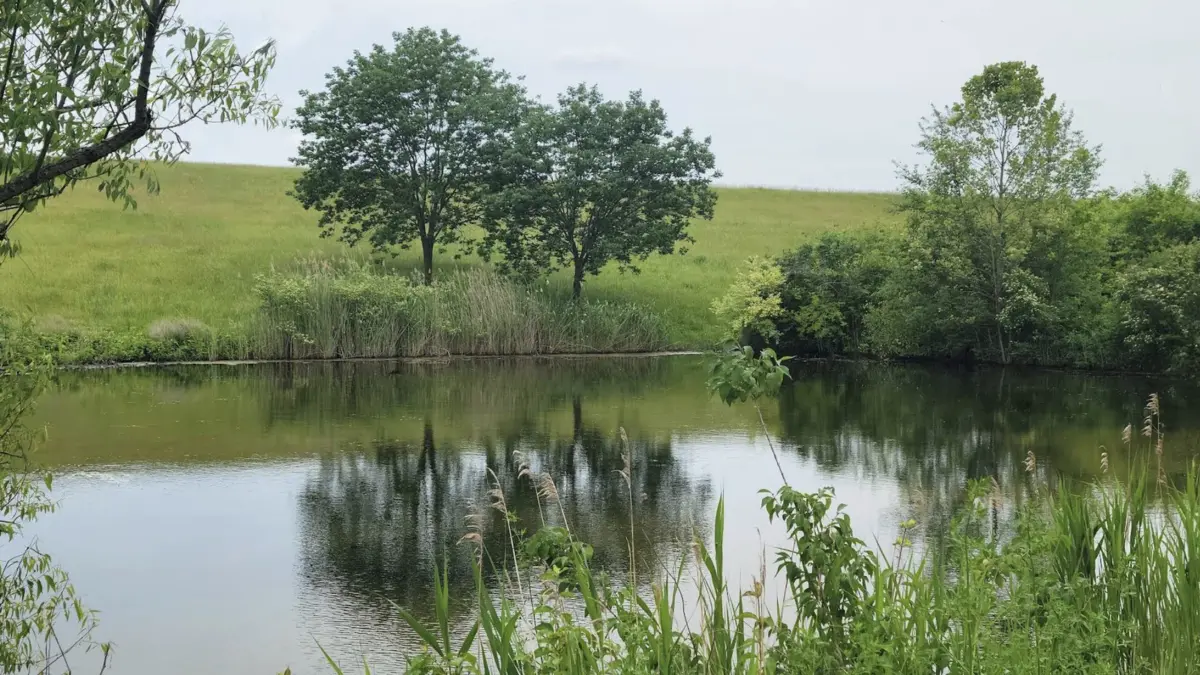
Out of the 200 total acres, an initial 85 acres were deliberately designated for public recreational development, forming the foundation of modern St. Ellen Park. The central feature of the newly engineered landscape—a prominent, rolling hill—stands as a direct physical remnant of the old strip-mining operations, now capped with rich grasses and wildflowers. Small collection ponds, originally formed by water pooling in excavated troughs, were enhanced and integrated into a cohesive hydrological network alongside a larger, deep-water lake gracing the property’s northwest border. Today, the park stands as a testament to the resilience of nature and the foresight of local governance, masking its heavy industrial past beneath a thriving canopy of green.
Supporting Context & Metrics: Geography, Ecology, and Infrastructure
Geographical Context and Accessibility
St. Ellen Park occupies a strategic geographic footprint in Downstate Illinois, situated just three miles from downtown O’Fallon. Its proximity to major transportation arteries makes it an easily accessible destination for both local residents and regional travelers.
- Proximity to St. Louis: The park is located less than twenty miles east of downtown St. Louis, Missouri. Visitors crossing the Mississippi River find themselves in a seamless transition from the urban density of St. Louis—renowned for its walkable neighborhoods, vibrant cultural institutions, and historic parks—to the tranquil, suburban-rural interface of St. Clair County.
- Air Travel Logistics: For regional and national visitors, transportation infrastructure is exceptionally robust. The park is less than ten miles from MidAmerica St. Louis Airport (BLV) in neighboring Mascoutah, an affordable and accessible facility known for its small-town charm and growing local economy. For travelers requiring major international and domestic connections, St. Louis Lambert International Airport (STL)—the largest non-hub airport in the Midwest—is a convenient 35-minute drive west across the river.
Ecological Inventory and Biodiversity Metrics
Despite its genesis as an industrial scar, decades of natural succession combined with deliberate ecological management have transformed St. Ellen Park into a biological hotspot. The park’s diverse micro-habitats—ranging from open water and marshy wetlands to upland meadows and dense scrub-shrub zones—support a remarkably rich cross-section of Midwestern flora and fauna.
- Avian Diversity: According to observational data compiled on eBird, more than 170 distinct bird species have been documented within the park boundaries. This high biodiversity index makes St. Ellen Park a premier destination for regional birdwatchers, who routinely spot waterfowl, migratory songbirds, raptors, and wading species utilizing the park’s aquatic corridors.
- Terrestrial Wildlife: The 2.4-mile paved trail system winds through dense stands of honeysuckle and native brush, creating ideal cover for a thriving population of white-tailed deer, eastern cottontail rabbits, and various small mammals. Herpetologists and wildlife observers frequently encounter native reptiles and amphibians, including eastern garter snakes, rat snakes, American toads, and several species of freshwater turtles resting along the pond banks.
- Aquatic Ecosystems: The park’s primary water body, St. Ellen Mine Lake, alongside its network of smaller ponds, supports a vibrant aquatic food web. Beyond fish populations, the waterways serve as a habitat for muskrats, amphibians, and nocturnal foraging bats utilizing the water surface for insect control.
Official Statements and Stakeholder Perspectives
The successful realization of St. Ellen Park has drawn widespread praise from regional planners, environmental advocates, and community leaders, highlighting the viability of industrial brownfield reclamation.
Dr. Aris Thorne, a regional landscape ecologist specializing in post-industrial restorations in the Midwest, notes the unique value of projects like St. Ellen Park:
"When we look at the legacy of 19th and 20th-century coal extraction in states like Illinois, the physical footprint is often viewed exclusively through a lens of liability. What O’Fallon and St. Clair County achieved with St. Ellen Park demonstrates that given adequate time, hydrological stabilization, and careful topographic redesign, these disturbed landscapes can actually outperform pristine greenfields in terms of structural biodiversity. The varied topography left by strip-mining—when properly remediated—creates micro-climates that support an astonishing array of flora and fauna."
Local municipal officials in O’Fallon have similarly emphasized the park’s role in enhancing the city’s overall quality of life. In a recent municipal statement regarding regional recreational assets, city planners underscored the economic and social dividends paid by the project:
"O’Fallon has earned a reputation as one of the most desirable places to live in Illinois precisely because we refuse to rest on our laurels. St. Ellen Park bridges our proud industrial heritage with a progressive, environmentally conscious future. It takes a landscape born from the coal shovel and turns it into a sanctuary where families can hike, fish, and connect with nature just minutes from our downtown center. It honors the labor of past generations while actively investing in the health and well-being of the next."
Recreation advocates and outdoor bloggers who frequently document the site highlight its understated charm. Reviewers from regional outdoor guides often refer to the park as "the Metro East’s best-kept secret," praising its immaculate trail maintenance, accessibility, and the surprising depth of its wilderness experience despite its suburban proximity.
Detailed Recreational Guide: Hiking and Fishing at St. Ellen Park
For visitors looking to experience the park firsthand, St. Ellen Park offers robust recreational infrastructure designed to accommodate casual walkers, serious anglers, and dedicated naturalists alike.
[Parking / Entrance]
       │
       ├──► [St. Ellen Mine Trail (2.4-Mile Paved Loop)]
       │         ├──► Upper Grassy Hill (Panoramic Farmland Views)
       │         └──► Lower Wetland & Honeysuckle Corridor
       │
       └──► [St. Ellen Mine Lake Access]
                 ├──► Concrete Boat Ramp (Non-motorized / Trolling Motors Only)
                 ├──► Floating Dock (Shoreline Angling)
                 └──► Primary Species: Largemouth Bass, Crappie, Bluegill
The St. Ellen Mine Trail
The centerpiece of the park’s land-based recreation is the St. Ellen Mine Trail, a fully paved, 2.4-mile loop that expertly navigates the park’s undulating topography. Designed to accommodate users of varying fitness levels, the trail offers an easy yet engaging excursion.
- Trail Route & Scenery: The path loops smoothly through both upper and lower elevations of the park. As hikers traverse the route, they pass the peripheries of the lakes and smaller ponds, flanked by dense thickets of honeysuckle and native grasses.
- The Summit: A highlight of the trek is the ascent up the park’s central grassy hill—the engineered remnant of the old strip-mine spoils. Reaching the crest rewards hikers with sweeping, panoramic views of the surrounding Downstate Illinois agricultural landscape, stretching out into distant farmlands.
- Wildlife Encounters: Walkers are advised to remain observant, as the trail’s interface with dense brush frequently yields close-up encounters with local wildlife, including grazing deer, darting rabbits, and sunning reptiles.
Angling at St. Ellen Mine Lake
For freshwater fishing enthusiasts, the park provides exceptional access to St. Ellen Mine Lake, a well-stocked fishery managed to support healthy recreational yields.
- Watercraft & Access: Anglers can access the water via a durable concrete boat ramp or a dedicated small floating dock. Watercraft regulations permit paddle craft such as kayaks and canoes, as well as small watercraft utilizing electric trolling motors, ensuring a peaceful, noise-free aquatic environment.
- Target Species: Historical catch data and angler reports confirm that the lake harbors robust populations of gamefish. The most commonly caught species include:
- Largemouth Bass: Highly active along weed beds and submerged structural drop-offs.
- Crappie: Frequently located near deeper water structures and submerged brush.
- Bluegill: Abundant throughout the shallow bays, making the lake ideal for youth and recreational fishing.
- Regulatory Compliance: While admission to St. Ellen Park is entirely free of charge and open to the public during operational hours, all visitors engaging in fishing activities must possess a valid fishing license issued by the Illinois Department of Natural Resources (IDNR) and adhere strictly to state bag and size limits.
Future Outlook: The Legacy of Reclamation in the Post-Coal Midwest
As the transition away from fossil-fueled energy generation accelerates nationwide, the blueprint established at St. Ellen Park offers valuable lessons for industrial communities across the United States. The successful transformation of a 19th-century coal strip mine into a vibrant 21st-century ecological and recreational hub proves that post-industrial lands do not have to remain permanent economic and environmental liabilities.
Looking forward, regional planners in St. Clair County and O’Fallon continue to evaluate opportunities for further enhancements at St. Ellen Park. Proposed future initiatives include the expansion of native prairie restoration projects, the installation of interpretive signage detailing the site’s rich mining and labor history, and the potential integration of extended multi-use trail networks connecting the park directly into O’Fallon’s broader municipal greenway system.
Ultimately, St. Ellen Park stands as a powerful physical metaphor for renewal. By honoring the industrial labor that originally built the community while aggressively championing environmental restoration, O’Fallon has crafted a sustainable model for the future—proving that even the deepest scars of the carbon economy can be healed, re-cultivated, and returned to the people as a lasting natural legacy.