









Executive Overview
Public transportation in the United States is rarely viewed through the lens of its vast, highly sophisticated manufacturing and supply chain engine. To the average daily rider, transit is simply the bus that arrives at the corner, the subway car that dives beneath the city streets, or the light rail vehicle that navigates urban congestion. Yet behind every mile of track laid, every electric bus deployed, and every fare gate maintained lies a massive, intricate partnership between public transit agencies and the private sector.
Representing this vital industrial backbone is the American Public Transportation Association’s (APTA) Business Members Board of Governors (BMBG). Comprising more than 850 private-sector companies—ranging from agile small businesses and regional enterprises to multinational corporations—the BMBG acts as the unified voice for the suppliers, manufacturers, engineers, technology providers, and financial institutions that power the nation’s transit network.
At the helm of this organization is Ray Melleady, President and CEO of Ster Seating. Bringing a rare and valuable perspective shaped by decades on both sides of the aisle—starting his career as a hands-on diesel technician at the Southeastern Pennsylvania Transportation Authority (SEPTA) before transitioning to private-sector leadership—Melleady has made collaboration the defining hallmark of his tenure.
In an in-depth conversation with METRO Magazine Executive Editor Alex Roman, Melleady outlined a comprehensive roadmap for the BMBG. His vision centers on modernizing procurement practices, amplifying legislative advocacy, championing responsible innovation, and bridging the gap between public agency needs and private-sector capabilities. As the industry faces critical legislative reauthorizations, rapidly evolving cybersecurity threats, and pressing workforce development challenges, Melleady’s leadership underscores a fundamental truth: the health of public transit agencies and the vitality of the private business community are inextricably linked.
Detailed Chronology and Evolution of the BMBG
To understand the current trajectory of the Business Members Board of Governors, one must examine its evolution as an institutional force within APTA. Historically, private-sector suppliers often operated in a transactional silos—viewed strictly as vendors whose engagement began and ended with the execution of a sales contract. Over the past decade, however, that dynamic has undergone a fundamental paradigm shift.
The Foundation of Shared Enterprise
Public transportation has always been a shared enterprise. While public agencies hold the mandate to deliver reliable, equitable mobility to communities, the vast majority of federal transit investment flows directly into the private sector. Private companies design the rolling stock, engineer complex tunneling projects, install advanced signaling and fare-collection technologies, and maintain the continuous supply chains required to keep systems operational.
Recognizing that neither sector can succeed in isolation, the BMBG was structured to give these private entities a formalized, influential voice in shaping national transit policy. The board operates through a network of seven specialized committees, each chaired by active business members, with direct representation on APTA’s Executive Committee and Board of Directors.

Crafting the 2026–2028 Strategic Plan
Under Melleady’s guidance, the BMBG recently crystallized its operational focus through the development of its ambitious 2026–2028 Strategic Plan. This framework was not drafted in a vacuum; rather, it was forged through an extensive, listening-first methodology that included widespread surveys, in-depth stakeholder interviews, and rigorous working sessions with business members across all industry sectors and company sizes.
The resulting strategic plan focuses on four core pillars:
- Securing Long-Term Transit Funding: Partnering with agency leaders to build unassailable economic arguments for federal and state capital investment.
- Modernizing Procurement: Moving away from hyper-customized vehicle specifications toward standardized, configurable platforms that lower costs and accelerate delivery times.
- Championing Responsible Innovation & Cybersecurity: Establishing trusted frameworks for emerging technologies, including artificial intelligence and digital infrastructure protection.
- Strengthening Member Value: Expanding accessibility, engagement tools, and leadership opportunities for historically underrepresented enterprises, particularly small, minority-owned, and disadvantaged business enterprises (DBEs).
Supporting Context & Industry Metrics: The Economic Engine of Transit
Public transit is frequently evaluated strictly through operational metrics—ridership numbers, on-time performance, and farebox recovery ratios. However, the economic footprint of the industry extends far beyond the passenger platform.
The Multiplier Effect of Federal Investment
Every dollar invested in public transportation yields a profound macroeconomic return. According to industry analyses, federal transit investments support hundreds of thousands of high-quality manufacturing, engineering, and construction jobs across nearly every state in the nation—many of which are located far outside major metropolitan bus and rail corridors. When a transit agency in a major city procures a fleet of new zero-emission buses, that single contract activates a sprawling domestic supply chain encompassing component manufacturers, raw material suppliers, software developers, and specialized testing facilities.
Bridging the Manufacturing and Procurement Divide
One of the most persistent operational hurdles facing the modern transit industry has been the friction inherent in legacy procurement processes. For decades, transit agencies have operated under specifications that heavily customized vehicle and infrastructure orders to meet hyper-local preferences. While understandable from an agency-specific engineering standpoint, this practice has introduced severe operational bottlenecks:
- Escalating Costs: Custom engineering drives up unit prices for agencies already operating under tight fiscal constraints.
- Extended Lead Times: Tailored components stretch manufacturing timelines, delaying fleet modernization.
- Supply Chain Strain: Suppliers are forced to constantly pivot production lines, limiting their ability to invest in long-term research and development.
Under Melleady’s leadership, the BMBG—in close coordination with initiatives like APTA’s Original Equipment Manufacturer (OEM) Task Force—has championed a shift from customization to configuration. By bringing agency leaders, OEMs, and tier-one suppliers to the same table, the industry is establishing standardized platform baselines with modular, configurable options. Agencies benefit from lower acquisition costs and faster delivery schedules, while manufacturers gain the operational stability necessary to invest in innovation.
Official Insights & Leadership Perspectives
Ray Melleady’s unique background informs his pragmatic, partnership-driven approach to industry governance. Having spent his early career turning wrenches as a diesel technician at SEPTA before ascending to the executive suite of Ster Seating, Melleady speaks fluently across the cultural divide that can sometimes separate public agency bureaucrats from private corporate leadership.
Redefining the Vendor Relationship
Addressing common misconceptions about the role of transit suppliers, Melleady emphasizes that business members are far more than mere transactional vendors:
"Probably the notion that business members are primarily vendors—companies whose engagement begins and ends with a sales relationship. The reality is much richer than that. Business members are the industry’s manufacturing base, its engineering expertise, and much of its innovation capacity. They invest capital years ahead of contracts, develop the technologies agencies will rely on next, and employ skilled workers in communities across the country."
This perspective reframes business members as foundational architects of the transit ecosystem. When agencies and suppliers view each other as long-term strategic partners, adversarial dynamics give way to collaborative problem-solving.
A United Front on Legislative Advocacy
Advocacy represents one of the most powerful intersection points for APTA’s diverse membership. While transit agencies articulate the vital civic narrative—focusing on community equity, mobility access, and carbon reduction—business members bring the undeniable economic argument: jobs, manufacturing output, and regional economic resilience.
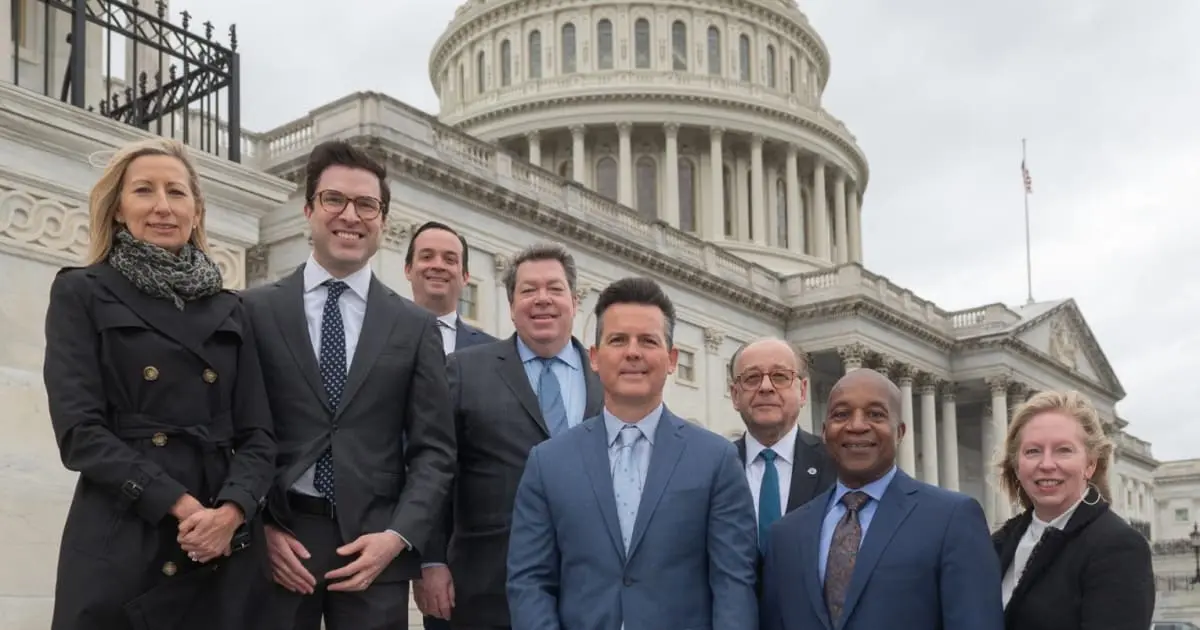
Melleady highlights the impact of coordinated advocacy efforts, such as business member fly-ins, Capitol Hill delegations, and district-level mapping initiatives executed alongside APTA’s Government Affairs team:
"Transit agencies speak compellingly about ridership and community service. Business members complement that story with the economic case—the thousands of suppliers across nearly every state, the manufacturing and engineering jobs in communities far from any bus route, and the significant economic return generated by every dollar of transit investment. Together, those two narratives resonate across the political spectrum because they’re grounded in jobs, opportunity, and community."
With major federal surface transportation reauthorization cycles on the horizon, this unified front is more critical than ever. Melleady notes that the willingness of agency and business leaders to stand shoulder-to-shoulder is a testament to the maturation of the industry.
Future Outlook: Navigating Workforce, Technology, and Funding
As the public transportation sector looks toward the remainder of the decade, it confronts a complex matrix of systemic challenges. Navigating these headwinds will require unprecedented cooperation between the public and private spheres.
1. Workforce Development and Institutional Knowledge
The transit industry faces a dual workforce challenge: an aging demographic of seasoned professionals retiring from agency leadership and technical roles, alongside the urgent need to attract a new generation of skilled talent.
Melleady views workforce development through a deeply personal lens. Recalling his own start as a young technician in Philadelphia, he stresses that the industry must actively build accessible career on-ramps:
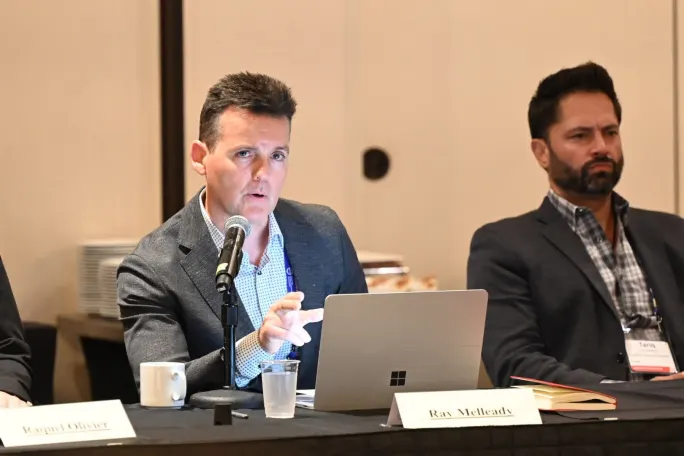
"On workforce, business members bring training capacity, apprenticeship models, and career pathways, and I can speak personally to what this industry offers, because it gave a young technician from Philadelphia a career I never could have imagined. We owe the next generation those same on-ramps, and building them is shared work."
Private-sector partners are increasingly collaborating with transit agencies to deploy structured training pipelines, technical certifications, and apprenticeship programs that bridge the skills gap, particularly in advanced propulsion technologies, zero-emission fleet maintenance, and digital systems management.
2. Technology Adoption, AI, and Cybersecurity
The rapid acceleration of digital transformation in public transit—ranging from automated vehicle locators and predictive maintenance algorithms to artificial intelligence-driven scheduling and tap-to-ride payment architectures—has introduced immense operational opportunities alongside heightened vulnerability.
To prevent agencies from reacting haphazardly to the breakneck pace of technological change, the BMBG has committed to acting as a trusted, neutral convener. By developing shared toolkits, industry best practices, and cybersecurity frameworks, the board ensures that agencies and suppliers can integrate emerging technologies thoughtfully and securely.
3. Securing Long-Term Fiscal Resilience
Funding uncertainty remains a perennial shadow over public transit planning. Capital projects require multi-year financial visibility, yet agencies frequently grapple with shifting budgetary landscapes at both the federal and state levels.
By pairing agency-led community impact narratives with the private sector’s hard economic data, APTA and the BMBG are building an unassailable case for sustained federal investment. The strategy emphasizes that funding public transit is not merely an operational subsidy, but an essential capital investment in national economic productivity.
Conclusion: A Legacy of Collaboration
As Ray Melleady’s tenure as Chair of the Business Members Board of Governors progresses, his ultimate measure of success is refreshingly straightforward. He envisions an industry where the artificial wall between "public agency" and "private vendor" has been permanently dismantled, replaced by an integrated, highly communicative ecosystem of partners working toward common goals.
Reflecting on his desired legacy for the BMBG, Melleady concludes:
"I’d like them to say the BMBG helped bring agencies and business members closer together—that we built genuine partnerships around issues of common interest, from advocacy to procurement to innovation, and that those partnerships produced real results: fairer contracts, streamlined costs, stronger small business participation, and a more resilient supply chain. More than anything, I’d like members to feel that their voice shaped the direction of this association."
Through rigorous strategic planning, proactive advocacy, and an unwavering commitment to mutual respect, Melleady and the 850+ members of the BMBG are ensuring that America’s public transportation network is not only equipped to meet the demands of today, but engineered to thrive for generations to come.