




Executive Overview
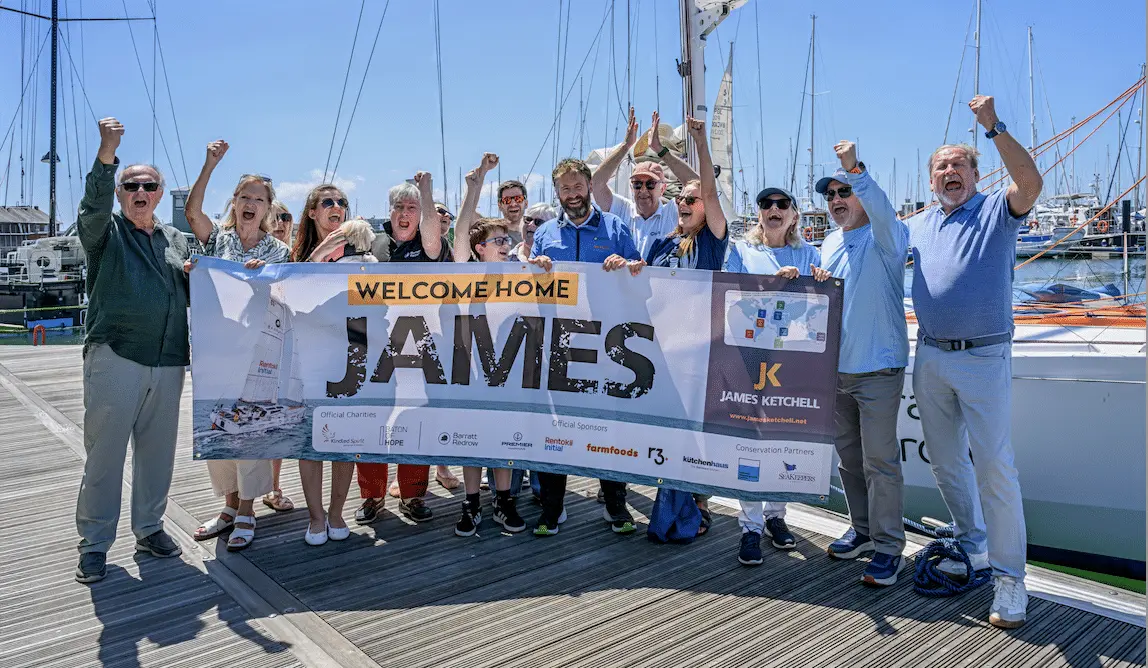
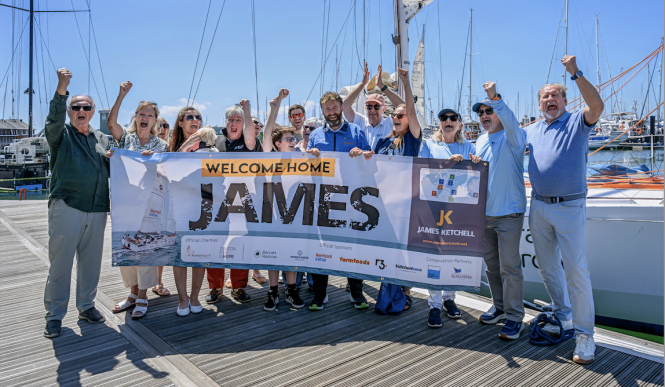
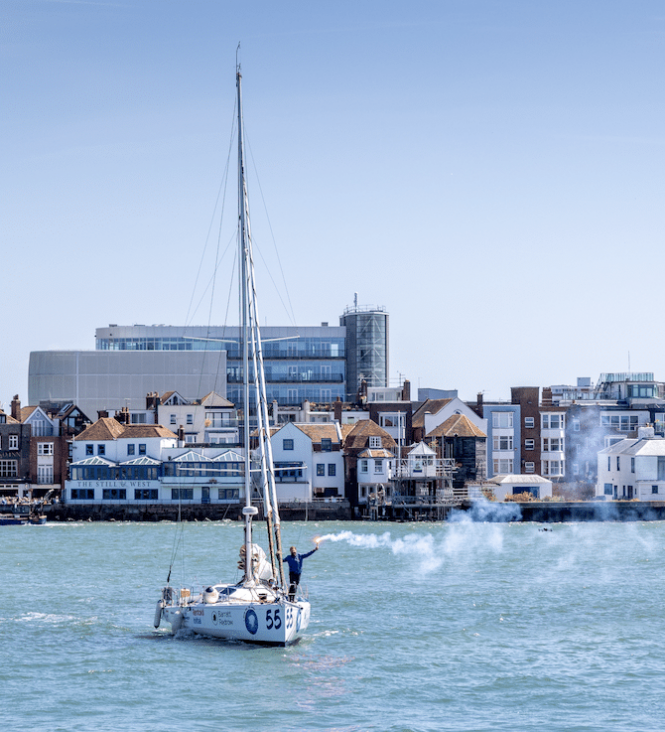
On June 13, 2026, British adventurer James Ketchell guided his sailing vessel, Mindset, back into the waters of Gosport, United Kingdom. With that final nautical mile, Ketchell secured his place in the history books, officially becoming the first person in human history to circumnavigate the globe by land, air, and sea.
Yet, this monumental milestone was about far more than securing a unique superlative in the record books. Ketchell’s 30,000-nautical-mile maritime odyssey—which commenced in July 2025—was explicitly designed to serve a higher purpose. Operating as an Ambassador for the UK’s National Oceanography Centre (NOC) and in close partnership with The International SeaKeepers Society’s DISCOVERY Programme, Ketchell transformed his solo vessel into a mobile scientific research platform.
Throughout his multi-year, multi-modal global traverses—which previously included cycling around the world in 2013 and piloting a gyrocopter globally in 2019—Ketchell has continually redefined the boundaries of human endurance. By weaving vital oceanographic data collection, microplastic research, global mapping initiatives, and youth educational outreach into the fabric of his latest voyage, he has established a new paradigm for modern exploration: one where elite physical endurance and rigorous scientific stewardship sail side by side.
Detailed Chronology: The Making of a World-First Circumnavigation
Phase One: The Groundwork (2013 Cycling Expedition)
To fully appreciate the magnitude of Ketchell’s 2026 maritime homecoming, one must examine the painstaking chronology of a lifelong dedication to extreme exploration. The foundation of his global circumnavigation trilogy was laid in 2013, when Ketchell undertook a gruelling unsupported bicycle journey around the world. Pedalling tens of thousands of kilometres across diverse continents, extreme weather systems, and varied terrain, he proved his mental fortitude and physical resilience on land. This initial feat established his reputation not merely as an endurance athlete, but as a methodical planner capable of executing complex global itineraries.
Phase Two: Taking to the Skies (2019 Gyrocopter Flight)
Having conquered the earth by bicycle, Ketchell turned his sights upward. In 2019, he embarked on an aviation milestone by flying a lightweight gyrocopter around the globe. Navigating volatile airspaces, unpredictable meteorological patterns, and remote refuelling stops, this aerial leg pushed the boundaries of solo aviation. By the time he successfully touched down, Ketchell had mastered two distinct modes of planetary transit: land and air. All that remained was the vast, untamed expanse of the world’s oceans.
Phase Three: The Maritime Masterpiece (July 2025 – June 2026)
The final chapter of Ketchell’s grand design commenced in July 2025, when he cast off aboard his sailing vessel, Mindset. Setting a course that would test the limits of seamanship and psychological endurance, his 30,000-nautical-mile route was as perilous as it was ambitious.
Leaving the UK behind, Ketchell’s itinerary took him across the Atlantic to Lanzarote and Cape Verde, before cutting across to the coast of Brazil. From there, he steered his vessel southward toward the treacherous waters of Cape Town, onward across the formidable Southern Ocean swells toward Hobart, Australia, and finally around the legendary, storm-tossed graveyard of Cape Horn.
Battling towering seas, volatile gales, and the relentless isolation of solo oceanic passage-making, Ketchell navigated the globe’s most unforgiving marine corridors. When Mindset finally crossed its wake in Gosport on June 13, 2026, it marked the completion of the ultimate planetary trifecta: land, air, and sea.
Supporting Context & Metrics: Science on the High Seas
While navigating treacherous oceans single-handedly would be more than enough for most adventurers, Ketchell’s 2025–2026 voyage was defined by its aggressive scientific agenda. Partnering with The International SeaKeepers Society’s DISCOVERY Programme and the National Oceanography Centre (NOC), Ketchell integrated active marine research into his daily sailing routines.
1. Deploying Argo Floats in the Indian Ocean
Among his primary scientific duties was the deployment of an autonomous Argo float in the remote expanses of the Indian Ocean. Argo floats are critical components of the global ocean-monitoring architecture, consisting of a fleet of more than 4,000 free-drifting profiling floats that measure temperature, salinity, and current velocity in the upper 2,000 metres of the ocean. By launching this device, Ketchell directly contributed to a vital global network that transmits real-time data to oceanographers and climate scientists worldwide, enhancing our understanding of global heat distribution and climate change.
2. Microplastic Sampling for the NOC
In an era defined by anthropogenic marine pollution, quantifying the proliferation of microplastics is an urgent priority. Throughout his voyage, Ketchell actively gathered microplastic water samples as part of a collaborative research initiative between the NOC and The International SeaKeepers Society. These samples provide marine biologists with granular data regarding pollutant concentrations in remote oceanic sectors, helping researchers track the dispersion and density of microplastic debris on a planetary scale.
3. Mapping the Ocean Floor: Seabed 2030
Despite covering more than 70 percent of the Earth’s surface, the ocean floor remains largely unmapped—we possess better maps of the surface of Mars than we do of our own seabeds. To combat this knowledge gap, Ketchell contributed valuable bathymetric data to the Nippon Foundation-GEBCO Seabed 2030 Project. This collaborative international initiative aims to compile all available bathymetric data to produce the definitive map of the world ocean floor by 2030, aiding in tsunami forecasting, marine habitat protection, and navigation safety.
4. Educational Outreach and Social Impact
Beyond hard science, Ketchell utilized his journey as a live educational platform. Through satellite technology, he conducted live virtual link-ups, distributed educational worksheets, and hosted interactive classroom sessions with schools in ports along his route.
Furthermore, the expedition served as a high-profile fundraising vehicle for two prominent charitable organizations:
- Boton of Hope: A grassroots initiative dedicated to breaking the stigma of mental health and driving suicide awareness and prevention.
- Kindled Spirit: A humanitarian charity providing vital rehabilitation, support, and empowerment to victims of human trafficking.
Official Statements and Industry Perspectives
The convergence of elite endurance athletics and critical scientific research garnered widespread praise from international conservation and maritime leaders.
Gill Rodrigues, Director of International Relations at The International SeaKeepers Society, underscored the significance of the collaboration:
"James has shown how adventure and science can sail side by side. We couldn’t be prouder to welcome him home. His willingness to take on demanding research protocols while managing a solo circumnavigation demonstrates an extraordinary level of commitment to our planet’s future."
Upon reflecting on his cumulative career of extreme exploration—which includes rowing across oceans, scaling the heights of Mount Everest, cycling across continents, flying gyrocopters through global airspaces, and single-handedly sailing the world’s most dangerous seas—James Ketchell shared his perspective on the journey:
"I am extremely grateful to all my partners that have supported me over so many years and continue to do so for this challenge. After rowing oceans, climbing Everest, cycling, flying and sailing around the world, I’m not sure what challenge is left on this planet."
Industry stakeholders have similarly lauded the expedition. Leading maritime organizations, including CharterWorld, have championed the model established by SeaKeepers’ DISCOVERY Programme, emphasizing that private vessels and ocean travellers possess an untapped, highly efficient capacity to act as mobile scientific laboratories. By harnessing the global yachting and adventuring community, researchers gain access to remote, data-deficient ocean regions that would otherwise require costly, dedicated scientific research vessel expeditions.
Future Outlook: A New Era for Adventure and Ocean Conservation
James Ketchell’s historic circumnavigation marks a watershed moment in the evolution of modern exploration. For centuries, global exploration was defined by extraction, conquest, and territorial mapping. Today, as humanity confronts unprecedented ecological crises—ranging from warming seas and acidifying waters to pervasive microplastic contamination—the definition of an "adventurer" has fundamentally shifted.
The successful completion of Ketchell’s journey proves that the modern explorer’s primary weapon is no longer just endurance; it is collaboration. By bridging the worlds of extreme sport, cutting-edge oceanography, and global youth education, initiatives driven by organizations like The International SeaKeepers Society are charting a new course for marine conservation.
As SeaKeepers continues to expand its international network of vessel owners, captains, and scientific researchers, expeditions like Ketchell’s serve as a blueprint for the future. They demonstrate that when adventurers open their cockpits and cabins to science, the barriers between extreme human achievement and planetary stewardship dissolve. James Ketchell may be left wondering what challenges remain on this planet, but the trail he has blazed ensures that future explorers will look at the oceans not merely as obstacles to be conquered, but as vital ecosystems to be understood, protected, and preserved.