






Executive Overview
For more than a decade, Dr. Britta Baechler has dedicated her career to understanding the invisible threads connecting human consumption to planetary decline. As the Director of Ocean Plastics Research for the Ocean Conservancy, her life’s work has largely been confined to the controlled environment of the laboratory—analyzing hundreds of samples, poring over dense environmental datasets, and theorizing about the ultimate resting place of synthetic polymers once they escape human hands.
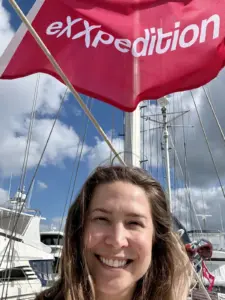
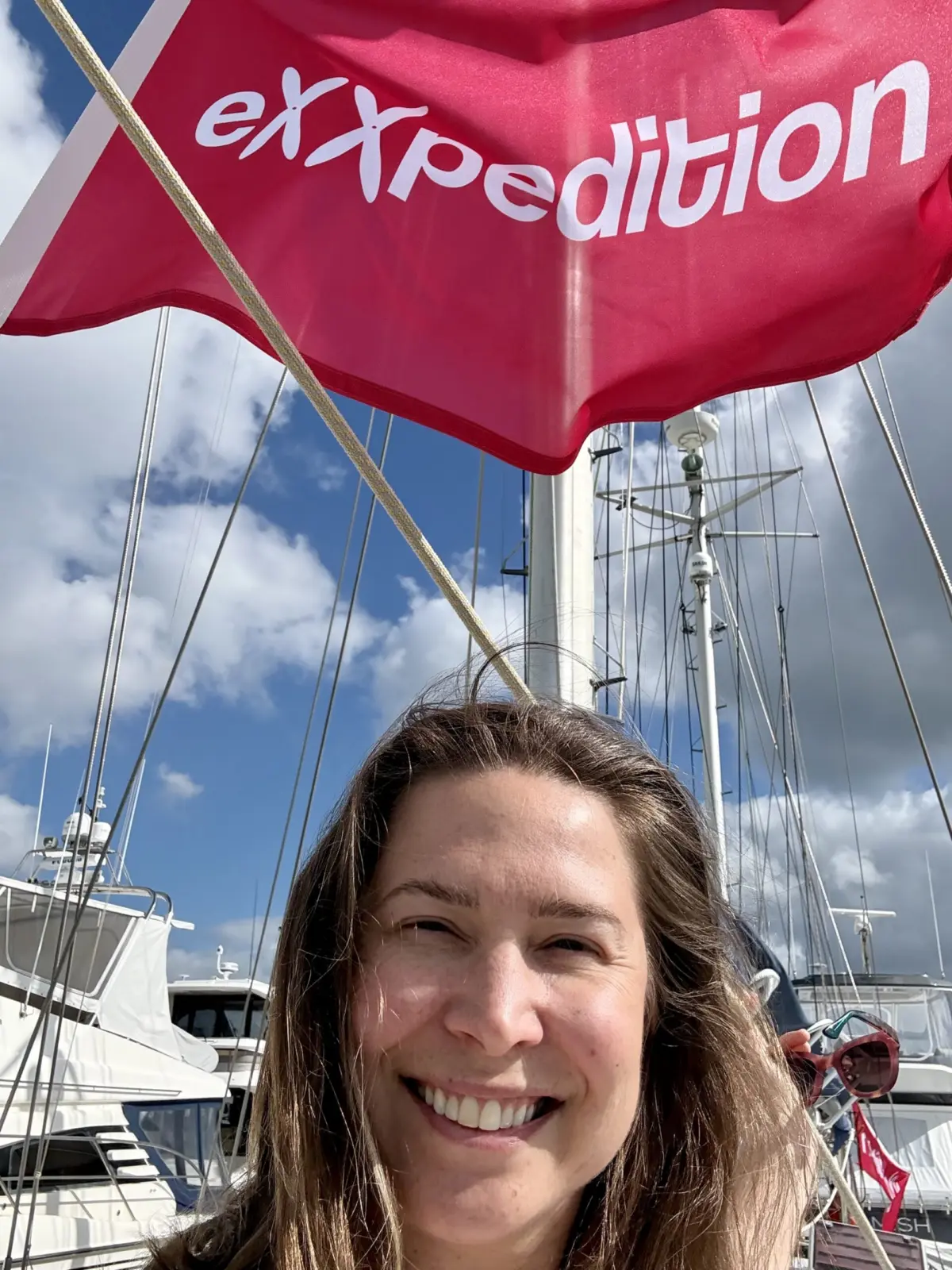
However, theoretical science can only tell part of the story. Driven by a desire to witness the phenomenon at its source, Dr. Baechler recently traded her lab coat for a lifejacket, embarking on a transformative 10-day scientific voyage across the South Pacific. Joining the all-female crew of eXXpedition—a pioneering organization dedicated to highlighting the impact of plastics on marine health—she stepped aboard the 70-foot research vessel Wind Shift to sail from Auckland, New Zealand, to the picturesque Bay of Islands.
The mission was as rigorous as it was urgent: to investigate how land-based consumer goods translate into ubiquitous, microscopic pollutants in some of the most remote marine ecosystems on Earth. Working alongside a diverse multidisciplinary team of engineers, circular economy strategists, sustainable fashion advocates, and roboticists, Dr. Baechler confronted the chilling reality of plastic pollution head-on. From the bustling metropolitan streets of Auckland to the protected shores of Aotea Great Barrier Island, the voyage yielded profound insights into how synthetic debris permeates the global marine environment.
The findings are both a sobering reminder of the scale of the crisis and a rallying cry for systemic policy change. As microplastics—particularly microscopic fibers shed from everyday textiles—continue to saturate pelagic waters, the scientific community is shifting its focus from passive observation to aggressive, proactive mitigation. This deep dive examines the expedition, the scientific methods deployed at sea, the underlying metrics of the microplastic crisis, and the actionable solutions required to protect our oceans for generations to come.
Detailed Chronology: Ten Days on the South Pacific
The first leg of the eXXpedition South Pacific voyage—running from late April to early May—was designed to capture a holistic snapshot of the plastic continuum, tracing pollution from its urban origins on land to its ultimate dispersion in the open ocean.
Days 1–3: Urban Footprints and Terrestrial Sources
The expedition commenced in Auckland, New Zealand’s largest urban center. Before setting sail, the all-female crew didn’t just look at the sea; they analyzed the ground beneath their feet. Utilizing measuring tapes, field equipment, and observational mapping, the researchers surveyed city streets to gauge how urban infrastructure contributes to the initial transport of macro- and micro-debris.
Cities serve as the primary nurseries for plastic pollution. Tire particles, discarded single-use packaging, cigarette butts, and eroded synthetic materials are routinely washed down storm drains by rainwater, funneling directly into coastal estuaries and, ultimately, the open sea.
Days 4–7: Crossing the Hauraki Gulf to Remote Shores
Leaving the city behind, the Wind Shift set a course across the Hauraki Gulf toward Aotea Great Barrier Island. Despite being celebrated for its rugged wilderness, dark skies, and protected coastlines, the island proved immune to the planetary reach of plastic waste.
Upon arrival, the crew partnered with Sustainable Coastlines, a prominent local environmental non-profit, to execute a comprehensive beach cleanup and audit on a remote stretch of sand. What they encountered was a microcosm of global consumerism: weathered bottle caps, fragmented food packaging, colorful plastic pellets (nurdles), and tangled commercial fishing debris. These items bore the distinct scars of weathering—sun-bleached, wave-battered, and ground down into brittle, jagged fragments. The discovery underscored a foundational truth of modern oceanography: plastic does not respect remoteness. Ocean currents and atmospheric deposition ensure that even the most isolated sanctuaries become repositories for human waste.
Days 8–10: Science at Sea and Pelagic Sampling
The final phase of the journey brought the crew into open pelagic waters, where the primary work shifted to marine sampling. Deploying manta tow nets—long, cone-shaped mesh nets towed alongside the vessel—the team captured surface-water samples to quantify microplastic concentrations far from shore.
For Dr. Baechler, processing these samples aboard a rolling vessel provided an immediate test of endurance. Sorting microscopic synthetic fibers from krill-laden seawater under a dissecting microscope while battling seasickness is an exercise in extreme scientific focus. Yet, the data harvested during these harrowing hours at sea provided invaluable evidence of the sheer density of microplastic pollution drifting silently beneath the ocean’s surface.
Supporting Context & Metrics: The Ubiquity of Microfibers
To comprehend the severity of the crisis observed during the eXXpedition voyage, one must examine the macro-level data surrounding plastic production and degradation. Plastics do not biodegrade; instead, they photodegrade, breaking down under ultraviolet light and mechanical wave action into progressively smaller pieces without altering their chemical structure.
The Dominance of Microplastic Fibers
Among the myriad forms of plastic pollution recovered from both the Auckland street surveys and the open-ocean manta trawls, one culprit emerged above all others: microplastic fibers.
Defined as synthetic filaments no wider than a human hair, microplastic fibers are now recognized as the most abundant type of microplastic found in global aquatic and terrestrial environments. While they can originate from degraded ropes, cigarette filters, and industrial wet wipes, the overwhelming majority stem from a surprising, everyday source: our wardrobes.
- The Textile Connection: Modern clothing is heavily reliant on synthetic polymers such as polyester, nylon, acrylic, and spandex. Every time these garments are worn, rubbed, or washed, they shed microscopic threads.
- The Laundry Loop: Research indicates that a single standard load of domestic laundry can release up to 18 million microfibers into wastewater systems. Wastewater treatment plants, while effective at capturing larger solids, often fail to trap these sub-millimeter filaments, allowing them to bypass filtration and flow directly into rivers, estuaries, and oceans.
- Pelagic Dispersal: The discovery of these fibers floating miles away from the nearest washing machine or human settlement illustrates the terrifying efficiency of global ocean currents. Once airborne or waterborne, microfibers travel vast distances, bioaccumulating within marine food webs as they are ingested by zooplankton, shellfish, and finfish.
The Human and Ecological Toll
The presence of synthetic polymers in the marine environment poses complex biochemical challenges. Microplastics act as chemical sponges, absorbing persistent organic pollutants (POPs), heavy metals, and pathogens from the surrounding seawater. When marine organisms ingest these particles, these toxins can transfer into their tissues, moving upward through the marine food chain and raising legitimate concerns regarding human seafood consumption and endocrine disruption.
Official Perspectives and Expert Insights
The strength of the eXXpedition model lies in its interdisciplinary approach. By bringing together women from structural engineering, circular economy strategy, sustainable fashion, and robotics, the voyage fostered a holistic dialogue that bridged the gap between academic research and applied industry solutions.
Reflecting on her time aboard the Wind Shift, Dr. Baechler emphasized that the crisis, while daunting, must serve as a catalyst for systemic action rather than a source of paralysis:
"Studying plastic pollution from the deck of a boat in some of the most remote waters in the Southern Hemisphere made me appreciate the work I do even more. It also made me appreciate how important people are in this giant puzzle of plastic pollution solutions. The plastic pollution crisis is a human problem, and solving it requires all of us."
Dr. Baechler noted that the physical discomforts of life at sea—the seasickness, the relentless motion, and the painstaking hours spent peering through microscope lenses—were minor grievances compared to the moral imperative of the mission:
"Going to sea, doing the science, and pushing through discomfort to collect data that matters was not easy. We were seasick some days and exhilarated others. Despite that fact, we showed up for it fully, every day. The plastic is out there, even in far-flung corners of the ocean. And the answer is not to be paralyzed by that fact, but to use it as fuel."
Future Outlook: Turning the Tide Through Policy and Innovation
While beach cleanups and surface trawls are vital for raising public awareness and removing immediate hazards, marine scientists and conservationists agree that remediation alone cannot solve the crisis. Humanity cannot clean its way out of a plastic flood; we must shut off the tap at the source.
Addressing the plastic pollution epidemic requires a three-pronged approach:
- Upstream Policy Reform: Governments must implement robust regulatory frameworks that hold manufacturers accountable for the entire lifecycle of their products, encouraging extended producer responsibility (EPR) and restricting unnecessary single-use plastics.
- Better Product Design: The textile and manufacturing industries must transition toward biodegradable natural fibers and redesign synthetic textiles to minimize shedding during manufacturing and consumer use.
- Targeted Waste Management Infrastructure: Significant capital investment is required globally to upgrade municipal wastewater and solid waste management systems, ensuring that industrial and residential runoff is adequately scrubbed before reaching natural waterways.
The Immediate Solution: Washing Machine Filters
Fortunately, when it comes to the most prolific form of ocean plastic—microfibers—an immediate, highly effective, and economically viable technological solution already exists: external and integrated washing machine filters.
Operating on the exact same mechanical principle as household dryer lint traps, these specialized washing machine filters utilize tightly woven mesh screens to capture up to 90% of microfibers before wastewater leaves the home. Mandating the installation of these filters in new washing machines—and incentivizing retrofits for existing appliances—represents one of the most cost-effective legislative and consumer interventions available today.
A Call to Action
As environmental advocates mark Plastic Free July, the path forward is clear. Organizations like the Ocean Conservancy are urging citizens to channel their eco-anxiety into political advocacy. By contacting elected officials and demanding legislation that mandates microplastic fiber filters in residential and commercial laundry systems, everyday individuals can exert a profound influence on environmental health.
The journey from Auckland to the Bay of Islands ultimately reaffirmed a timeless truth: our oceans are remarkable ecosystems well worth fighting for. Whether viewed from the deck of a 70-foot sailing vessel in the South Pacific or through the lens of a laboratory microscope, the ocean demands our protection—not just for its own sake, but for the future of humanity.
The eXXpedition South Pacific I voyage successfully concluded its mission, operating from April 27 to May 6, 2026. Further details regarding the expedition’s research data, itinerary, and ongoing conservation initiatives can be accessed via official maritime and conservation portals.