






Executive Overview
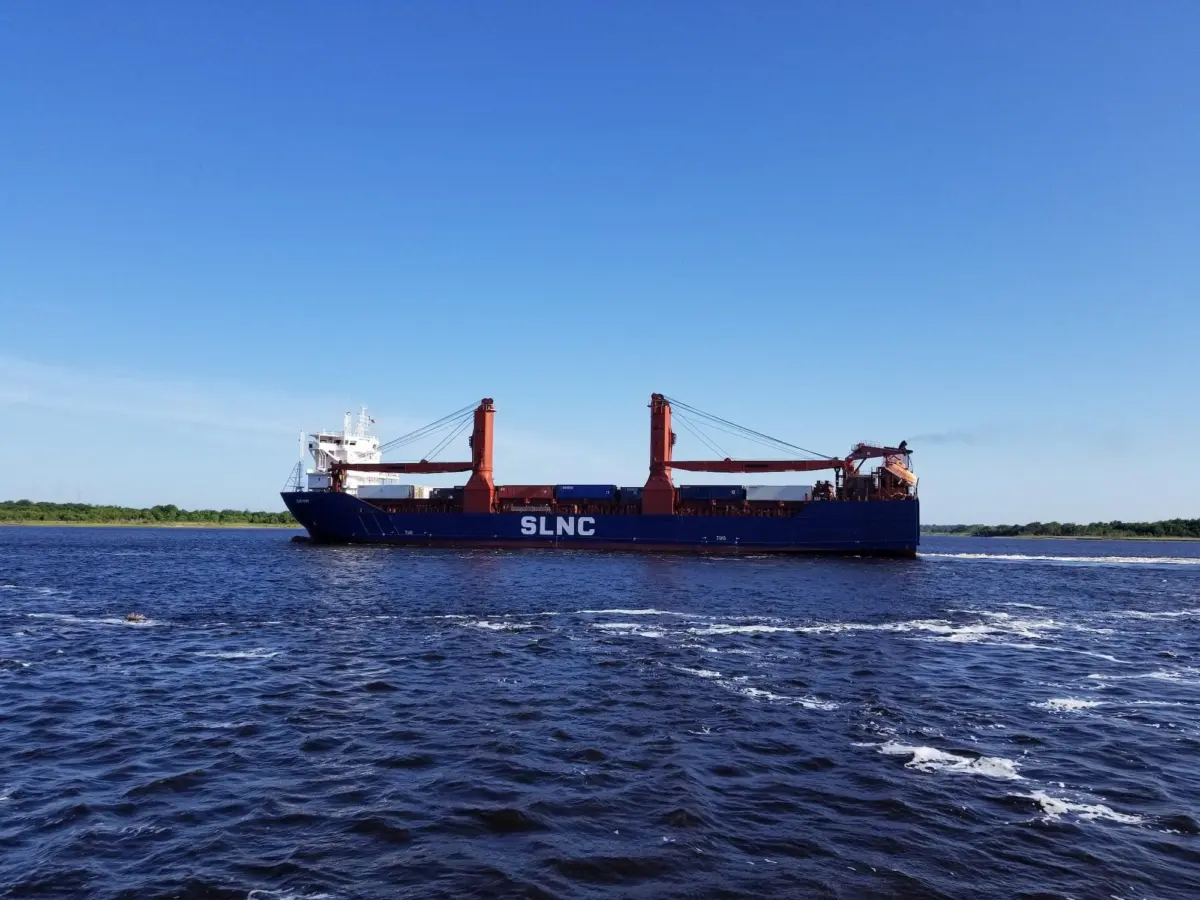
On August 18, the SLNC York, a highly specialized, U.S.-flagged multipurpose heavy-lift cargo vessel, suffered a critical maritime emergency while transiting the vast waters of the Pacific Ocean. The vessel, operated by the West Palm Beach, Florida-based Schuyler Line Navigation Company (SLNC), began taking on water under circumstances that remain under active investigation. Facing a potentially catastrophic flooding scenario, the ship’s command and technical teams executed emergency damage control protocols before making the calculated decision to evacuate the vessel.
In a seamless mid-ocean rescue operation, all crew members were safely transferred to the nearby commercial vessel Pacific Yantai, which had altered its course to render assistance. According to official statements from SLNC, there were no casualties or injuries, and all personnel have been fully accounted for.
While the SLNC York is currently reported to be in a stable condition, the incident has sent ripples through both the commercial shipping sector and U.S. defense logistics circles. The SLNC York is not merely a commercial asset; it is an active participant in the United States Maritime Administration’s (MARAD) Maritime Security Program (MSP). This program maintains a fleet of commercially viable, militarily useful U.S.-flagged merchant vessels designed to sustain global sealift capabilities for the Department of Defense (DoD) during times of conflict or national emergency.
As salvage teams, the U.S. Coast Guard, and the Japan Coast Guard coordinate a complex recovery operation to escort the vessel to a port of refuge, the incident highlights the operational vulnerabilities of the aging U.S. merchant fleet and the logistical challenges of open-ocean salvage in the strategically vital Indo-Pacific theater.
Detailed Chronology of the Incident
The emergency involving the SLNC York unfolded over several critical hours in the deep waters of the Pacific Ocean, a region characterized by its isolation and challenging salvage logistics.
[Honolulu, HI] ---> (Water Ingress / Emergency Declared - Aug 18) ---> [Naha, Japan (Intended)]
                                   |
                                   v
                    [Crew Evacuated to Pacific Yantai]
                                   |
                                   v
                    [Pacific Yantai Transits to Yeosu, ROK]
Departure and Transit
The SLNC York departed Honolulu, Hawaii, laden with cargo, bound for Naha, Okinawa Prefecture, Japan—a critical logistical hub for both commercial goods and U.S. military installations in the Western Pacific. The voyage was progressing along standard transpacific shipping lanes when, on August 18, onboard sensors and watchstanders detected a sudden and unexpected rise in bilge levels, indicating active water ingress.
Damage Control and Emergency Response
Upon identifying the flooding, the crew immediately initiated emergency stations. Damage control teams worked to isolate the source of the water ingress and stabilize the vessel’s internal bulkheads. Although the ship’s bilge pumps and onboard damage control systems were activated, the rate of water entry prompted the captain, in consultation with SLNC’s shore-side technical management, to prepare for a precautionary evacuation.
The Rescue Operation
A distress broadcast and Automated Mutual-Assistance Vessel Rescue (AMVER) alert were initiated. The Pacific Yantai, a bulk carrier operating in the immediate vicinity, responded to the call. The vessel altered its course to intercept the listing SLNC York.
Under challenging open-ocean conditions, the entire crew of the SLNC York abandoned ship in an orderly fashion and was successfully transferred to the Pacific Yantai. The precision of the evacuation ensured that no injuries were sustained during the high-risk transfer.
+-------------------------------------------------------------------------+
|                      KEY TIMELINE OF EVENTS                             |
+----------------------+--------------------------------------------------+
| Date / Time (approx) | Event Description                                |
+----------------------+--------------------------------------------------+
| Mid-August           | SLNC York departs Honolulu, Hawaii, bound       |
|                      | for Naha, Japan.                                 |
+----------------------+--------------------------------------------------+
| August 18            | Water ingress detected; crew initiates damage    |
|                      | control protocols; emergency declared.           |
+----------------------+--------------------------------------------------+
| August 18 (Late)     | Precautionary evacuation executed; crew safely   |
|                      | boards the responding vessel, Pacific Yantai.    |
+----------------------+--------------------------------------------------+
| August 19 – Present  | Pacific Yantai reroutes to Yeosu, South Korea;   |
|                      | salvage operations and investigations commence.   |
+----------------------+--------------------------------------------------+
Post-Evacuation Status
Following the evacuation, the SLNC York remained afloat and stable, riding on its watertight subdivisions. The Pacific Yantai resumed transit, updating its Automatic Identification System (AIS) destination to Yeosu, Republic of Korea, where the evacuated crew is expected to be repatriated. Meanwhile, emergency response vessels and salvage tugs have been dispatched to secure the abandoned cargo ship and prepare it for emergency towing.
Supporting Context & Technical Metrics
To understand the operational significance of this incident, it is essential to examine the technical profile of the SLNC York alongside the broader strategic framework of the U.S. merchant marine fleet.
Vessel Profile: SLNC York
The SLNC York is a highly versatile, ice-class multipurpose heavy-lift and roll-on/roll-off (RoRo) cargo ship. Built in 2010, the vessel is engineered to transport specialized, heavy, and oversized cargoes that standard container ships cannot accommodate. This includes military vehicles, generators, construction equipment, and localized infrastructure components.
- Name: SLNC York
- Operator: Schuyler Line Navigation Company (SLNC)
- Flag State: United States
- Year of Build: 2010
- Length Overall (LOA): 141.6 meters (464.5 feet)
- Beam (Width): 21.02 meters
- Gross Tonnage (GT): 12,679 tons
- Deadweight Tonnage (DWT): Approximately 9,500 metric tons
- Ice Class: Equipped for operation in moderate ice conditions, indicating a reinforced hull structure.
- Lifting Capacity: Outfitted with two heavy-lift cranes, each capable of lifting up to 350 metric tons, providing a combined tandem lift capacity of 700 metric tons.
- Service Speed: 15.5 knots
+-------------------------------------------------------------+
|               SLNC YORK: TECHNICAL PROFILE                  |
+------------------------------------+------------------------+
| Metric                             | Specification          |
+------------------------------------+------------------------+
| Length                             | 141.6 meters           |
| Deadweight Tonnage                 | ~9,500 mt              |
| Gross Tonnage                      | 12,679 GT              |
| Crane Capacity (Tandem Lift)       | 700 metric tons        |
| Service Speed                      | 15.5 knots             |
| Ice Class Rating                   | Yes (Reinforced Hull)  |
+------------------------------------+------------------------+
The Strategic Importance of the Maritime Security Program (MSP)
The SLNC York is one of only 60 vessels enrolled in the Maritime Security Program (MSP), administered by the U.S. Maritime Administration (MARAD).
The MSP was established under the Maritime Security Act of 1996 to ensure the United States retains access to a fleet of modern, commercially viable, U.S.-flagged, and U.S.-crewed merchant ships. These vessels operate in international commerce during peacetime but are legally obligated to be made available to the Department of Defense to meet military sealift requirements during war, national emergencies, or humanitarian crises.
   +-----------------------------------------------------------------+
   |              U.S. Maritime Security Program (MSP)               |
   +-----------------------------------------------------------------+
   |                                                                 |
   |  [ Commercial Trade ] <--- Peacetime Operations ---> [ Profit ] |
   |                                                                 |
   |                              |                                  |
   |                              v                                  |
   |                                                                 |
   |  [ National Emergency ] <--- Activated by DoD ---> [ Sealift ]  |
   |                                                                 |
   +-----------------------------------------------------------------+
The loss or long-term disablement of any vessel within the MSP fleet represents a direct blow to U.S. strategic sealift capacity. The U.S. military relies heavily on these commercial partners to transport up to 90% of the cargo required by joint forces operating overseas.
Because the SLNC York is a heavy-lift and RoRo vessel, its tactical utility is disproportionately high. It can access austere ports, self-discharge heavy military hardware without relying on shore-based infrastructure, and operate in challenging environments due to its ice-class hull.
Official Statements and Emergency Coordination
In the wake of the incident, Schuyler Line Navigation Company and allied maritime authorities have maintained a highly controlled flow of information, focusing on the safety of life at sea and ongoing recovery efforts.
Schuyler Line Navigation Company (SLNC) Statement
In an official communique, SLNC emphasized the efficacy of their emergency training and the rapid response of their crew:
"All crew members remain safe, uninjured, and fully accounted for. The crew and technical teams took immediate action to control the flooding. As a precaution, the entire crew was transferred to the Pacific Yantai, which was nearby and responded to assist. The vessel remains stable and is expected to receive assistance from a support vessel for the voyage to port."
SLNC did not disclose the precise geographic coordinates of the SLNC York at the time of the incident, nor did they detail the current rate of water ingress, citing the ongoing, sensitive nature of the salvage operations.
Regulatory and Search & Rescue (SAR) Agency Involvement
Because the incident occurred in the Pacific transit corridor, international coordination has been paramount. SLNC confirmed it is working in lockstep with multiple national agencies:
- United States Coast Guard (USCG): Monitoring the vessel’s stability, potential environmental hazards (such as fuel spills), and verifying the safety of the evacuated crew.
- Japan Coast Guard (JCG): Assisting in coordinating emergency response assets, given the vessel’s proximity to Japanese maritime search and rescue zones and its destination of Naha, Okinawa.
- Classification Societies and Insurers: Actively participating in formulating the salvage plan, assessing structural integrity, and evaluating potential ports of refuge.
Future Outlook, Salvage Operations, and Strategic Implications
The resolution of the SLNC York incident will unfold across three distinct phases: salvage and towing, incident investigation, and broader strategic policy assessments.
Phase 1: The Salvage Challenge and Ports of Refuge
The immediate priority is the safe recovery of the SLNC York. Salvage in the open Pacific is a logistically demanding endeavor. Ocean-going salvage tugs must be dispatched to intercept the drifting, unmanned vessel.
               [ Abandoned SLNC York ]
                         ^
                         | (Tug Connection)
                         |
               [ Ocean Salvage Tug ]
                         |
                         +---> [ Port of Refuge Selection ]
                                    |
                                    +---> Naha, Japan (Logistically Close)
                                    |
                                    +---> Yeosu, South Korea (Repair Facilities)
Upon arrival, salvage masters must board the vessel, assess the water level in the flooded compartments, secure the source of the ingress (if possible), and establish a secure towing bridle.
Selecting a "Port of Refuge" is a delicate political and environmental decision. Coastal states are often reluctant to admit damaged vessels taking on water due to the risk of sinking in shipping channels or causing environmental pollution from leaking fuel tanks.
Given the SLNC York’s destination of Naha, Japan, and the rescue vessel Pacific Yantai’s destination of Yeosu, South Korea, either nation could serve as a destination for the disabled vessel, depending on which port authority grants entry permissions.
Phase 2: Root Cause Investigation
Once the vessel is safely moored in a shipyard, a comprehensive investigation will be launched by MARAD, the U.S. Coast Guard, and the vessel’s classification society. Investigators will focus on several potential failure points:
- Hull Structural Integrity: Given the ship’s age (built in 2010) and its ice-class designation, investigators will examine the hull for stress fractures, weld failures, or corrosion-induced wastage.
- Sea Chest or Valve Failure: A common cause of sudden, uncontrollable water ingress in large commercial vessels is the failure of sea chests, sea-water cooling pipes, or major overboard discharge valves.
- Shaft Seal Malfunction: The stern tube seal, which prevents water from entering the vessel where the propeller shaft exits the hull, is another critical point of vulnerability that will be scrutinized.
- External Impact: Investigators will inspect the underwater hull for signs of collision with semi-submerged objects, such as lost shipping containers, which can puncture steel plating at cruising speeds.
Phase 3: Strategic Implications for U.S. Maritime Policy
The SLNC York incident highlights a growing concern among defense planners: the vulnerability and shrinking capacity of the U.S. merchant marine.
The U.S.-flagged commercial fleet has dwindled significantly over the past half-century. With only 60 ships in the MSP, the temporary or permanent loss of a highly capable heavy-lift vessel like the SLNC York leaves a gap in the Pentagon’s sealift readiness.
If the Indo-Pacific region were to experience a geopolitical crisis, the availability of such vessels would dictate the speed and scale of the U.S. military response.
+-------------------------------------------------------------------------+
|                  STRATEGIC RISK ASSESSMENT MATRIX                       |
+--------------------+----------------------------------------------------+
| Vulnerability Area | Description & Strategic Impact                      |
+--------------------+----------------------------------------------------+
| Fleet Attrition    | The loss of even one MSP vessel significantly      |
|                    | reduces specialized heavy-lift sealift capacity.    |
+--------------------+----------------------------------------------------+
| Geographic Scope   | The vast distances of the Pacific delay salvage    |
|                    | response times, leaving assets vulnerable.         |
+--------------------+----------------------------------------------------+
| Crewing Crisis     | Incidents in remote areas underscore the reliance  |
|                    | on highly trained, increasingly scarce U.S. crews. |
+--------------------+----------------------------------------------------+
This incident is likely to be cited in future congressional hearings regarding the National Security Multi-Mission Vessel (NSMV) program and initiatives aimed at revitalizing domestic shipbuilding and expanding the U.S. merchant fleet.
For now, the maritime community watches the Pacific horizon, hoping that swift salvage actions can preserve a vital national security asset and prevent a localized emergency from becoming a total loss.