By Philippe Lazaro
Digital Content Manager
Executive Overview
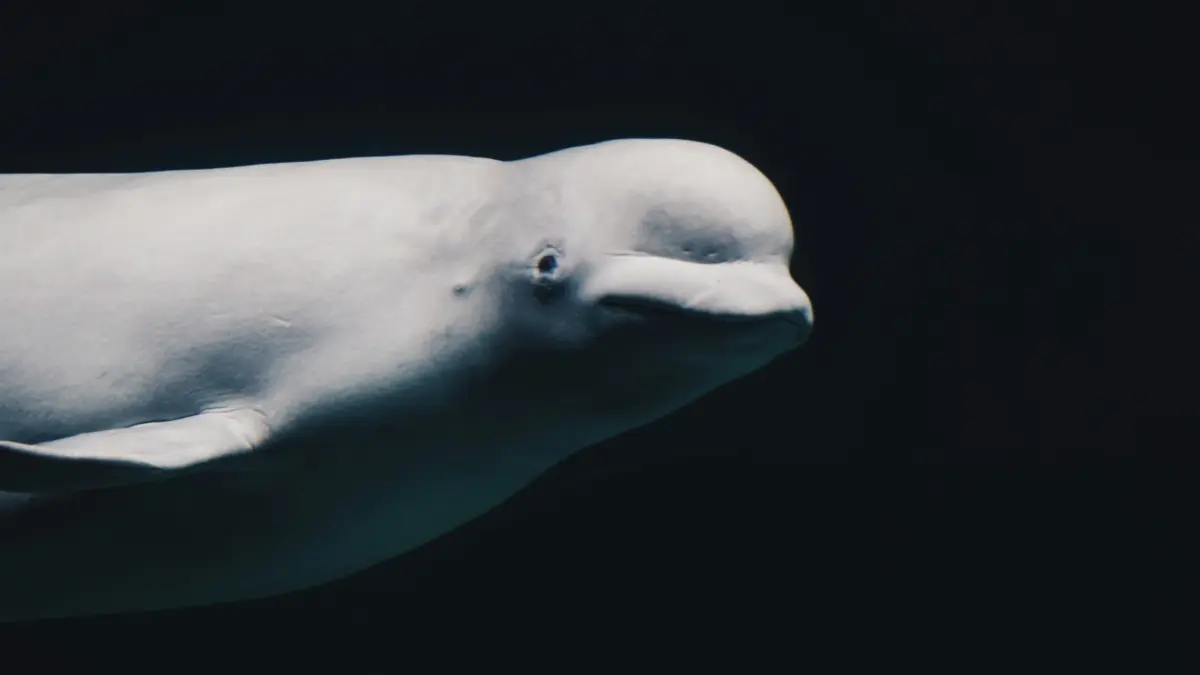
If you stand along the banks of the St. Lawrence River in Quebec on a crisp morning, you might catch an unexpected flash of ivory beneath the dark current. It is a beluga whale—a striking white cetacean gliding through a freshwater corridor hundreds of miles away from the open ocean. To the casual observer, finding whales in a river might seem anomalous. Yet these Arctic-native mammals have inhabited this complex watershed for millennia, navigating shipping lanes, dodging kayaks, and surfacing against a backdrop of Canadian townships and farmland.
However, the residency of the St. Lawrence belugas is more than a biological curiosity; it is a living geological archive. Their presence is the direct result of a vanished sea, carved out by the retreat of the colossal Wisconsin ice sheet some 15,000 years ago.

Today, this isolated population stands at a catastrophic crossroads. Having survived the end of an ice age, centuries of industrial transformation, and decades of commercial hunting, the St. Lawrence belugas face a sweeping modern crisis: rapid climate change and a warming Arctic. As northern waters warm and sea ice dwindles, the ecological barriers that historically protected these whales are crumbling. Invasive predators, surging industrial maritime traffic, and rising water temperatures threaten to erase a lineage that has called the St. Lawrence home for 10,000 years. This is the story of what a retreating glacier left behind, and what an overheating ocean now threatens to take away.
Detailed Chronology: From Ancient Ice to Modern Estuary
To understand how Arctic belugas came to live permanently in the St. Lawrence River, one must look back nearly 15,000 years into the Pleistocene epoch, when North America looked entirely different than it does today.
1. The Wisconsin Ice Sheet and the Birth of the Champlain Sea
At the height of the last ice age, an immense sheet of ice known as the Wisconsin glacier blanketed much of North America, its sheer weight depressing the Earth’s crust beneath it by hundreds of meters. As global temperatures began to rise roughly 15,000 years ago, the glacier initiated a slow, monumental retreat.
The colossal weight of the melting ice had carved and depressed the land, allowing cold seawater from the Atlantic Ocean to rush inland and flood the low-lying basin. This colossal body of water was the Champlain Sea. Stretching from the modern-day Atlantic coast westward toward the Great Lakes and up into what is now New York State, the Champlain Sea transformed the geography of eastern North America.

2. A Subarctic Ecosystem in Inland North America
During the height of the Champlain Sea’s existence, marine life flourished in waters that now sit beneath agricultural fields, forests, and suburban developments. Whales, walruses, narwhals, humpbacks, fin whales, bowhead whales, and multiple species of seals and sealskin-wearing pinnipeds roamed the inland sea.
Fossil evidence of these marine mammals has been systematically uncovered across the St. Lawrence lowlands, stretching from Quebec City all the way to the Ottawa Valley. Scientists have unearthed ancient remains buried beneath ordinary farm soil and suburban lots. Notably, in 2001, researchers at the Université du Québec à Montréal recovered a remarkably well-preserved beluga fossil carbon-dated to more than 10,000 years old.
3. The Great Retreat and Genetic Isolation
As the ice age drew to a close, the depressed landmass began a slow geological rebound, rising back up as the weight of the ice disappeared. This rebound caused the Champlain Sea to drain back out toward the Atlantic, leaving behind the remnants of the St. Lawrence River and its vast estuary.
While most marine mammals retreated northward with the receding cold-water habitats, a specific population of beluga whales chose to stay. Trapped by the changing geography, these whales took up permanent residence in the newly formed St. Lawrence estuary. Over thousands of years, this stranded population became genetically isolated from all other beluga groups in northern Canada, Alaska, and Russia.
Through generations of adaptation, their life cycle, migration patterns, and social structures evolved to harmonize intimately with the St. Lawrence ecosystem. For Indigenous communities inhabiting the region, these whales became a vital subsistence resource, anchoring traditional food security and cultural heritage for millennia.
Supporting Context & Metrics: A Species Under Seige
Despite successfully weathering thousands of years of environmental shifts, the St. Lawrence beluga population is now critically endangered. Their numbers have plummeted to a fraction of their historical baseline, caught in a multi-front war of human industrialization and ecological disruption.
Demographic Collapse
At the turn of the 20th century, scientists estimate that roughly 10,000 beluga whales inhabited the St. Lawrence River. Today, that number has collapsed dramatically. Official estimates place the remaining population at approximately 1,800 individuals, with recent demographic surveys suggesting the true count may hover dangerously close to 900.
While commercial hunting was a primary driver of their initial decline—a practice that thankfully continued only until 1979—stopping the hunt was not enough to save them. The modern St. Lawrence watershed is heavily industrialized, exposing the whales to:
- High Contaminant Loads: Persistent organic pollutants, heavy metals, and industrial runoff accumulate in the food web, compromising the whales’ immune and reproductive systems.
- Intense Vessel Traffic: Commercial cargo ships, whale-watching boats, and recreational watercraft crowd the estuary.
- Acoustic Pollution: Underwater engine noise disrupts the sophisticated echolocation belugas rely on to navigate, hunt for food, and communicate.
The Arctic Feedback Loop and Orca Invasions
Compounding these local stressors is an existential threat from the north: climate change. The Arctic is warming nearly four times faster than the rest of the planet. As summer sea ice continues its precipitous decline, historical ecological boundaries are breaking down.
The reduction of sea ice has opened previously impassable northern routes, allowing killer whales (orcas)—apex predators capable of hunting all Arctic whale species, including belugas—to venture deeper into traditional beluga habitats. Less ice means fewer natural sanctuaries for belugas to evade these new, highly efficient predators.
Furthermore, satellite data from the National Snow and Ice Data Center (NSIDC) paints a grim picture of the overarching trend. Every year around the third week of September, scientists measure the Arctic sea ice minimum—the point at which summer melting reaches its maximum extent before winter refreezing begins. The last 19 September minimums (recorded between 2007 and 2025) represent the 19 lowest sea ice extents on record. Measured across nearly five decades of continuous satellite observation, the downward trajectory is relentless and unambiguous.
Official Statements and Conservation Perspectives
Conservation scientists and environmental advocates emphasize that the plight of the St. Lawrence belugas is emblematic of broader systemic failures in ocean management.
"The beluga in the St. Lawrence is a living record of what the ocean once was and a clear signal of what it is rapidly becoming," notes marine researchers tracking the population. "Our ocean shapes life in ways that travel far inland and last much longer than our short-sighted economic planning anticipates."
Environmental organizations, including the Ocean Conservancy, have intensified calls to protect vulnerable marine populations through targeted biodiversity initiatives and ecosystem-based management. Conservation experts stress that different beluga populations—such as the St. Lawrence group and Alaska’s endangered Cook Inlet belugas—have spent millennia developing distinct genetic adaptations.
"Groups of belugas in places like the St. Lawrence River and the Arctic have been separated for such long periods that they highlight the critical importance of genetic diversity when it comes to climate resilience," conservation advocates state. "Losing an isolated population like the St. Lawrence belugas cannot simply be offset by pointing to healthy beluga numbers in another part of the world. They represent thousands of years of unique history, culture, and evolutionary adaptation."
Future Outlook: Charting a New Course for Cetaceans
The warming of our oceans and the systematic loss of Arctic sea ice are accelerating on a timeline far faster than the glacial retreats of prehistory. If current trajectories hold, the unique lineage of the St. Lawrence beluga could vanish within our lifetimes, taking with it a 10,000-year biological legacy.
However, conservationists argue that extinction is not inevitable if society takes decisive regulatory action. Legislative measures are currently being championed to mitigate the human-induced pressures facing large marine mammals.
Chief among these legislative solutions is the proposed Whale CHARTS Act. If enacted, the legislation would significantly reduce fatal ship strikes by amending the National Oceanic and Atmospheric Administration’s (NOAA) near-real-time monitoring and mitigation programs. By improving our understanding of baleen and sperm whale migration pathways, feeding grounds, mating areas, and calving sites, authorities can implement dynamic speed restrictions and shipping lane adjustments to protect vulnerable cetaceans.
Ultimately, saving the St. Lawrence beluga requires a dual-track approach: aggressive global action to curb greenhouse gas emissions and stabilize Arctic temperatures, paired with rigorous local protections to clean the watershed, reduce vessel noise, and restrict industrial encroachment.
As these ivory ghosts of the ice age continue to navigate the murky, industrialized currents of the St. Lawrence River, they serve as both a poignant reminder of our planet’s deep glacial past and an urgent warning about the fragile future of our marine ecosystems.