By Philippe Lazaro
Digital Content Manager | Special Environmental Report
Executive Overview
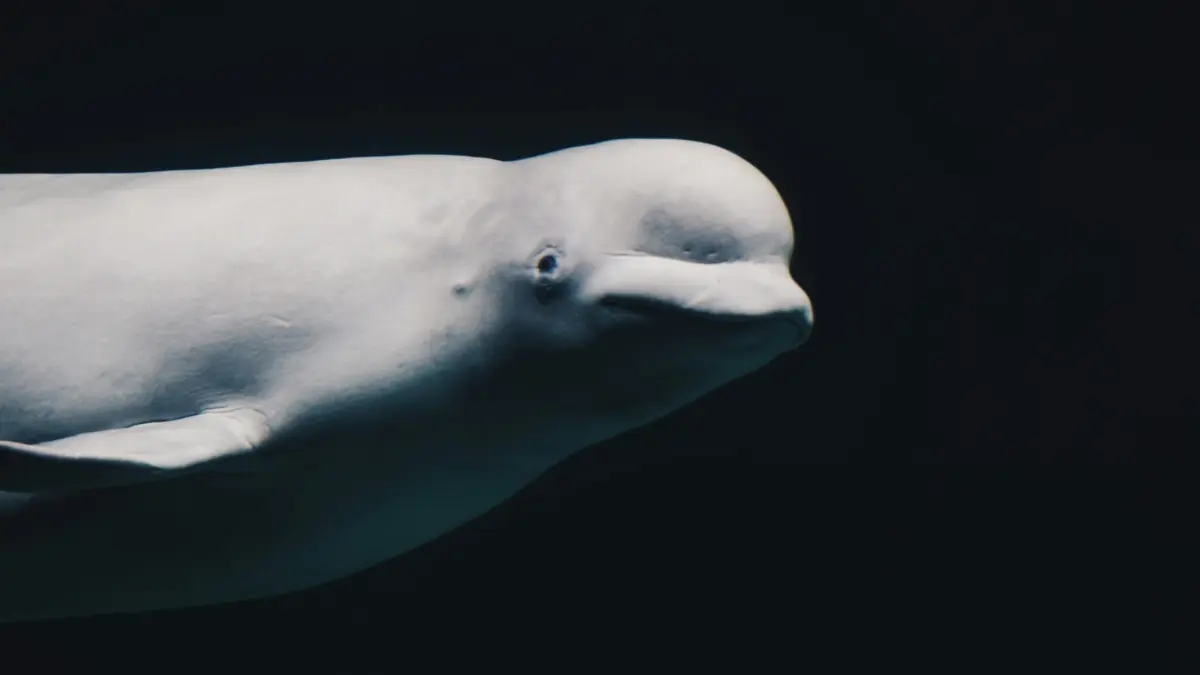
To stand on the banks of the St. Lawrence River in Quebec is to witness one of the natural world’s most astonishing anomalies. Far from the sub-zero pack ice and churning swells of the high Arctic, a sudden flash of ivory breaks the dark, tannin-stained surface of the water. It is a beluga whale (Delphinapterus leucas)—an iconic resident of polar seas navigating a vital freshwater corridor hundreds of miles inland, sharing its aquatic pathways with commercial cargo ships, recreational kayaks, and bustling Canadian ports.
Yet, this surreal sight is more than a geographic curiosity; it is a living biological archive. The presence of these small, brilliant white cetaceans in the St. Lawrence River is the direct result of a planetary transformation that began roughly 15,000 years ago, when the colossal Laurentide Ice Sheet—specifically the Wisconsin glacier—began its agonizing, millennia-long retreat.

Today, however, the ancient ecological legacy carved by retreating ice is under siege by a modern crisis driven by human activity. Once numbering around 10,000 strong at the dawn of the 20th century, the St. Lawrence beluga population has plummeted to an estimated 900 to 1,800 individuals. Officially listed as endangered, these whales face a grim convergence of historic industrial pressures, chemical contamination, and a rapidly warming climate that is destabilizing their historic range. As the Arctic melts and unprecedented ecological pressures encroach upon their isolated riverine habitat, the survival of the St. Lawrence belugas hangs in the balance, offering a stark warning about the cascading impacts of global climate change on unique marine ecosystems.
Detailed Chronology: From Inland Sea to River Sanctuary
To understand how Arctic whales came to inhabit a Canadian river system, one must look back deep into prehistoric time, long before human footprints lined the shores of North America.
Phase 1: The Glacial Compression (c. 15,000 Years Ago)
At the peak of the last glacial maximum, an immense sheet of ice thousands of feet thick—the Wisconsin glaciation—blanketed the northern half of the North American continent. The sheer weight of this glacial mass exerted crushing pressure on the Earth’s crust, depressing the land thousands of feet below its current elevation. As global temperatures began to inch upward around 15,000 years ago, the glacier initiated a massive, protracted retreat.
Phase 2: The Birth of the Champlain Sea (c. 13,000–10,000 Years Ago)
As the ice melted, it left behind a profound geographical void. The depressed topography of the St. Lawrence river valley and surrounding lowlands opened a gateway for marine waters from the Atlantic Ocean to rush inland. This massive inundation created the Champlain Sea—a vast inland arm of the Atlantic that stretched from the present-day Gulf of St. Lawrence westward toward the Great Lakes basin and as far south as what is now New York State.

During this period, marine life flooded into the interior of the continent. Sub-polar and Arctic species, including ringed seals, bowhead whales, fin whales, humpbacks, porpoises, walruses, and ancestral belugas, thrived in the cold, saline waters of the Champlain Sea. Today, the fossilized remains of these ancient marine mammals are routinely unearthed far from the coast—buried deep beneath fertile farmland, suburban housing developments, and industrial plots spanning from Quebec City to the Ottawa Valley. Notably, in 2001, researchers at the Université du Québec à Montréal recovered a remarkably well-preserved beluga fossil carbon-dated to more than 10,000 years old.
Phase 3: Land Rebound and Isolation (c. 8,000 Years Ago)
As the immense weight of the melted glacier was lifted from the continent, the Earth’s crust began a slow process of geological rebound (isostatic uplift). Over thousands of years, the land slowly rose, cutting off the saltwater influx from the Atlantic and causing the Champlain Sea to drain away.
While most marine mammals retreated eastward back into the open ocean as salinity dropped and water depths receded, one group of belugas made a fateful choice. They remained behind in the newly forming estuary of the St. Lawrence River. As dry land emerged and separated them from their Arctic cousins, this stranded population became genetically isolated. Over millennia, they adapted to the unique ecological conditions, seasonal cycles, and freshwater-saltwater mixing zones of the St. Lawrence ecosystem, establishing a distinct lineage entirely independent of populations in northern Canada, Alaska, and Russia.
Supporting Context & Metrics: A Species at the Precipice
For over ten millennia, the St. Lawrence belugas served as a cornerstone of the river’s ecosystem and held profound cultural and subsistence value for Indigenous communities throughout the region. They successfully navigated an extreme, dynamic environment. However, the dawn of industrialization brought catastrophic changes to their sanctuary.
Historical Overhunting and Industrial Contamination
At the turn of the 20th century, government-sponsored culls and commercial hunting decimated the population, with authorities viewing the whales as competitors for fisheries. Although outright hunting was finally restricted and halted in 1979, the damage was already done.
The cessation of hunting did not spark a recovery. Instead, the St. Lawrence watershed became one of the most heavily industrialized and urbanized regions in Canada. Consequently, the belugas absorbed devastating loads of chemical contaminants—including PCBs, heavy metals, and persistent organic pollutants—poured into the river by upstream manufacturing, agriculture, and municipal wastewater. These toxins accumulate in the fat-rich blubber of the whales, leading to high rates of reproductive failure, immune system suppression, and unusually high incidences of cancer discovered in stranded carcasses.
The Modern Climate Threat: A Warming Arctic and Invasive Predators
Compounding these chronic chemical and acoustic stresses is a new, unprecedented threat vector: rapid climate change.
As global temperatures rise, the Arctic is warming nearly four times faster than the rest of the planet. Every September, scientists at the National Snow and Ice Data Center (NSIDC) record the annual Arctic sea ice minimum—the point at which summer melt reaches its peak before winter refreezing begins. The data tell an alarming story: the last 19 September sea-ice extents (recorded from 2007 to 2025) represent the 19 lowest minimums on record. Across nearly five decades of continuous satellite observation, the trend line points definitively downward.
This catastrophic loss of sea ice in the north is having direct, destabilizing ripple effects down south and across marine food webs:
- Invasion of Apex Predators: The retreat of Arctic ice has opened up historic migration corridors, allowing killer whales (orcas)—the primary natural predator of belugas—to venture deeper into sub-arctic and riverine habitats where they previously could not operate due to heavy ice cover.
- Acoustic Pollution and Vessel Traffic: As northern shipping routes expand and southern industrial corridors grow busier, underwater noise pollution spikes. Belugas rely heavily on sophisticated echolocation to navigate, hunt, and communicate. Chronic engine noise masks these vital acoustic signals, disrupting feeding behaviors and mother-calf bonding.
- Habitat Compression: Warmer water temperatures alter the abundance and distribution of key prey species, forcing belugas to expend more energy searching for food in an increasingly crowded and noisy waterway.
Official Statements and Conservation Perspectives
Conservation scientists and environmental advocates emphasize that the plight of the St. Lawrence belugas is emblematic of a broader planetary failure to protect isolated biodiversity hotspots.
"The belugas in the St. Lawrence River are a living record of what the ocean once was and a striking signal of what it is rapidly becoming," notes marine conservation literature from the Ocean Conservancy. "Our ocean shapes life in ways that travel far inland and last much longer than we ever anticipate."
Experts stress that genetic distinctiveness cannot be easily replaced. Populations like the St. Lawrence belugas and the endangered Cook Inlet belugas in Alaska have evolved over thousands of years to possess unique adaptations tailored to their specific micro-climates.
"Losing a distinct population like the St. Lawrence belugas cannot simply be offset by pointing to healthy numbers of belugas in another remote part of the world," conservation biologists warn. "These animals represent millennia of localized evolutionary history, cultural heritage, and ecological resilience. Once their genetic lineage is extinguished, it is gone forever."
Organizations such as Ocean Conservancy are actively pushing for robust policy interventions, supporting comprehensive marine ecosystem protections, and advocating for legislative measures designed to safeguard large marine mammals from the escalating dangers of commercial shipping.
Future Outlook: Charting a New Course for Whales
Saving the St. Lawrence beluga from the brink of extinction requires an aggressive, multi-pronged approach that bridges local municipal action with international climate policy. Conservationists argue that immediate mitigation efforts must focus on three critical pillars:
- Vessel Traffic Management and Noise Reduction: Implementing strict speed limits, mandatory viewing distances, and re-routing commercial cargo vessels away from core beluga nursery areas during sensitive calving and feeding seasons.
- Water Quality Restoration: Continuing rigorous cleanup efforts across the St. Lawrence watershed to reduce agricultural runoff, toxic industrial chemical discharges, and municipal sewage inputs that poison the food web.
- Legislative Protections for Cetaceans: Advancing critical legislative tools, such as the proposed Whale CHARTS Act (Cetaceous Habitat and Regional Threat Suppression), which seeks to amend monitoring and mitigation frameworks to better track large whale migration routes, feeding grounds, and mating zones in real-time, thereby reducing lethal ship strikes.
Ultimately, the belugas of the St. Lawrence River are canaries in the marine coal mine. They survived the dramatic geological shifts of the retreating Wisconsin glacier 15,000 years ago, adapting to a transformed continent through sheer evolutionary tenacity. Whether they can survive the accelerated, human-driven pressures of a warming ocean and an industrialized river will depend entirely on the urgency and scale of our conservation response today.