By Philippe Lazaro
Digital Content Manager | Special Environmental Report
Executive Overview
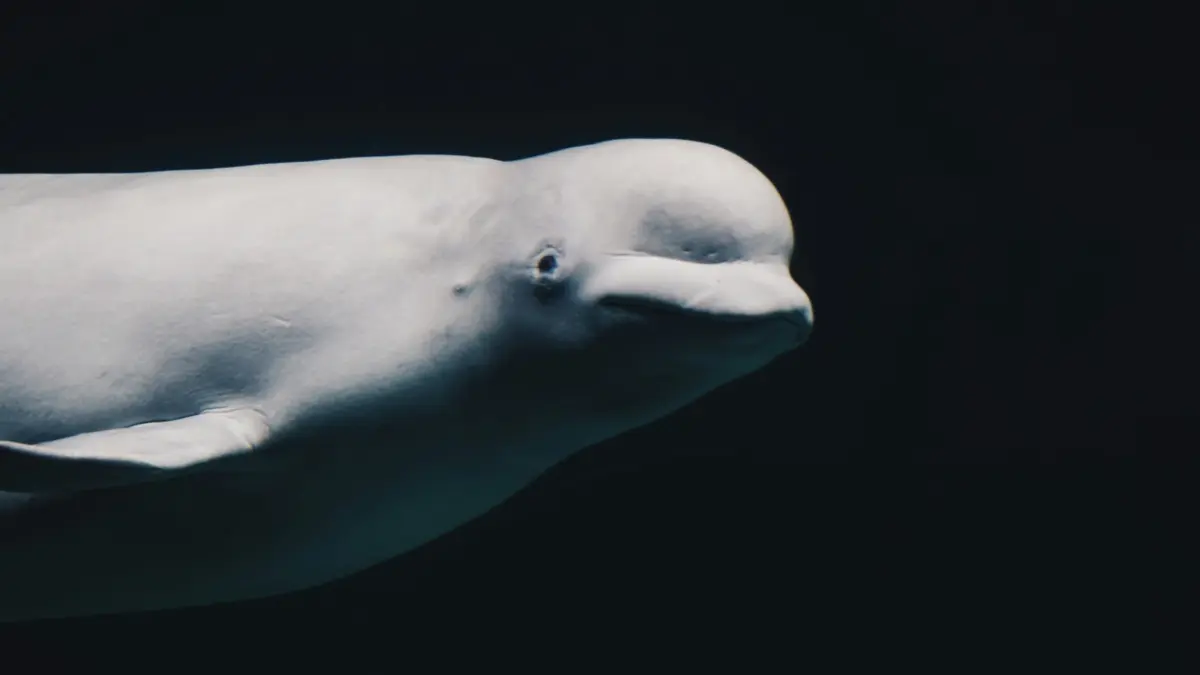
Spend an afternoon along the banks of the St. Lawrence River in Quebec, and you might catch a sudden, brilliant flash of ivory white slicing through the dark current. It is a beluga whale—a marine mammal more commonly associated with the remote, ice-choked expanses of the high Arctic, yet thriving hundreds of miles inland within a bustling Canadian river system. These small, charismatic cetaceans navigate the very same freshwater corridors utilized by massive international cargo ships, commercial ferries, and recreational kayakers.
However, the presence of these Arctic icons in a southern Canadian river is not merely a geographic quirk; it is a profound biological legacy. The story of the St. Lawrence belugas is an epic written in retreating ice, geological upheaval, and millennia of localized adaptation.

Today, this ancient lineage faces an unprecedented existential crisis. Once numbering roughly 10,000 individuals at the dawn of the 20th century, the St. Lawrence beluga population has plummeted to an estimated 900 to 1,800 whales. Decimated historically by commercial hunting—which persisted legally until 1979—the population now contends with a toxic cocktail of heavy industrial contamination, relentless vessel traffic, and the cascading effects of modern climate change. As a warming Arctic melts polar sea ice, apex predators like orcas are expanding into historical refuges, while industrial encroachment threatens the fragile acoustic environments these whales require to survive.
The St. Lawrence belugas are more than just a regional wildlife population; they are living testaments to planetary change, serving simultaneously as historical records of what the North American continent once was and urgent warning signals of what our oceans are rapidly becoming.
Detailed Chronology: From Ancient Inland Sea to Modern Estuary
To understand how Arctic whales came to make a permanent home in a Canadian river, one must look back roughly 15,000 years to the twilight of the last glacial maximum.
Phase 1: The Wisconsin Glacier and the Birth of the Champlain Sea
At its peak, the colossal Wisconsin ice sheet blanketed vast swathes of North America, its immense weight depressing the underlying Earth’s crust by hundreds of meters. As global temperatures began to rise roughly 15,000 years ago, the glacier initiated a slow, monumental retreat.

The colossal weight of the ice had compressed the land below sea level. Consequently, as the glacier melted, frigid seawater from the Atlantic Ocean rushed inland, inundating the depressed low basin. This cataclysmic flooding birthed the Champlain Sea—a vast, temporary inland sea that stretched from the modern Atlantic coast westward toward the Great Lakes and deep into what is now New York State.
Phase 2: A Subarctic Ecosystem in Inland North America
During the height of the Champlain Sea era, the St. Lawrence lowlands hosted a vibrant, subarctic marine ecosystem. Whales, walruses, narwhals, humpbacks, fin whales, bowhead whales, and multiple species of seals and walruses roamed freely across waters that now sit hundreds of feet above sea level.
Paleontological discoveries underscore this forgotten marine past. Fossils of ancient marine mammals have been unearthed repeatedly between Quebec City and the Ottawa Valley, buried deep beneath the sediment of modern-day farms, suburban housing developments, and agricultural fields. Notably, in 2001, researchers at the Université du Québec à Montréal (UQAM) recovered a remarkably well-preserved beluga fossil carbon-dated to more than 10,000 years old.
Phase 3: Land Rebound and Isolation
As the immense weight of the ice sheet continued to lift, the Earth’s crust experienced post-glacial rebound—a geological uplifting of the land. Slowly, inexorably, the Champlain Sea drained back into the Atlantic Ocean.
While most marine mammals retreated northward with the receding cold water and pack ice, a distinct sub-population of beluga whales chose to stay behind, adapting to the newly forming estuary of the St. Lawrence River. As dry land emerged and the river stabilized into its modern geography, these stranded belugas became genetically isolated from all other populations in northern Canada, Alaska, and Russia.
For more than 10,000 years—a timeframe stretching far beyond recorded human history in the region—the St. Lawrence River has been the only home their specific lineage has known. Over millennia, they evolved distinct seasonal behaviors, dietary habits, and social structures finely tuned to the unique rhythms of the river. For generations, they also served as a cornerstone of subsistence, food security, and cultural heritage for local Indigenous communities.
Supporting Context & Metrics: A Species at the Precipice
The historical resilience of the St. Lawrence belugas is now being severely tested by modern anthropogenic pressures. The numbers paint a grim picture of decline and compounded stress.
Population Demographics and Historical Decline
- 1900s: An estimated 10,000 belugas roamed the St. Lawrence estuary and Gulf.
- 1979: Commercial hunting of the population was finally banned, but not before the numbers had been reduced to a fraction of their historical baseline.
- Modern Estimates: Current conservation assessments place the population between 900 and 1,800 individuals, with recent surveys warning that the true number may hover closer to the lower end of that spectrum.
- Listing Status: The Committee on the Status of Endangered Wildlife in Canada (COSEWIC) and federal authorities officially classify the St. Lawrence beluga population as Endangered.
The Compounding Threat of Climate Change
While historical declines were driven by direct harvesting, modern stagnation and ongoing population drops are fueled by cumulative stressors:
- Chemical Contamination: Industrialization of the St. Lawrence watershed has left the river system heavily polluted with persistent organic pollutants (POPs), heavy metals, and industrial chemicals. These contaminants accumulate in the fatty tissues of long-lived marine mammals, leading to high rates of cancer, immune system suppression, and reproductive failure.
- Acoustic and Physical Vessel Disturbance: Heavy commercial shipping traffic, whale-watching vessels, and recreational watercraft generate intense underwater noise. Because belugas rely entirely on echolocation and complex vocalizations to navigate, hunt, and communicate, this acoustic smog severely disrupts their daily survival behaviors.
- Arctic Warming and Predator Incursion: Climate change is fundamentally altering the high northern latitudes. The historic sea ice minimums recorded over the past two decades—including the 19 lowest September extents on record between 2007 and 2025 tracked by the National Snow and Ice Data Center (NSIDC)—have resulted in radically reduced sea ice cover in the Arctic.
This loss of ice has opened up previously impassable maritime pathways, driving apex predators like killer whales (orcas) further south into historical beluga habitats. For the St. Lawrence belugas and other Arctic cetaceans, less ice translates directly into diminished natural refuges and heightened predation risks.
Official Statements and Conservation Perspectives
Conservation scientists and environmental advocates emphasize that the plight of the St. Lawrence beluga is not an isolated ecological tragedy, but a canary in the coal mine for global marine biodiversity.
"Groups of belugas in places like the St. Lawrence River and the Arctic have been separated for such long periods that they highlight the ultimate importance of genetic diversity when it comes to climate resilience," notes field research coordinators at Ocean Conservancy. "Losing a distinct population like the St. Lawrence belugas cannot simply be offset by pointing to healthy numbers in another part of the world. They represent thousands of years of unique historical adaptation."
Experts stress that these localized populations harbor irreplaceable genetic adaptations that allow them to endure extreme environments. Their loss represents an irreversible erasure of biological heritage.
Furthermore, conservationists argue that legislative and regulatory frameworks must evolve rapidly to address the physical hazards faced by large marine mammals. Initiatives such as the proposed Whale CHARTS Act seek to fundamentally transform marine safety by amending the National Oceanic and Atmospheric Administration’s (NOAA) near-real-time monitoring and mitigation programs. By improving our understanding of baleen and sperm whale migration routes, feeding grounds, and calving areas, such legislation aims to drastically reduce deadly ship strikes and acoustic trauma.
Future Outlook: Charting a New Course for Whales
The geological forces that shaped the destiny of the St. Lawrence belugas 15,000 years ago were natural, slow, and transformative. Today, humanity is driving a new epoch of transformation—one defined by rapid warming, industrial expansion, and ocean acidification—that operates on a timeline far faster than any glacial melt.
The St. Lawrence beluga is not the only population standing at the edge; Cook Inlet belugas in Alaska face similarly perilous trajectories, alongside other vulnerable Canadian Arctic groups. Protecting these animals requires an aggressive, multi-tiered approach:
- Strict Vessel Speed and Routing Regulations: Minimizing underwater noise pollution and eliminating the risk of catastrophic ship strikes in critical habitats.
- Watershed-Level Pollution Controls: Drastically reducing the influx of industrial and agricultural toxins into the St. Lawrence drainage basin to allow immune and reproductive recovery.
- Ecosystem-Based Climate Policies: Supporting broad international efforts to curb greenhouse gas emissions and protect fragile high-latitude ecosystems from unmitigated industrial expansion.
Ultimately, the white flash of a beluga beneath the dark surface of the St. Lawrence River is a living archive. It reminds us of what the North American continent once was—a dynamic landscape sculpted by ice and water—and issues a stark warning about what our oceans are rapidly becoming. If we fail to protect these resilient survivors, we risk losing not just a species, but a living bridge to our planet’s ancient past.