By Philippe Lazaro
Digital Content Manager
Executive Overview
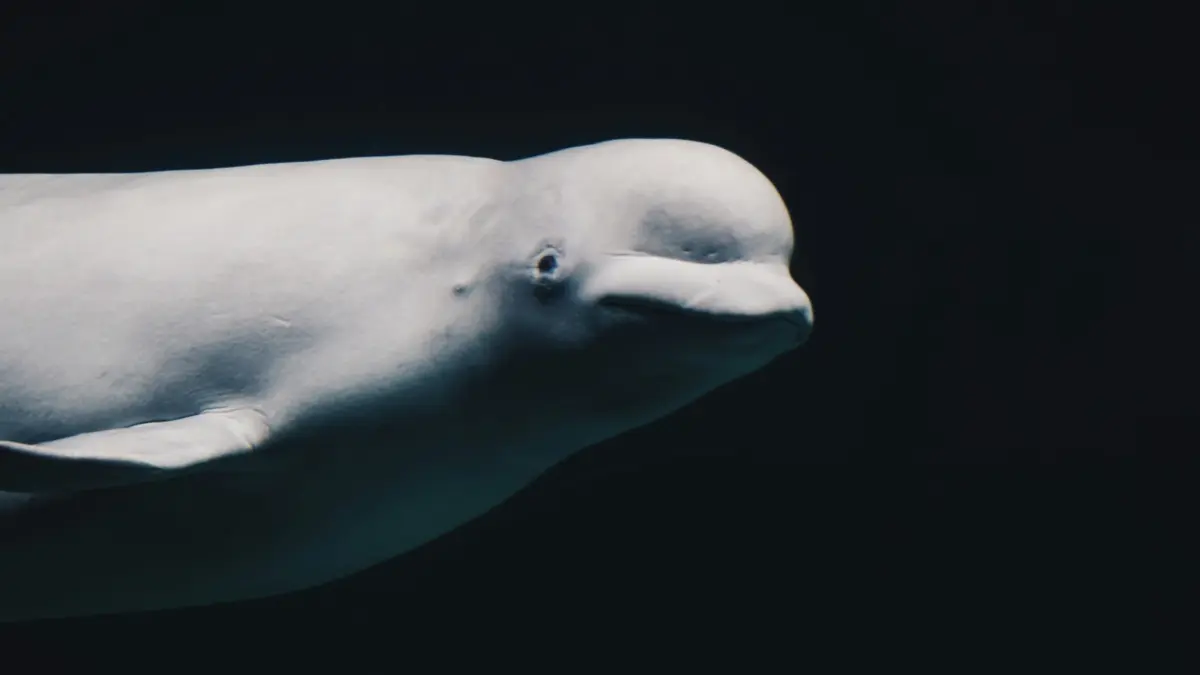
If you stand quietly on the shores of the St. Lawrence River in Quebec, watching the slate-colored waters churn against the current, you might catch a sudden, ethereal flash of white beneath the surface. It is a beluga whale (Delphinapterus leucas). While the human mind instinctively associates these ghostly marine mammals with the remote, ice-choked expanses of the High Arctic, a remarkably resilient population has made its home hundreds of miles inland, navigating the freshwater corridors of Canada alongside cargo ships, fishing vessels, and recreational kayaks.
This improbable living arrangement is not a recent migration, but rather the evolutionary legacy of a profound geological epoch. The story of these river-dwelling whales begins not with water, but with ice.

Today, however, the ancient chapter that birthed this unique population is colliding with a modern crisis. The St. Lawrence belugas—genetically isolated from their Arctic counterparts for millennia—are critically endangered. Numbering an estimated 10,000 individuals at the dawn of the 20th century, their population has plummeted to roughly 900 to 1,800 whales. Although commercial hunting ceased decades ago, a toxic cocktail of historic chemical contamination, heavy industrialization, unrelenting vessel traffic, and anthropogenic climate change continues to push them toward the brink of extinction. As a warming ocean reshapes the Arctic and alters the ecosystems they depend on, the St. Lawrence belugas serve as both a living archive of Earth’s history and an urgent warning of its ecological future.
Detailed Chronology: From Ancient Glacier to Inland Sea
To understand how Arctic cetaceans came to inhabit a Canadian river, one must look back approximately 15,000 years to the Pleistocene epoch, when the planet was gripped by the waning stages of the last great ice age.
The Retreat of the Wisconsin Glacier
At its maximum extent, the colossal Wisconsin ice sheet covered much of North America, burying mountains, valleys, and river basins beneath miles of compacted ice. The sheer weight of this glacial mass depressed the Earth’s crust beneath it, forcing the continental plate downward into the Earth’s mantle.
Around 15,000 years ago, global temperatures began to rise, triggering the slow, monumental retreat of the glacier. As millions of cubic kilometers of ice melted, it released torrents of freshwater. More critically, because the land had been depressed beneath sea level by the weight of the ice, the heavy marine waters of the Atlantic Ocean rushed inward, flooding the vast low basin left in the glacier’s wake.

The Birth and Death of the Champlain Sea
This geological cataclysm gave birth to the Champlain Sea—a massive inland body of saltwater that stretched from the present-day Atlantic coast westward toward the Great Lakes and deep into what is now New York State and the Ottawa Valley.
Into this newly formed inland sea poured marine life. Whales, walruses, narwhals, humpback whales, fin whales, bowhead whales, and multiple species of seals and seals colonized the fertile, cold-water basin. Today, the fossilized remains of these ancient marine mammals are routinely uncovered far from the modern coastline, buried deep beneath the agricultural fields, suburban housing developments, and river valleys of Quebec. Researchers have unearthed ancient bones between Quebec City and the Ottawa Valley, and in 2001, the Université du Québec à Montréal recovered a beluga fossil carbon-dated to more than 10,000 years old.
As the glaciers continued to melt and recede, the weight lifted from the Earth’s crust. Slowly, inexorably, the land began to rebound—a geological process known as isostatic rebound. As the topography rose, the Champlain Sea drained back into the Atlantic, leaving behind the modern St. Lawrence River and its expansive estuary.
Isolation and Adaptation
While most marine mammals retreated with the receding salt waters, one population of belugas made a fateful choice: they stayed. Trapped as the estuary formed and the connection to the broader ocean narrowed, these whales adapted to the shifting salinity and unique ecological niches of the St. Lawrence.
Over the span of more than 10,000 years, this population became genetically isolated from all other beluga groups inhabiting northern Canada, the Russian Arctic, and Alaska. The St. Lawrence River became the only home their lineage has ever known—predating recorded human history in the region.
Over millennia, these belugas fine-tuned their behaviors to the pulse of the river. Their seasonal migrations, feeding habits, and social structures evolved to match the St. Lawrence’s distinct environmental rhythms. For Indigenous communities inhabiting the watershed, the beluga became an integral part of life, serving as a vital resource for subsistence, food security, and cultural identity.
Supporting Context & Metrics: A Population Under Pressure
Despite surviving thousands of years of environmental shifts, the St. Lawrence belugas are currently locked in an unequal battle against human-driven pressures.
The Numbers Game
At the turn of the 20th century, scientists estimate that roughly 10,000 belugas inhabited the St. Lawrence estuary. However, decades of unregulated commercial hunting decimated the population. Although Canada officially protected the species by restricting hunting in 1979, the population has failed to rebound.
Today, conservation assessments place the population at roughly 1,800 individuals, while recent, rigorous scientific surveys suggest the actual number may hover dangerously close to 900. This low census leaves the population highly vulnerable to stochastic events, disease outbreaks, and inbreeding depression.
Cumulative Anthropogenic Stressors
The failure of the St. Lawrence beluga population to recover is driven by a compounding web of modern threats:
- Chemical Contamination: Situated at the outlet of the Great Lakes and the St. Lawrence Seaway, the belugas’ habitat drains one of the most heavily industrialized and populated regions in North America. Historically, these waters accumulated heavy loads of industrial toxins, including polychlorinated biphenyls (PCBs), heavy metals, and pesticides. These contaminants bioaccumulate in the fatty tissues of apex predators, compromising the whales’ immune and reproductive systems and leading to high rates of unusual cancers observed in stranded animals.
- Vessel Traffic and Noise Pollution: The St. Lawrence is a major commercial shipping highway. The roar of cargo ship engines, military vessels, and whale-watching boats creates an underwater acoustic cacophony. Because belugas rely heavily on echolocation and vocalizations to navigate, hunt, and communicate, chronic noise pollution functionally blinds and deafens them, disrupting vital life functions and driving them away from prime feeding grounds.
- Climate Change and Shifting Ecosystems: Perhaps most insidiously, a warming Arctic is introducing novel pressures from a direction these river-dwellers have never faced. As sea ice melts at unprecedented rates, apex predators like orcas (killer whales)—historically blocked by heavy ice packs—are increasingly penetrating sub-Arctic and riverine habitats. Orcas are formidable predators of belugas. Furthermore, shrinking sea ice reduces crucial refuges and destabilizes the food web, altering the abundance and distribution of the fish and invertebrates the belugas rely upon for sustenance.
Official Statements and Conservation Perspectives
Conservation scientists and environmental advocates emphasize that the plight of the St. Lawrence beluga is not an isolated tragedy, but a canary in the coal mine for global marine biodiversity.
"Groups of belugas in places like the St. Lawrence River and the Arctic have been separated for such long periods that they highlight the importance of genetic diversity when it comes to climate resilience," notes Ocean Conservancy in its biodiversity frameworks. "Losing one distinct population, like the St. Lawrence group, cannot simply be offset by the presence of healthy beluga populations in another part of our world. They represent thousands of years of unique history, culture, and evolutionary adaptation."
Experts point out that Arctic sea ice minimums—tracked annually by organizations like the National Snow and Ice Data Center—have painted a grim picture of rapid climate destabilization. The last 19 recorded September sea ice minimums (spanning from 2007 through 2025) represent the 19 lowest extents in the era of satellite observation. This accelerating loss of ice is compressing ecological timelines, forcing marine mammals to adapt at a pace that evolutionary biology simply cannot match.
Furthermore, conservationists stress that the St. Lawrence population shares its precarious status with other vulnerable groups, such as the endangered Cook Inlet belugas in Alaska. Protecting these distinct lineages requires targeted legislative and regulatory action that directly addresses human-wildlife conflict on the water.
Future Outlook: Charting a New Course for Whales
Saving the St. Lawrence beluga requires a multi-pronged, urgent policy response. Environmental organizations and lawmakers are increasingly pushing for legislative measures to curb the most immediate anthropogenic threats to marine mammals, notably vessel strikes and acoustic trauma.
A cornerstone of these legislative efforts in North America is the proposed Whale CHARTS Act. This vital piece of legislation aims to dramatically reduce ship strikes—a leading cause of mortality for large whales—by amending the National Oceanic and Atmospheric Administration’s (NOAA) near-real-time monitoring and mitigation programs. By improving our scientific understanding of the exact locations, timing, and spatial extent of baleen and sperm whale migration routes, feeding grounds, and calving areas, the Act would empower regulatory bodies to establish mandatory speed restrictions and shipping lane shifts before tragedies occur.
Locally, within the St. Lawrence watershed, conservation strategies must focus on strict enforcement of water quality standards, reduction of agricultural and industrial runoff, establishment of marine protected areas with zero-emission zones, and rigorous speed limits for commercial and recreational watercraft.
A Living Record
The pale, intelligent face of a beluga surfacing in the St. Lawrence River is far more than a striking wildlife encounter. It is a living, breathing archive of what the North American continent once was—a ghost of the Champlain Sea, swimming through a world transformed by human hands.
The glaciers that carved their ancient home shaped the geography of a continent, but the warming oceans we engineer today are rewriting their future at an unprecedented velocity. Ensuring that the St. Lawrence beluga survives to see another century will require humanity to recognize that our actions on land—from the factories we build to the carbon we emit—travel far inland, echo deep beneath the waves, and dictate the fate of creatures that have called our waters home for millennia.