By Philippe Lazaro, Digital Content Manager Estimated Reading Time: 8 minutes
Executive Overview
Storytelling is one of humanity’s oldest surviving behaviors. Across every continent, ocean, and cultural boundary, communities have used oral traditions not merely for entertainment, but to encode essential survival knowledge, transmit moral frameworks, and make sense of unpredictable natural forces. Long before oceanography emerged as a formal academic discipline or satellites began monitoring sea surface temperatures from space, coastal populations relied on myth, legend, and ceremony to navigate the marine environment.
Far from being arbitrary fantasies, many of these enduring coastal tales function as repositories of ecological wisdom. They record animal behaviors, map migratory pathways, dictate sustainable resource use, and warn of ecological collapse.
Today, as marine ecosystems face unprecedented stressors—ranging from climate change and acidification to abandoned fishing gear and decaying offshore oil infrastructure—modern marine conservation is increasingly looking backward to find a path forward. By examining how traditional societies forged reciprocal relationships with the sea, contemporary environmental advocates can glean invaluable insights into stewardship, community engagement, and ocean defense.
Detailed Chronology: Five Cultural Traditions and Their Ecological Parallels
Across the globe, diverse maritime cultures developed unique frameworks to conceptualize their relationship with the sea. Five distinct oral traditions illustrate how indigenous and coastal communities integrated marine science into their cultural identities long before modern instrumentation existed.
1. Scotland: The Selkie and the Protection of the Gray Seal
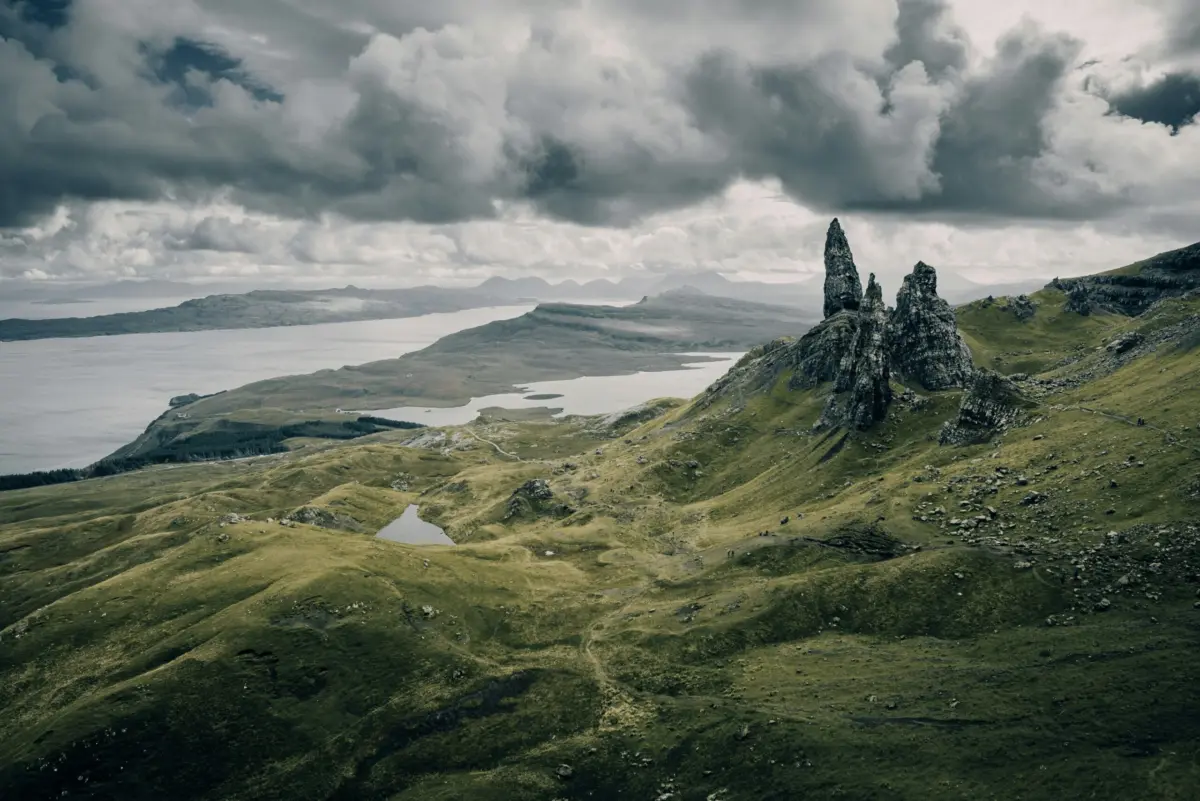
Early written and oral records from the rugged coasts of Scotland tell of the selkie—mythical seal-people capable of shedding their aquatic pelts to walk upon the earth as humans. In these traditional narratives, a selkie’s skin is often stolen, binding them to a terrestrial life of marriage and children until the skin is recovered, prompting an immediate and permanent return to the sea.
Ecological Roots: The biological inspiration behind the selkie is unmistakable. Gray and harbor seals (Halichoerus grypus and Phoca vitulina) exhibit remarkably human-like physical and behavioral traits: expressive, large eyes, complex vocalizations, and maternal rearing habits where mothers nursing pups closely mirror human parental care.
Conservation Impact: By humanizing the seal, Scottish coastal communities established strong cultural taboos against the excessive hunting of marine mammals. Today, conservationists utilize the selkie as a cultural bridge to highlight ongoing threats to Scottish seal populations, which continue to suffer from historical culling practices and modern entanglements in abandoned, lost, or otherwise discarded fishing gear (often referred to as "ghost gear").
2. Pasifika: Wayfinding and the Star-Maps of Oceania
Pasifika encompasses the Indigenous Peoples of the Pacific Islands, who for more than three millennia have traversed the vast expanse of the world’s largest ocean without modern navigational instruments. Their mastery of the seas was preserved and transmitted through complex oral histories.
Ecological Roots: Navigators shared stories of the demigod Māui and his canoe (Waka-a-Māui), utilizing stellar constellations as chronological maps. For instance, the appearance of the Pleiades star cluster—associated in myth with Tāwhirimātea, the god of wind and storms—signaled optimal seasonal windows for embarking on long-distance ocean voyages.
Conservation Impact: Pasifika wayfinding represents an extraordinary feat of empirical science. The codification of weather patterns, ocean swells, bird migrations, and stellar movements into narrative form allowed complex navigational systems to be preserved and passed down across generations with pinpoint accuracy.
3. Mexico: Chalchiuhtlicue and the Dual Nature of Water
In Aztec cosmology, Chalchiuhtlicue reigned as the goddess of rivers, lakes, streams, and the open ocean, while serving as the sacred protector of fishermen and navigators. She was worshipped as a vital, active deity across Mesoamerica.
Ecological Roots: Narratives surrounding Chalchiuhtlicue frequently portray her as both a life-giving creator and a destructive force. Sudden oceanic surges could provide fertile agricultural silt or trigger devastating floods and violent tempests.
Conservation Impact: Mexico’s Pacific and Gulf coasts comprise some of the most biologically diverse yet storm-vulnerable marine ecosystems on Earth. The Chalchiuhtlicue tradition reflected an advanced ecological understanding of hydrological connectivity—recognizing that the health of the ocean, inland river systems, and terrestrial agricultural soils are inextricably linked.
4. Vietnam: "Grandfather Whales" and Maritime Reciprocity
Along the coastal fishing villages of Vietnam, whales are revered as divine protectors and universally referred to as Cá Ông, or "Grandfather Whales."
Ecological Roots: Generations of Vietnamese fishers have passed down accounts of whales physically intervening during violent maritime storms, actively guiding capsized or lost vessels toward safe shores. Modern marine biology confirms that species such as sperm whales (Physeter macrocephalus), humpback whales (Megaptera novaeangliae), and gray whales (Eschrichtius robustus) frequently exhibit altruistic or protective behaviors, occasionally shielding distressed swimmers, surrounding injured pod members, or interacting with unfamiliar marine species.
Conservation Impact: This deep reverence translates into tangible conservation action. Several Vietnamese fishing communities maintain centuries-old traditions, celebrating the Whale Prayer Festival twice a year. Furthermore, when a whale strands and dies on the coast, villages observe formal funeral rites. Scientifically, this practice acknowledges the vital ecological role of whale falls—where a single decaying carcass sustains hundreds of deep-sea benthic organisms for decades.
5. The Caribbean: Mami Wata and the Sacred Species Effect
Carried across the Atlantic during the forced migration of enslaved Africans, the deity Mami Wata—known as La Sirène in Haiti, River Mumma in Jamaica, and Yemonja in Brazil—remains a cornerstone of Caribbean maritime folklore. Often depicted as a siren or mermaid, she possesses a dual nature: immensely generous, yet intensely dangerous and unpredictable.
Ecological Roots: Anthropologists and marine biologists suggest that historical sightings of Mami Wata were heavily influenced by encounters with West Indian manatees (Trichechus manatus). These slow-moving, herbivorous marine mammals share human-like facial characteristics and nursing postures.
Conservation Impact: The mythology of Mami Wata exemplifies what conservation scientists term the "sacred species effect." When an animal holds profound spiritual or cultural weight within a society, violating or harming it carries powerful social, moral, and spiritual penalties that often outlast statutory legal prohibitions. In regions where legal enforcement is weak, cultural reverence provides an essential layer of wildlife protection.
Supporting Context & Metrics: The Science Behind the Stories
The convergence of ancient folklore and modern marine science is not accidental; it is the result of centuries of direct, empirical observation by people whose lives depended entirely on the ocean’s health.
Biodiversity and Threat Levels: According to global marine assessments, tropical and subtropical coastal zones—such as those found in the Caribbean and the Gulf of Mexico—harbor up to 25% of all marine life within coral reef systems, yet they are experiencing unprecedented degradation from industrial runoff, destructive fishing practices, and intensifying storm frequencies linked to climate change.
Marine Mammal Vulnerability: The International Whaling Commission (IWC) and Ocean Conservancy data indicate that over 300,000 whales, dolphins, and porpoises are killed annually worldwide due to accidental entanglement in commercial fishing gear. Traditional taboos against harming marine mammals, once enforced through cultural storytelling, highlight a historical conservation ethos that modern industrial fleets frequently bypass in the absence of robust regulation.
Official Statements and Institutional Perspectives
Conservation organizations and marine scientists are increasingly emphasizing the value of integrating traditional ecological knowledge (TEK) with Western scientific methodologies to address modern ocean crises.
"For countless generations, coastal communities understood a fundamental truth that modern industrial systems often ignore: the ocean is not an infinite dumping ground or an inexhaustible resource to be strip-mined. It is a dynamic, living system that requires reciprocity and respect," notes an environmental policy analyst at Ocean Conservancy.
"When we look at ancient whale worship in Vietnam, selkie taboos in Scotland, or Pasifika wayfinding, we are looking at empirical data encoded as narrative. These stories kept human communities living in balance with marine life for thousands of years. Today, we need that exact same mindset to confront 21st-century threats like deep-sea pollution and offshore industrial neglect."
Future Outlook: Bridging Ancient Wisdom and Modern Advocacy
While cultural legends provide a profound blueprint for how humans should interact with the sea, modern marine conservation requires enforceable legal frameworks to hold corporate polluters accountable on a global scale.
Right now, one of the most critical threats to marine biodiversity lies hidden beneath the surface: aging, abandoned offshore oil and gas infrastructure. Thousands of miles of pipelines, platforms, and wellheads are currently corroding on the ocean floor, leaking toxic hydrocarbons and threatening the very marine species that cultural traditions around the world have sought to protect for centuries.
Fossil fuel corporations frequently exploit regulatory loopholes to abandon this dangerous infrastructure rather than funding proper decommissioning and cleanup operations. To counter this, legislative action is urgently required.
Take Action for Our Oceans
The ocean has sustained human culture, mythology, and survival for millennia. Now, it requires our active defense.
Advocacy groups are rallying behind the Offshore Leasing Standards and Accountability Act, a vital piece of federal legislation currently before Congress. If passed, this act will mandate that oil and gas corporations assume full legal and financial responsibility for their offshore operations across every phase—before, during, and long after drilling ceases.
Support Marine Protection: Add your voice to the movement. Visit Ocean Conservancy’s Action Center to learn more about how you can help pass the Offshore Leasing Standards and Accountability Act and ensure that the legacy of our oceans is preserved for the generations to come.