








Executive Overview
Attica Group, the premier passenger shipping entity in Greece and one of the largest ferry operators across the Mediterranean basin, has announced performance metrics reflecting operational efficiency, emissions mitigation, and workplace safety standards across its fleet. Corporate performance disclosures for 2025 reveal that the group successfully curtailed the greenhouse gas (GHG) emissions intensity of its owned fleet by 7.9 kilograms of carbon dioxide equivalent ($textCO_2texte$) per nautical mile compared to 2024 levels.
This reduction in carbon intensity is accompanied by significant decreases in criteria air pollutants across the company’s maritime operations. Sulfur oxide ($textSOx$) emissions fell by 48.5% year-over-year, while fine and coarse particulate matter ($textPM2.5$ and $textPM_10$) dropped by 17.6%. These operational improvements align with Attica Group’s strategic sustainability roadmap, which targets a 14% cumulative reduction in GHG emissions intensity by 2030 relative to its 2019 baseline.
       ATTICA GROUP: 2024–2025 PERFORMANCE METRICS AT A GLANCE
┌──────────────────────────────────────┬────────────────────────────────┐
│ Metric                               │ Performance Change             │
├──────────────────────────────────────┼────────────────────────────────┤
│ Fleet GHG Intensity                  │ -7.9 kg CO₂e per nautical mile │
│ SOx Emissions                        │ -48.5%                         │
│ PM2.5 / PM10 Particulates            │ -17.6%                         │
│ 2030 GHG Intensity Target            │ -14.0% (vs. 2019 baseline)     │
│ Fleet ISO 45001:2018 Certification   │ 100% (33 vessels certified)    │
└──────────────────────────────────────┴────────────────────────────────┘
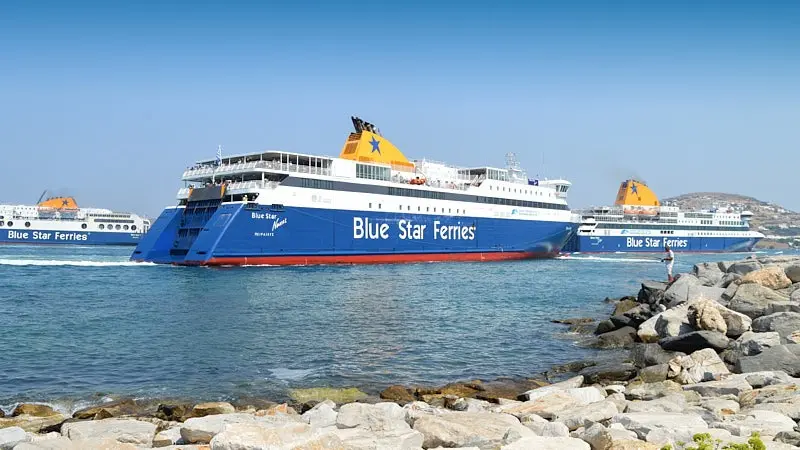
Concurrently, Attica Group secured fleet-wide ISO 45001:2018 certification for occupational health and safety management. This distinction positions Attica as the first Greek passenger shipping group to achieve total fleet certification under the international standard. Operating a unified fleet of 33 vessels under four major commercial brands—Superfast Ferries, Blue Star Ferries, Hellenic Seaways, and ANEK Lines—the group’s environmental and safety management updates reflect broader shifts within European short-sea shipping under evolving regulatory frameworks.
Detailed Chronology and Technical Evolution of the Fleet
The structural transformation of Attica Group’s operational posture follows a series of multi-year capital investments, route rationalizations, and fleet integration efforts. Following the corporate consolidation that fully integrated ANEK Lines alongside Superfast Ferries, Blue Star Ferries, and Hellenic Seaways, management initiated a fleet-wide operational audit designed to standardize safety management systems and decarbonization initiatives across 33 vessels.
                     ATTICA GROUP FLEET STRUCTURE
                                  │
      ┌───────────────────────────┴───────────────────────────┐
      │               33 VESSELS UNDER OPERATION              │
      └───────────────────────────┬───────────────────────────┘
                                  │
    ┌─────────────────┬───────────┴───────────┬─────────────────┐
    ▼                 ▼                       ▼                 ▼
 SUPERFAST        BLUE STAR                HELLENIC            ANEK
  FERRIES          FERRIES                 SEAWAYS             LINES
(Adriatic Routes) (Aegean Routes)     (High-Speed & Ro-Pax) (Crete & Aegean)
The progressive reduction in environmental impact reported in 2025 stems from technical and operational measures executed across the combined fleet over recent years:
- Late 2023–Early 2024 (Operational Alignment & Hull Optimization): Following the full integration of ANEK Lines’ tonnage, Attica Group instituted fleet-wide protocols for hull performance monitoring and hydrodynamic optimization. High-performance silicone-based anti-fouling coatings were applied during scheduled dry-dockings to minimize hull friction, reducing engine load and fuel consumption across high-frequency Aegean and Adriatic routes.
- Mid-to-Late 2024 (Fuel Quality Upgrades & Scrubbing Technology Integration): To comply with tightening Mediterranean Emission Control Area ($textSO_xtext ECA$) requirements and prepare for broader decarbonization mandates, the group executed fuel-system modifications and expanded the deployment of Exhaust Gas Cleaning Systems (EGCS) alongside transitions to low-sulfur fuel formulations across conventional Ro-Pax vessels.
- Early 2025 (Energy Efficiency Retrofits & Smart Navigation): The group deployed dynamic trim optimization software and AI-driven route-planning systems across its high-speed catamarans and conventional ferries. Engine tuning, combined with upgraded variable pitch propellers, enabled substantial fuel efficiency gains per nautical mile sailed.
- Mid-2025 (ISO 45001 Fleet Standardization): Following rigorous third-party audits evaluating onboard workplace risk management, emergency preparedness, occupational risk prevention, and crew health protocols, the group formally attained ISO 45001:2018 certification across all 33 vessels.
Supporting Context & Metrics Analysis
       EMISSIONS REDUCTION IMPACT (YEAR-OVER-YEAR COMPARISON)

  GHG Intensity   [██████████████████████████░░] -7.9 kg CO₂e / nm
  SOx Emissions   [████████████████████───────] -48.5%
  PM2.5 / PM10    [████████████████████████───] -17.6%
                 0%                          50%                      100%
Quantifying the Ecological Footprint Reduction
The operational data published by Attica Group highlights measurable progress across several key environmental metrics:
1. GHG Intensity (-7.9 kg $textCO_2texte$ / Nautical Mile)
The reduction of 7.9 kg $textCO_2texte$ per nautical mile in 2025 represents a meaningful drop in operational carbon intensity. In short-sea shipping and passenger ferry operations, intensity metrics provide a reliable gauge of real-world efficiency gains, accounting for variables such as weather disruptions, port congestion, and seasonal scheduling adjustments. This intensity reduction was driven by optimized voyage speeds, reduced hotel loads in port via energy-saving HVAC systems, and improved operational scheduling across overlapping routes.
2. Sulfur Oxides ($textSO_x$ -48.5%)
The nearly 50% drop in $textSO_x$ emissions reflects targeted fuel switching and exhaust technology optimization. With the Mediterranean Sea transitioning toward stricter sulfur cap enforcement, Attica’s aggressive abatement reduces local air pollution, particularly in coastal urban centers and island ports such as Piraeus, Heraklion, and Patras where passenger ferries dock near population centers.
3. Particulate Matter ($textPM2.5$ / $textPM10$ -17.6%)
Particulate matter emissions present significant public health concerns in maritime logistics. Attica’s 17.6% drop in fine and coarse particulates was achieved through cleaner fuel blends, improved fuel injection timing, and upgraded combustion control systems across both main propulsion engines and auxiliary generators.
4. The 2030 Target (-14% vs. 2019 Baseline)
Attica Group’s interim objective—a 14% reduction in overall greenhouse gas emissions intensity by 2030 relative to 2019—aligns its operational strategy with the initial phase of the European Union’s Fit for 55 package and the International Maritime Organization’s (IMO) revised GHG Strategy. Achieving this target requires sustained capital expenditure in vessel modernization, energy-saving devices (ESDs), and alternative fuel readiness.
       ATTICA GROUP 2030 DECARBONIZATION TRAJECTORY

  2019 Baseline   [████████████████████████████████████████] 100%
  2024 Progress   [█████████████████████████████████░░░░░░░] ~91%
  2025 Current    [███████████████████████████████░░░░░░░░░] ~88%
  2030 Target     [██████████████████████████████░░░░░░░░░░]  86% (-14%)
Regulatory Pressures: FuelEU Maritime and EU ETS
The financial and operational imperative driving these metrics extends beyond voluntary corporate social responsibility. The integration of maritime transport into the European Union Emissions Trading System (EU ETS), which began phasing in compliance obligations in 2024, imposes direct financial liabilities on vessel operators for their carbon output. Furthermore, the implementation of the FuelEU Maritime regulation establishes strict limits on the annual greenhouse gas intensity of energy used onboard ships.
By reducing its carbon intensity by 7.9 kg $textCO_2texte$ per nautical mile, Attica Group directly mitigates its exposure to volatile carbon allowance purchase requirements under the EU ETS, preserving operational margins while ensuring compliance with European environmental directives.
Occupational Safety Framework: ISO 45001:2018 Certification
Securing ISO 45001:2018 certification across all 33 vessels under the Superfast Ferries, Blue Star Ferries, Hellenic Seaways, and ANEK Lines banners represents an important organizational milestone. Passenger ferry operations present unique occupational hazards, combining heavy machinery operations, vehicle deck loading and unloading, hazardous weather conditions, and high-density passenger management.
           ISO 45001:2018 FLEET-WIDE IMPLEMENTATION
┌─────────────────────────────────────────────────────────────┐
│                    UNIFIED SAFETY POLICIES                  │
├──────────────────────────────┬──────────────────────────────┤
│ Seagoing Operational Safety  │ Port & Terminal Interface    │
│  - Engine Room Safeguards    │  - Vehicle Deck Control      │
│  - Bridge Resource Protocols │  - Passenger Gangway Safety  │
│  - Emergency Response Drills │  - Mooring Operation Standards│
└──────────────────────────────┴──────────────────────────────┘
The ISO 45001 standard requires organizations to establish systematic mechanisms for risk identification, incident prevention, continuous safety culture training, and active worker consultation. Achieving full fleet certification required harmonizing safety management systems across disparate corporate structures—most notably standardizing protocols across newly integrated ANEK Lines vessels to match the operational standards of Blue Star Ferries and Superfast Ferries.
Official Statements and Industry Perspectives
Reflecting on the environmental and safety metrics disclosed for 2025, executive leadership highlighted the structural changes underway across the organization’s maritime operations.
"Securing ISO 45001 certification across our entire fleet while simultaneously cutting carbon intensity by nearly eight kilograms per nautical mile in a single year demonstrates that environmental stewardship and crew safety are complementary pillars of our operational strategy," stated an executive representative for Attica Group. "As the first Greek passenger shipping group to achieve total fleet certification under ISO 45001, we are setting a clear benchmark for short-sea shipping in the Eastern Mediterranean."
The leadership team further emphasized the technical complexity of retrofitting a diverse fleet operating in complex geographical environments:
"Managing environmental efficiency across 33 vessels—ranging from ultra-fast hydrofoils and catamarans to large Ro-Pax ferries servicing remote island communities—requires tailormade engineering solutions. Our performance in 2025 confirms that our operational interventions, hull coatings, and speed management protocols are yielding tangible reductions in local pollutants like $textSO_x$ and particulate matter. This progress keeps us firmly on track to hit our 2030 decarbonization target relative to our 2019 baseline."
Maritime analysts note that Attica’s fleet-wide certifications provide a strategic advantage as institutional investors and financial institutions increasingly tie credit lines and capital allocation to verified Environmental, Social, and Governance (ESG) performance indicators.
Future Outlook and Strategic Roadmap to 2030
As Attica Group advances toward its 2030 target of a 14% reduction in GHG intensity compared to 2019, the group faces a rapidly evolving regulatory and technical landscape. The next phase of corporate growth and environmental strategy will focus on fleet renewal, alternative fuel adoption, and port infrastructure collaboration.
        ATTICA GROUP STRATEGIC ROADMAP (2025–2030)

   2025 ───► ISO 45001 Certification & 7.9 kg CO₂e/nm Reduction
    │
   2026 ───► Port Cold-Ironing (Onshore Power) Pilot Integration
    │
   2028 ───► Introduction of Next-Gen Hybrid/Electrified Tonnage
    │
   2030 ───► Achievement of 14% GHG Intensity Reduction Goal
Fleet Renewal and Alternative Fuels Integration
To achieve long-term decarbonization goals, simple efficiency retrofits will eventually reach their technical limits. Consequently, Attica Group’s multi-year planning involves:
- Hybrid Propulsion Concepts: Designing next-generation Ro-Pax vessels equipped with hybrid-electric engines capable of zero-emission port arrivals and departures utilizing large-scale battery storage.
- Alternative Fuel Readiness: Evaluating dual-fuel engines compatible with green methanol, bio-LNG, or synthetic e-fuels for long-haul routes such as the Adriatic connections (Patras/Igoumenitsa to Ancona/Bari/Venice) and deep Aegean routes to Crete and the Dodecanese.
- Shore Power (Cold Ironing) Adaptation: Retrofitting existing vessels with high-voltage shore power connections. This enables ships to shut down auxiliary diesel generators while docked at major ports such as Piraeus, eliminating portside emissions when onshore green power infrastructure becomes fully operational.
Navigating Systemic Regional Challenges
The transition path for short-sea passenger shipping in the Aegean Sea involves distinct operational challenges. Unlike deep-sea cargo shipping, ferry operators must maintain critical lifelines to remote island populations, navigating shallow harbors, limited port infrastructure, and severe seasonal demand fluctuations.
                   REGIONAL OPERATIONAL CHALLENGES
┌─────────────────────────────────────────────────────────────────┐
│ Dynamic Seasonal Demand (Peak Summer vs. Winter Routes)         │
├─────────────────────────────────────────────────────────────────┤
│ Complex Archipelagic Geography (Frequent Port Maneuvering)      │
├─────────────────────────────────────────────────────────────────┤
│ Lagging Island Port Infrastructure (Limited Onshore Green Grid) │
└─────────────────────────────────────────────────────────────────┘
Attica Group’s ability to lower its $textSO_x$ emissions by 48.5% and particulate emissions by 17.6% while maintaining these vital transportation links demonstrates that operational optimizations can yield immediate localized air quality improvements, even as long-term zero-emission technologies mature.
Through capital discipline, standardized safety protocols under ISO 45001, and targeted emissions reduction strategies, Attica Group maintains its market leadership in Greek passenger shipping, establishing a clear path toward sustainable maritime transport in the Eastern Mediterranean.