











Executive Overview
Amidst the sprawling, fast-paced urban expansion of Minnesota’s Twin Cities metropolitan area, the demand for accessible, immersive natural landscapes has never been more critical. While the region is celebrated for its Thousand Lakes and extensive park systems, few locations capture the delicate balance between urban proximity and untouched wilderness quite like the Westwood Hills Nature Center. Spanning 160 acres of protected land in the city of St. Louis Park, this pristine sanctuary has quietly achieved iconic status among local residents, commanding an impressive 4.8-star rating across thousands of Google reviews.
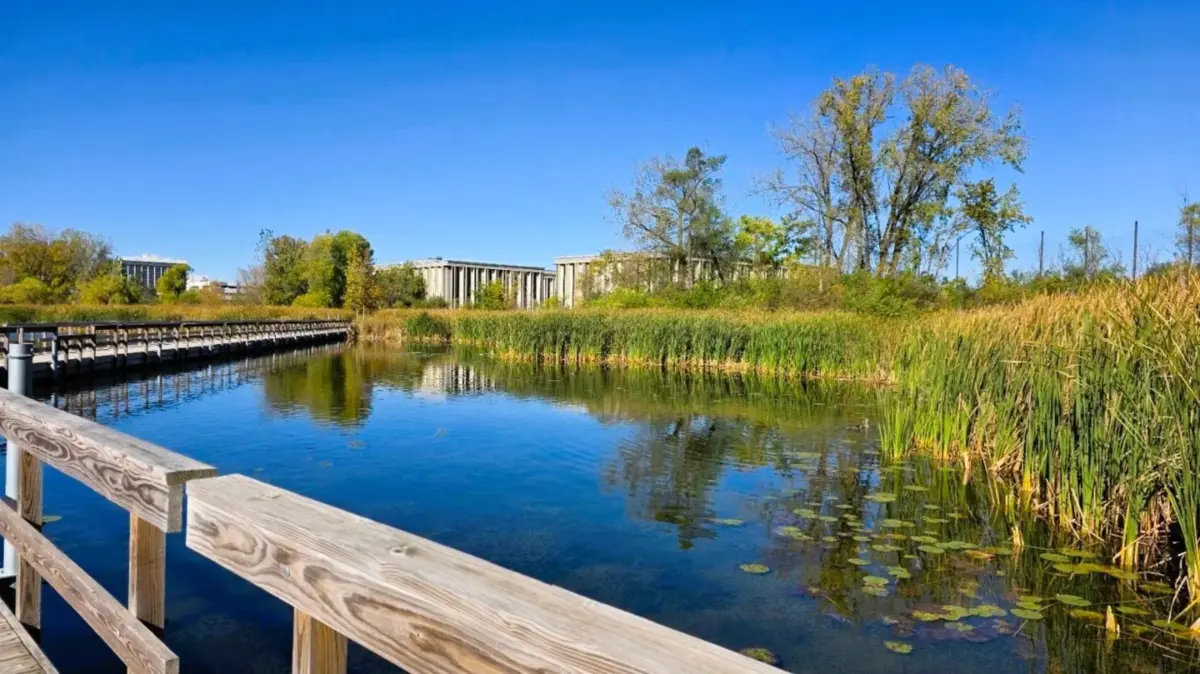
Unlike regional counterparts geared toward high-intensity recreation—such as boating, swimming, or motor sports—Westwood Hills operates under a strict philosophy of ecological preservation, passive recreation, and environmental education. Boasting a state-of-the-art, zero-energy interpretive center, miles of floating boardwalks, hardwood forests, open prairies, and dynamic marshlands, the preserve serves as a living laboratory and a psychological retreat. As urban centers become denser, destinations like Westwood Hills are evolving from simple weekend diversions into vital urban infrastructure that supports regional biodiversity, mental health, and community-based climate education. This report provides an in-depth examination of the nature center’s architectural evolution, its ecological significance, visitor dynamics, and its future as a model for sustainable urban conservation.
Detailed Chronology: From Glacial Basin to Modern Ecological Haven
The landscape that forms Westwood Hills Nature Center today is the result of millennia of geological shaping, followed by decades of deliberate municipal intervention, community advocacy, and modern architectural engineering. Understanding the trajectory of this 160-acre preserve requires looking backward through its geological roots and forward into its cutting-edge sustainable future.
Pre-Settlement and Early Agricultural Era
Long before European settlers arrived in the mid-19th century, the terrain encompassing modern-day St. Louis Park was carved by retreating glacial ice sheets, leaving behind a complex hydrological network of kettles, marshlands, and rolling moraines. For generations, the area served as a rich hunting and gathering ground for indigenous Dakota peoples, who stewarded the native oak savannas and wetlands. As the region underwent agricultural development in the late 1800s, portions of the high ground were grazed and farmed, while the central marshlands largely resisted intensive cultivation due to their saturated soils.
Municipal Acquisition and Preservation (Late 20th Century)
As the Twin Cities post-World War II suburban boom accelerated, St. Louis Park rapidly transformed from a farming community into a bustling first-ring suburb of Minneapolis. Recognizing the impending threat of residential and commercial encroachment on the remaining natural spaces, local civic leaders and environmental advocates banded together in the 1970s to petition for the protection of the Westwood Hills watershed.
The city government ultimately acquired the land, officially designating it as a municipal nature center. For decades, the park served local school districts and families via a modest nature building, fostering generations of environmental stewards through hands-on outdoor education, cross-country skiing, and summer nature camps.
The 2020 Transformation: A Benchmark in Sustainable Architecture
The most significant chronological turning point in the modern history of Westwood Hills occurred in 2020, with the completion and grand opening of its 13,300-square-foot interpretive center. Conceptualized as an architectural and environmental statement, the multi-million-dollar facility replaced aging infrastructure with a cutting-edge building designed to harmonize entirely with the surrounding landscape.

Engineered to achieve net-zero energy consumption, the interpretive center utilizes advanced geothermal heating and cooling, extensive photovoltaic solar arrays, and high-performance building envelopes. This redevelopment repositioned Westwood Hills not merely as a local park, but as a regional showcase for green building practices and climate resilience. Despite opening during the unprecedented challenges of the COVID-19 pandemic, the center quickly rebounded, cementing its reputation as a premier destination for ecological learning and community gatherings.
Supporting Context & Metrics: Ecology, Architecture, and Visitor Dynamics
To fully appreciate the impact of Westwood Hills Nature Center, one must examine the specific metrics and ecological markers that define its daily operations and environmental footprint.
Ecological Composition and Biodiversity
Spanning exactly 160 acres, the preserve is an ecological mosaic containing three primary vegetative and aquatic communities:
- Hardwood Forests: Dominated by mature stands of bur oak, red oak, and basswood, providing crucial nesting and foraging habitats for migratory songbirds and resident mammals.
- Open Prairies: Restored native tallgrass prairie plots that support diverse pollinator populations, including monarch butterflies, native bees, and ground-nesting birds.
- Wetland and Marsh Ecosystems: Centered around the Westwood Lake basin, these saturated habitats act as natural floodwater retention zones while filtering urban runoff before it reaches the broader Mississippi River watershed.
Avian metrics at the center are particularly staggering. According to historical tracking data compiled via eBird, more than 200 distinct bird species have been documented within the park’s boundaries. This includes high-profile sightings of trumpeter swans, pileated woodpeckers, bald eagles, ospreys, and the common loon—the beloved state bird of Minnesota.
Infrastructure and Visitor Metrics
Navigating the preserve relies on a carefully maintained infrastructure designed to minimize human impact on sensitive wetland soils:
- Trail Systems: Approximately 3 miles of interconnected trails feature a mix of compacted earth, gravel, and specialized floating boardwalks. These elevated structures allow visitors to traverse deep marsh environments safely without disrupting aquatic life or plant communities.
- The Interpretive Facility: The 13,300-square-foot building houses interactive conservation exhibits, classrooms, community gathering spaces, and permanent enclosures for live educational ambassador animals, including native turtles, snakes, and birds of prey unable to survive in the wild.
- Demographic and Satisfaction Metrics: Consistently maintaining a 4.8-star rating across thousands of reviews on Google and TripAdvisor places Westwood Hills in the top tier of regional attractions for customer satisfaction. Visitor demographics range heavily from urban families and retirees to K-12 field trip cohorts and solo nature photographers seeking respite from the nearby urban core.
Official Statements and Institutional Perspectives
The success of Westwood Hills Nature Center is deeply rooted in the collaborative philosophy shared by municipal leaders, park rangers, and environmental educators.
Municipal Vision and Park Management
St. Louis Park city officials have consistently emphasized that Westwood Hills is an educational asset rather than a traditional recreational park. In municipal planning documents, the parks and recreation department highlights the center’s dual mission: protecting local biodiversity while providing equitable access to nature for urban populations.
"Westwood Hills Nature Center represents our community’s unwavering commitment to environmental sustainability," notes municipal park planning literature. "By integrating net-zero architectural design with immersive wilderness education, we are not just preserving a piece of land; we are actively shaping the ecological literacy of future generations."
Community and Stakeholder Feedback
The public response, echoed across digital review platforms and community forums, underscores the profound psychological and emotional value the park holds for Twin Cities residents. Urban dwellers frequently remark on the abrupt transition from the bustle of Interstate 394—located just 15 minutes west of downtown Minneapolis—to the tranquil silence of the hardwood canopy.
Local educators and naturalists frequently point out that the absence of motorized watercraft, fishing rods, and domestic pets is not a restriction, but rather a deliberate preservation strategy.
"When you remove the noise of boats, dogs, and swimming crowds, the wildlife returns," explains a local naturalist affiliated with the center. "The animals feel safe here. Deer graze openly near the trails, swans nest within feet of the observation docks, and visitors experience a level of wildlife interaction that is increasingly rare in a metropolitan setting."
Future Outlook: Sustainability, Climate Resilience, and Urban Conservation
Looking ahead, Westwood Hills Nature Center is poised to play an increasingly vital role in regional climate adaptation and environmental education. As urban areas face mounting pressures from the urban heat island effect, erratic weather patterns, and habitat fragmentation, the preservation of urban green spaces like Westwood Hills is shifting from a luxury to an absolute necessity.
Expanding Environmental Education and STEM Initiatives
Park leadership is actively expanding partnerships with Twin Cities school districts to integrate the net-zero interpretive center into formal K-12 science curricula. Future programming aims to leverage the park’s sustainable infrastructure—such as its solar arrays and geothermal systems—as living case studies for renewable energy and ecological engineering. By teaching students how urban environments can coexist with complex wetland ecosystems, the center aims to cultivate the next generation of conservation scientists and policymakers.
Habitat Restoration and Climate Adaptation
On the ecological front, ongoing management plans focus on aggressive invasive species removal (such as buckthorn eradication in the hardwood forests) and the continuous enhancement of native prairie seed banks. As regional climate conditions shift, park ecologists are monitoring hydrological fluctuations within Westwood Lake to ensure the marshlands retain their capacity to absorb heavy stormwater surges—protecting downstream neighborhoods while maintaining stable habitats for vulnerable amphibian and avian populations.
Balancing Access and Preservation
As the population of the Minneapolis-St. Paul metropolitan area continues to grow, maintaining the delicate equilibrium between visitor access and habitat protection will remain the central challenge for Westwood Hills administrators. Strict enforcement of existing policies—such as the prohibition of pets and active water sports—will remain non-negotiable to safeguard nesting wildlife and fragile boardwalk corridors.
Ultimately, Westwood Hills Nature Center stands as a shining blueprint for modern municipal conservation. It proves that dense urban centers do not need to sacrifice their natural heritage for the sake of development. By intentionally weaving wilderness, sustainable architecture, and community engagement together, St. Louis Park has secured a timeless sanctuary where both wildlife and urbanites can thrive for generations to come.


