










Executive Overview
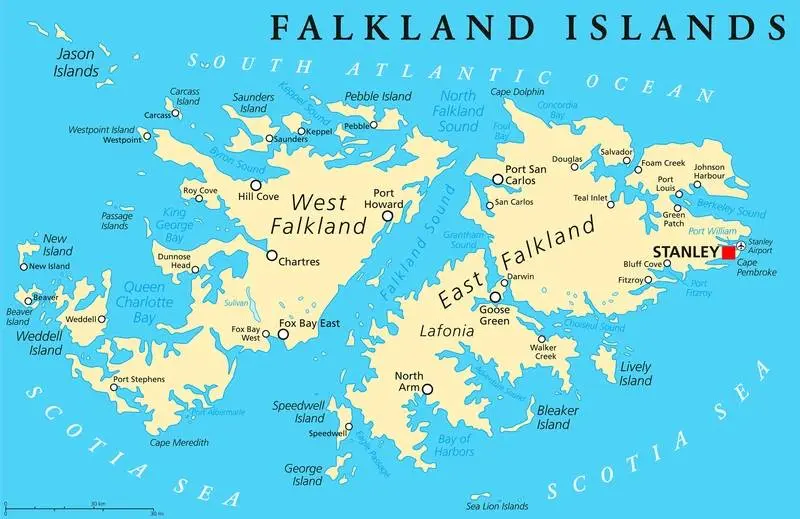
In a significant escalation of geopolitical and economic friction in the South Atlantic, Argentine President Javier Milei has announced a sweeping package of legislative, economic, and military measures aimed at halting unauthorized oil and gas exploration in the waters surrounding the Falkland Islands (referred to in Argentina as Las Islas Malvinas).
During a televised national address, the right-wing libertarian leader declared his intention to sign an emergency decree designed to fast-track punitive sanctions against multinational corporations operating under licenses granted by the British administration of the islands. Crucially, the proposed measures will extend legal and financial penalties beyond the primary operating energy firms to target their directors, shareholders, and supply-chain partners.
In tandem with these economic sanctions, President Milei unveiled plans to bolster Argentina’s military posture in its southern territories. This includes the construction of a major integrated naval base in the Tierra del Fuego province, designed to project power near the contested waters and secure logistical dominance over maritime routes leading to Antarctica. Furthermore, Milei announced that he would send an urgent "national sovereignty defense" bill to the Argentine Congress to codify these expanded powers and seal off domestic market access for any entity aiding British-authorized resource extraction.
This aggressive posture marks a notable strategic pivot for Milei. Since taking office in December 2023, his administration had largely prioritized domestic economic shock therapy and sought warmer diplomatic relations with Western allies, including the United Kingdom. However, the imminent progression of the Sea Lion offshore oil project—spearheaded by Israel’s Navitas Petroleum and the UK’s Rockhopper Exploration—has forced Buenos Aires to reassert its historical sovereignty claims with renewed legislative and military vigor.
Detailed Chronology
The current dispute over South Atlantic energy reserves is the latest chapter in a decades-long sovereignty conflict, punctuated by a brief but bloody war in 1982. Below is a chronology tracing the development of the offshore energy sector in the Falkland Islands and the events leading to President Milei’s recent legislative offensive.
[1833] Britain establishes continuous administration of the Falkland Islands.
  │
[1982] The Falklands War: Argentina invades; UK forces reclaim the archipelago.
  │
[2010] Rockhopper Exploration discovers the Sea Lion field in the North Falkland Basin.
  │
[2011] Argentina introduces Law 26.659, outlawing unauthorized drilling on its continental shelf.
  │
[2022] Navitas Petroleum acquires a 65% operating interest in the Sea Lion project.
  │
[Dec 2023] Javier Milei is inaugurated, initially emphasizing diplomatic negotiation.
  │
[Mid-2024] Sea Lion developers announce plans to reach "first oil" by late 2026/early 2027.
  │
[Present] Milei issues a televised address announcing targeted sanctions, military expansion, and a new sovereignty bill.
The Origins of Offshore Exploration
Following the 1982 war, Britain maintained control of the archipelago, while successive Argentine administrations constitutionalized their claim to the islands. The geopolitical dynamic shifted from diplomatic sparring to economic competition in 1996, when the Falkland Islands Government (FIG) conducted its first offshore licensing round.
The breakthrough occurred in May 2010, when British independent explorer Rockhopper Exploration discovered the Sea Lion field in the North Falkland Basin, approximately 220 kilometers north of the islands. Preliminary tests confirmed the presence of high-quality, commercially viable crude oil, igniting a diplomatic firestorm.

The Legislative Pushback (2011–2013)
In response to the Sea Lion discovery, the administration of then-President Cristina Fernández de Kirchner enacted Law 26.659 (the Solanas Law) in 2011. This legislation established severe administrative and criminal penalties for any company conducting hydrocarbon exploration activities on the Argentine continental shelf without express authorization from Buenos Aires. In 2013, the law was amended to include prison sentences for company executives and the seizure of vessels and assets.
Corporate Realignment and the Entry of Navitas (2020–2022)
Despite legal threats from Buenos Aires, the Sea Lion project progressed, though it faced funding hurdles and corporate restructuring. In 2022, the project received a major boost when Israeli energy firm Navitas Petroleum acquired a 65% operating interest in the field, partnering with Rockhopper Exploration (which retained 35%). Navitas brought the capital and deep-water expertise necessary to transition the project from exploration to development.
Milei’s Pragmatism Meets Geopolitical Reality (Dec 2023–Present)
Upon taking office in late 2023, Javier Milei adopted a pragmatist tone, suggesting that while Argentina’s claim to the islands was "non-negotiable," the dispute should be settled via long-term, Hong Kong-style diplomatic transfers, while simultaneously pursuing close trade ties with the UK.
However, by mid-2024, the Sea Lion partners declared they were on track to make a Final Investment Decision (FID), targeting "first oil" by late 2026 or early 2027. Realizing that commercial oil extraction was fast becoming an imminent reality, Milei pivoted to a hardline nationalist stance, culminating in his televised address on Thursday.
Supporting Context & Metrics
To understand the stakes of this escalating dispute, it is necessary to examine the economic potential of the Sea Lion field, the legal mechanism of Argentina’s proposed sanctions, and the strategic importance of the military buildup in Tierra del Fuego.
The Hydrocarbon Economics of the Sea Lion Project
The Sea Lion field is one of the largest undeveloped offshore oil discoveries in the world. According to technical assessments published by Rockhopper Exploration and Navitas Petroleum, the project boasts substantial reserves that could transform the local economy of the Falkland Islands and provide lucrative returns for international investors.
| Metric | Project Estimate |
|---|---|
| Recoverable Oil Resources (Phase 1 & 2) | ~317 million barrels (with upside potential exceeding 500 million) |
| Target Peak Production Rate | 55,000 to 80,000 barrels per day (bpd) |
| Estimated Life of Field | 20–30 years |
| Initial Capital Expenditure (Capex) | ~$1.2 billion USD |
| Estimated Break-even Oil Price | ~$35–$40 per barrel (Brent) |
For Argentina, the successful extraction of these resources under British auspices represents not only a loss of potential national wealth but also a permanent consolidation of British economic presence in the South Atlantic.
The Legal Architecture of "Secondary Sanctions"
The centerpiece of Milei’s legislative push is the expansion of Argentina’s domestic sanctions framework into a system of "secondary sanctions" reminiscent of United States extraterritorial measures.
[Targeted Energy Firms] ──► [Subcontractors & Suppliers] ──► [Financial & Insurance Backers]
          │                             │                                 │
          ▼                             ▼                                 ▼
   Asset Seizure in              Blacklisting from                 Ban on Capital Markets
  Argentine Waters              Argentine Contracts               and Domestic Operations
Under the proposed "national sovereignty defense" bill, the Argentine government seeks to penalize:
- Direct Operators: Companies directly involved in drilling and extraction (e.g., Navitas and Rockhopper).
- The Supply Chain: Seismic survey providers, maritime transport firms, helicopter logistics companies, and equipment manufacturers.
- Financial Facilitators: Investment banks, underwriters, and insurance companies providing capital or coverage for the South Atlantic projects.
- Corporate Governance: Individual directors and major shareholders of these firms will face personal entry bans, asset freezes, and potential criminal indictments within Argentine jurisdiction.
While Argentina lacks the global financial leverage of the United States to enforce extraterritorial sanctions globally, the law aims to force multinational corporations to make a binary choice: participate in the Falklands’ emerging oil sector or maintain access to Argentina’s vast domestic market, which includes the massive Vaca Muerta shale formation—one of the world’s largest unconventional gas and oil reserves.
Militarization and Logistics in Tierra del Fuego
Milei’s announcement of an emergency decree to build an integrated naval base in Tierra del Fuego is a direct geopolitical counterweight to the British military base at Mount Pleasant on the Falkland Islands.
Located in Ushuaia, the southernmost city in the world, the planned base will serve several strategic functions:
- Monitored Patrols: Providing a launchpad for the Argentine Navy to monitor maritime traffic, fisheries, and hydrocarbon activities in the South Atlantic.
- Antarctic Logistics Hub: Positioned to challenge the Falklands’ role as the primary gateway to Antarctica, reinforcing Argentina’s territorial claims on the frozen continent.
- Telecommunications and Radar: Upgrading electronic surveillance and telecommunications capabilities to track vessels operating in the North and East Falkland Basins.
Official Statements
The Argentine Executive
In his televised address, President Javier Milei framed the measures as a non-negotiable defense of Argentine territory and natural resources:
"We will continue to bar from operating in Argentine territory companies involved, directly or indirectly, in projects in the Malvinas Islands without Argentine authorization. This government will not stand by and watch our natural wealth plundered under an illegal occupation. We are equipping our armed forces, building our southern naval infrastructure, and providing our judiciary with the teeth required to penalize those who violate our sovereignty."
Corporate Silence and Historical Precedent
At the time of reporting, both Navitas Petroleum and Rockhopper Exploration have declined to comment directly on the Argentine President’s televised remarks. Historically, however, the operators have maintained that their activities are fully compliant with the laws of the Falkland Islands Government, which holds the legal authority to grant licenses under British administrative law.
The British Position
The UK Foreign, Commonwealth & Development Office (FCDO) has consistently maintained its stance on the Falkland Islands’ sovereignty, pointing to the 2013 referendum in which 99.8% of islanders voted to remain a British Overseas Territory. A spokesperson for the Falkland Islands Government previously stated:
"The development of our natural resources is a democratic right of the people of the Falkland Islands. Decisions regarding the hydrocarbon industry are made by the elected government of the islands for the benefit of our community, and we reject any attempts by neighboring states to interfere with our economic self-determination."
Future Outlook
President Milei’s aggressive stance introduces a volatile variable into the South Atlantic energy landscape, raising critical questions about the viability of the Sea Lion project and the broader geopolitical alignment of his administration.
Can Argentina Enforce the Sanctions?
The practical efficacy of Argentina’s proposed sanctions remains highly debated among international legal experts and energy analysts.
- Limited Direct Leverage: Neither Navitas Petroleum nor Rockhopper Exploration currently holds significant physical assets or active operations within mainland Argentina. Therefore, direct asset seizures are unlikely.
- The Chilling Effect on Suppliers: The real danger for the Sea Lion project lies in the "chilling effect" on third-party contractors. Tier-1 oilfield service providers (such as Schlumberger, Baker Hughes, or Halliburton) and major international maritime transport firms possess substantial business interests in mainland Argentina, particularly in the booming Vaca Muerta shale play. If forced to choose between supporting a high-risk offshore project in the Falklands or maintaining lucrative contracts in mainland Argentina, these global service giants may choose to withdraw from the Falklands, driving up development costs and causing project delays.
Geopolitical Ironies for the Milei Administration
The escalation presents several diplomatic challenges for President Milei’s broader foreign policy agenda:
- The Israeli Connection: Milei has repeatedly declared himself a staunch ally of Israel and has expressed a desire to move Argentina’s embassy in Israel to Jerusalem. However, Navitas Petroleum is a prominent Israeli corporation. Blacklisting and legally pursuing a major Israeli energy firm creates a direct contradiction with his geopolitical alignment.
- Attracting Foreign Direct Investment (FDI): Milei’s primary economic goal is to deregulate the Argentine economy and attract foreign capital. Implementing aggressive state-led sanctions, blacklists, and threatening the assets of international shareholders could undermine his messaging that Argentina is once again a stable, rule-of-law-abiding destination for global investors.
Conclusion
As the Sea Lion partners edge closer to a Final Investment Decision, the South Atlantic is poised for a prolonged period of legal and economic warfare. By tying the defense of national sovereignty to tangible economic sanctions and military infrastructure in the far south, Javier Milei has signaled that even as he seeks to liberalize Argentina’s economy, the country’s historic claim to the Falkland Islands remains an active, volatile, and highly politicized frontier.