




Executive Overview
Water contamination in a boat’s engine oil is one of the most perilous mechanical failures a mariner can encounter on the water. When moisture breaches the lubrication system, it compromises the oil’s viscosity and film strength, transforming a vital protective fluid into an abrasive, destructive emulsion. According to marine engineering experts and on-water rescue organizations like Sea Tow, discovering milky or cloudy oil on the dipstick demands immediate, decisive action: shutting down the engine instantly and abstaining from any attempt to restart it.
Failing to heed this cardinal rule can transform a manageable, albeit costly, component repair—such as replacing a blown head gasket or a corroded exhaust manifold—into a catastrophic engine failure requiring a total powerhead or block replacement. Beyond the mechanical implications, water intrusion frequently coincides with or precipitates secondary hazards, including sudden engine overheating, loss of propulsion in congested or hazardous waterways, and drifting into shallow water or navigational hazards. This report explores the physiological mechanics of water intrusion, diagnostic protocols, immediate tactical responses on the water, and the indispensable role of professional marine assistance providers in mitigating disaster.
Detailed Chronology: The Lifecycle of a Water-In-Oil Contamination Event
Understanding how water enters an engine and the rapid progression of damage it causes is vital for every boat owner. The timeline of a contamination event typically follows a structured, cascading path from initial compromise to complete mechanical seizure.

Phase 1: The Breach (The Root Cause)
Water rarely enters an engine oil system spontaneously; it is almost always the result of a structural, thermal, or environmental failure.
- Thermal Shock and Overheating: When an engine experiences severe overheating, components warp. Cylinder heads can lift, and head gaskets can fail, creating pathways where coolant or raw cooling water can bypass sealing rings and drain directly into the crankcase.
- Corrosion and Material Fatigue: In marine environments, saltwater is notoriously corrosive. Over time, cast iron or aluminum exhaust manifolds and risers can develop internal pinhole leaks. These microscopic fractures allow raw cooling water—or seawater drawn through the exhaust system—to backflow directly into the cylinders or exhaust ports, eventually migrating past piston rings into the oil pan.
- Environmental Submersion or Flooding: Whether caused by heavy weather swamping the transom, a failed bilge pump system during a heavy rainstorm, or taking water over the bow after running aground, sudden flooding can submerge lower engine components or force water through air intakes, instantly contaminating the lubrication reserves.
- Freeze Damage: In regions experiencing sub-freezing temperatures, residual water left inside an engine block expands as it freezes, cracking the block or intake manifolds. When the engine is subsequently thawed and started, water pours directly into the oil supply.
Phase 2: Emulsification (The Chemical Degradation)
Once water interacts with standard motor oil under the intense mechanical churning of a running engine, it creates a chemical reaction known as emulsification.
- Normal engine oil appears amber, dark brown, or black, depending on its age and use.
- When mixed with water under heat and pressure, it turns into a thick, opaque fluid resembling a milkshake—typically milky white, tan, or creamy light brown.
- In this emulsified state, the oil completely loses its ability to form a protective hydrodynamic boundary between moving metal parts, such as bearings, camshafts, and piston skirts.
Phase 3: Accelerated Friction and Component Failure
Operating an internal combustion engine with water-contaminated oil accelerates wear to an exponential degree. Within minutes of operation:
- Bearing Wipe: Crankshaft and connecting rod bearings rely on a pressurized cushion of clean oil to prevent metal-to-metal contact. Water replaces this cushion, leading to extreme friction, localized superheating, and the wiping or melting of softer bearing materials.
- Scoring and Seizing: Pistons expand against cylinder walls without proper lubrication, resulting in deep scoring, broken rings, and ultimately, a seized engine where internal components weld themselves together.
Supporting Context & Metrics: The Physics of Lubrication Failure
To fully grasp why running an engine with contaminated oil is a critical hazard, one must look at the underlying tribology—the science of friction, lubrication, and wear.
The Role of Viscosity
Engine oil is engineered with specific viscosity indices to withstand high operating temperatures and extreme pressures. When water mixes into the oil, it drastically lowers the fluid’s viscosity. A low-viscosity fluid cannot maintain pressure within the oil galleries, causing oil pressure warning alarms to sound (or drop below safe operating thresholds). Without sufficient pressure and film thickness, high-stress components experience boundary lubrication failure, where microscopic peaks on metal surfaces weld and tear apart.
Statistical Risks in Marine Operations
Marine mechanics report that head gasket failures and exhaust manifold leaks account for over 70% of all internal water-in-oil incidents. Furthermore, data from maritime safety agencies indicates that engine mechanical failures remain the leading cause of emergency on-water assistance calls. Among these mechanical failures, secondary damage caused by operators attempting to "limp home" on compromised fluids—such as low oil or contaminated oil—multiplies average repair bills by a factor of three to five, frequently turning a $1,500 gasket job into a $10,000+ engine replacement project.
Official Guidelines & Expert Protocols
Leading marine safety organizations and engine manufacturers share a unified stance on how to manage water intrusion emergencies. The following protocols outline the industry standard for response and safety.
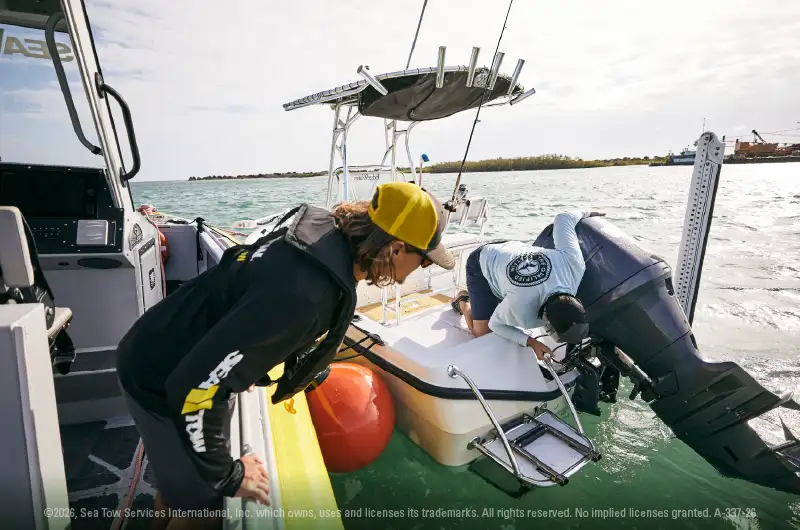
Immediate Action Checklist
- Cut the Ignition Immediately: The moment milky oil is observed, or if severe engine sputtering, loss of power, or high-temperature alarms occur alongside oil degradation, shut the engine down. Do not attempt to "verify" the problem by restarting the motor.
- Evaluate Safety and Environmental Conditions: Before turning your attention back to the engine compartment, take stock of your immediate surroundings.
- Are you drifting toward rocks, shoals, or heavy commercial traffic?
- What are the wind and sea conditions?
- Drop an anchor immediately if you are in shallow or restricted waters and drifting toward danger.
- Inspect the Dipstick and Fluid Levels: Pull the oil dipstick and examine the residue. If the fluid is opaque, creamy, or milky, confirm the diagnosis. Check coolant levels as well; a sudden drop in closed-loop coolant often points directly to a compromised head gasket or intake manifold gasket.
- Abandon On-Water Repairs: Attempting to fix a water-in-oil condition while drifting on open water is fundamentally unsafe and mechanically futile. Changing oil on a pitching boat deck does not solve the underlying mechanical failure (e.g., a cracked block or blown gasket), and introducing new oil into a leaking system will only result in instant re-contamination.
Professional On-Water Assistance: The Role of Sea Tow
When an engine is rendered inoperable due to water contamination or catastrophic internal failure, attempting to navigate back to port unassisted is out of the question. This is where professional maritime towing networks become indispensable.
Why Professional Towing Outweighs "Limping Home"
- Eliminating Secondary Disasters: Attempting to run a compromised engine stresses other systems, increases the risk of fire due to overheated components or fuel leaks, and can leave a vessel entirely dead in the water in a dangerous shipping channel.
- Expert Navigation and Equipment: Commercial towing captains are trained in specialized close-quarters maneuvering, rigging secure towlines in adverse weather, and safely delivering disabled vessels to slips or service yards.
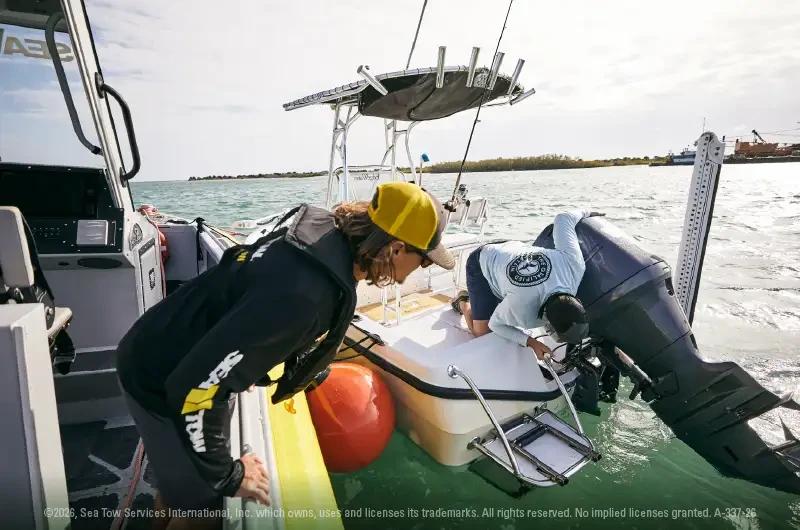
- Financial Protection via Membership: Out-of-pocket costs for commercial towing can be substantial depending on distance and conditions. Membership programs like Sea Tow cover these emergency services fully for members within their home zones, ensuring that boaters never hesitate to call for help due to financial concerns.
How to Request Emergency Assistance
If you find yourself dead in the water with a contaminated engine, establishing communication is your next priority. Mariners can contact professional assistance via:
- VHF Radio: Channel 16 (the international hailing and distress frequency).
- Direct Telephone: Toll-free hotlines such as 800-4-SEATOW.
- Mobile Applications: Dedicated digital platforms like the Sea Tow app, which transmit precise GPS coordinates directly to dispatchers.
Frequently Asked Questions (FAQ)
What does milky oil mean in a boat engine?
Milky, creamy, or light brown oil indicates that water has breached the engine’s internal lubrication system and mixed with the motor oil. This is a critical sign of failure—commonly caused by a blown head gasket, cracked block, or leaking exhaust manifold—that demands immediate engine shutdown.
Can water in engine oil completely ruin a boat engine?
Yes. Water strips oil of its lubricating properties, leading to immediate metal-to-metal contact, extreme friction, bearing failure, and potential engine seizure within minutes of operation.
Is it ever safe to run a boat engine if water is found in the oil?
No. Even running the engine for a brief period can cause irreversible internal damage, drastically increasing repair costs and placing the vessel and its occupants at risk.
Can Sea Tow safely tow a boat with engine mechanical failure?
Yes. Sea Tow provides 24/7 on-water assistance, including professional towing services, to safely transport disabled vessels and their passengers back to port when engines cannot be operated safely.
Future Outlook: Technological Advancements in Engine Health Monitoring
As marine engineering evolves, the future of boating safety is shifting from reactive measures to proactive, predictive maintenance. Modern inboard and outboard marine engines are increasingly integrated with smart sensors and telematics systems.
Advanced electronic control modules (ECMs) now monitor oil quality, moisture levels, continuous fluid temperature, and pressure fluctuations in real-time. In the near future, early-warning diagnostic alerts sent directly to a captain’s smartphone or multi-function display (MFD) will detect micro-traces of water intrusion before the oil turns visibly milky. By catching gasket degradation or manifold corrosion at its inception, boaters will be able to schedule preventative dockside maintenance, avoiding emergency open-water towing scenarios altogether.
Until these smart diagnostic suites become universal across all vessel classes, however, the timeless rules of marine stewardship remain unchanged: routine dipstick checks, vigilance regarding operating temperatures, and an unwavering commitment to shutting down immediately when contamination is detected.