





Executive Overview
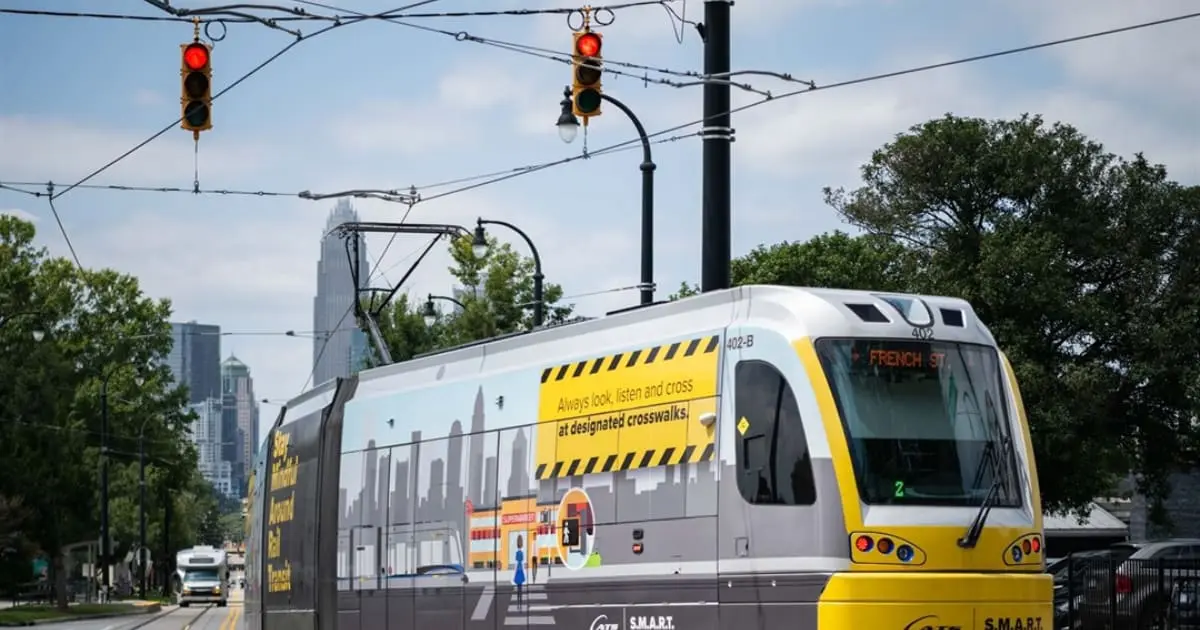
The Charlotte Area Transit System (CATS) is celebrating a significant milestone this month, marking five years of continuous passenger service on the CityLYNX Gold Line streetcar. Since its modern debut on August 30, 2021, the four-mile alignment has transformed the urban mobility landscape of North Carolina’s largest city, bridging historic neighborhoods and bustling commercial districts. Connecting the Historic West End to Plaza Midwood via the heart of Uptown Charlotte, the Gold Line has firmly established itself as a vital arterial vein in the region’s expanding multi-modal transit network.
To date, the streetcar system has successfully facilitated more than 2.8 million passenger trips across its 17 operational stations. Beyond its impressive ridership metrics, the Gold Line has served as a technological showcase for modern American transit. By deploying hybrid Siemens S700 streetcars equipped with advanced onboard battery propulsion, CATS successfully navigated the historic urban architecture of Uptown Charlotte without marring the city’s signature streetscapes with an unsightly web of overhead catenary wires.
Yet, this five-year anniversary serves as more than just a retrospective celebration. It arrives at a critical inflection point for transit infrastructure in Mecklenburg County. Buoyed by the recent approval of a pivotal sales tax referendum in November 2025, CATS is actively preparing for the next generation of public transit under its ambitious 2055 Transit System Plan. The forthcoming Phase 3 expansion promises to more than double the footprint of the streetcar network, introducing approximately six miles of new track, up to 17 additional stations, and vital regional connections to major multi-modal transit hubs like the Eastland Community Transit Center, the Rosa Parks Community Transit Center, and the forthcoming Charlotte Gateway Station.

This comprehensive report examines the operational history, technological innovations, economic impacts, and future trajectory of the CityLYNX Gold Line, offering an authoritative look at how Charlotte is redefining urban mobility for the 21st century.
Detailed Chronology: From Historic Roots to Modern Revival
To fully understand the significance of the Gold Line’s five-year milestone, one must examine the complex and evolving history of rail transit in the Queen City. Charlotte’s relationship with streetcars dates back to the late 19th and early 20th centuries, when an extensive electric trolley network helped shape the city’s early neighborhoods and commercial centers. However, like many American cities, Charlotte decommissioned its original streetcar system in the mid-20th century to make way for automobile-centric infrastructure, paving over tracks and transitioning exclusively to rubber-tired bus fleets.
The journey toward bringing rail back to Charlotte’s surface streets began in earnest at the turn of the millennium. Planners and city leaders envisioned a modern streetcar line that would act as both an economic catalyst and a community-binding mechanism.
Phase 1: The Initial Step
The revitalization of streetcar service began in 2015 with the launch of the "Phase 1" heritage streetcar line. Operating over a relatively short 1.5-mile stretch between the Charlotte Transportation Center (CTC) in Uptown and the historic Elizabeth neighborhood, this initial segment utilized vintage replica cars. While popular with tourists and local history enthusiasts, transit planners recognized that a heritage line had limited capacity to serve as a high-frequency, heavy-lifting commuter option for a rapidly growing metropolis.
Phase 2: Transformation and Modernization
Recognizing the limitations of Phase 1, CATS undertook a massive overhaul and expansion project known as Phase 2. This phase involved integrating the original heritage route into a modern, 4-mile continuous alignment that extended westward to French Street Station in the Historic West End and eastward to Sunnyside Station near Plaza Midwood.
On August 30, 2021, the modernized CityLYNX Gold Line officially opened for passenger service. This launch was not merely an extension of tracks; it represented a complete technical reinvention. The heritage vehicles were retired in favor of state-of-the-art, low-floor hybrid streetcars capable of operating seamlessly in mixed traffic alongside automobiles, bicycles, and pedestrians. This phase officially stitched together historically underserved and economically diverse corridors, offering residents in the Historic West End and Plaza Midwood a direct, reliable rail connection to the core of Uptown Charlotte.
Supporting Context & Metrics: Ridership, Technology, and Economic Impact
Ridership and Network Performance
Over its first five years of operation, the Gold Line has demonstrated consistent utility and resilience. Despite the lingering behavioral shifts in commuting habits prompted by the COVID-19 pandemic and subsequent rise in remote work models, the streetcar has accumulated over 2.8 million passenger trips.
An analysis of station-level data reveals clear hubs of high-density activity. Among the 17 stations currently servicing the four-mile route, several have emerged as exceptionally busy transfer and destination points:
- CTC Arena Station: Acting as a major transfer nexus in Uptown, connecting riders directly to the LYNX Blue Line light rail and numerous bus routes.
- Tryon Street Station: Situated in the commercial core of the city, serving office workers, shoppers, and daily commuters.
- Johnson & Wales University & Central Piedmont Community College (CPCC) Stations: Providing essential campus connectivity for thousands of students and faculty members.
- Sunnyside Station: Serving as the eastern anchor in the vibrant, culturally rich Plaza Midwood neighborhood, driving weekend and evening leisure travel.
Battery Technology and Wire-Free Engineering
One of the most remarkable engineering feats of the Gold Line project is the integration of cutting-edge Siemens S700 hybrid-electric streetcars. Operating urban rail in a historic downtown presents unique aesthetic, historical, and structural challenges. In Charlotte, Uptown’s status as a traditional parade route—specifically along Tryon Street—meant that permanent overhead catenary wires (OHW) were strictly prohibited. Furthermore, the route passes beneath several historic and modern bridges with severely restricted vertical clearance.
To solve this dilemma, CATS invested in cutting-edge battery-hybrid technology. The Siemens S700 vehicles are engineered to draw power from traditional overhead wires in suburban and transitional segments of the route, but seamlessly transition to onboard energy storage systems when entering Uptown.
This wire-free operation preserves the unobstructed skyline of the city center, protects the integrity of the parade route, and allows the streetcars to safely navigate low-clearance rail and roadway underpasses. The successful deployment of this technology in Charlotte has served as a nationwide case study for transit agencies seeking to balance modern rail capabilities with historical preservation and urban design sensitivities.
Official Statements: Perspectives from Transit Leadership
As CATS pauses to reflect on the five-year anniversary of the Gold Line, agency leadership has emphasized the broader socio-economic philosophy guiding the system’s development. Public transit is increasingly viewed not merely as a mechanical utility, but as an engine for equitable community growth, environmental sustainability, and regional connectivity.
Brent Cagle, Interim CEO of CATS, offered a reflective assessment of the streetcar’s impact during the anniversary announcements:
"The Gold Line serves some of Charlotte’s most historic and vibrant neighborhoods, and its success reflects the true value of investing in communities. As we look ahead, we remain intensely focused on building a system that supports every rider, every day—ensuring that economic growth and mobility access go hand in hand across our entire municipal footprint."
Transportation experts within the agency point out that the Gold Line has successfully bridged the physical and social divides that often plague rapidly gentrifying American cities. By connecting the Historic West End—an area historically impacted by systemic disinvestment—directly to the financial engines of Uptown and the cultural hubs of Plaza Midwood, the streetcar has functioned as a social equalizer.
City planners also highlight the environmental dividends. By shifting thousands of daily single-occupancy vehicle trips to a zero-emission (at the point of operation) rail network, the Gold Line contributes directly to Charlotte’s long-term sustainability goals, helping to mitigate urban heat island effects, reduce particulate matter emissions, and lower the city’s overall carbon footprint.
Future Outlook: The 2055 Transit System Plan and Phase 3 Expansion
While celebrating half a decade of operational success is an important milestone for CATS, the agency’s primary focus is firmly fixed on the horizon. The future of the CityLYNX Gold Line is inextricably linked to the broader regional mobility blueprints outlined in the 2055 Transit System Plan.
The 2025 Sales Tax Referendum: A Financial Catalyst
The viability of ambitious transit expansions in Mecklenburg County received a monumental boost following the successful approval of a dedicated sales tax referendum by local voters in November 2025. This funding mechanism provides the predictable, long-term capital required to transition visionary transit maps into concrete-and-steel reality. With dedicated local revenue secured—frequently leveraged alongside federal matching grants through the Federal Transit Administration (FTA)—CATS is moving swiftly from conceptual engineering to formal environmental reviews and preliminary design phases.
Phase 3 Extension: Doubling the Network
The centerpiece of the future Gold Line strategy is the proposed Phase 3 extension. This major capital project will add approximately six miles of new track and up to 17 new stations to the existing infrastructure, effectively doubling the length and reach of the current streetcar network.
The expanded alignment is designed to create powerful new multi-modal transit nodes across the city:
- Eastland Community Transit Center: The eastern terminus extension will integrate the streetcar network with the rapidly revitalizing Eastland site, providing residents of east Charlotte with fast, reliable rail access to the city center.
- Rosa Parks Community Transit Center: On the western end, extending service toward the Rosa Parks hub will enhance connectivity for neighborhoods along Beatties Ford Road, facilitating seamless transfers between crosstown bus routes and the rail network.
- Charlotte Gateway Station: The future Gold Line alignment is engineered to interface directly with the proposed Charlotte Gateway Station. This multi-modal facility will centralize intercity rail (Amtrak), commuter rail, regional buses, and streetcars, creating a unified transportation hub akin to major transit terminals in larger metropolitan areas.
Integrating the Regional Corridor Network
Beyond physical track expansion, CATS is utilizing advanced fare modernization programs—such as the recently approved "Fare Ambassadors" initiative and digital account-based ticketing systems—to make riding the Gold Line and the broader system more intuitive and seamless.
As Charlotte continues to experience explosive population growth, welcoming thousands of new residents each month, the pressure on the region’s roadways will only intensify. The CityLYNX Gold Line stands as proof that high-capacity, sensitive urban rail design can thrive in a Southern metropolitan market. By connecting historic roots with forward-thinking battery technology and aggressive expansion plans, CATS is ensuring that Charlotte’s transit future is equitable, sustainable, and built to last.