



Executive Overview
The global oceans cover more than 70 percent of the Earth’s surface, acting as the lifeblood of our planet. They regulate our climate, provide the air we breathe, and sustain billions of lives. Yet, despite their immense scale and critical importance, much of the marine world remains unseen and unappreciated by the average citizen.
To bridge this empathy gap and celebrate the breathtaking beauty of marine ecosystems, the annual Ocean Conservancy Photo Contest serves as a vital cultural touchstone. Marking the official conclusion of National Ocean Month, the 2026 edition of the competition drew an unprecedented response, inviting over 1,000 ocean lovers, conservationists, and wildlife photographers from across the globe to submit their most striking captures of marine life and coastal habitats.
This year’s competition was more than just a showcase of aesthetic brilliance; it was a powerful reminder of what is at stake. Through the lenses of passionate photographers, audiences worldwide were granted rare, intimate glimpses into the secret lives of Arctic walruses, Australian cuttlefish, and urban-adjacent Atlantic seals.
In this feature, we explore the winning entries that captured the hearts of judges, staff, and the public alike. We delve into the stories behind the images, examine the crucial role of ethical wildlife photography, and highlight the expert commentary from a distinguished panel of judges: Angela J. Farmer, Harvey Hergett, and Andrés Ballesteros.
Detailed Chronology: From Submissions to the Global Spotlight
The journey of the 2026 Ocean Conservancy Photo Contest followed a rigorous path of community engagement, expert evaluation, and public voting, culminating in a nationwide celebration during National Ocean Month.
Phase One: The Global Call for Submissions
Opening earlier in the year, the contest invited amateur and professional photographers alike to submit their finest work depicting ocean wildlife, coastal scenes, and underwater ecosystems. By the time submissions closed, over 1,000 entries had poured in. Photographers braved freezing Arctic temperatures, navigated choppy coastal waters, and spent hours submerged in kelp forests to secure frames that captured authentic animal behaviors without causing distress.
Phase Two: Expert Deliberation and the Judges’ Choice
Once submissions were tallied, a panel of world-renowned nature and underwater photographers—featuring two-time contest winner Angela J. Farmer, seasoned wildlife photographer Harvey Hergett, and visual artist Andrés Ballesteros—faced the monumental task of reviewing the entries. Evaluating submissions not only on technical composition, lighting, and clarity, but also on ethical wildlife interaction, the judges selected the top contenders.
The ultimate Judges’ Choice Winner was awarded to Richard Rothstein for his arresting Arctic portrait, “Walrus Nursing.” Shot in the icy waters of Norway, the image captivated the panel with its stark emotional resonance, pristine symmetry, and undeniable testament to parental care in a rapidly changing polar environment.
Phase Three: Staff Selection and the Cinematic Depths
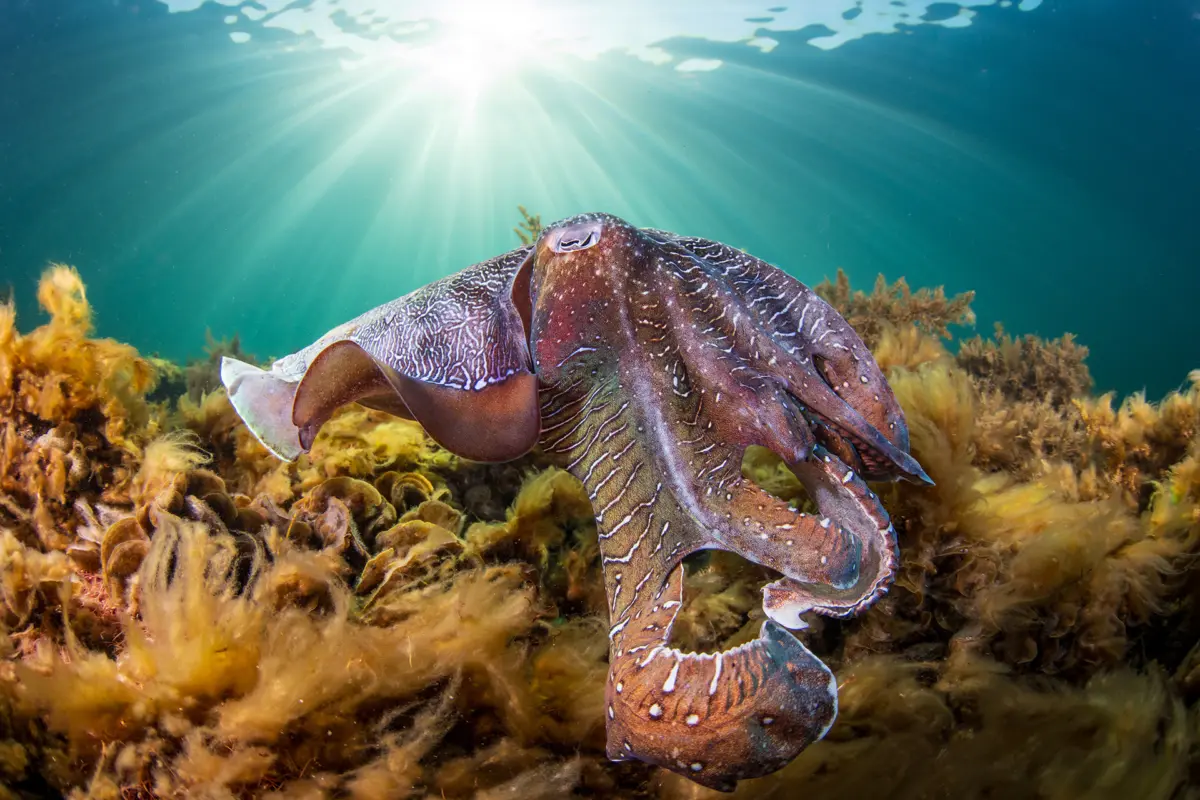
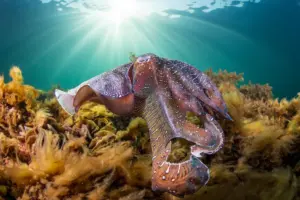
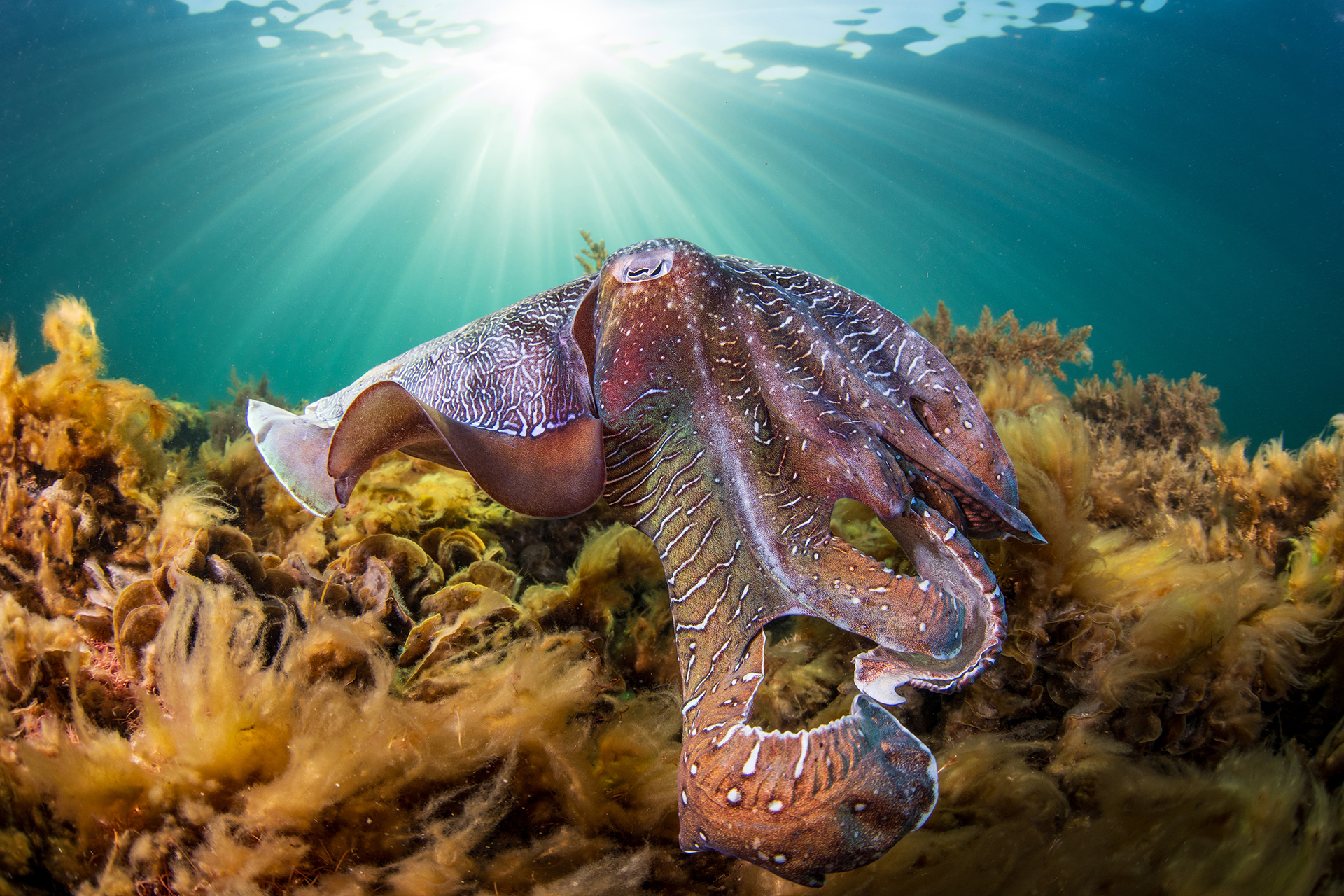
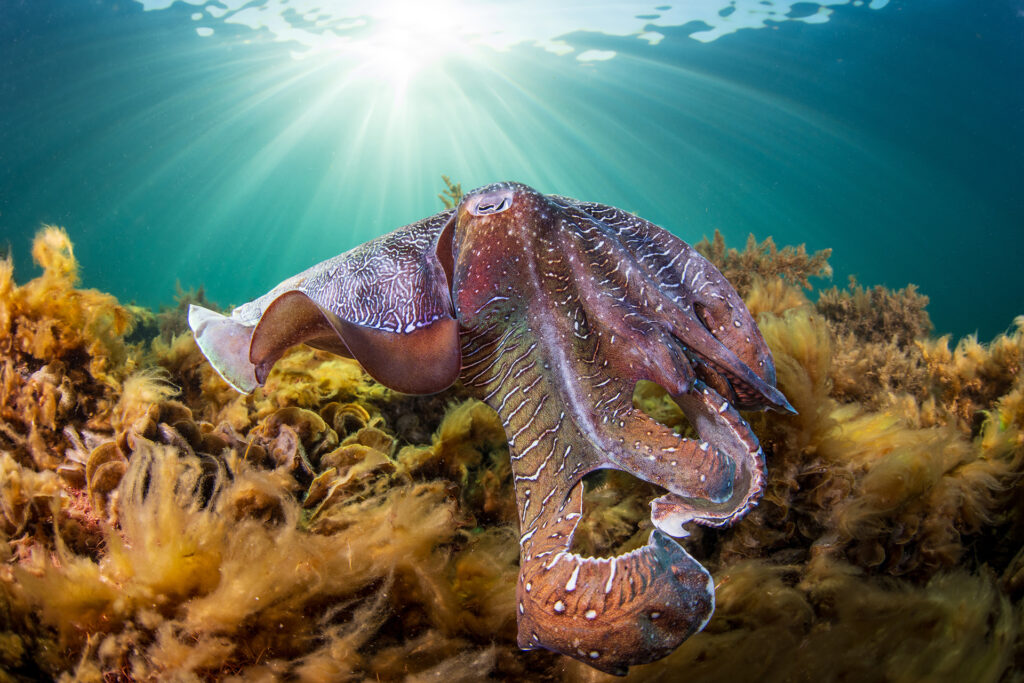
In addition to the main judges’ prize, the internal staff at the Ocean Conservancy cast their votes to recognize an image that embodied the spirit of marine exploration. Rowan Dear claimed the Staff Choice Winner title with his dynamic underwater capture, “The Lone Ranger,” photographed off the shoreline of Whyalla, Australia. Featuring a massive male Giant Cuttlefish illuminated by a dramatic underwater sunburst, the photograph won over the staff with its cinematic scale and rich color palette.
Phase Four: Public Voting and the People’s Choice
Democratizing the competition further, the People’s Choice category invited the global online community to review the shortlisted finalists and vote for their favorite piece. Capturing the hearts of thousands of digital voters, Nicole Pellegrino secured the People’s Choice victory with “Sweet Seal,” a tender, sun-drenched portrait of a harbor seal resting peacefully on the shores of Long Beach, New York.
Supporting Context & Metrics: The Art and Ethics of Marine Conservation Photography
Photography in natural environments—particularly in marine ecosystems—carries a profound ethical weight. As human pressures on coastal and open-ocean habitats mount due to climate change, overfishing, and pollution, the behavior of wildlife is increasingly disrupted. Consequently, the 2026 contest placed a heavy emphasis on ethical field practices.
The Metrics of Participation
- Total Submissions: Over 1,000 original photographs submitted.
- Geographical Spread: Entries spanned multiple continents, ranging from the sub-polar regions of Norway and the temperate waters of Southern Australia to the urbanized Atlantic coastline of New York.
- Categories Celebrated: Judges’ Choice, Staff Choice, People’s Choice, and a curated selection of Honorable Mentions.
Ethical Wildlife Photography in Practice
A recurring theme throughout the evaluations of judges Farmer and Hergett was the behavioral state of the subjects. True conservation photography prioritizes the well-being of the animal over the perfection of the shot.
For instance, Richard Rothstein’s description of photographing the nursing walruses highlights this exact principle. Operating from a small skiff at a respectful distance, Rothstein and his group observed the animals without provoking defensive maneuvers or altering their natural routines. The result was not merely a pretty picture, but a genuine snapshot of uninhibited animal behavior.
Similarly, Rowan Dear’s work in Whyalla underscores the seasonal dynamics of marine species. Giant Cuttlefish gather along the Australian coast in winter to spawn. By patiently observing the territorial dominance and mating strategies of large males over several weeks, Dear was able to capture an immersive portrait of an animal at the absolute peak of its natural life cycle.
Official Statements and Expert Perspectives
The prestige of the Ocean Conservancy Photo Contest is elevated by the deep insights provided by its judging panel. Their critiques offer a masterclass in visual storytelling and marine appreciation.
Angela J. Farmer on the Power of Composition and Light
Reflecting on the Judges’ Choice winner, “Walrus Nursing” by Richard Rothstein, Angela J. Farmer noted:
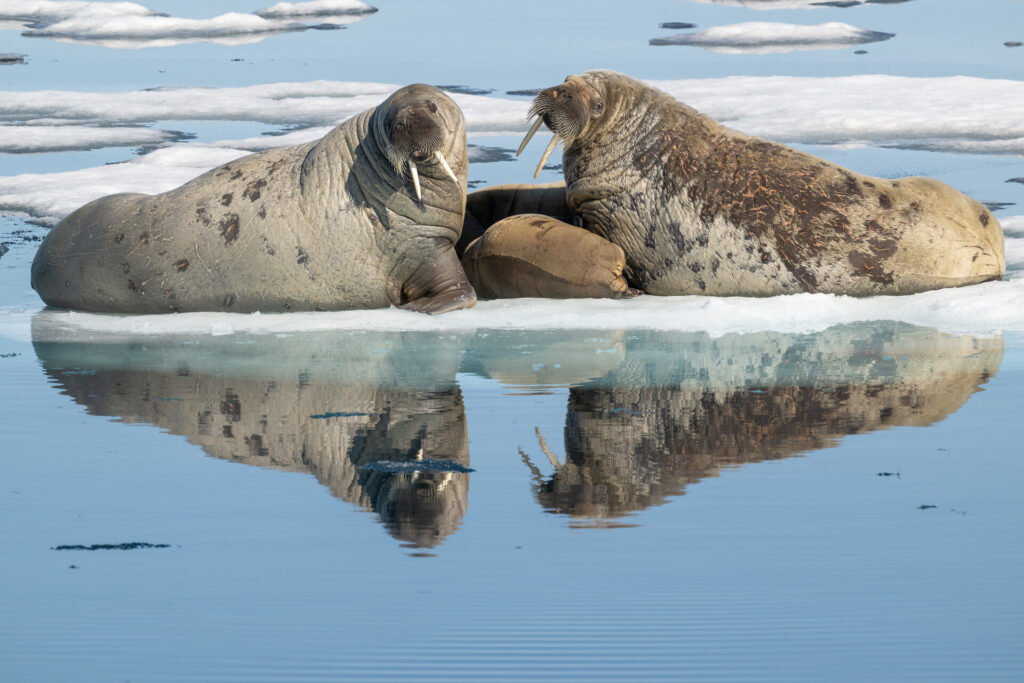
"There’s such tenderness in this Arctic moment—two adult walruses framing the calf nursing between them, all mirrored in the glassy meltwater below. That reflection doubles the impact and gives the composition a beautiful symmetry, and the soft, even light shows off every wrinkle and whisker. A quiet, intimate family portrait set against the fragile backdrop of the sea ice these animals depend on."
Turning her attention to the Staff Choice winner, “The Lone Ranger” by Rowan Dear, Farmer praised its technical execution:
"This is an absolute showstopper—the sunburst breaking through the surface turns an ordinary dive into something almost cinematic. The cuttlefish’s intricate textures and shifting purple-to-copper tones are stunning, and the way the light rays guide your eye right down to it shows real mastery of natural underwater lighting. A rich, immersive image that makes you feel like you’re in the water with him."
Harvey Hergett on Respecting Natural Habitats
Judge Harvey Hergett emphasized the importance of non-intrusive wildlife photography:
"I love this photograph! The composition is excellent with the reflections and the icebergs in the background balancing the photograph. I also appreciate that the photographer captured this photo and it does not appear like the animals were stressed out in any way. They are acting and behaving naturally in their natural habitat. Very important to me as a photographer to not disturb the animals by my presence. Good job!"
Commenting on the unique perspective of the cuttlefish image, Hergett added:
"I liked the angle of the shot as shooting upward on the subject gives it a more majestic feel."
Andrés Ballesteros on Emotional Resonance
Adding depth to the panel’s review, Andrés Ballesteros shared his perspective on the winning Arctic entry:
“…Really beautiful and powerful. I loved the calm moment, the reflection and the connection between the walruses. It feels very natural, honest and emotional.”
Future Outlook: Looking Ahead to 2027
As the 2026 contest officially draws to a close, the momentum for marine conservation through visual arts continues to accelerate. National Ocean Month serves as an annual reminder of the ocean’s fragility and resilience, but initiatives like the Ocean Conservancy Photo Contest ensure that this advocacy persists across all twelve months of the year.
The winning photographs—from Rothstein’s serene Arctic walruses and Dear’s majestic Australian cuttlefish to Pellegrino’s comforting portrait of a New York seal—do more than just decorate digital galleries. They serve as ambassadors for the deep blue, inspiring everyday citizens to care about marine policies, plastic pollution reduction, and climate action.
Organizers have expressed profound gratitude to the participants, the voters, and the expert judges who made the 2026 event an overwhelming success. As we look toward the horizon, the message from the conservation community is clear: the camera can be as powerful a tool for protection as any legislative bill.
With preparations already underway, organizers and photography enthusiasts alike are left anticipating the stories that will be told next year. Until then, the Ocean Conservancy invites all nature lovers to explore the gallery of honorable mentions, stay engaged through digital updates, and remember to SEA you next year for the 2027 competition.