







Executive Overview
For the vast majority of cruise enthusiasts who have taken to the seas over the last several years, the dreaded pre-sail bottleneck of the traditional life jacket drill has been little more than a fading memory. Replaced globally by the streamlined, contactless “e-muster” or self-mustering format introduced during the post-pandemic industry restart, the modern boarding experience has generally favored individual convenience. Guests could simply stroll up to their designated muster station at their leisure, scan their sail-and-sign cards, listen to a quick briefing from a crew member, and return to vacationing without missing a beat.
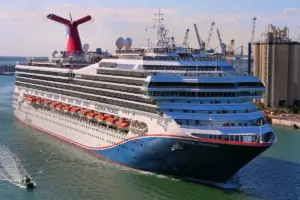
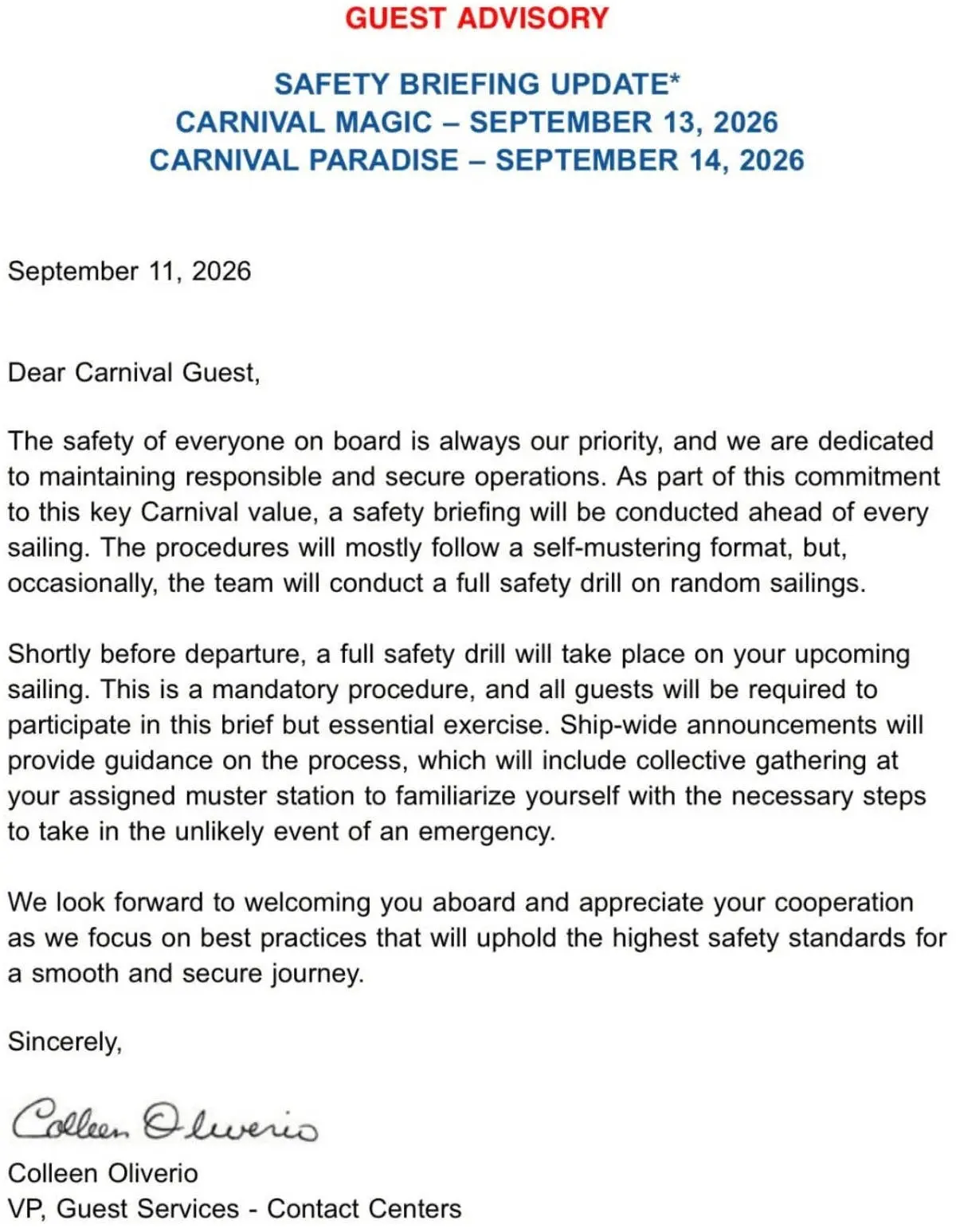
However, a pair of upcoming departures across the Carnival Cruise Line fleet are about to shatter that routine for unsuspecting travelers. Carnival has formally notified booked guests that two of its vessels—Carnival Magic and Carnival Paradise—will completely bypass the standard e-muster system in favor of a traditional, fully realized, all-hands-on-deck in-person safety drill.
This unexpected operational shift will affect the Carnival Magic during its Sunday, September 13, 2026 departure out of Miami, Florida, as well as the Carnival Paradise during its Monday, September 14, 2026 voyage departing from Tampa, Florida.
While seasoned cruisers might experience a momentary jolt of frustration upon reading the advisory emails, cruise executives and maritime regulators emphasize that these periodic interruptions are non-negotiable elements of international maritime safety law. Far from signaling a permanent abandonment of the wildly popular self-muster system, these isolated in-person drills are standard compliance measures governed by strict regulatory bodies, including the United States Coast Guard (USCG), the Australian Coast Guard, and the International Maritime Organization’s (IMO) Safety of Life at Sea (SOLAS) convention.
This comprehensive report breaks down the logistical differences between the modern e-muster and the traditional full drill, examines the specific impacts on the upcoming Carnival Magic and Carnival Paradise itineraries, explores the underlying regulatory mandates driving these decisions, and provides essential tips for passengers preparing to navigate this throwback procedure.
Detailed Chronology & Operational Breakdown
To understand why thousands of vacationers will soon find themselves standing shoulder-to-shoulder in crowded hallways and muster stations, it is vital to contrast the standard embarkation procedure with the intensive routine mandated for these specific September 2026 sailings.
The Modern Standard: The Self-Muster (E-Muster)
Since cruising resumed at scale following global health disruptions, the e-muster format has been heralded as one of the greatest quality-of-life advancements in modern cruising. Under this protocol, passengers complete their mandatory safety briefings digitally via the cruise line’s mobile app or through their stateroom television sets shortly after boarding.
Once the digital briefing is completed, guests have several hours—typically anytime between boarding and the ship’s actual departure time—to physically visit their assigned muster station. At the station, a crew member scans their cruise card to log their attendance, answers any immediate questions, and can physically demonstrate how to properly don a life jacket if requested.
This decentralized approach virtually eliminates massive crowd crushes on embarkation day. Shortly before sail-away, public address (PA) announcements remind stragglers to complete their check-ins, and individual names may even be called if specific guests fail to register. When the ship finally sounds its emergency alert signal—traditionally defined by maritime code as seven short blasts followed by one long blast—over the PA system, guests are not required to stop what they are doing or report to a station; the sound serves purely as an audible test of the ship’s systems while passengers continue enjoying their vacation.
The Throwback: The Full In-Person Drill
By contrast, the full in-person drill is a collective, synchronized event that requires the active participation of every single soul onboard at the exact same moment.
As outlined in Carnival’s advance email warnings to passengers booked on the mid-September voyages, ship-wide announcements will direct all guests to immediately break away from their embarkation day activities, retrieve any necessary guidance, and proceed directly to their assigned assembly stations.
Unlike the rolling arrivals of the e-muster system, a full drill forces thousands of travelers into concentrated communal spaces simultaneously. During this exercise:
- Crowd Density: Passengers will find themselves packed tightly into designated lounges, open decks, or dining rooms assigned as their muster stations.
- Live Demonstrations: On-duty crew members will step forward to physically demonstrate life jacket donning techniques, explain evacuation routes, and walk passengers through emergency protocols.
- Auditory Cues: The ship’s powerful emergency horn will sound the formal SOLAS alarm (seven short blasts, one long blast), and detailed emergency procedures will be read aloud over the main PA network.
- Time Commitment: While an e-muster check-in takes less than two minutes, a full in-person muster drill typically consumes anywhere from 20 to 45 minutes of embarkation day, depending entirely on the physical size of the ship, the efficiency of crowd flow, and the thoroughness of the crew’s instruction.
Supporting Context & Metrics: Vessel Capacities and Impact
The decision to execute these intensive drills on the Carnival Magic and Carnival Paradise introduces unique logistical hurdles due to the vastly different scales of the two vessels. Managing thousands of travelers simultaneously requires intricate crowd management strategies from the shipboard safety teams.
Carnival Magic: The Floating Metropolis
Operating out of the bustling cruise hub of PortMiami, the Carnival Magic is a massive member of the cruise line’s Dream-class fleet.

- Double Occupancy Capacity: 3,690 guests.
- Maximum Full Occupancy (All Berths Filled): 4,724 guests.
- Crew Complement: Approximately 1,150 international crew members.
- Logistical Challenge: Gathering upwards of nearly 5,000 individuals into specific public spaces requires meticulous coordination. On a ship of this scale, muster stations are often located in high-traffic entertainment venues, such as the main showroom theater or large multi-level dining rooms, which can quickly feel claustrophobic when fully packed.
Carnival Paradise: The Intimate Classic
Sailing out of Tampa, the Carnival Paradise is a much smaller, more traditional vessel belonging to the Fantasy-class.
- Double Occupancy Capacity: 2,190 guests.
- Maximum Full Occupancy: 2,606 guests.
- Crew Complement: Approximately 920 crew members.
- Logistical Challenge: While the absolute numbers are lower than its Miami-based counterpart, the physical dimensions of a Fantasy-class ship mean that corridors are narrower and public rooms are more compact. Consequently, the sensation of crowd density during a full drill can feel just as intense for passengers onboard.
Comparative Operational Metrics
| Metric | Carnival Magic (Miami Departure) | Carnival Paradise (Tampa Departure) |
|---|---|---|
| Departure Date | Sunday, September 13, 2026 | Monday, September 14, 2026 |
| Ship Class | Dream-class | Fantasy-class |
| Double Occupancy | 3,690 guests | 2,190 guests |
| Maximum Capacity | 4,724 guests | 2,606 guests |
| Drill Format | Full In-Person Drill | Full In-Person Drill |
| Estimated Duration | 30–45 minutes | 20–35 minutes |
Official Statements & Regulatory Realities
Whenever rumors of a return to full drills surface within online cruising communities, anxiety spikes. Many veteran travelers fear that the cruise industry is permanently scrapping the beloved e-muster system. However, high-ranking company representatives have repeatedly clarified that these events are governed by strict international compliance calendars rather than a corporate desire to overhaul the onboarding experience.
John Heald on the Twice-Yearly Mandate
Carnival Cruise Line Brand Ambassador John Heald has frequently addressed passenger concerns regarding these sudden drill updates. When similar rumors swept the internet in late 2025 following full drills on ships like the Carnival Sunshine, Carnival Liberty, Carnival Valor, and Carnival Conquest, Heald moved quickly to contextualize the policy for anxious guests.
"This is something that every single ship needs to do twice a year as per US Coast Guard, Australian Coast Guard, and other government agencies, and SOLAS, Safety of Life at Sea," Heald explained to followers.
Under international maritime law, cruise ships operating out of United States ports or under various international flags must prove their crew and systems can execute a total vessel evacuation drill under real-world conditions. These audits ensure that crew members remain sharp, that emergency communication networks function flawlessly under heavy acoustic loads, and that physical assembly spaces can handle maximum passenger loads without panic or bottlenecks.
The Official Guest Advisory
To prevent passenger confusion and mitigate frustration on embarkation day, Carnival’s automated communication systems dispatch targeted email advisories several days prior to sailing.
The official notice sent to guests booked on the September 13 and September 14 departures reads, in part:
"A full safety drill will take place on your upcoming sailing. This is a mandatory procedure, and all guests will be required to participate in this brief but essential exercise… Ship-wide announcements will provide guidance on the process, which will include collective gathering at your assigned muster station to familiarize yourself with the necessary steps to take in the unlikely event of an emergency."
By giving travelers advance notice, Carnival ensures that guests can adjust their embarkation-day plans, arrive at the port with appropriate expectations, and avoid scheduling early afternoon spa appointments or specialty dining reservations that might conflict with the drill window.
Future Outlook: What to Expect Moving Forward
As the cruise industry continues to mature in the post-pandemic era, passenger expectations around embarkation day have settled into a comfortable rhythm of speed and autonomy. The e-muster system has proven to be safer, less chaotic, and overwhelmingly preferred by travelers who view the first day of vacation as precious time to be spent relaxing on the lido deck or exploring the ship.
Will Full Drills Return Permanently?
Industry analysts and cruise executives emphasize that there are no current plans to permanently scrap the e-muster format. The digital self-mustering system has received formal endorsement from major maritime safety regulators worldwide because it eliminates the physical risks associated with cramming thousands of guests into tight stairwells and enclosed spaces simultaneously—a hazard that historically led to minor injuries, heat exhaustion, and severe embarkation congestion.
Instead, passengers should view full in-person drills as rare, regulatory compliance milestones. As Heald noted, every ship in the Carnival fleet—and across competing major lines like Royal Caribbean, Celebrity, and Norwegian—must schedule these comprehensive audits twice a year to maintain their operational licenses.
Advice for Affected Travelers
If your upcoming itinerary falls on a vessel scheduled for a mandatory full drill, keeping a few practical tips in mind can turn a potential headache into a smooth experience:
- Check Your Cruise Documents: Always read pre-cruise emails and check the cruise line’s mobile app as your sail date approaches. Knowing in advance prevents unwelcome surprises at the port.
- Locate Your Station Early: Review your stateroom keycard or app to find your assigned muster station before the announcements begin. Familiarizing yourself with the route avoids frantic wandering through unfamiliar corridors.
- Wear Comfortable Footwear: Embarkation day involves plenty of walking, but an in-person drill requires standing in place for up to 45 minutes in potentially warm or crowded assembly areas. Choose supportive shoes.
- Stay Patient and Cooperative: Remember that the hundreds of crew members guiding you through the process are executing a rigorous legal mandate. Their primary goal is your safety, and a cooperative attitude ensures the entire ship gets back to vacation mode as quickly as possible.
While standing shoulder-to-shoulder for a half-hour may not be anyone’s ideal way to kick off a Caribbean getaway, these rare, twice-yearly exercises remain an indispensable pillar of modern maritime safety—ensuring that when the unexpected happens, ships like the Carnival Magic and Carnival Paradise are prepared to protect every passenger onboard.