








Executive Overview
Where the azure waters of the Caribbean Sea give way to the rugged volcanic spine of northeastern Tobago lies a sanctuary untouched by the rapid industrialization and agricultural clear-cutting that transformed much of the colonial world. The Main Ridge Forest Reserve—protecting nearly 10,000 acres of primeval tropical rainforest, cascading waterfalls, and exceptional biodiversity—is not merely a scenic nature park. It is a monumental historical achievement in environmental stewardship. Established in 1776, Main Ridge proudly holds the distinction of being the oldest legally protected tropical forest on Earth, predating modern conservation movements by more than a century.
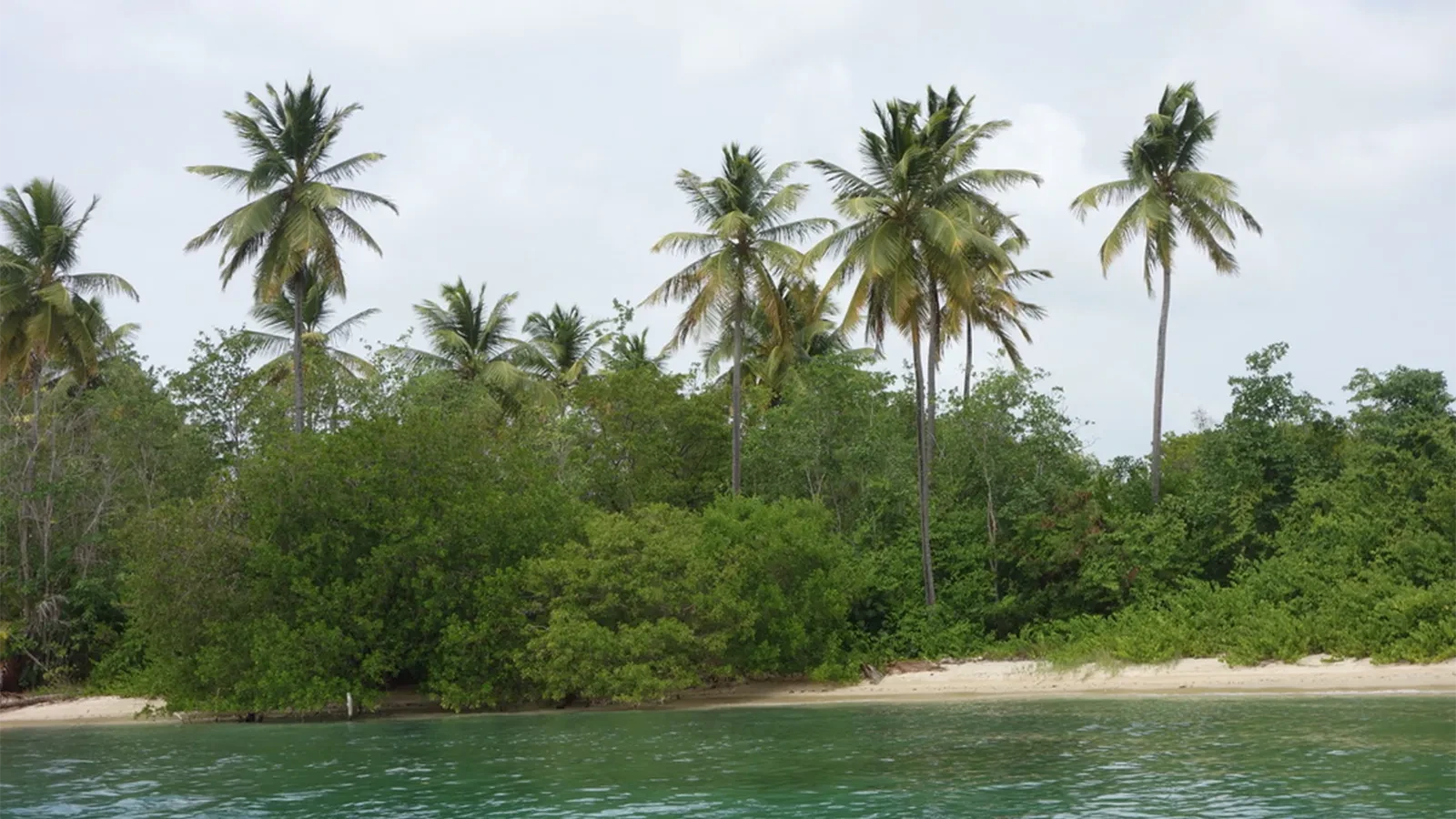
Nearly 250 years after its designation, Main Ridge remains the ecological and cultural heartbeat of Tobago. While travelers frequently flock to the island for its world-famous sun-drenched shores, such as the iconic white sands of Pigeon Point or the vibrant marine life of Buccoo Reef, a journey into Main Ridge reveals a deeply contrasting dimension of the island. Here, a misty, dense canopy of giant ferns, towering bamboo groves, and ancient hardwoods shelters an astonishing array of flora and fauna, including rare avian species found nowhere else on the planet.
In recent years, the international significance of this ancient reserve has been further cemented. As part of the North-East Tobago Biosphere Reserve, designated by UNESCO in 2020, Main Ridge is recognized globally as a model of harmonious coexistence between humanity and nature. This comprehensive report examines the history, ecological importance, cultural footprint, and future outlook of a forest that has withstood centuries of changing political landscapes, severe natural disasters, and mounting global environmental pressures.
Detailed Chronology: The History of Main Ridge Forest Reserve
To understand the extraordinary legacy of Main Ridge, one must journey back to the late 18th century, a time when Caribbean islands were aggressively carved up for lucrative sugarcane plantations, leading to widespread deforestation and catastrophic ecological disruption.
1776: The Enlightenment-Era Decree
During British colonial administration in 1776, Tobago’s governing body made a remarkably forward-thinking legislative decision. Recognizing that the wholesale clearing of timber in the mountainous interior was altering local weather patterns, drying up vital freshwater streams, and reducing agricultural yields on the coastal plains, the government officially set aside the central ridge.
This decree was not born out of modern environmentalism or aesthetic appreciation, but rather out of practical economic survival. Early colonial administrators understood a fundamental ecological truth long before modern science codified it: without the forest, there is no rain; without rain, there is no agriculture. By drawing a protective legal boundary around the mountainous spine spanning nearly 18 miles, the colonial government inadvertently birthed the global movement of forest conservation.
1963: The Test of Resilience — Hurricane Flora
For nearly two centuries, the reserve endured under various colonial and post-colonial administrations, gradually integrating into the local identity of Tobagonians. However, the true resilience of Main Ridge was severely tested on September 30, 1963, when Hurricane Flora—one of the most devastating Atlantic hurricanes in recorded history—ravaged the island.

Packing winds exceeding 120 miles per hour, Flora stripped the island’s vegetation, flattened infrastructure, and devastated the local economy. Conservationists feared the complete annihilation of several endemic species, most notably the white-tailed sabrewing hummingbird, a brilliant emerald-hued bird whose global population was thought to be entirely restricted to the storm-blasted slopes of the reserve. For years following the disaster, the species was feared extinct. Yet, in a testament to the regenerative power of a protected ecosystem, the white-tailed sabrewing was later rediscovered deep within the recovering rainforest, re-establishing its claim on the misty slopes of Main Ridge.
2020: UNESCO Global Recognition
As the 21st century unfolded, local conservationists, researchers, and government agencies lobbied heavily to elevate the international profile of Tobago’s northeastern ecosystem. Their efforts culminated in 2020, when UNESCO formally designated North-East Tobago as a Biosphere Reserve.
This prestigious designation elevated Main Ridge from a localized historical landmark to a globally recognized biosphere encompassing not only the terrestrial rainforest but also adjacent coastal ecosystems, pristine mangrove forests, rich coral reefs, and traditional fishing communities. This milestone bridged centuries of local protection with modern international frameworks for sustainable development and climate resilience.
Supporting Context & Metrics: The Ecology of Main Ridge
Spanning approximately 9,730 acres across the mountainous spine of northeastern Tobago, Main Ridge is an ecological powerhouse. Its metrics reveal a complex, highly specialized ecosystem operating within a relatively compact geographical footprint.
Geographical and Climatic Metrics
- Total Protected Area: ~9,730 acres (3,938 hectares).
- Length of the Ridge: Approximately 18 miles running through northeastern Tobago.
- Elevation Range: Rises from coastal foothills to over 1,800 feet (approx. 550 meters) at its highest peaks, notably Pigeon Peak.
- Precipitation: Due to its elevation, the ridge intercepts moisture-laden trade winds, resulting in high annual rainfall that feeds countless streams, rivers, and waterfalls cascading down both the windward and leeward coasts.
Biodiversity and Avian Wealth
Tobago is home to more than 260 recorded bird species, making it one of the premier avian destinations in the Western Hemisphere. Main Ridge serves as the crown jewel of this biodiversity, functioning as a vital breeding and foraging ground for numerous endemic and migratory species.
- The White-Trained Sabrewing Hummingbird (Campylopterus ensipennis): The undisputed ambassador of Main Ridge. Found almost exclusively within this specific rainforest ecosystem, the male boasts a brilliant metallic green body, a deep blue tail, and a long, curved bill adapted for feeding on specific forest understory flowers.
- Avian Companions: Birdwatchers trekking the reserve routinely encounter the brilliant turquoise and black blue-backed manakin, the striking rust-and-green collared trogon, the iridescent rufous-tailed jacamar, and a dazzling variety of other hummingbirds, tanagers, and woodcreepers.
- Flora and Fauna Diversity: Beneath a dense closed canopy featuring giant tree ferns, wild heliconias, massive silk-cotton trees, and sprawling lianas, the forest floor teems with life. Non-venomous snakes, colourful butterflies, endemic freshwater crabs, and small mammals inhabit the leaf litter and root systems, creating a fully functioning, self-sustaining tropical web of life.
The Hiking Experience: Navigating the Gilpin Trace
The primary artery into this living museum is the Gilpin Trace, a historic, non-motorized trail that cuts directly across the width of the reserve. Named after early naturalist and traveller Captain Bernard Gilpin, the trail immerses visitors deeply into the rainforest interior.
Walking the Gilpin Trace is a sensory immersion. The path is frequently slick and muddy, demanding sturdy footwear. Towering bamboo stalks creak in the humid air; crystal-clear streams gurgle over volcanic rocks; and filtered sunlight pierces the dense canopy in dramatic beams. A chorus of insect hums, bird calls, and rustling foliage envelops hikers, offering a stark, tranquil contrast to the bustling beach resorts of the island’s southern coast.
Official Statements & Expert Perspectives
The preservation of Main Ridge for nearly two and a half centuries is a testament to the foresight of early administrators and the continuous dedication of modern environmental authorities, local communities, and international bodies.
In evaluating the legacy of the reserve, environmental historians frequently cite the 1776 ordinance as a rare early victory for watershed management. Dr. Keston Maharaj, a Caribbean environmental historian specializing in colonial land use, notes:
"What happened in Tobago in 1776 was genuinely revolutionary. While European powers were systematically stripping their colonial territories of timber and converting every square inch of arable land to cash-crop plantations, Tobago’s leadership recognized an existential truth: you cannot divorce human economic survival from ecological health. They protected Main Ridge not to save the birds, but to save the rain—and in doing so, they inadvertently saved the biodiversity that calls it home today."
Following the 2020 UNESCO designation, local authorities and conservation groups underscored the importance of balancing sustainable tourism with rigorous ecological protection. Aisha Mohammed, regional director of the North-East Tobago Biosphere Reserve management initiative, emphasized the collaborative nature of safeguarding the site:
"The UNESCO Biosphere designation is not a lock-and-key museum exhibit; it is a living laboratory. It honors the people of northeastern Tobago who have lived in harmony with Main Ridge for generations. Our mandate is to ensure that economic development, eco-tourism, and community livelihoods reinforce one another, ensuring that the forest remains as vibrant in 2226 as it was in 1776."
Local eco-guides, who act as the primary interpreters of the forest for international travelers, stress the necessity of local expertise when navigating the reserve. Devon Melville, a veteran birding guide based near Charlotteville, explains:
"When a traveler walks into Main Ridge without a guide, they see green walls and hear a wall of sound. When they walk with someone who knows the forest, those sounds break down into individual conversations. You learn the distinct metallic click of the sabrewing, the mechanical snap of the manakin, and the hidden medicinal properties of the vines beneath your feet. The forest speaks—you just need someone who knows the language to translate."
Future Outlook: Challenges and Opportunities for the 21st Century
As Main Ridge approaches its quarter-millennial anniversary, it stands at a critical juncture between heritage preservation and modern environmental pressures. While the reserve has successfully survived colonial rule, devastating hurricanes, and shifting geopolitical eras, the 21st century introduces novel challenges.
Climate Change and Weather Volatility
Global climate change poses an unprecedented threat to tropical forest ecosystems worldwide. Changing precipitation patterns, rising average temperatures, and an increased frequency of high-intensity Atlantic hurricanes threaten the delicate balance of the Main Ridge ecosystem. While the forest proved its incredible resilience in the wake of Hurricane Flora in 1963, modern climate models suggest that more frequent and severe storm systems could test the regenerative capacity of the reserve’s flora and fauna.
Sustainable Tourism and Economic Pressures
Tobago’s tourism sector is actively diversifying away from mass resort tourism, pivoting heavily toward eco-tourism, cultural heritage, and nature-based travel. While this trend benefits Main Ridge by driving conscious, low-impact travelers to the island’s interior, it also requires careful visitor management. Increased foot traffic along the Gilpin Trace, vehicular congestion on the winding mountain roads connecting the leeward and windward coasts, and the potential for unauthorized trail expansion require vigilant oversight from the Tobago House of Assembly (THA) and environmental agencies.
The Role of Community-Led Conservation
The long-term security of Main Ridge increasingly relies on community-led conservation frameworks. By integrating the residents of surrounding villages—such as Castara, Englishman’s Bay, Bloody Bay, and Charlotteville—into the economic benefits of eco-tourism, the local population acts as the most effective guardian of the forest. When rural communities see tangible value in preserving pristine watersheds and rare bird habitats, illegal logging, poaching, and unmanaged land clearing are effectively neutralized from the ground up.
Conclusion: A Timeless Legacy
Main Ridge Forest Reserve is much more than a scenic detour for travelers seeking respite from Tobago’s sun-drenched beaches. It is a profound historical monument to ecological foresight—a living, breathing reminder that human societies have long understood the necessity of protecting the natural world.
For the modern traveler, traversing the muddy paths of the Gilpin Trace, listening to the iridescent flash of a white-tailed sabrewing, and breathing in the cool, moisture-rich air of the canopy offers a rare privilege: walking through history. As Main Ridge looks ahead to its 250th anniversary as a protected sanctuary, it stands ready to inspire future generations to view conservation not as an obstacle to progress, but as its foundational prerequisite.