










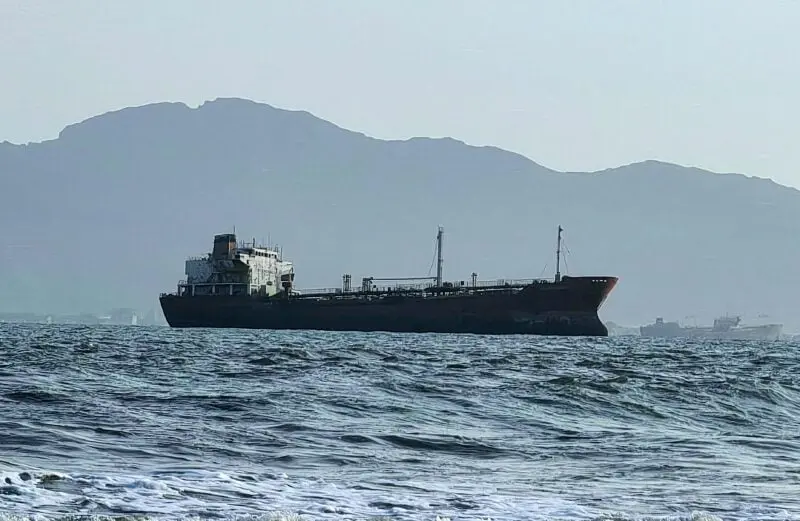
Executive Overview
Saudi Arabia, historically the world’s preeminent swing producer and the ultimate guarantor of global energy stability, is facing an unprecedented logistical crisis. Driven by a dramatic escalation of geopolitical hostilities in the Middle East, the Kingdom’s observed crude oil exports plummeted in August to approximately 3 million barrels per day. According to tanker-tracking data compiled by Bloomberg, Vortexa, and Kpler, this represents the lowest export volume recorded since early 2017, marking a near-decade low that has sent shockwaves through international energy markets.
Saudi Crude Oil Exports (2026 Trend)
==================================================
January:      770,000 bpd (Pre-escalation baseline)
June:       4,300,000 bpd (Peak Red Sea/Yanbu diversion)
July:       3,700,000 bpd (Houthi blockade announced)
August:     3,000,000 bpd (Nine-year low)
==================================================
The primary catalyst for this export collapse is a dual-chokepoint squeeze. Saudi Arabia’s geographic advantage—boasting coastlines on both the Persian Gulf and the Red Sea—has transformed into a strategic vulnerability. To the east, the Strait of Hormuz has become a highly volatile theater of conflict between the United States and Iran, rendering Persian Gulf transits exceptionally hazardous. To the west, Yemen’s Houthi militants have systematically targeted shipping in the Red Sea, effectively neutralizing the alternative pipeline-to-port route Riyadh established at the beginning of the conflict.
The ramifications of this maritime bottleneck are global. With major buyers increasingly reluctant to lift crude from Saudi Arabia’s Red Sea terminals, shipping companies are being forced to route vessels around the Cape of Good Hope. This detour adds thousands of miles and weeks of transit time to voyages, severely straining global supply chains already frayed by months of regional warfare. As a direct consequence of these supply anxieties, Brent crude prices in London have surged back above $95 a barrel, raising the specter of a renewed inflationary wave and complicating the monetary policies of central banks worldwide.
Detailed Chronology of the Crisis
The current maritime crisis is the culmination of a rapidly deteriorating security environment that began in late February and escalated through the summer.
[Late Feb] War Outbreak & Hormuz Closure ──> [Spring] Pivot to Yanbu (Red Sea) ──> [June] Peak West Coast Exports (4.3M bpd) ──> [July] Houthi Blockade & Slip to 3.7M bpd ──> [August] Squeeze to 3M bpd (Hormuz & Red Sea Attacked)The February Pivot and the Yanbu Surge
In late February, the outbreak of a wider regional conflict led to the effective closure of the Strait of Hormuz by Iranian forces. Recognizing the immediate threat to its primary export terminals on the Persian Gulf coast, Riyadh executed a rapid and highly coordinated pivot. The Kingdom began routing vast quantities of crude westward via its East-West pipeline to the Red Sea port of Yanbu.
This maneuver was initially hailed as a logistical triumph. In January, Yanbu had handled a modest 770,000 barrels per day. By June, as the Kingdom successfully bypassed the Persian Gulf, west coast exports surged to an unprecedented 4.3 million barrels per day. This massive diversion of crude played a vital role in stabilizing global energy markets, preventing an immediate oil price spike, and shielding Western economies from a severe inflationary shock.
The July Decline and the Houthi Blockade
The stability achieved in June proved short-lived. In July, Yemen’s Houthi militants announced a formal blockade on Saudi-linked shipping transiting the Red Sea. Leveraging an arsenal of anti-ship ballistic missiles, one-way attack drones, and unmanned surface vessels, the Houthis began targeting commercial tankers with high precision.
The threat of attack immediately cooled buyer appetite. In July, exports through Yanbu eased to 3.7 million barrels per day. Simultaneously, cautious attempts to resume shipments through the Persian Gulf yielded a modest recovery, with eastern exports rising to approximately 800,000 barrels per day. However, this fragmented approach failed to compensate for the mounting friction in the Red Sea.
The August Collapse and Recent Escalations
By August, the security situation deteriorated into a full-scale maritime crisis. Red Sea exports from Yanbu collapsed to roughly 2.25 million barrels per day—nearly half of the June peak. Efforts to fall back on Persian Gulf routes were similarly thwarted, as exports through the region fell back from their brief July recovery.
The crisis reached a tipping point during the final week of August and the first week of September, marked by a sharp escalation in kinetic engagements:
- The Hormuz Projectile Strikes: Two crude tankers carrying Saudi oil were struck by projectiles in the Strait of Hormuz amid intensifying direct hostilities between US naval forces and Iranian military units.
- The Bahri Tragedy: One of the targeted vessels was owned and operated by Bahri, Saudi Arabia’s state-run national shipping company. The attack resulted in the tragic deaths of two seafarers, marking a significant escalation in the human cost of the conflict and shattering any remaining industry assumptions regarding the immunity of sovereign Saudi vessels.
- US-Iran Retaliatory Strikes: Following the tanker attacks, the United States launched targeted airstrikes against military installations inside Iran. Tehran responded by firing a barrage of projectiles toward neighboring Gulf states hosting American military personnel, further paralyzing commercial navigation throughout the region.
Supporting Context & Metrics: Logistics, Routes, and Risk Premiums
The reduction in Saudi Arabia’s observed exports is not merely a reflection of shut-in production, but rather a consequence of extreme logistical friction. The refusal of international charterers and buyers to risk their assets in the Red Sea has forced a fundamental reorganization of global oil flows.
The Cape of Good Hope Detour
For vessels still willing to carry Saudi crude from Red Sea ports like Yanbu to destinations in Europe or North America, the traditional route through the Suez Canal is increasingly unviable due to the threat of Houthi strikes at the Bab el-Mandeb strait. The alternative is the Cape of Good Hope route around the southern tip of Africa.
Typical Shipping Route Metrics (Yanbu to Rotterdam)
+-------------------------+-----------------+-----------------+
| Route                   | Distance (nm)   | Transit Time    |
+-------------------------+-----------------+-----------------+
| Suez Canal (Standard)   | ~6,500 nm       | ~18-20 Days     |
| Cape of Good Hope       | ~11,500 nm      | ~32-35 Days     |
+-------------------------+-----------------+-----------------+
*Note: The Cape detour adds approximately 5,000 nautical miles and 14+ days of transit, drastically increasing fuel costs and tying up global tanker capacity.
This detour has profound implications for global tanker availability. By effectively doubling the duration of a round-trip voyage, the detour reduces the velocity of the global tanker fleet. This "ton-mile" expansion has driven clean and dirty tanker charter rates to highly elevated levels, adding several dollars per barrel in freight costs alone.
Maritime Risk and Insurance Premiums
The attack on the Bahri-owned vessel has fundamentally altered the underwriting landscape for Middle Eastern maritime transits.
- War Risk Premiums: Insurance underwriters have expanded the designated "high-risk areas" in both the Red Sea and the Persian Gulf. War risk premiums, which typically hover around 0.05% of a vessel’s hull value during peacetime, have surged to over 1.5% to 2.0% for transits through these corridors. For a modern Very Large Crude Carrier (VLCC) valued at $100 million, this represents an additional $1.5 million to $2 million in insurance costs per voyage.
- Crewing Challenges: The death of two seafarers aboard the Bahri tanker has triggered protests from maritime labor unions. Many international crews are now exercising their contractual right to refuse transit through the Red Sea and the Gulf of Aden, forcing operators to pay double-wage bonuses to secure staff, further inflating operational overheads.
Official Statements and Market Repercussions
The geopolitical sensitivity of the export drop is reflected in the tight-lipped response from Riyadh and the immediate, volatile reaction of global financial markets.
Silence from Riyadh
When contacted for comment regarding the August export figures, state-owned oil giant Saudi Aramco declined to comment. Similarly, the Saudi Ministry of Energy did not respond to formal inquiries. This reticence is characteristic of the Kingdom’s strategic communications during times of geopolitical crisis. Acknowledging a structural bottleneck in export capacity could exacerbate market panic, potentially inviting speculative premium increases that Riyadh seeks to avoid.
Regional Divergence
The export decline is particularly frustrating for Saudi Arabia because its regional competitors have enjoyed varying degrees of success in navigating the crisis:
- The United Arab Emirates (UAE): The UAE has managed to maintain a steady flow of crude through the Strait of Hormuz, utilizing a combination of heavily escorted convoys and its own bypass pipeline terminating at the port of Fujairah on the Gulf of Oman, outside the immediate choke point of the Strait.
- Iraq and Kuwait: Both nations have continued to push crude through the Persian Gulf, albeit under highly volatile conditions and at significantly elevated insurance costs.
Macroeconomic Shockwaves
The drop in Saudi exports comes at a delicate moment for the global economy. The loss of approximately 1.3 million barrels per day of supply relative to the June peak has erased the supply cushion that market analysts had anticipated for the second half of the year.
Global Market Impacts
┌────────────────────────┐     ┌────────────────────────┐     ┌────────────────────────┐
│  Brent Crude Surges    │ ──> │ Sticky Inflation Fears │ ──> │ Central Bank Dilemma   │
│  Past $95 per Barrel   │     │ Rising energy & freight│     │ Pressures Fed/ECB to   │
│  (Highest since July)  │     │ costs pressure CPI.    │     │ maintain high rates.   │
└────────────────────────┘     └────────────────────────┘     └────────────────────────┘
In London, Brent crude futures surged past $95 a barrel, erasing the price declines observed in early summer. Energy economists warn that if Saudi exports remain suppressed near the 3 million barrels per day mark through the autumn, crude could comfortably breach the $100 threshold. This scenario would severely complicate the efforts of the US Federal Reserve and the European Central Bank to rein in inflation, raising the probability of "higher-for-longer" interest rates and heightening the risk of a global economic slowdown.
Future Outlook: Navigating the New Energy Security Landscape
As the region enters a highly volatile autumn, the outlook for Saudi Arabia’s oil export apparatus remains fraught with geopolitical and operational uncertainties.
Potential Scenarios for Saudi Export Recovery
                   ┌── [Optimistic Scenario] ──> Western Naval Escorts Stabilize Red Sea
                   │                             (Exports recover to 3.8M+ bpd by Q4)
                   │
Saudi Export Path ─┼── [Status Quo Scenario] ───> Continued Low-Level Kinetic Conflict
                   │                             (Exports fluctuate between 2.8M - 3.2M bpd)
                   │
                   └── [Pessimistic Scenario] ─> Direct Iran-Saudi Infrastructure Strikes
(Exports plunge below 2.0M bpd)- Optimistic Scenario (Naval Stabilization): An expansion of Western-led maritime coalition escorts—such as a reinforced Operation Prosperity Guardian—succeeds in suppressing Houthi launch capabilities and securing commercial transits. Under this scenario, shipping lines gradually regain confidence, allowing Saudi Arabia to restore west coast exports from Yanbu to above 3.5 million barrels per day by the end of the fourth quarter.
- Status Quo Scenario (Persistent Conflict): The kinetic stalemate continues. Sporadic attacks keep insurance rates prohibitively high, and the Cape of Good Hope remains the default route for Western-bound crude. Saudi exports remain capped between 2.8 million and 3.2 million barrels per day, forcing the Kingdom to rely on bilateral term contracts with Asian buyers who are more willing to accept the shipping risks in exchange for discounted pricing.
- Pessimistic Scenario (Infrastructure Escalation): The conflict escalates from targeting tankers to direct strikes on onshore energy infrastructure, such as the East-West pipeline pumping stations or the giant Ras Tanura terminal on the Persian Gulf. This would trigger a severe, structural disruption, potentially driving oil prices well past $110 a barrel and forcing emergency releases from Western Strategic Petroleum Reserves.
Long-Term Strategic Implications for Riyadh
The current crisis exposes the limits of Saudi Arabia’s infrastructure-led security strategy. The East-West pipeline was designed precisely to mitigate the risk of a Hormuz closure, yet the asymmetric capabilities of the Houthis have effectively neutralized this multi-billion-dollar contingency plan.
In the long term, Riyadh may be forced to re-evaluate its reliance on maritime transport for its economic survival. This could accelerate Saudi Arabia’s domestic investments in non-oil sectors under its "Vision 2030" program. However, in the near to medium term, the Kingdom remains bound to its oil revenues. To secure these revenues, Saudi Arabia will likely need to engage in intense, behind-the-scenes diplomacy with regional and global powers to de-escalate the broader US-Iran conflict, recognizing that its economic sovereignty is directly tied to the security of the waters that flank its shores.