








Executive Overview
In the wake of a devastating maritime tragedy that claimed two lives, marine safety officials have released a comprehensive safety flyer aimed at the recreational boating community. The advisory highlights the indispensable role of personal flotation devices (PFDs) and underscores the critical need for heightened situational awareness on the water.
The safety publication stems from an ongoing, rigorous investigation into the catastrophic allision involving the rigid inflatable boat (RIB) Peaky Blinder. On August 14, 2025, the vessel collided violently with a navigation beacon situated within the bustling waters of Portsmouth Harbour, England. The impact resulted in fatal consequences for two individuals on board, sending shockwaves through the local maritime community and prompting renewed scrutiny of safety protocols within the high-speed recreational boating sector.
Designed specifically for recreational mariners, skippers, and water sports enthusiasts, the newly issued documentation breaks down the tragic sequence of events, identifies systemic vulnerabilities, and outlines actionable safety considerations. Authorities emphasize that while recreational boating offers freedom and leisure, the inherent risks associated with high speeds, complex navigational hazards, and dynamic marine environments demand unwavering adherence to safety standards.

To ensure widespread accessibility, a printable PDF version of the safety flyer (393 KB, 2 pages) has been made available via official government publishing channels. Maritime authorities have concurrently published the comprehensive full-length investigation report, providing an exhaustive breakdown of the incident’s contributing factors. As the recreational boating sector continues to grow in popularity, this incident serves as a stark, sobering reminder of the thin margin for error on the water, reinforcing the mandate that safety equipment must be worn—not merely stowed—whenever individuals venture out to sea.
Detailed Chronology of the Incident
The Setting: Portsmouth Harbour’s Complex Navigational Arena
Portsmouth Harbour stands as one of the United Kingdom’s most historic, vital, and commercially active maritime gateways. Characterized by narrow channels, swift tidal currents, and a dense mix of heavy commercial shipping, naval vessels, and fast-moving recreational craft, the harbor demands absolute vigilance from anyone at the helm.
On August 14, 2025, weather and sea conditions were initially considered conducive to recreational navigation. However, the inherent complexity of the harbor environment means that local hazards—including permanent structures such as navigation beacons, mooring trot markers, and commercial traffic lanes—present constant, unforgiving challenges to fast craft operators.
The Voyage of the Peaky Blinder
The rigid inflatable boat Peaky Blinder, a class of vessel renowned for its agility, speed, and responsiveness, was operating within the confines of Portsmouth Harbour on that fateful August afternoon. RIBs are heavily favored by the recreational boating community due to their stability and high-performance capabilities. However, these very characteristics often encourage higher operational speeds, which in turn drastically compress reaction times when navigating dynamic environments.
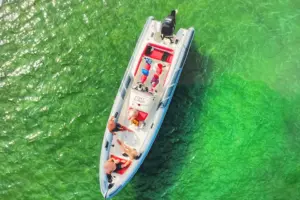
As the Peaky Blinder traversed the harbor waters, a catastrophic breakdown in navigation and obstacle avoidance occurred. According to preliminary findings outlined in the official investigation, the vessel failed to maintain a safe distance or clear visual separation from a fixed navigation beacon marking the channel.
The Impact and Immediate Aftermath
The collision—technically classified as an allision, given that the vessel struck a stationary object rather than another moving craft—occurred with devastating force. The structural integrity of the high-speed RIB was severely compromised upon striking the rigid structure of the navigation beacon.
The kinetic energy of the impact was immediately transferred to the vessel’s occupants. In high-speed maritime accidents, the sudden deceleration forces are frequently sufficient to cause severe blunt-force trauma, incapacitation, and immediate ejection into the water. In the case of the Peaky Blinder, the violent impact resulted in two fatalities, plunging the vessel into a critical emergency status.
Emergency response services, including local harbour authorities, rescue boats, and paramedic teams, were swiftly mobilized to the scene. Despite prompt intervention and recovery efforts, the severity of the injuries sustained during the impact proved fatal for the two victims. The immediate aftermath shifted from an active rescue operation to a complex multi-agency inquiry aimed at understanding how a routine recreational excursion ended in such profound loss of life.
Supporting Context & Metrics
The Vital Role of Personal Flotation Devices (PFDs)
At the core of the safety guidance issued alongside the Peaky Blinder investigation report is a fervent, non-negotiable appeal for the consistent wearing of personal flotation devices. Within the recreational boating sector, a persistent cultural gap exists regarding safety gear: many mariners stow lifejackets or buoyancy aids in lockers or under seats, operating under the assumption that they can easily don them in an emergency.
Maritime safety data consistently demonstrates the fallacy of this assumption. In high-speed allisions or sudden man-overboard scenarios, occupants are frequently incapacitated, stunned, or rendered unconscious upon impact. Under such conditions, the ability to retrieve and fasten a lifejacket is entirely non-existent.
A properly fitted PFD serves multiple critical functions:
- Immediate Buoyancy: It ensures that an unconscious or injured casualty remains afloat with their airway elevated above the water line, preventing secondary drowning.
- Shock Absorption: Modern marine buoyancy aids and inflatable lifejackets offer a degree of padding against blunt-force impacts during collisions.
- High-Visibility Elements: Equipped with retro-reflective tape and whistle attachments, PFDs dramatically enhance the probability of visual acquisition by search and rescue (SAR) teams, particularly in low-light or choppy sea conditions.
RIB Safety and Human Factors in High-Speed Navigation
Rigid inflatable boats occupy a unique space in modern marine recreation. Their lightweight hulls, powerful outboard engines, and deep-V designs allow them to plane at high velocities across choppy waters. However, these performance characteristics introduce distinct operational hazards:
- Field of View and Spray: At high speeds, the bow-up attitude of a RIB can obstruct the skipper’s forward vision. Combined with wind-driven spray on the console screens, visual impairment is a constant hazard.
- G-Force and Fatigue: Rapid acceleration, deceleration, and wave-slamming generate significant lateral and vertical G-forces. Over time, this induces physical fatigue, degrading reaction times and decision-making capacity.
- Distraction and Multi-Tasking: Modern recreational helmsmen frequently contend with chart plotters, VHF radios, and passenger interactions, increasing cognitive load in high-traffic waters like Portsmouth Harbour.
Statistical reviews conducted by maritime safety agencies globally indicate that human error—encompassing poor situational awareness, excessive speed for prevailing conditions, and inadequate passage planning—remains the leading contributory factor in recreational vessel accidents. The Portsmouth Harbour incident underscores that these factors are not merely academic concepts; they carry lethal real-world consequences.
Official Statements and Investigation Insights
The Marine Accident Investigation Framework
The publication of the safety flyer is part of a standardized, rigorous protocol enforced by marine accident investigators to ensure that lessons learned from fatal incidents are disseminated rapidly, long before the final, exhaustive investigation report is formally archived.
By separating the immediate, actionable safety messages into a concise flyer, authorities ensure that skippers, clubs, and training organizations can review their practices immediately. The flyer encapsulates the core findings regarding the Peaky Blinder allision, focusing sharply on the mechanics of the collision and the survivability factors involved.
Expert Warnings to the Recreational Boating Community
In statements accompanying the release of the safety documentation, maritime safety officials underscored the personal responsibility borne by everyone who takes command of a vessel.
"Recreational boating is an immensely rewarding pastime, but the marine environment is fundamentally unforgiving," noted a senior maritime safety investigator. "When operating high-speed craft such as rigid inflatable boats in confined, high-traffic commercial waterways like Portsmouth Harbour, there is zero margin for complacency. Equipment such as personal flotation devices cannot save lives if they are left stowed away in a locker when disaster strikes. We urge every skipper and passenger to make wearing a lifejacket an absolute, non-negotiable rule of going to sea."
The investigation report—accessible via official government digital archives—delves deeper into the systemic issues surrounding the accident. It examines factors such as local navigational marking visibility, vessel handling characteristics at the time of the allision, and the human elements that influenced the skipper’s decision-making process leading up to the impact.
Future Outlook: Enhancing Safety Culture in Recreational Boating
Bridging the Gap Between Commercial and Recreational Standards
While commercial passenger vessels and workboats are subject to stringent regulatory oversight, mandatory safety audits, and certified crew training regimes, the recreational sector has traditionally relied on voluntary compliance and self-regulation. Tragedies like the Peaky Blinder allision prompt renewed debate within the maritime industry regarding whether voluntary guidelines are sufficient to protect lives on increasingly crowded coastal waters.
Industry stakeholders, including national boating associations, training academies, and harbor authorities, are leveraging the Portsmouth Harbour incident to advocate for cultural change. The goal is to shift public perception so that wearing a PFD on a high-speed craft is viewed with the same automatic compliance as wearing a seatbelt in a motor vehicle.
Key Recommendations for the Boating Community
As the maritime sector absorbs the lessons of the Peaky Blinder investigation, safety authorities have laid out several forward-looking recommendations for recreational boaters:
- Mandatory PFD Protocols: Establish a strict policy on board all recreational craft where lifejackets or buoyancy aids must be worn continuously while the vessel is underway, regardless of weather conditions or the perceived skill of the operator.
- Rigorous Passage Planning: Conduct thorough pre-voyage risk assessments, paying meticulous attention to local navigational hazards, tidal constraints, and commercial traffic patterns within complex ports like Portsmouth.
- Speed Management: Exercise disciplined control over vessel speed, ensuring that craft are operated at velocities that permit stopping or maneuvering clear of unexpected obstacles within the limits of visibility and sea state.
- Enhanced Training: Encourage recreational skippers to undertake formal powerboat handling and coastal navigation courses (such as RYC/RYA certifications) to better prepare for emergency situations and high-stress environments.
- Accessibility and Equipment Maintenance: Regularly inspect lifejackets, kill cords, and electronic navigation aids to ensure they are fully operational and accessible to all passengers on board.
Conclusion
The loss of two lives in Portsmouth Harbour on August 14, 2025, is an irreparable tragedy that has left an indelible mark on the families involved and the wider maritime community. Through the rigorous dissemination of the Peaky Blinder safety flyer and its accompanying investigation report, authorities aim to transform this sorrow into a powerful catalyst for safety reform.
By fostering a culture of proactive risk management, unwavering situational awareness, and the universal adoption of personal flotation devices, the recreational boating community can honor the memory of the victims and work collectively to ensure that such a preventable disaster is never repeated on our waters.