










Executive Overview
Booking a cruise vacation is an exercise in anticipation and decision-making. Long before stepping foot onto a vessel, travelers are confronted with a cascade of choices that can profoundly shape their voyage. Among the most consequential is stateroom selection. Should a passenger opt for a traditional balcony cabin to enjoy stellar ocean vistas, redirect those funds toward specialty dining and onboard attractions, or make the financial leap into the luxurious world of cruise ship suites?
For guests sailing with Royal Caribbean International, this dilemma is magnified by the sheer breadth of accommodations available. Fleet-wide, Royal Caribbean offers an extraordinary array of staterooms, with massive Oasis-class and Icon-class ships boasting nearly 200 distinct suite configurations onboard. From cozy junior suites to sprawling, multi-story architectural marvels complete with private hot tubs and personal butlers, the options cater to nearly every taste—and budget.
Yet, upgrading to a suite is rarely a minor financial adjustment. Fares can fluctuate wildly based on the age of the ship, the chosen itinerary, and the specific category of the accommodation. While some travelers regard a suite as an indispensable element of a luxury vacation, others view it as an unnecessary extravagance. This comprehensive analysis explores the financial realities, tangible perks, ship-class distinctions, and lifestyle factors that determine whether upgrading to a Royal Caribbean suite is truly worth the investment.
Detailed Chronology: The Evolution of Royal Caribbean Suites
To understand the modern Royal Caribbean suite experience, it is helpful to look at how the cruise line has transformed its upper-tier accommodations over the decades.
The Traditional Era: Space and Simplicity
In the earlier generations of cruise travel, suites were primarily defined by square footage rather than specialized lifestyle programming. Passengers who booked a suite enjoyed a larger room, a larger balcony, and perhaps priority boarding. However, the onboard ecosystem did not yet feature the deeply integrated, multi-tiered VIP infrastructure that defines modern mega-ships. Dining rooms were largely uniform, and personalized concierge services were limited to general desk assistance.
The Innovation Boom: Neighborhoods and Loft Living
The debut of the Oasis-class in 2009 fundamentally altered the cruise industry landscape by introducing the concept of neighborhood design and specialized suite enclaves. For the first time, Royal Caribbean carved out private real estate—such as dedicated suite sun decks, private lounges, and exclusive restaurants like Coastal Kitchen—specifically for high-end guests.
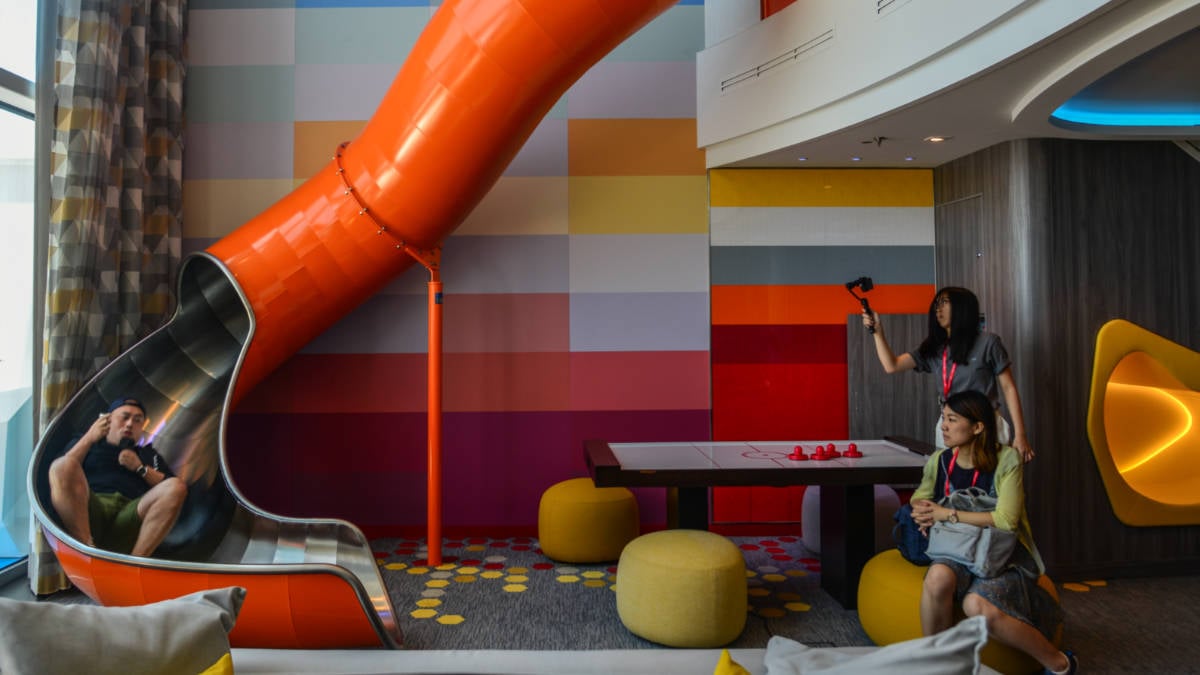
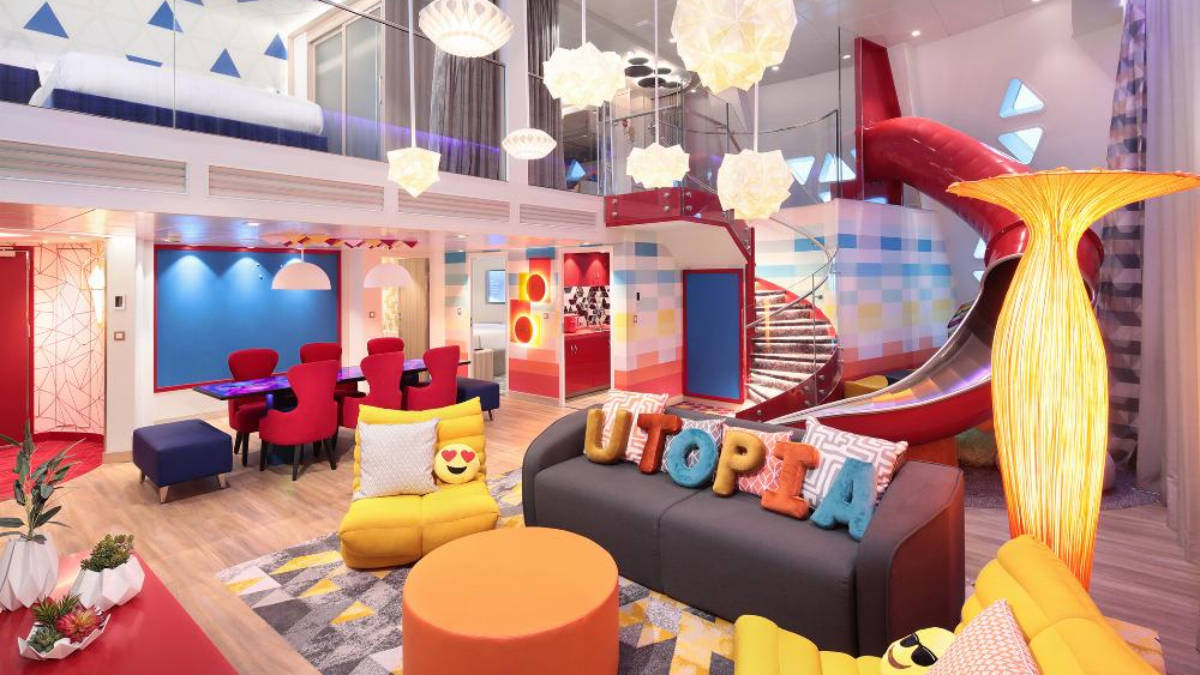
This momentum accelerated in 2018 with the introduction of the Ultimate Family Suite aboard Symphony of the Seas. Featuring in-suite slides, private game rooms, and multi-story layouts, this whimsical yet ultra-luxurious concept captured the public imagination and proved that family travel and high-end luxury could successfully intersect.

The Modern Era: The Icon Class and Beyond
With the rollout of the groundbreaking Icon-class ships, including Icon of the Seas and Star of the Seas, Royal Caribbean elevated the suite experience further. The line expanded its multi-level suite neighborhoods, introducing tailored public spaces like The Grove and The Balcony. Today, the cruise line’s suite product is divided into a sophisticated three-tier system—Sea, Sky, and Star Classes—supported by digital connectivity, dedicated concierges, and the legendary Royal Genie service.

Supporting Context & Metrics: Crunching the Numbers
When evaluating a suite upgrade, the decision inevitably circles back to a fundamental question: Are the perks genuinely worth the elevated price tag? Because vacation budgets are finite, travelers must look beyond the emotional appeal of luxury and analyze the hard financial data.
Examining Fleet-Wide Fare Disparities
The cost of a Royal Caribbean suite is highly variable. To illustrate the broad financial spectrum, consider the following baseline fares for a standard seven-night Caribbean itinerary:
- Older Fleet Vessels: On Grandeur of the Seas, one of the oldest operational ships in the fleet, a suite stay for a seven-night round-trip Caribbean cruise departing from Puerto Rico can start around $1,309 per person.
- Mid-Tier Vessels: Ships sitting in the middle of the fleet—such as those in the Quantum class—tend to occupy a moderate pricing middle-ground, frequently offering balanced value for families seeking additional space without paying top-tier prices.
- Newest Fleet Additions: In stark contrast, sailing on newer vessels commands a significant premium. Suite fares for a seven-night Caribbean voyage aboard cutting-edge ships frequently start around $4,390 per person, scaling upward rapidly depending on the suite category.
The "Total Cost of Ownership" Equation
Many first-time suite buyers experience sticker shock when encountering fares of $7,500 or more for a family of four on ships like Symphony of the Seas. However, experienced cruisers emphasize the importance of looking at the comprehensive package rather than the bare room rate.
Consider a family of four—two adults and two teenagers—who might otherwise book two connecting balcony staterooms. When calculating the total vacation expenditure, travelers must factor in out-of-pocket costs for add-ons that come bundled within higher suite tiers:

- Wi-Fi Packages: Standard internet packages for multiple devices can quickly add hundreds of dollars to a bill. Higher-tier suites often include complimentary internet accounts for guests.
- Beverage Packages: Alcoholic and specialty non-alcoholic drink packages represent a major expense. Suite lounge access often includes complimentary evening drinks, mitigating this cost.
- Specialty Dining: Access to private suite-exclusive restaurants like Coastal Kitchen can reduce or eliminate the need to purchase external specialty dining packages.
- Priority Services & Extras: Perks such as priority boarding, escorted departures, dedicated tender lines, and prime theater seating mimic the benefits of paid add-on programs like "The Key."
When savvy travelers tally these expenses, the financial gap between a standard multi-room setup and a high-end suite frequently narrows significantly, making the upgrade far more cost-effective than initial impressions suggest.
Categorizing Royal Caribbean Suites: Understanding Your Options
Royal Caribbean’s inventory ranges from modestly enhanced staterooms to sprawling, two-story complexes. Understanding the nuances of each category is essential for matching accommodations to travel goals.
1. Junior Suites
- The Experience: Junior suites represent the entry point into the suite category. While they lack the traditional multi-room layout of high-end suites, they offer substantially more square footage than standard balcony cabins.
- The Verdict: Ideal for travelers seeking upgraded stateroom amenities and select suite perks on a modest budget.
2. Grand Suites
- The Experience: Grand suites introduce a more traditional suite layout, typically featuring one or two bedrooms and expansive outdoor balcony space—with select configurations featuring private hot tubs.
3. Owner’s Suites
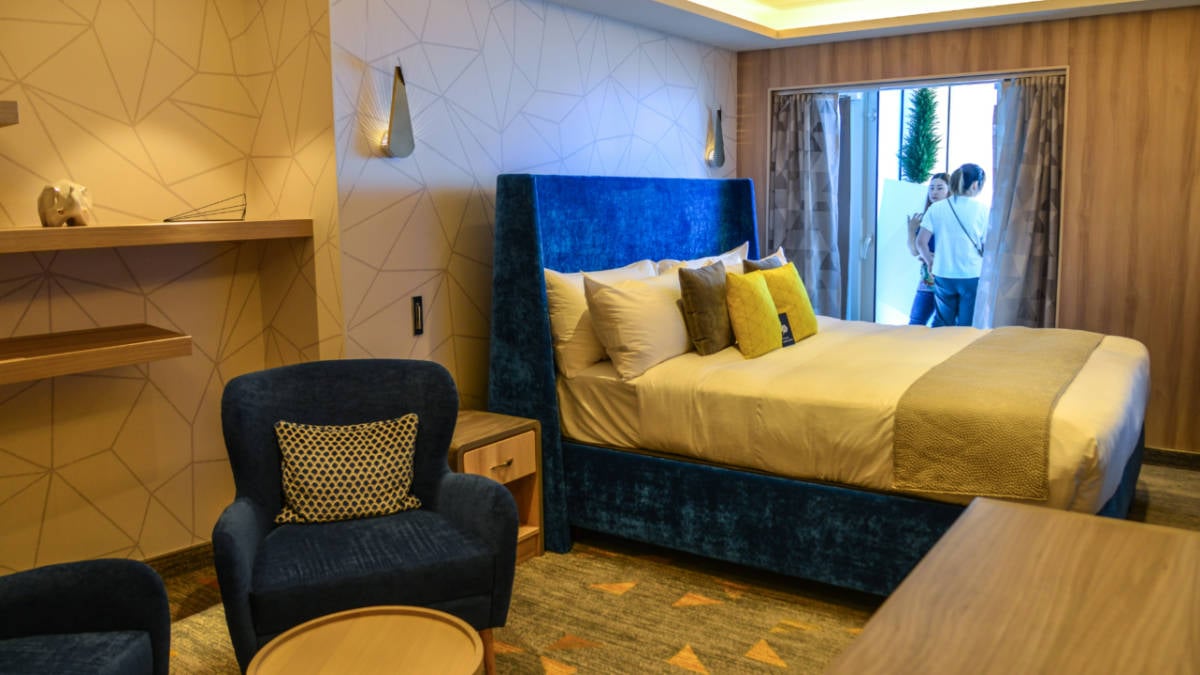
- The Experience: Stepping up from Grand Suites, Owner’s Suites offer increased square footage, enhanced interior layouts, dedicated dining tables, upgraded bathrooms with separate tubs and showers, and superior balcony furnishings.
4. Royal Suites
- The Experience: Representing the pinnacle of traditional cruise luxury, Royal Suites feature opulent living and dining areas, multiple bathrooms, expansive walk-in closets, and statement pieces like baby grand pianos. Some configurations exceed the square footage of a typical suburban home.
5. Family Suites
- The Experience: Pioneered by the Ultimate Family Suite on Symphony of the Seas and expanded across the Icon class, these accommodations are engineered specifically for multi-generational travel, featuring multi-story designs, in-suite slides, gaming consoles, and dedicated play areas.
6. Loft Suites
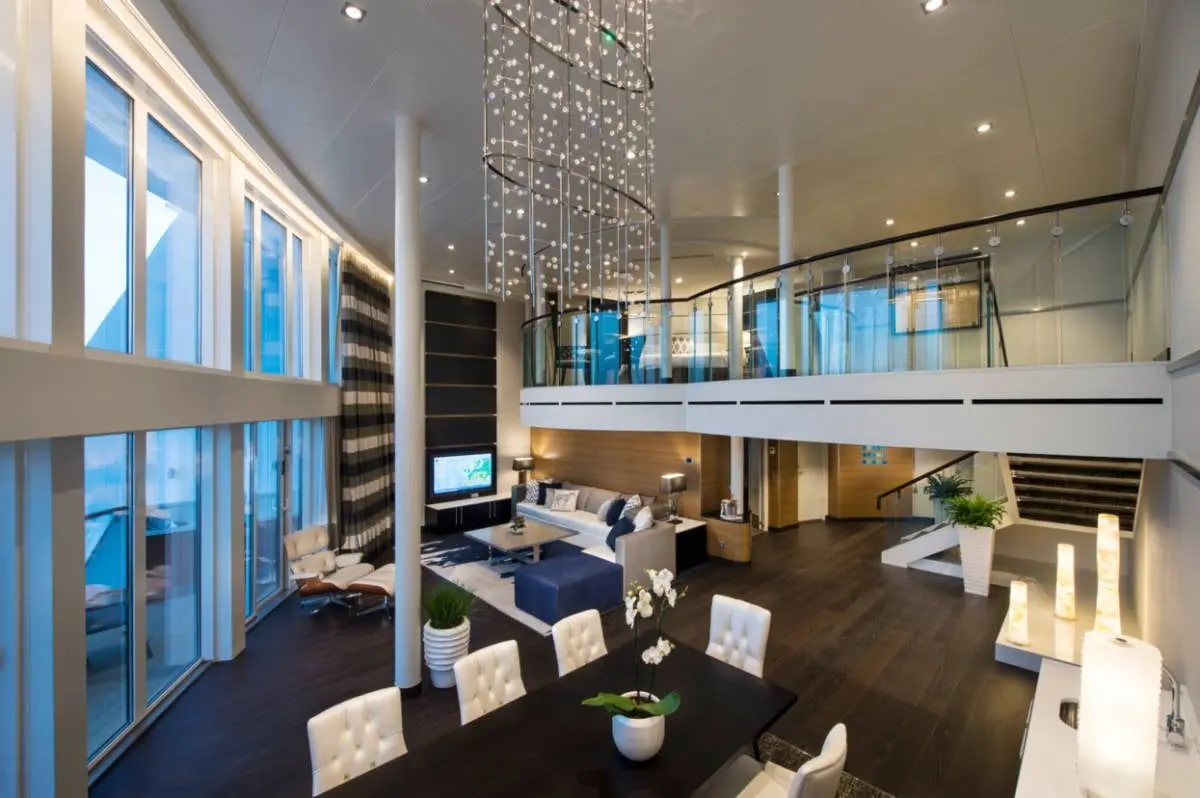
- The Experience: Found on newer ship classes (Quantum, Oasis, and Icon), Loft Suites feature soaring double-height ceilings, floor-to-ceiling panoramic windows, second-story sleeping quarters, and multi-bathroom layouts.
Decoding the Royal Caribbean Suite Class System
Not all suite guests receive the same level of service. Royal Caribbean structures its suite program into three distinct tiers—Sea Class, Sky Class, and Star Class—each unlocking a progressively richer suite of amenities.
Sea Class
Positioned as the entry tier, Sea Class guests enjoy upgraded stateroom amenities, luxury bath products, and priority boarding. On select ships like Spectrum of the Seas, Sea Class passengers also gain access to dedicated dining venues such as Star Sky Sea Dining.
Sky Class
Sky Class expands significantly upon the Sea Class foundation. Passengers in this tier receive:
- Complimentary Voom high-speed internet.
- Access to exclusive suite lounges and private sun deck spaces (such as The Grove and The Balcony on newer ships).
- Priority dining reservations and dedicated theater seating.
- Complimentary specialty dining access on select vessels.
Star Class
The ultimate expression of Royal Caribbean luxury, Star Class elevates the cruise experience to an exclusive level by including all Sky Class perks alongside ultimate luxury features:
- All-inclusive specialty dining across the fleet.
- Complimentary deluxe beverage packages for all guests in the suite.
- Complimentary gratuities covered entirely by the line.
- The Royal Genie Service: Serving as the ultimate personal concierge, the Royal Genie can accommodate virtually any reasonable request—from securing front-row theater seats and arranging private in-suite cocktail parties to organizing exclusive behind-the-scenes ship tours.
Decision-Making Framework: When Is an Upgrade Worth It?
Beyond the raw math and class structures, individual travel motivations dictate whether a suite upgrade is worthwhile.
The Purpose of the Voyage
- Celebration & Space: If traveling with a large group to celebrate a major milestone—such as a milestone anniversary, retirement, or significant birthday—the added space, privacy, and personalized service of a suite can transform a standard vacation into an unforgettable memory.
- Destination-Heavy Itineraries: Conversely, if the primary goal of a cruise is destination immersion—spending long daylight hours exploring ports of call and minimal time onboard the ship—the financial investment in a high-end suite is frequently underutilized.
Future Outlook
As the cruise industry continues to evolve, the demand for high-end, exclusive travel experiences shows no signs of slowing down. Cruise lines are increasingly investing in private ship-within-a-ship concepts, private islands with VIP cabanas (such as Royal Caribbean’s Perfect Day at CocoCay), and hyper-personalized concierge technologies.
For Royal Caribbean, expanding its suite infrastructure across upcoming ship classes signals a clear corporate strategy: catering to travelers willing to pay a premium for frictionless service, privacy, and elevated comfort. While standard staterooms will always remain the operational backbone of the fleet, the modern cruise suite has transitioned from a simple room upgrade into a comprehensive, luxury lifestyle product—proving that for the right traveler, the investment is well worth the cost.