By Philippe Lazaro
Digital Content Manager
Executive Overview
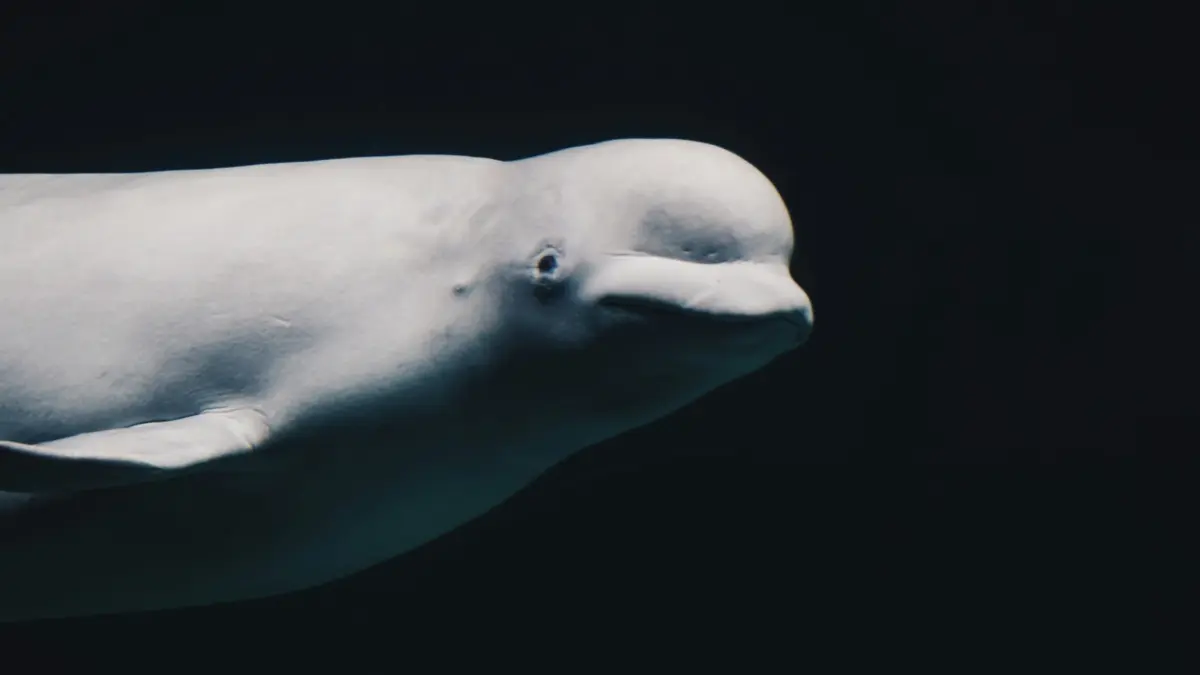
If you stand quietly on the banks of the St. Lawrence River in Quebec, watching the heavy current sweep past toward the Atlantic, you may catch a sudden, luminous flash of white just beneath the surface. It is a beluga whale (Delphinapterus leucas)—an ivory-colored Arctic cetacean navigating the exact same freshwater corridors as massive cargo container ships, commercial ferries, and recreational kayaks.
While marine mammals are typically associated with vast, open oceans or polar ice floes, a genetically distinct population of belugas has made its permanent home in this Canadian river hundreds of miles from the sea. Their presence is not a modern migration, but a living geological legacy. These animals are the direct descendants of a prehistoric fauna stranded inland at the close of the last Ice Age.

For more than 10,000 years, the St. Lawrence belugas have adapted to the unique rhythms of this dynamic watershed. However, their ancient lineage now faces an unprecedented modern crisis. Squeezed by historical overhunting, industrial chemical contamination, and heavy vessel traffic, this endangered population confronts a rapidly accelerating threat: human-induced climate change. As a warming Arctic melts sea ice and shifts ecological boundaries, new apex predators like orcas are encroaching on traditional beluga habitats, while industrial maritime activity intensifies.
Understanding the plight of the St. Lawrence beluga requires looking backward into deep geological history and forward into a rapidly warming future. These whales are both living archives of what North America once was and urgent barometers of what our marine ecosystems are rapidly becoming.
Detailed Chronology: From the Champlain Sea to the Modern Estuary
To understand how Arctic whales came to inhabit a Canadian river, one must look far beyond recorded human history, tracing a geological timeline spanning 15,000 years.
The Retreat of the Wisconsin Glacier (c. 13,000 BCE)
At the height of the last glacial maximum, an immense sheet of ice known as the Wisconsin glacier covered virtually all of North America north of the modern United States. Roughly 15,000 years ago, global climatic shifts initiated a slow, monumental retreat of this ice sheet.
The physical weight of the glacier had profoundly depressed the continental crust beneath it, pushing the land miles downward. As the colossal wall of ice melted, torrents of freshwater rushed outward, while seawater from the North Atlantic flooded the low-lying basin left in the wake of the receding ice.
The Inland Epoch of the Champlain Sea (c. 10,000 BCE – 7,000 BCE)
This massive marine inundation created the Champlain Sea, a vast inland saltwater body that stretched from the present-day Atlantic coastline westward into the Great Lakes basin and northward into the Ottawa Valley.
During this epoch, Arctic and sub-Arctic marine life thrived in what are now the rolling farmlands, dense forests, and suburban developments of southern Quebec and eastern Ontario. Historical fossil records recovered across the region—from Quebec City to the Ottawa Valley—reveal an extraordinary prehistoric marine ecosystem. Paleontologists have unearthed the fossilized remains of:
- Humpback whales (Megaptera novaeangliae)
- Fin whales (Balaenoptera physalus)
- Bowhead whales (Balaena mysticetus)
- Harbor porpoises (Phocoena phocoena)
- Multiple species of seals and walruses (Odobenus rosmarus)
In 2001, researchers at the Université du Québec à Montréal (UQAM) cataloged a remarkably well-preserved beluga fossil carbon-dated to more than 10,000 years old, confirming that ancestral white whales were active inhabitants of this inland sea.
Land Rebound and Isolation (c. 7,000 BCE – Present)
As the immense weight of the glacial ice continued to lift, the Earth’s crust experienced isostatic rebound—a gradual uplifting of the landmass. Over thousands of years, this geological bounce drained the Champlain Sea, flushing saltwater out toward the Atlantic and leaving behind the modern St. Lawrence River basin.
While most marine mammals returned to the open ocean as salinity dropped and depths receded, one group of belugas remained behind. Trapped within the newly formed estuary, these whales adapted to the fluctuating salinity, seasonal ice cover, and distinct prey availability of the St. Lawrence. Over millennia, this localized population became genetically isolated from all other beluga groups in northern Canada, the Russian Arctic, and Alaska.
For more than ten millennia, the St. Lawrence River has been the only home this distinct lineage has ever known. Indigenous peoples historically relied on these whales for subsistence, food security, and cultural traditions, viewing them as integral members of the regional ecosystem.
Supporting Context & Metrics: A Population Under Severe Pressure
Despite surviving thousands of years of environmental shifts, the St. Lawrence beluga population is now collapsing under the cumulative weight of modern anthropogenic pressures.
Demographic Freefall
At the dawn of the 20th century, historical estimates place the St. Lawrence beluga population at roughly 10,000 individuals. However, commercial hunting—viewing the whales as competitors for fisheries and as a source of oil and leather—decimated the population. Although hunting of the species was finally restricted in 1979, the population failed to rebound.
- Current Estimates: Modern scientific surveys estimate that only 900 to 1,800 individuals remain in the St. Lawrence estuary, leading to their formal classification as an endangered population.
- The Contaminant Burden: The St. Lawrence watershed drains heavily industrialized and agricultural regions of North America. Decades of research have shown that dead belugas washing ashore frequently carry high loads of toxic industrial contaminants—including polychlorinated biphenyls (PCBs), heavy metals, and polycyclic aromatic hydrocarbons (PAHs). These chemicals severely compromise the whales’ immune systems and reproductive success, leading to high rates of cancer and low calf survival.
- Acoustic Pollution: Belugas rely heavily on sophisticated echolocation and vocalizations to navigate, locate prey, and communicate in murky waters. The dramatic intensification of commercial cargo shipping, whale-watching vessels, and industrial dredging creates a wall of underwater noise that masks their calls and disrupts critical behaviors.
The Accelerating Threat of Arctic Warming
While local industrial pressures have historically driven the decline, climate change is now compounding the threat from a direction these whales have never previously faced.
As global temperatures rise, the Arctic is warming nearly four times faster than the rest of the planet. Every September, scientists at the National Snow and Ice Data Center (NSIDC) measure the annual Arctic sea ice minimum—the point at which summer melt reaches its maximum extent before winter refreezing begins.
The data reveals an alarming trajectory: the 19 lowest September sea ice extents in the nearly five-decade satellite record have all occurred between 2007 and 2025.
This rapid loss of sea ice in northern latitudes is fundamentally altering marine predator-prey dynamics. With less ice cover protecting northern waters, killer whales (Orcinus orca)—major apex predators that hunt marine mammals, including belugas—are expanding their range into traditional Arctic and sub-Arctic habitats. For the St. Lawrence belugas, climate change represents a double-edged sword: rising water temperatures alter prey distribution, while diminishing Arctic ice unlocks new predator pathways and escalates industrial shipping pressures throughout northern marine corridors.
Official Statements and Conservation Imperatives
Conservation organizations and marine biologists emphasize that the plight of the St. Lawrence beluga is not an isolated local tragedy, but a warning flare for global marine biodiversity.
"Groups of belugas in places like the St. Lawrence River and the Arctic have been separated for such long periods that they highlight the importance of genetic diversity when it comes to climate resilience," notes policy leadership at Ocean Conservancy. "Losing one distinct population, like the St. Lawrence beluga, cannot simply be offset by healthy populations elsewhere in our world. They represent thousands of years of unique history, culture, and evolutionary adaptation."
Marine scientists and conservation advocates stress that protecting these distinct populations requires robust, multi-layered federal interventions. Chief among current legislative proposals is the push for enhanced protections against vessel strikes and acoustic harassment.
+-------------------------------------------------------------------------+
|                  CHART A NEW COURSE FOR WHALES                          |
+-------------------------------------------------------------------------+
| The proposed Whale CHARTS Act represents a critical legislative step    |
| forward. By amending NOAA’s near-real-time monitoring and mitigation    |
| programs for large cetaceans, the act aims to:                          |
|                                                                         |
|  • Significantly reduce commercial ship strikes.                        |
|  • Improve scientific mapping of baleen and sperm whale migration       |
|    routes.                                                              |
|  • Safeguard vital feeding, mating, and calving grounds from            |
|    industrial intrusion.                                                |
+-------------------------------------------------------------------------+
Future Outlook: What Lies Ahead for the White Whales of Quebec
The survival of the St. Lawrence beluga hangs in a delicate balance. Addressing their decline requires aggressive, coordinated action on multiple fronts:
- Stricter Contaminant Regulations: Enforcing rigorous watershed management policies to reduce agricultural runoff and industrial chemical discharge into the St. Lawrence River basin.
- Maritime Traffic Management: Implementing mandatory speed reductions, route modifications, and strict acoustic buffer zones for commercial shipping and recreational vessels within critical beluga habitats.
- Climate Mitigation and Habitat Protection: Recognizing that regional conservation efforts must be paired with global commitments to curb greenhouse gas emissions and protect vulnerable marine ecosystems from thermal stress and invasive predators.
The belugas of the St. Lawrence are far more than an ecological curiosity; they are living archives of what the North American continent once was, and prophetic indicators of what our marine ecosystems are rapidly becoming. As human activity continues to reshape the planet’s oceans, the fate of these resilient white whales will test our willingness to protect the ancient, irreplaceable webs of life that sustain our natural world.