





Executive Overview
For the vast majority of modern cruise passengers, a vacation at sea is synonymous with uninterrupted relaxation, culinary indulgence, and seamless luxury. Guests rarely pause to consider the immense, complex engineering feats required to keep a floating resort operational thousands of miles from shore. However, that illusion of effortless maritime transit was momentarily shattered on the evening of Saturday, September 5, 2026, when Royal Caribbean International’s Adventure of the Seas experienced a sudden, shipwide power outage.
The unexpected blackout plunged the 3,114-passenger vessel into sudden darkness shortly before one of its primary evening dining services, prompting brief confusion, momentary concern, and a scramble for illumination across decks and staterooms. While emergency lighting systems functioned as designed, the complete loss of primary electrical grids temporarily halted elevators, knocked out stateroom power, and brought evening entertainment and culinary preparations to an abrupt standstill.
Fortunately, the crisis was short-lived. Thanks to the rapid response of the ship’s engineering crew, primary power was restored within approximately thirty minutes, averting what could have escalated into a more severe operational disruption. No injuries were reported, and the ship’s ambitious eight-night Southern Caribbean itinerary remains unaffected. Nevertheless, the incident serves as a stark reminder of the fragile nature of technology at sea, placing a renewed spotlight on the frequency of power failures across the modern cruise industry and the protocols designed to manage them.
Detailed Chronology of Events
The timeline of events on Saturday, September 5, 2026, began much like any other day of a luxury Caribbean voyage. The 137,276-gross-ton Adventure of the Seas—operating under the banner of Royal Caribbean—had departed Port Canaveral, Florida, just one day prior, on Friday, September 4, embarking on an eagerly anticipated eight-night Southern Caribbean cruise.
Earlier that day, guests had enjoyed a picturesque stop at Royal Caribbean’s private Bahamian destination, Perfect Day at CocoCay, where passengers swam, lounged, and partook in island excursions from 7:00 a.m. until the all-aboard call at 4:00 p.m. As the vessel transitioned into an evening at sea, setting a southerly course toward the Dominican Republic, guests retreated to their staterooms to dress for dinner, eager to sample the ship’s renowned culinary offerings.
The Blackout Strikes
At approximately 5:30 to 6:00 p.m.—a critical juncture sandwiched between the early and late main dining seatings—the ship’s primary electrical infrastructure suffered a catastrophic trip, resulting in a total, shipwide power failure.
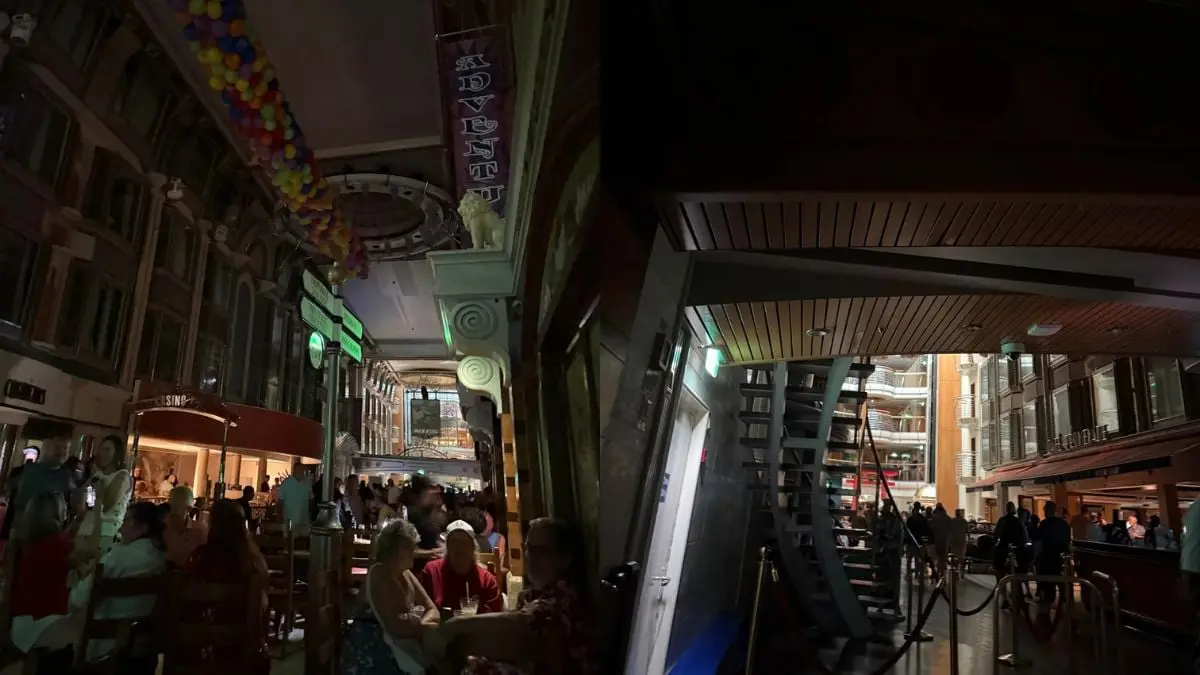
In an instant, the humming luxury liner went eerily quiet. Stateroom lights flickered out, television screens faded to black, and air-conditioning systems ground to a halt. Elevators suspended operation mid-shaft (though safety brakes engaged immediately), and the sprawling public promenades, casinos, and lounges were plunged into sudden darkness.
Passengers milling about the ship reported initial moments of confusion. With public address systems temporarily offline, travelers relied on the LED flashlights of their cellular devices to navigate hallways and stairwells. On social media platforms such as Facebook and Threads, concerned passengers began uploading rapid-fire video reels capturing the darkened corridors, illuminating the ambient glow of emergency exit signs and smartphone torches.
Reassurance and Recovery
As anxiety threatened to ripple through the ship’s populace, the captain of the Adventure of the Seas acted decisively. Utilizing battery-backed emergency communication systems, the master of the vessel delivered a calm, concise announcement across the public address system. The captain reassured guests that the bridge was aware of the situation, that engineering teams were actively diagnosing the root cause, and that a follow-up announcement would be issued within fifteen minutes should power fail to return.
The reassurance proved effective in curbing panic. Guests gathered in common areas, sharing bewildered smiles and trading theories about the sudden blackout.
The anxiety, however, was mercifully brief. True to the captain’s timeline, the ship’s backup generators kicked in to stabilize critical systems, followed swiftly by the restoration of primary electrical generation. Within roughly 30 minutes of the initial failure, the ship’s vibrant interior lighting flickered back on, air conditioning units roared back to life, and the hum of elevators and galley equipment resumed.
Subsequent social media updates from passengers confirmed the swift normalization of onboard life. One passenger took to Facebook to quip, "The power has been restored and hopefully that’s the end of it because we still have six days left!" while noting that management had yet to offer a formal, detailed explanation for the outage. A separate passenger posting on Reddit corroborated the timeline, confirming that full power was restored within a half-hour window.
Supporting Context & Metrics: The Itinerary and Vessel Profile
To fully understand the scope of the incident, it is vital to examine the profile of the vessel involved and the trajectory of its current voyage.
Vessel Specifications
- Ship Name: Adventure of the Seas
- Cruise Line: Royal Caribbean International
- Class: Voyager-class
- Gross Tonnage: Approx. 137,276 GT
- Passenger Capacity: 3,114 (double occupancy), with a maximum capacity exceeding 3,800.
- Crew Complement: Approximately 1,185 international crew members.
The Eight-Night Southern Caribbean Itinerary
Despite the evening disruption, the Adventure of the Seas has maintained its scheduled timeline without alterations. The voyage profile outlines a comprehensive tour of tropical destinations:
- Friday, Sept 4: Departed Port Canaveral, Florida.
- Saturday, Sept 5: Visited Perfect Day at CocoCay, Bahamas (7:00 AM – 4:00 PM). Power outage occurred this evening.
- Sunday, Sept 6: Day at sea (navigating the Atlantic toward the Caribbean basin).
- Monday, Sept 7: Port call at Cabo Rojo, Dominican Republic (7:00 AM – 4:00 PM).
- Tuesday, Sept 8: Port call at Oranjestad, Aruba (11:30 AM – 11:00 PM).
- Wednesday, Sept 9: Port call at Willemstad, Curacao (7:00 AM – 2:00 PM).
- Thursday & Friday, Sept 10–11: Days at sea / return transit north.
- Saturday, Sept 12: Scheduled return to Port Canaveral, Florida.
Municipal and port authorities in the scheduled stops have not been notified of any structural or mechanical impairments, ensuring that the remainder of the voyage will proceed unimpeded.
Official Statements and Industry Response
As of the publication of this report, Royal Caribbean International has maintained a measured public posture regarding the incident. Representatives from Cruise Hive and other major maritime publications reached out to the cruise line’s corporate media relations department immediately following reports of the blackout. However, a comprehensive corporate statement explaining the precise mechanical or electrical trigger behind the Saturday evening failure has not yet been released.
Historically, cruise lines are hesitant to release granular technical explanations for momentary power failures until internal engineering investigations—often conducted in tandem with class societies like DNV or Lloyd’s Register—are finalized. These investigations seek to determine whether the outage was sparked by a tripped circuit breaker, a software glitch in the power management system (PMS), a localized electrical surge, or a minor mechanical anomaly within the diesel-generator plant.
The Broader Spectrum of Maritime Power Failures
While a shipwide blackout invariably causes a spike in passenger anxiety, maritime experts emphasize that temporary power disruptions are an understood operational risk in contemporary shipping. Modern cruise ships are effectively floating smart cities, relying on complex integrated electric propulsion (IEP) systems where massive diesel-generator sets provide electricity for both propulsion (via azimuth thrusters or electric motors) and "hotel load" (air conditioning, lighting, galleys, and entertainment).
When an unexpected fault occurs within the power distribution network, automated safety protocols—often referred to as "preferential tripping"—are triggered. These systems intentionally shed non-essential loads to protect the main engines and prevent catastrophic electrical fires, which can result in temporary, localized or shipwide darkness.
The incident aboard the Adventure of the Seas is part of a broader, well-documented pattern of recent technical hiccups across the industry:
- May 16, 2026: Royal Caribbean’s Radiance of the Seas experienced a brief power failure following its departure from Cozumel, Mexico, leaving the ship adrift for a short duration before engineering teams restored power within an hour.
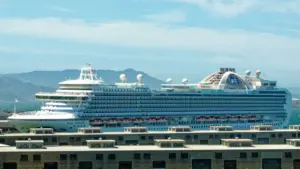
- June 5, 2026: Princess Cruises’ Caribbean Princess suffered a sudden power loss while navigating the open sea en route from San Juan to Port Canaveral, with operations fully normalized just over an hour later.
- Other Notable Vessels: Similar short-term electrical anomalies have been documented on high-profile mega-ships and contemporary liners, including Royal Caribbean’s Icon of the Seas and Utopia of the Seas, as well as vessels from Virgin Voyages (Valiant Lady), Carnival Cruise Line (Carnival Panorama), and Norwegian Cruise Line (Norwegian Star).
These incidents pale in comparison to historical maritime disasters of the past, most notably the infamous 2013 Carnival Triumph "poop cruise," where an engine room fire knocked out propulsion and primary hotel power for days, resulting in harrowing conditions that were recently re-examined in depth by Netflix’s Trainwreck documentary series in June 2025.
Unlike the protracted ordeal of the Carnival Triumph, modern engineering redundancies, stricter international safety regulations (SOLAS), and highly trained shipboard technical officers ensure that the vast majority of contemporary power outages are resolved within minutes rather than days.
Future Outlook and Passenger Takeaways
For the 3,114 guests aboard the Adventure of the Seas, the thirty-minute blackout has transformed from a moment of sudden uncertainty into an unexpected narrative anchor of their vacation—a dramatic sea story to recount upon returning to family and friends.
Looking forward, this incident underscores the perpetual challenges cruise operators face in maintaining aging yet heavily modernized fleets. While cruise lines invest billions of dollars into preventive maintenance, software upgrades, and redundant generator architectures, the sheer complexity of operating self-sustaining floating cities means that electrical faults will inevitably occur from time to time.
Key Takeaways for Future Cruisers:
- Emergency Systems Work: The seamless activation of backup lighting and public address systems on the Adventure of the Seas validates the rigorous safety drills and engineering redundancies mandated by international maritime law.
- Communication is Critical: The swift, calm intervention of the ship’s captain played a pivotal role in preventing panic, highlighting the importance of transparent communication during onboard crises.
- Resilience at Sea: Power outages, while unsettling, are statistically rare and typically brief. Passengers are encouraged to heed safety briefings, familiarize themselves with emergency lighting routes in their staterooms, and maintain confidence in the professional engineering crews manning the engine control room.
As the Adventure of the Seas continues its journey through the sun-drenched waters of the Southern Caribbean—with upcoming calls in Aruba and Curaçao—the Saturday evening blackout has already faded into the background. For Royal Caribbean, however, the incident serves as another vital data point in the ongoing effort to fortify electrical reliability across its fleet, ensuring that future voyages remain as smooth and uninterrupted as the ocean waves themselves.