











PUBLISHED: March 2026
AUTHOR: Maritime Security & Investigations Desk
SUBJECT: Marine Accident Investigation Branch (MAIB) Report Release
Executive Overview
Maritime safety regulators have officially released their comprehensive investigative findings into a tragic workplace fatality that occurred aboard the Bermuda-registered passenger vessel Arvia. The incident, which took place on October 26, 2025, occurred while the massive cruise liner was on the high seas, navigating from its point of origin in Southampton, England, toward its scheduled port of call in Santa Cruz de Tenerife, Canary Islands, Spain.
The formal inquiry was led by the United Kingdom’s Marine Accident Investigation Branch (MAIB). Because the Arvia flies under the flag of Bermuda—a proud member of the prestigious Red Ensign Group (REG)—the investigation was conducted on behalf of the Bermuda Ship Registry. This collaborative effort was executed seamlessly in accordance with the established Memorandum of Understanding (MoU) governing cooperative maritime safety investigations between the MAIB and various REG member administrations.
While the publishing of the report marks a critical milestone in transparency and accountability, it also casts a somber spotlight on the ongoing hazards faced by maritime professionals operating massive floating resorts. As the modern cruise industry experiences unprecedented growth, questions surrounding occupational health, safety protocols, heavy machinery handling, and crew fatigue remain at the forefront of international maritime discourse. This investigative breakdown examines the operational context, jurisdictional frameworks, and broader implications of the findings detailed in the MAIB report.
Detailed Chronology: The Journey and the Incident
To understand how a routine trans-Atlantic positioning voyage turned fatal, safety investigators had to reconstruct the timeline of events leading up to the tragedy on October 26, 2025. While the precise mechanics of the accident are detailed extensively in the official MAIB document, the overarching chronology highlights the grueling nature of life at sea and the suddenness with which routine operations can escalate into life-threatening emergencies.
Phase 1: Departure from Southampton
The voyage began amidst the bustling activity of the Port of Southampton, one of the United Kingdom’s premier maritime hubs. The Arvia, a state-of-the-art mega-cruise ship, cast off its moorings with thousands of vacationers and a multinational crew on board. For the passengers, the journey promised a sun-drenched escape toward the Canary Islands. For the crew, however, departure marked the commencement of a demanding operational period involving continuous maintenance, watchkeeping, hospitality services, and deck operations designed to keep a floating city functioning smoothly.
Phase 2: Open-Sea Passage and Routine Operations
As the vessel cleared the English Channel and entered the vast expanses of the Bay of Biscay and the open Atlantic, life aboard settled into a standardized rhythm. Crew members were distributed across dozens of specialized departments, ranging from navigation and engineering to technical maintenance and hotel operations. Maritime operations rarely pause for the weather or the hour; maintenance schedules must be strictly adhered to in order to ensure vessel readiness. It was during these routine operational windows—far from coastal safety infrastructure—that safety margins become remarkably thin.

Phase 3: The Critical Incident on October 26, 2025
On October 26, while the Arvia was thousands of tons of steel cutting through international waters en route to Santa Cruz de Tenerife, an incident unfolded that would claim the life of a valued crew member. Although exact environmental conditions are documented within the formal safety report, open-ocean transits frequently involve dynamic motion, complex mechanical systems, and high-pressure working environments.
The immediate aftermath of the accident triggered emergency response protocols on board. Medical personnel and shipboard emergency response teams mobilized instantly to administer critical care. Despite the prompt intervention of the ship’s medical staff, the crew member succumbed to their injuries. The captain subsequently notified maritime rescue coordination centers, adjusting communication channels to coordinate with flag state authorities, next of kin, and the nearest medical evacuation points, though the severity of the incident ultimately necessitated a formal, independent post-incident investigation upon arrival or via digital data transmission to shore-side authorities.
Supporting Context & Metrics: The Arvia, the MAIB, and the Red Ensign Group
To fully grasp the weight of this investigation, it is essential to analyze the institutional frameworks, regulatory bodies, and vessel specifications involved.
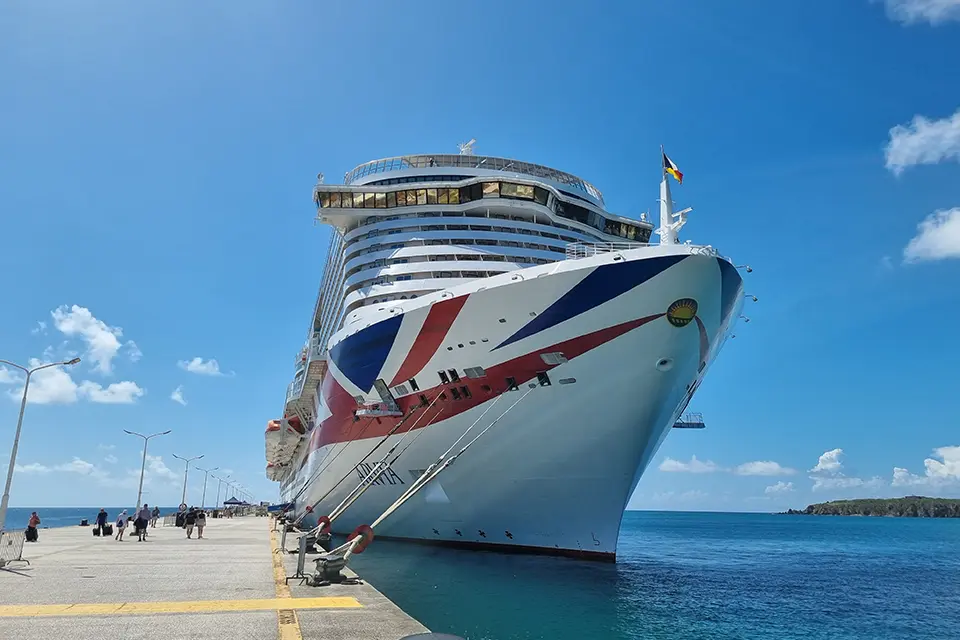
Profile of the Vessel: MS Arvia
The Arvia is not an ordinary ship; it is a marvel of modern naval architecture. Delivered to its operators as part of a multi-billion-dollar fleet expansion, the vessel boasts a gross tonnage exceeding 180,000 GT, a length of over 340 meters, and the capacity to carry well over 5,000 passengers alongside a crew numbering in the thousands.
Operating a vessel of this scale requires an intricate hierarchy of command, rigid adherence to the International Safety Management (ISM) Code, and flawless communication across dozens of nationalities. Because modern cruise liners function simultaneously as industrial complexes, floating hotels, and high-speed transport vessels, crew members are frequently exposed to a diverse array of occupational hazards—from heavy machinery operation and hazardous material handling to mooring operations and high-altitude maintenance.
The Role of the MAIB
The Marine Accident Investigation Branch is an independent part of the UK Department for Transport. Its core mandate is not to apportion blame or assign civil or criminal liability, but rather to determine the circumstances and causes of marine accidents with the sole objective of improving safety at sea.

The MAIB operates under stringent international guidelines established by the International Maritime Organization (IMO). When accidents occur on vessels flagged by British Overseas Territories—such as Bermuda—the MAIB frequently steps in to lend its world-class forensic, engineering, and human-factors expertise to the local administration.
The Red Ensign Group (REG)
The Red Ensign Group comprises the United Kingdom, the Crown Dependencies (Isle of Man, Guernsey, and Jersey), and the UK Overseas Territories (including Bermuda). These jurisdictions maintain separate ship registries, yet they are unified by high standards of maritime regulation, safety compliance, and environmental protection.
The Memorandum of Understanding between the MAIB and REG member administrations is a vital institutional bridge. It ensures that when complex, high-profile, or fatal accidents occur on ships flagged within the REG network, independent and highly trained investigators can deploy rapidly, unearthing systemic vulnerabilities that individual island registries might lack the specialized investigative bandwidth to uncover independently.
Official Statements and Regulatory Responses
The publication of the MAIB accident report has generated significant commentary from maritime stakeholders, industry analysts, and labor advocacy groups.
Statement from the Marine Accident Investigation Branch
In releasing the report, senior representatives of the MAIB emphasized that the primary motivation behind the document is prevention. A spokesperson noted:
"Every maritime fatality represents an irreparable loss to a family and a stark reminder of the unforgiving nature of the working environment at sea. Our investigation into the tragedy aboard the Arvia was conducted with uncompromising thoroughness. We expect shipowners, operators, and regulatory bodies to review these findings not merely as a matter of compliance, but as an urgent call to action to re-evaluate risk assessments, operational procedures, and safety cultures across the global fleet."
Operator and Flag State Responses
Representatives for the Bermuda Ship Registry acknowledged the receipt and formal adoption of the report’s findings. As the flag state administration legally responsible for the oversight of the Arvia, Bermuda authorities reaffirmed their commitment to enforcing the highest standards of maritime safety.
Similarly, the management company operating the cruise liner released a subdued corporate statement expressing profound sorrow over the loss of their crew member. The statement highlighted ongoing cooperation with investigators, noting that internal safety audits, procedural reviews, and equipment checks had been initiated across the broader fleet immediately following the tragedy to ensure that no stone was left unturned in safeguarding personnel.
Future Outlook: Implications for Global Cruise Safety
As the maritime sector digests the detailed findings of the MAIB report concerning the Arvia, attention inevitably shifts toward the future. What systemic changes must occur to prevent such a tragedy from repeating itself on the high seas?
1. Re-Evaluating Risk Assessments for Routine Tasks
One of the most recurring themes in maritime accident investigations is the phenomenon of "normalization of deviance"—where procedures are subtly altered over time due to operational pressures until an accident occurs. Safety experts suggest that cruise operators must rigorously audit their standard operating procedures (SOPs), particularly regarding high-risk mechanical operations, maintenance work in dynamic environments, and heavy equipment handling.
2. Enhancing Human Factors Engineering
Modern cruise ships are designed with a heavy emphasis on passenger comfort, aesthetic appeal, and commercial profitability. Critics and safety advocates argue that workspace ergonomics, crew safety integration, and the physical layout of technical areas must receive equal, if not superior, attention during the naval architecture and design phase. Designing out hazards at the blueprint stage is vastly more effective than relying solely on procedural compliance and personal protective equipment (PPE).
3. Crew Training and Psychological Safety
Addressing maritime safety requires an environment where crew members of all ranks feel empowered to halt work if they perceive an unacceptable hazard. Fostering a just culture—where reporting near-misses is encouraged without fear of retribution—remains a cornerstone of modern industrial safety. Training modules must continuously evolve to reflect real-world operational challenges rather than existing merely as check-the-box regulatory exercises.
Conclusion
The tragic events of October 26, 2025, aboard the Arvia will forever remain a sobering chapter in the vessel’s history. Yet, through the meticulous investigative work of the MAIB and the regulatory oversight of the Bermuda Ship Registry, this tragedy offers vital lessons for the entire maritime community. By turning the hard light of inquiry onto the mechanisms of failure, the industry takes a necessary, albeit painful, step toward ensuring that those who make their living upon the seas can return home safely to their families.


