Executive Overview
Every seasoned boater knows the visceral tension of the "dockmare." Whether wrestling a heavy, single-screw cruiser into a narrow slip against a fierce crosswind, navigating an unlit marina after sunset, or managing a tight maneuver with an inexperienced crew, close-quarters ship handling remains one of recreational boating’s most persistent anxiety points. High-consequence, low-speed maneuvering is a crucible that has tested the nerves of professional captains and weekend hobbyists alike since the dawn of powered navigation.
Enter Simrad Yachting’s AutoCaptain—a sophisticated, factory-integrated autonomous docking and close-quarters maneuvering system that aims to permanently change how mariners interact with tight spaces. Powered by a seamless convergence of stereo vision, advanced machine learning, and Mercury Marine’s industry-leading Joystick Piloting technology, AutoCaptain is designed to reliably dock, undock, and position a vessel with push-button simplicity.
However, the true significance of AutoCaptain extends far beyond its immediate utility. Developed under the corporate umbrella of the Brunswick Corporation—which owns both Simrad parent Navico Group and Mercury Marine—AutoCaptain represents a watershed moment in marine technology: the first autonomous docking system engineered from the ground up by a single corporate entity that builds everything from the steering actuators and propulsion engines to the onboard sensors and multifunction displays. This vertical integration eliminates the finger-pointing common in third-party retrofit integrations, promising a unified, robust ecosystem for the future of maritime automation.
Detailed Chronology: The Evolution of Marine Maneuverability
To appreciate the technological leap represented by AutoCaptain, it is helpful to look at how close-quarters handling has evolved over the past several decades.
- The Pre-Joystick Era: For generations, docking heavy powerboats relied entirely on the skipper’s mastery of prop walk, momentum, rudder angle, and spring lines. Without thrusters or independent engine controls, single-screw or twin-screw inboard handling required precise timing and a deep intuitive understanding of hydrodynamics. Mistakes frequently resulted in fiberglass-to-gelcoat encounters.
- The Joystick Revolution: The introduction of electronic engine controls and joystick docking systems in the late 2000s—pioneered heavily by Mercury Marine with Joystick Piloting—transformed boating. By allowing operators to vector thrust independently across multiple engines or thrusters, joysticks made sideways translation and axial rotation accessible to novices. Yet, the human hand remained entirely responsible for calculating distances, windage, and clearance.
- The Sensor-Based Autonomy Wave: Over the past five years, various marine electronics manufacturers introduced sensor-based docking assistants. However, these were predominantly aftermarket packages cobbled together from third-party cameras, radar modules, and independent autopilot systems, often leading to complex calibrations, warranty gray areas, and integration friction.
- The Factory-Integrated Era (Present): With the debut of AutoCaptain, hardware and software development have merged under one corporate roof. Currently launching as an OEM-exclusive feature aboard the Boston Whaler 405 Conquest, AutoCaptain establishes a new benchmark for level two-plus autonomy on the water, blending machine vision and machine learning natively into the vessel’s central nervous system.
Supporting Context & Metrics: Under the Hood of AutoCaptain
AutoCaptain is not merely a software application downloaded onto an existing chartplotter; it is a meticulously engineered hardware-software stack designed to operate reliably in harsh marine environments.
Hardware Architecture
A factory installation of AutoCaptain—currently demonstrated on the Boston Whaler 405 Conquest—relies on an intricate array of specialized hardware components:
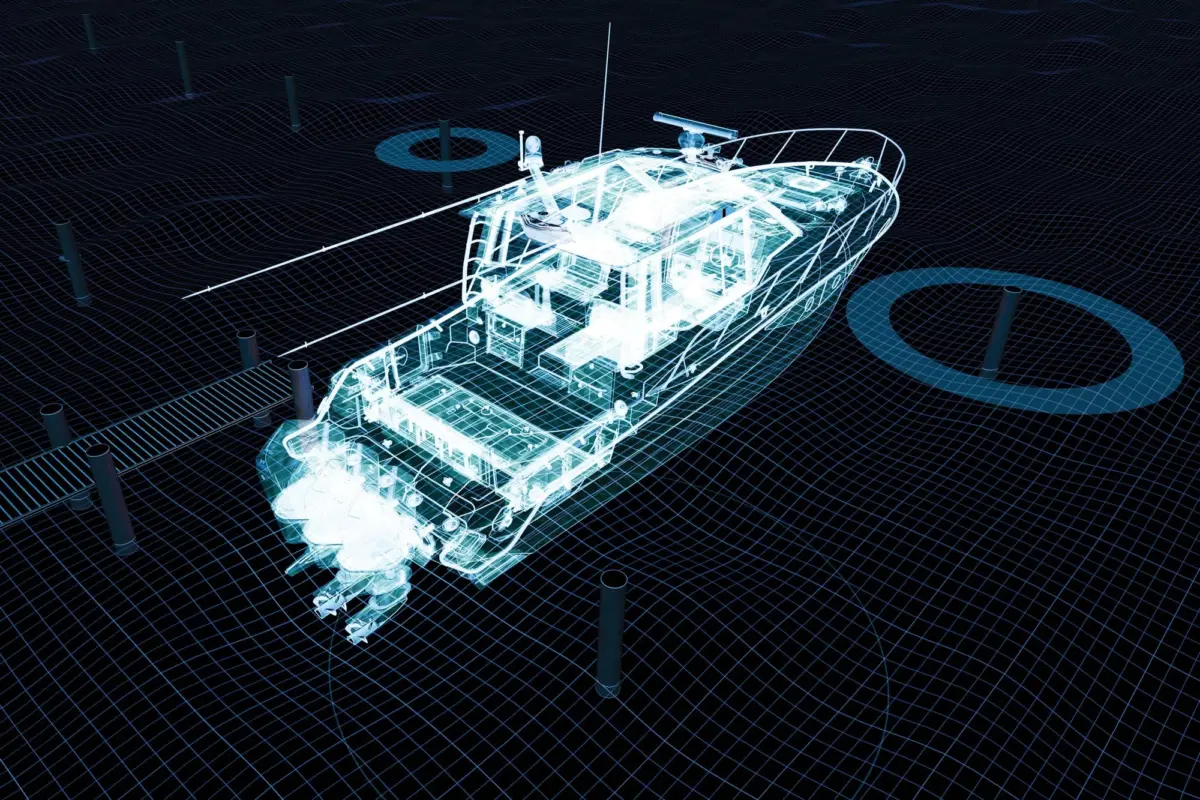
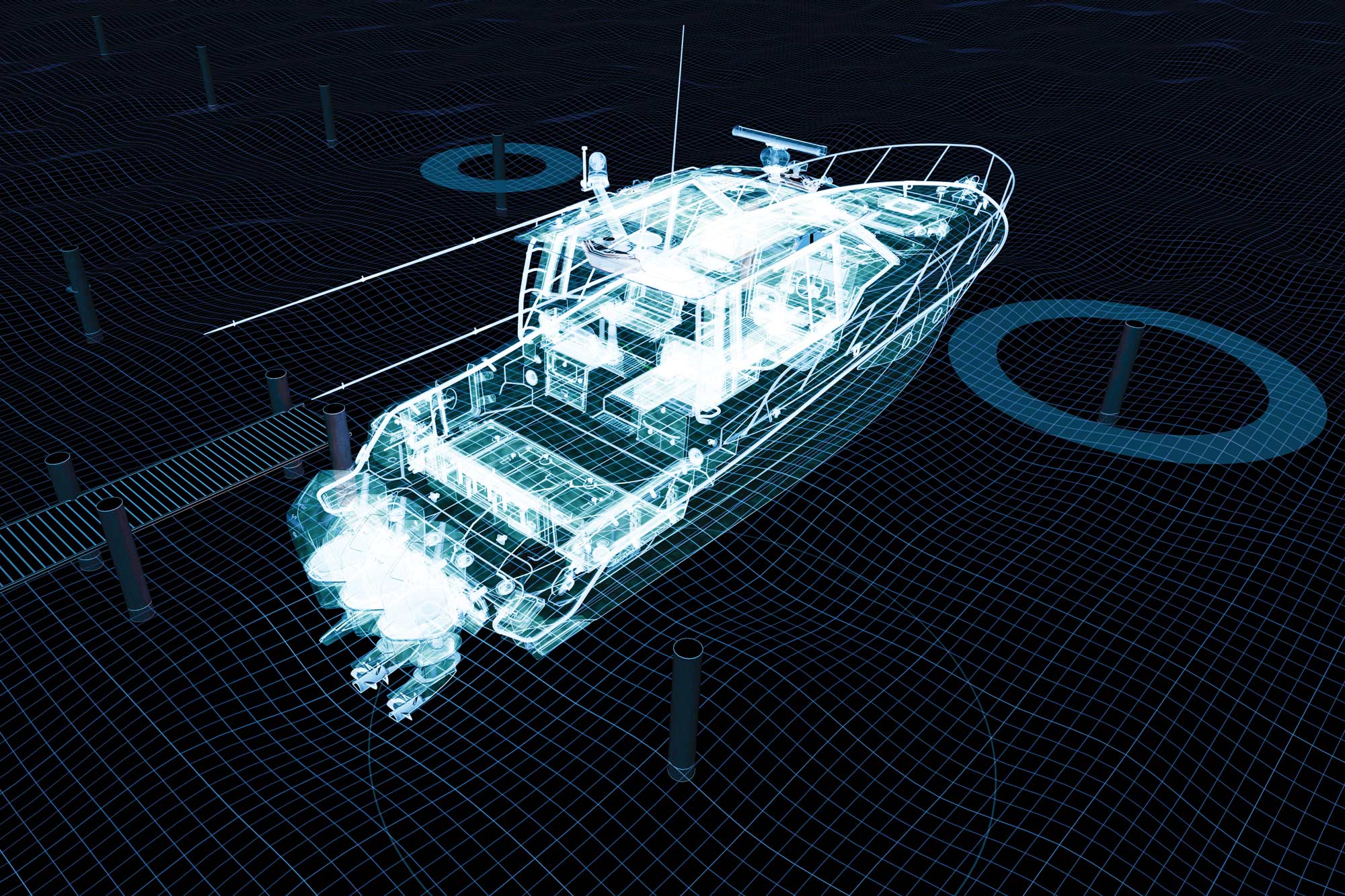
- 360-Degree Vision: Six factory-installed stereo cameras are seamlessly integrated into the vessel’s hardtop. Unlike monocular cameras, stereo vision utilizes dual lenses to calculate accurate depth perception and distance to surrounding objects, mimicking human stereoscopic vision. These cameras operate effectively even in low-ambient-light conditions.
- Processing Power: A dedicated high-performance black-box processor runs the heavy computational loads required for real-time video stream analysis and spatial mapping.
- Helm Interface: At least one Simrad NSO 4 or NSS 4 multifunction display running the dedicated AutoCaptain application serves as the primary visual and touch interface.
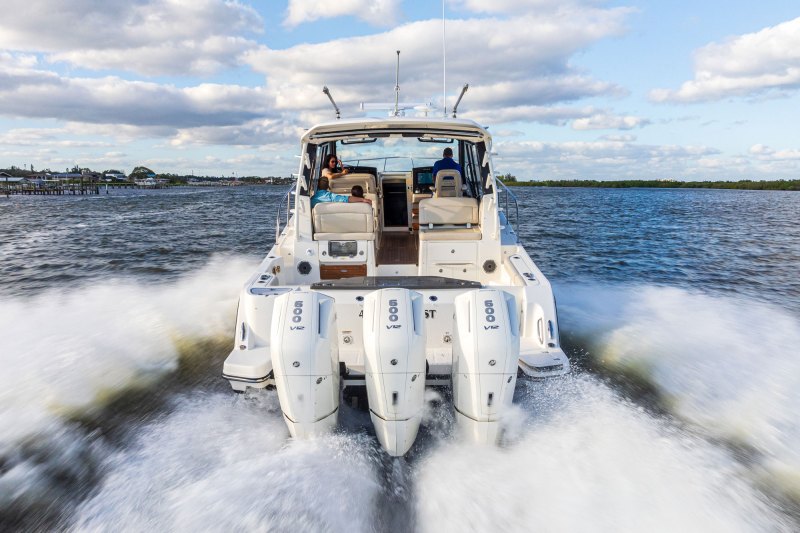
- Positioning & Propulsion: A Global Navigation Satellite System (GNSS) receiver anchors the vessel’s digital mapping framework, while dual (or multiple) compatible Mercury outboards tied to Mercury’s Joystick Piloting system execute the physical maneuvers. (While bow thrusters can enhance the setup, they are not strictly mandatory; the system leverages differential outboard thrust to achieve full spatial mobility).
Software and Artificial Intelligence
The software architecture balances two primary algorithms—one dedicated to obstacle and non-water object detection, and another focused on dynamic route planning. This is augmented by two branches of AI:
- Machine Vision: Enables the system’s processor to "see" and classify above-the-waterline objects, including other boats, pilings, docks, and floating debris, from the live video feeds.
- Machine Learning: Allows AutoCaptain to continuously improve its performance without explicit reprogramming. Every time the vessel enters a marina, the system updates its internal spatial map, making subsequent docking maneuvers cleaner and more efficient.
Operational Metrics & Safety Standards
According to Brunswick’s safety classifications, AutoCaptain operates at a Level 2-plus threshold on the National Highway Traffic Safety Administration’s six-tiered autonomy scale. This translates to a "hands-off, eyes-on-helmside" experience.
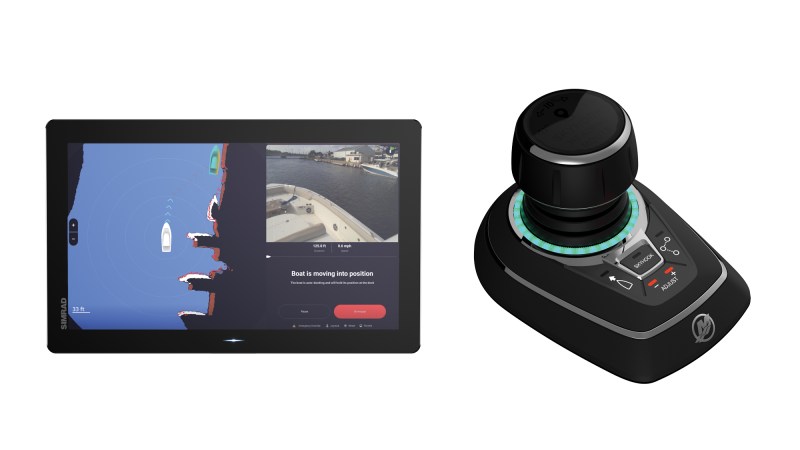
- Operational Scope: AutoCaptain is explicitly designed for docking, undocking, and short-range, slow-speed open-water positioning. It does not replace high-speed autopilot or navigate complex COLREGS (International Regulations for Preventing Collisions at Sea) maritime traffic scenarios at cruising speeds.
- The Pause Feature: A standout innovation is the system’s "pause" button—functionally a marine autonomy equivalent to Mercury’s Skyhook station-keeping. When engaged, AutoCaptain holds the yacht’s exact position and orientation within a one-meter tolerance, buying the skipper time to troubleshoot, manage lines, or wait for slip traffic to clear.
- Override Safety: Safety is baked into every layer of control. If the operator interacts with the steering wheel, throttles, or joystick, or taps the "disengage" button, AutoCaptain instantly transitions into standby mode, returning full manual control to the human captain.
Official Statements: Industry Leaders on the Future of Marine Automation
Navico Group and Brunswick Corporation executives emphasize that AutoCaptain is designed to bridge accessibility and advanced performance without sacrificing human oversight.
Jeremiah Clark, Navico Group’s vice president of product management for electronics solutions, stresses the deliberate choice to maintain a factory-only installation model:
"There’s no aftermarket. There’s no dealer install. The only way to get this is with a new boat."
Clark highlights the system’s capacity to learn and adapt over time:
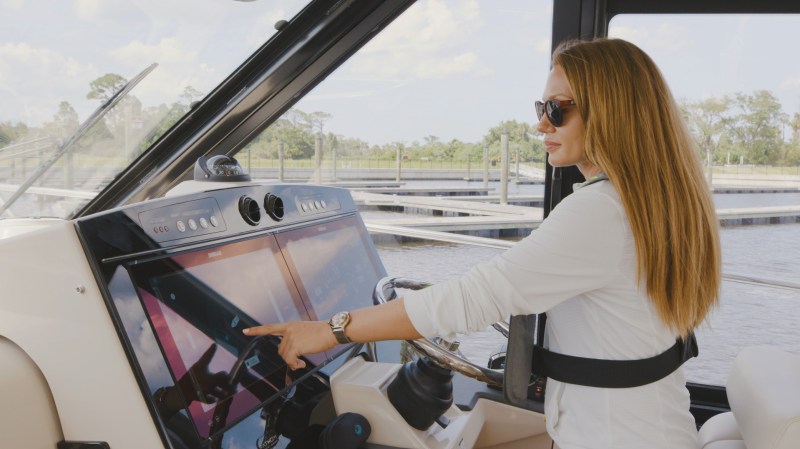
"We’ve taught it what are boats, what are docks, what are obstacles in the water. But over time, the more of those things it sees, the smarter it actually gets."
Describing the underlying mechanics that make precision positioning possible, Clark notes:
"The joystick system is really what enables the motors to go in different directions, different RPMs, different gears, and using those varying kinds of thrust and vector thrust. You can actually scoot the boat in different directions: sideways, forward, back."
Brandon Ferriman, Brunswick’s senior director of program management, explains the rationale behind choosing stereo vision over simpler camera arrays:
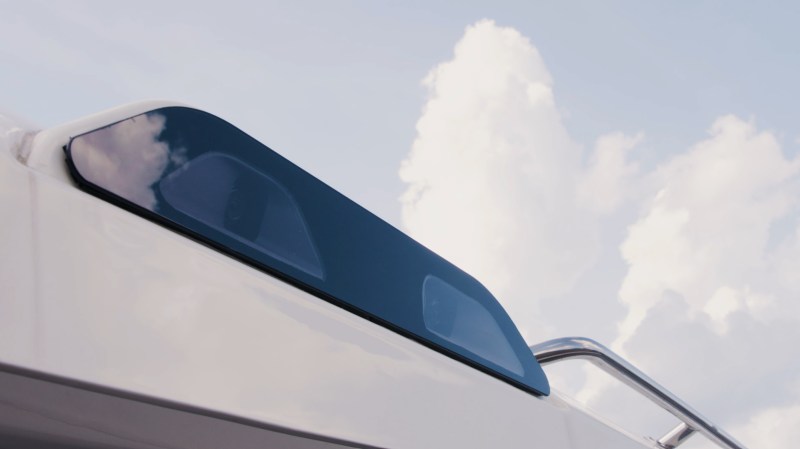
"We went with stereo cameras for their accuracy and [ability] to calculate distance and depth of the field of view. That’s how we as humans can see how far away things are."
Ferriman also notes the strategic advantage of Brunswick’s vertical integration:
"They’re mapping everything around them, and placing the objects they see in that map. And that GNSS device knows where we are in the map."
Future Outlook: The Horizon of Autonomous Boating
As AutoCaptain makes its debut on premium midsize builds like the Boston Whaler 405 Conquest, industry watchers are already looking toward the horizon to see how this technology will scale and evolve.
Scalability and Integration
Currently, AutoCaptain’s reliance on Mercury’s proprietary Joystick Piloting system limits its immediate deployment to Mercury-powered vessels. While Brunswick executives acknowledge that the core autonomy stack holds potential for broader application—such as sterndrive integrations or larger sportfishing platforms—the short-term roadmap remains tightly aligned with Mercury’s ecosystem. Similarly, physical constraints such as the need for a hardtop to mount 360-degree cameras mean AutoCaptain will remain focused on premium midsize and large recreational boats rather than small open runabouts.
Software-Driven Evolution
Because AutoCaptain is built within a closed, vertically integrated ecosystem, future enhancements will roll out primarily via software updates rather than hardware overhauls. Clark and his team have expressed openness to integrating other proprietary onboard sensors—including forward- and side-scanning sonar, Doppler-enabled radar, and Automatic Identification System (AIS) transceivers—directly into the autonomy stack without dealing with third-party licensing hurdles.
Accessibility vs. Traditional Seamanship
AutoCaptain serves a dual demographic: it lowers the intimidation barrier for novice boaters entering the lifestyle, while providing seasoned skippers with a reliable automated assistant to reduce fatigue after a long day on the water. While critics of marine automation often voice concerns over skill atrophy, proponents argue that technology like AutoCaptain simply removes the needless friction of high-stress routine tasks, leaving operators more relaxed and attentive.
Ultimately, Simrad’s AutoCaptain marks a definitive step into the future of recreational boating. By turning raw sensor data into intelligent, responsive propulsion control, it transforms one of boating’s most stressful chores into a seamless, highly choreographed maneuver—proving that the future of seamanship isn’t about replacing the captain, but giving them the ultimate first mate.