Executive Overview
In the bustling modern landscape of global gastronomy, the distinction between a generic urban bar and a traditional British pub is far more than a matter of semantics. While contemporary bars often prioritize hyper-stylized mixology, loud electronic soundscapes, and transient foot traffic, authentic pubs serve as the living, breathing anchors of their communities. They are historical institutions where the architecture of centuries past merges seamlessly with the comforting rituals of hearty meals, fine ales, and communal discourse.
Few establishments embody this multifaceted cultural heritage quite like The Sheep Heid Inn, located in the historic Duddingston neighborhood of Edinburgh, Scotland. Widely recognized as the oldest surviving pub in Scotland—with documented origins tracing back to 1360—this landmark balances the preservation of centuries-old tradition with a sophisticated, forward-thinking approach to modern dining and hospitality.
Positioned dramatically against the backdrop of Holyrood Park and overlooked by the towering volcanic peak of Arthur’s Seat, The Sheep Heid Inn is much more than a mere pitstop for weary travelers. It is a portal to the past. Having hosted monarchs, literary figures, and rebel armies alike, the inn offers a masterclass in how historic hospitality can adapt to the rigorous demands of 21st-century palates without losing its quintessential old-world charm.

From its eclectic menu featuring beetroot carpaccio and slow-roasted lamb rump to its meticulously restored 19th-century skittles alley, the pub continues to define the gold standard for British and Scottish pub culture. This report provides an exhaustive, authoritative examination of The Sheep Heid Inn, detailing its rich chronological history, architectural evolution, culinary philosophies, beverage programs, and its enduring role within Edinburgh’s vibrant tourism and community ecosystem.
Detailed Chronology: From Medieval Roots to the Modern Era
To fully appreciate the cultural significance of The Sheep Heid Inn, one must trace its journey across more than six centuries of Scottish history. The evolution of the site mirrors the broader political, social, and economic transformations of Edinburgh and the Kingdom of Scotland.
The Medieval Foundation (1360)
The establishment of the inn in 1360 places its origins firmly within the medieval period, during the reign of King David II, the son of Robert the Bruce. Long before the surrounding area was fully absorbed into the metropolitan sprawl of modern Edinburgh, Duddingston was a distinct, semi-rural village centered around a freshwater loch and an ancient parish church.
Travelers journeying toward Edinburgh Castle or moving southward through the Lothians required staging posts for fresh horses, food, and shelter. The original structure on the site of The Sheep Heid Inn served as a vital way station. While the immediate neighborhood was largely agrarian, its strategic location near key medieval transport routes ensured a steady stream of merchants, drovers, and clergy.

The Jacobite Uprising and Royal Connections (1745)
Perhaps the most dramatic chapter in the pub’s long history occurred during the tumultuous events of the 1745 Jacobite Rising. Duddingston village found itself directly in the path of history when Jacobite forces, led by Charles Edward Stuart—popularly known to history and folklore as "Bonnie Prince Charlie"—encamped in the area prior to the pivotal Battle of Prestonpans.
Historical lore and local archives suggest that Bonnie Prince Charlie himself frequented the precursor to the modern inn, using the locale as an informal command post and gathering space for his loyal officers. It was during this era that the establishment allegedly acquired its distinctive name. According to enduring local tradition, King James VI of Scotland (later James I of England) gifted an ornate ram’s head snuff box to the proprietor of the inn as a token of gratitude for hospitality and late-night gaming sessions. The "sheep’s head" motif became permanently etched into the cultural identity of the establishment, manifesting in its name, its heraldry, and its interior decor.
The 19th-Century Architectural Renaissance
While the historical foundations of the inn date back to the 14th century, the physical structure that greets visitors today is primarily a product of the 19th century. As Edinburgh expanded rapidly during the Victorian era, the building underwent extensive structural renovations and redesigns.
Architects of the period sought to modernize the interior to accommodate the burgeoning middle-class tourism market while meticulously preserving its rustic, antiquarian aesthetic. It was during this Victorian refurbishment that many of the signature interior elements—including the rich dark-wood paneling, the integration of private snugs, and the expansion of the rear outbuildings to house recreational facilities—were formalized.
The Contemporary Era: Heritage Meets Modernity
Entering the 20th and 21st centuries, The Sheep Heid Inn transitioned from a local coaching inn into a globally recognized destination for culinary tourists and history enthusiasts alike. Managed in recent decades under the stewardship of modern hospitality groups, the pub has successfully navigated the delicate balance between historical preservation and contemporary guest expectations.
Structural integrity has been vigilantly maintained, ensuring that the 19th-century aesthetic remains uncompromised, while kitchen and bar operations have been aggressively modernized to meet contemporary standards of food safety, sourcing transparency, and mixology.
Supporting Context & Metrics: Architecture, Setting, and Community Ecosystem
The enduring appeal of The Sheep Heid Inn cannot be understood in isolation from its physical and geographical environment. Every square foot of the property tells a story of intentional design, historical preservation, and geographic fortune.
Architectural Layout and Interior Aesthetics
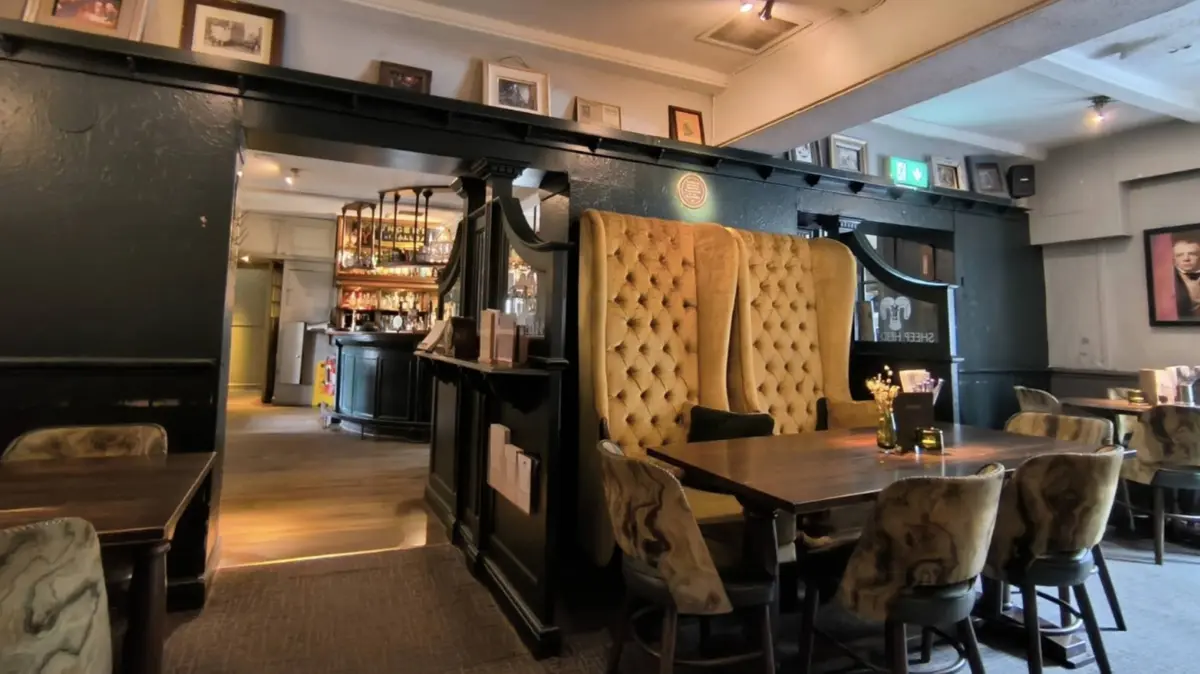
Upon crossing the threshold of The Sheep Heid Inn, patrons are immediately enveloped in an atmosphere that reviewers and architectural historians alike frequently describe as "an old traditional pub with oodles of character." The interior design avoids the sterile pastiche of modern themed restaurants, relying instead on genuine patina and carefully curated artifacts.
- The Hearth and Seating: At the center of the pub’s social sphere are open fireplaces designed to drive away the chill of damp Scottish winters. Heavy, plush armchairs and worn leather Chesterfields invite guests to settle in for hours of conversation.
- Taxidermy and Artwork: True to its name, the establishment prominently features mounted rams’ heads, serving as a direct nod to the royal folklore of King James VI. These are complemented by heavily varnished oil paintings, vintage political caricatures, and historical maps of Edinburgh and its surrounding shires.
- The Skittles Room: Tucked discreetly away in the rear of the main building lies one of the pub’s most treasured anomalies: an operational, century-old skittles alley. This precursor to modern bowling remains a rare architectural artifact in contemporary British pubs, offering a tactile, acoustic experience where heavy wooden balls roll down aged tracks to strike authentic 19th-century wooden pins.
Geographic Positioning and Tourism Integration
The Sheep Heid Inn occupies a privileged geographic niche in Edinburgh’s southeast. Situated at 43-45 The Causeway in Duddingston, the pub faces directly toward the sprawling expanse of Holyrood Park.
- Proximity to Natural Landmarks: The inn is heavily trafficked by hikers, nature enthusiasts, and tourists descending from Arthur’s Seat—an ancient volcanic peak that dominates the Edinburgh skyline and stands as one of the most photographed and romanticized natural film locations in the United Kingdom.
- The Festival Capital Synergy: As Edinburgh continuously cements its reputation as the global "Festival Capital"—hosting world-renowned events such as the Edinburgh International Festival, the Fringe, and the Royal Military Tattoo—The Sheep Heid Inn serves as a vital sanctuary for visitors seeking respite from the high-energy urban core. Its location in the tranquil, village-like atmosphere of Duddingston provides a necessary psychological and physical decompression chamber away from the city center’s frenetic pace.
Culinary Philosophy: Honoring Tradition While Embracing Innovation
For generations, the culinary output of British pubs was an afterthought—a utilitarian arrangement of simple crisps, pickled eggs, and overcooked pies designed solely to absorb alcohol. The modern renaissance of British pub culture, spearheaded by institutions like The Sheep Heid Inn, has fundamentally rewritten this paradigm. Today, the pub kitchen operates with the rigor, sourcing standards, and creative ambition of a fine-dining establishment.
The Evolution of the Menu
The culinary strategy at The Sheep Heid Inn relies on a dual-track philosophy: paying homage to classic British comfort food while aggressively incorporating modern gastronomic trends.
- Starters and Small Plates: The menu bridges the gap between old and new through thoughtfully crafted starters. Diners can sample contemporary culinary compositions such as velvety beetroot carpaccio paired with goat’s cheese and toasted seeds, alongside more traditional offerings like rich chicken liver and fig parfait served with toasted artisanal brioche. Another standout modern adaptation is the tarragon-battered halloumi, which offers a crisp, herbal twist on traditional pub bar snacks.
- Robust Mains: For main courses, the kitchen leans heavily into slow-cooked, deeply comforting classics executed with technical precision. Offerings include succulent Rotisserie chicken, slow-roasted lamb rump cooked to tender perfection, and seasonal iterations of classic British pies.
- Set Lunch and Daily Specials: To accommodate both leisurely diners and local workers, the pub offers dynamic daily specials that shift according to seasonal produce availability. Additionally, structured set lunch menus are available from Monday through Friday, 12:00 p.m. to 5:00 p.m., providing guests with a curated two- or three-course dining experience.
- Dessert Offerings: The meal concludes with nostalgic, expertly executed British desserts. Diners frequently indulge in classic apple and blackberry crumble served with steaming jugs of vanilla custard, or rich, torched raspberry crème brûlée.
Beverage Programs: Artisanal Casks, Craft Beers, and Mixology
A historic pub lives and dies by the quality of its beverage program. At The Sheep Heid Inn, the curation of the drink menu reflects a profound respect for both historical brewing traditions and the vibrant contemporary craft beverage movement.
Cask Ales and Draft Beers
As a cornerstone of Scottish hospitality, the pub maintains an uncompromising standard for its draft installations. The lineup balances global appeal with local craft pride:
- Global and Craft Lagers: Crisp, refreshing options such as Asahi Super Dry and Beavertown Neck Oil IPA anchor the draft selection, catering to fans of modern, hop-forward craft beers.
- Traditional Casks: Real ales change regularly, showcasing regional Scottish breweries alongside classic English cask conditioners, served at the precise cellar temperatures dictated by tradition.
- Specialty Bottled Beers: The bottled menu is thoughtfully curated to include niche selections such as Thornbridge Jaipur IPA, alongside inclusive dietary options like gluten-free Daura Damm, ensuring that all guests can participate in the social rituals of the house.
The Cocktail and Wine Program
Moving beyond traditional beer and cider, The Sheep Heid Inn employs expert mixologists to design a cocktail menu that balances complexity with accessibility.
- Flavor Profiles: Cocktails are intentionally categorized by their primary sensory characteristics. Guests can select from zesty and sweet concoctions designed to refresh after a hike up Arthur’s Seat, or smooth, bitter, and spirit-forward classics crafted for evening fireside sipping.
- Weekend Champagne and Prosecco Specials: Recognizing the celebratory nature of modern dining, the pub hosts weekend sparkling wine specials, elevating the casual pub experience into an occasion for indulgence.
- The Outdoor Beer Garden: During the fleeting warmth of Scottish summers, the pub’s outdoor beer garden becomes a vibrant social hub where guests can enjoy artisanal spirits, Pimm’s cups, and draft beers surrounded by historic stone architecture.
Official Guidelines, Community Etiquette, and Future Outlook
Navigating a historic British pub for the first time can occasionally intimidate international visitors unfamiliar with unwritten local customs. Furthermore, the longevity of an institution like The Sheep Heid Inn depends heavily on its community integration and forward-looking operational strategies.
Unwritten Rules of the British Pub
Visitors to The Sheep Heid Inn—particularly international tourists arriving from the nearby festival circuits—are encouraged to observe traditional British pub etiquette to ensure a harmonious experience:
- Ordering at the Bar: With very few exceptions during designated table-service dining hours, drinks are traditionally ordered directly at the bar. Establishing eye contact with the bartender and waiting your turn patiently is a cultural imperative.
- Tab Management: It is customary to either pay for drinks individually as you order them or ask to open a running tab by leaving a credit card with the bartender.
- Seating Etiquette: While table service operates in the dining areas, finding a seat in the bustling taproom requires situational awareness. Asking to join a partially occupied table or inquiring politely about available spaces is warmly welcomed.
Inclusivity and Community Access
Despite its medieval origins and ancient architecture, The Sheep Heid Inn maintains a progressive approach to community accessibility:
- Family-Friendly Policies: Unlike historical drinking dens of centuries past, the modern inn explicitly welcomes children, offering dedicated kids’ menus and a welcoming environment for family gatherings.
- Dog-Friendly Environment: In keeping with Scottish rural tradition, well-behaved dogs (pooches) are permitted in designated areas of the pub, provided with fresh water bowls by attentive staff.
- Private Event Booking: The legendary skittles alley is available for private hire. Guests can book the space for celebrations, corporate retreats, or private parties, combining the physical activity of the 100-year-old game with bespoke seasonal dining packages.
Future Outlook and Preservation Strategy
As The Sheep Heid Inn looks toward the remainder of the 21st century, its operational strategy remains anchored in the delicate stewardship of heritage. Management faces the dual challenge of protecting a fragile 14th-century foundation while aggressively reducing its carbon footprint and modernizing supply chains.
Commitments to locally sourced Scottish produce, sustainable waste management, and energy-efficient historic retrofitting ensure that the physical structure of the building will endure for generations to come. By remaining fiercely loyal to its community roots while embracing the culinary and mixological standards of the modern era, The Sheep Heid Inn guarantees that the echoes of Bonnie Prince Charlie’s boots and the satisfying clack of 19th-century skittle pins will continue to resonate through the Duddingston landscape for centuries to come.