The maritime transportation landscape of the American Northeast is undergoing a quiet, deliberate, and necessary evolution. As coastal communities grapple with the dual imperatives of maintaining vital infrastructure and aggressively curbing carbon emissions, public transit authorities are being forced to rethink generations-old engineering paradigms. Nowhere is this shift more palpable than in the waters of Maine’s Casco Bay, where a new chapter in regional mobility is officially underway.
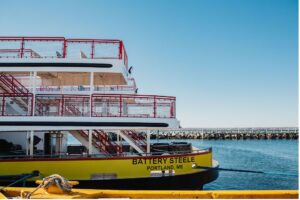
The Battery Steele—a state-of-the-art, 164-foot steel vessel commissioned by Casco Bay Lines—has officially entered the Atlantic Ocean, making its inaugural journey up the New England coastline toward its permanent home in Portland, Maine. Representing a watershed moment for public ferry services in the United States, this highly anticipated vessel is equipped with a cutting-edge diesel-electric hybrid propulsion system. It is designed not merely to replace aging tonnage, but to fundamentally redefine the environmental footprint of daily commuter and tourist transit between mainland Portland and Peaks Island.
Scheduled to arrive in Portland later this summer following its initial launch in North Kingstown, Rhode Island, the Battery Steele will undergo a rigorous period of final commissioning, regulatory inspections, and comprehensive crew training before officially entering service in the fall. Once operational on the heavily traveled Portland-to-Peaks Island route—eventually succeeding the steadfast but conventional Machigonne II—the vessel will run primarily on advanced lithium-ion battery power.
By integrating shoreside high-capacity charging infrastructure at the Portland terminal with reliable onboard backup diesel generators, the Battery Steele promises a cleaner, quieter, and more efficient maritime experience. Environmental projections indicate that the ferry will eliminate up to 800 metric tons of carbon dioxide ($CO_2$) emissions annually, offering a tangible blueprint for green coastal infrastructure across the United States.
Beyond its technological and ecological merits, the vessel’s nomenclature pays homage to the storied history of Peaks Island. Named after the historic World War II-era military fortification that once housed one of the largest gun batteries in the nation, the Battery Steele bridges a rich local heritage with a forward-looking commitment to environmental stewardship. As the maritime sector faces mounting pressure to decarbonize, this vessel stands as a testament to what is possible when regional transit authorities, naval architects, and master shipbuilders unite behind a shared vision of sustainable progress.
Detailed Chronology: From Blueprint to Open Water
The journey of the Battery Steele from a conceptual framework to a fully realized, ocean-going vessel is a masterclass in modern naval engineering, cross-state collaboration, and meticulous project management. The timeline of its creation reflects years of careful planning, rigorous design iterations, and precise manufacturing milestones.
Phase I: Conceptualization and Fleet Evaluation
The genesis of the Battery Steele can be traced back to comprehensive long-term planning initiatives undertaken by Casco Bay Lines. Recognizing the aging nature of their existing fleet—particularly vessels handling the high-volume Peaks Island run—transit leadership initiated an exhaustive Fleet Evaluation Project. The goal was twofold: to design a vessel capable of meeting the rigorous operational demands of year-round Maine weather, and to radically reduce the organization’s greenhouse gas emissions in alignment with state and national climate goals.
To translate these operational requirements into architectural reality, Casco Bay Lines partnered with the renowned naval architecture and marine engineering firm Elliott Bay Design Group. Tasked with pioneering one of the first diesel-electric hybrid public passenger ferries in the United States, the design team had to solve complex logistical challenges. They needed to balance passenger capacity, vehicle-hauling capabilities, structural durability in icy New England waters, and the unique weight and space distributions required for a massive marine battery bank.
Phase II: Construction at Senesco Marine
Once the architectural blueprints were finalized and rigorous computer-simulations and model-testing phases were completed, the contract for physical construction was awarded to Senesco Marine, a premier shipyard located in North Kingstown, Rhode Island.
Over the course of months, skilled metalworkers, marine electricians, and structural welders transformed thousands of tons of high-grade marine steel into the sleek, utilitarian hull of the Battery Steele. Unlike conventional vessels where the primary engine room dominates the internal layout, the construction of this hybrid ferry required an intricate choreography of specialized trades. Technicians installed sophisticated power management systems, high-capacity electrical switchboards, and the core energy storage enclosures designed to house the cutting-edge battery banks.
Phase III: The Rhode Island Christening
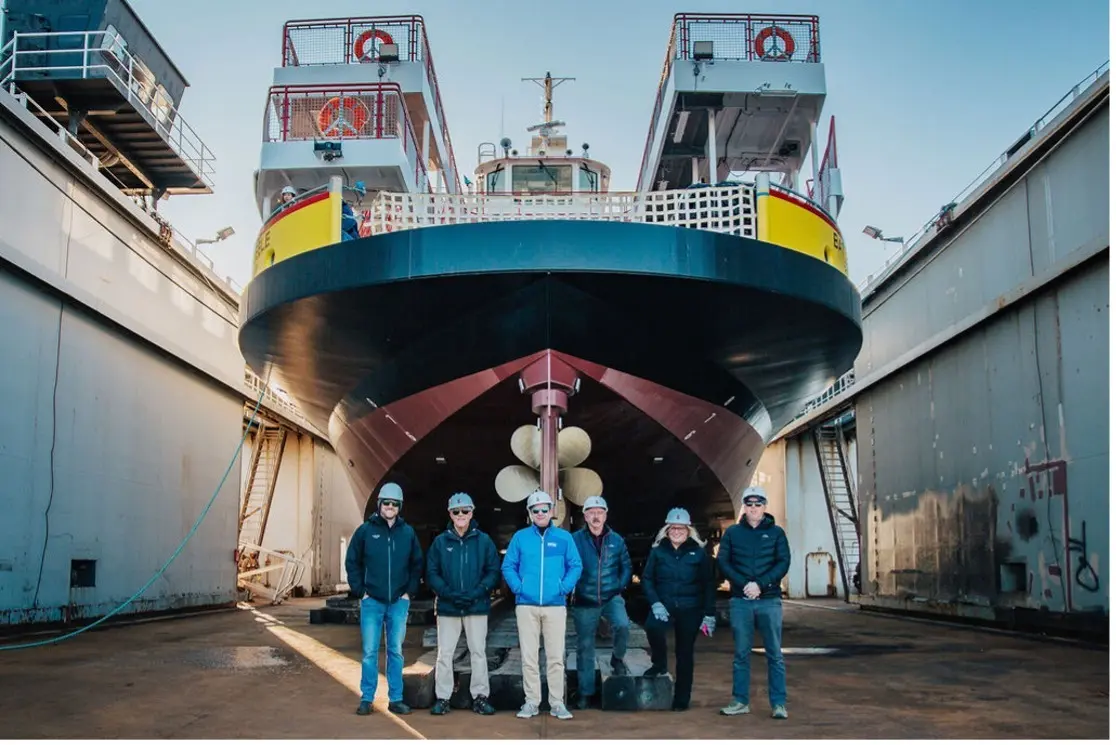
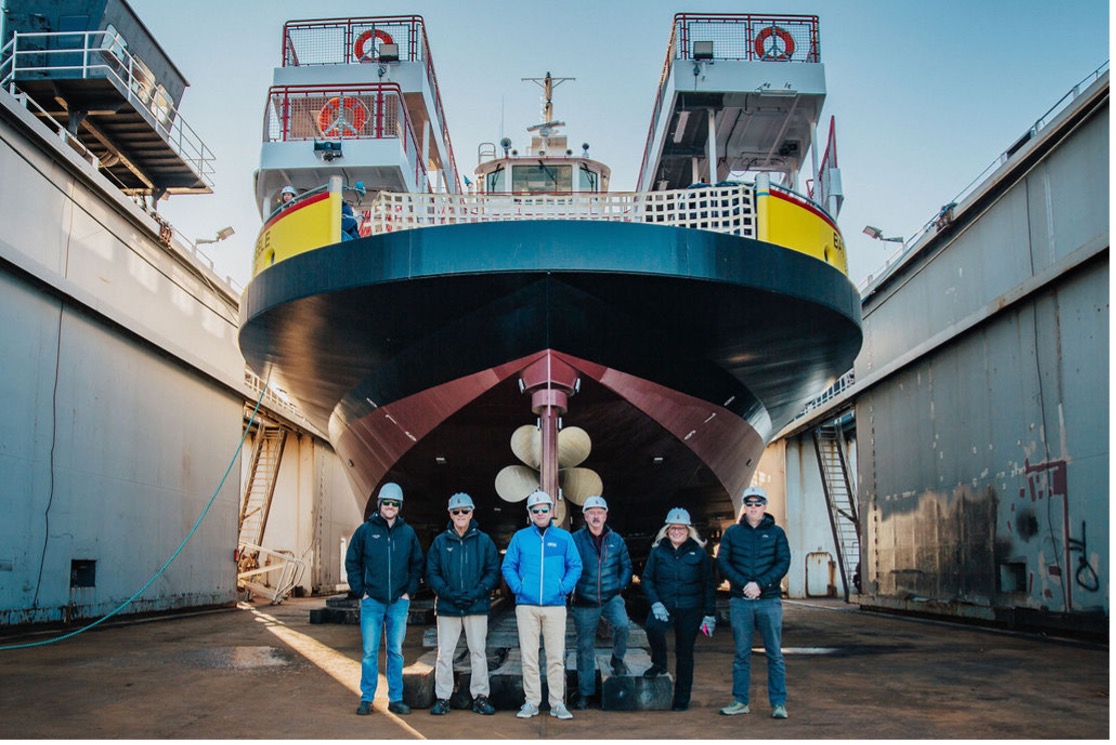
In early April, a delegation of Casco Bay Lines officials, municipal stakeholders, and shipyard workers gathered at the Senesco Marine facility in North Kingstown to celebrate a time-honored maritime tradition. Amidst speeches celebrating regional cooperation and technological innovation, the formal christening ceremony culminated in the traditional smashing of a champagne bottle against the steel hull, officially blessing the vessel and naming it the Battery Steele.
Phase IV: Delivery Voyage and Upcoming Integration
Following its successful launch into Narragansett Bay and subsequent sea trials in southern New England waters, the Battery Steele officially departed on its delivery voyage. Navigating the open Atlantic Ocean, the 164-foot vessel is currently tracing the rugged coastline northward, moving past Cape Cod and the Gulf of Maine toward its final destination in Portland Harbor.
Upon arrival later this summer, the vessel will enter its final phase of preparation before revenue service. This period will involve:
Shoreside Infrastructure Calibration: Fine-tuning the high-speed charging systems installed at the Portland terminal to ensure seamless, rapid power replenishment between runs.
Regulatory Compliance and Coast Guard Inspections: Rigorous testing of safety systems, lifesaving equipment, and emergency backup power protocols to satisfy United States Coast Guard (USCG) standards.
Comprehensive Crew Training: Specialized instruction for Casco Bay Lines captains, deckhands, and marine engineers to master the nuances of diesel-electric hybrid operations, regenerative braking/power systems, and advanced electronic bridge controls.
If all milestones are met according to schedule, the Battery Steele will officially embark on its maiden commercial voyage carrying commuters, tourists, and freight between Portland and Peaks Island by the fall.
Supporting Context & Metrics: Engineering a Clean Maritime Future
The significance of the Battery Steele extends far beyond local convenience; it represents a pioneering leap forward in green naval technology. To fully understand the magnitude of this achievement, one must examine the specific metrics and engineering specifications that set this vessel apart from its predecessors.
Propulsion Architecture: The Diesel-Electric Hybrid System
Traditional ferries rely on direct mechanical drive systems, where large internal combustion diesel engines turn propeller shafts directly through reduction gears. While reliable, these systems run continuously—often idling for extended periods at docks—resulting in high fuel consumption, localized air pollution, and significant acoustic noise.
The Battery Steele utilizes a sophisticated diesel-electric hybrid propulsion architecture. In this configuration:
Primary Electric Drive: The vessel’s electric propulsion motors draw energy directly from a large, high-capacity marine-grade lithium-ion battery bank stored securely within the ship’s hull.
Shoreside Replenishment: While docked at the Portland terminal, the vessel plugs into a high-capacity shoreside charging grid, replenishing its battery reserves using electricity from the local grid.
Onboard Backup Generation: For longer routes, severe weather conditions, or situations requiring extended operational ranges beyond battery capacity, clean-burning backup diesel generators are housed onboard to generate electricity dynamically.
This system allows the vessel to operate in a fully electric, zero-emission mode during docking maneuvers and specific segments of the transit route, drastically reducing fuel burn during the most carbon-intensive phases of a voyage.
Environmental Impact and Emissions Reductions
The transition from a conventional diesel-mechanical platform to a hybrid-electric system yields immediate, quantifiable environmental benefits for the Casco Bay ecosystem:
Carbon Dioxide Reduction: Environmental impact studies conducted during the vessel’s design phase project that the Battery Steele will prevent up to 800 metric tons of carbon dioxide ($CO_2$) emissions annually. To put this into perspective, this reduction is equivalent to removing approximately 170 gasoline-powered passenger vehicles from American highways each year.
Air Quality Improvements: By minimizing diesel combustion while operating in and around port facilities, the vessel significantly cuts emissions of particulate matter ($PM$), nitrogen oxides ($NO_x$), and sulfur oxides ($SO_x$), directly improving air quality for residents and visitors on both mainland Portland and Peaks Island.
Acoustic Mitigation: Traditional diesel engines generate substantial underwater and surface noise pollution, which can disrupt marine life and diminish the peaceful ambiance of the bay. The electric drive mode of the Battery Steele offers a dramatically quieter ride, preserving the tranquil acoustic environment that defines the Casco Bay island experience.
Vessel Specifications at a Glance
Vessel Name:Battery Steele
Length: 164 feet
Hull Material: Marine-grade steel
Primary Route: Portland to Peaks Island
Propulsion Type: Diesel-electric hybrid with shoreside charging capabilities
Naval Architect: Elliott Bay Design Group
Shipbuilder: Senesco Marine (North Kingstown, RI)
Projected Annual $CO_2$ Reduction: Up to 800 metric tons
Official Statements & Community Significance
The naming and deployment of the Battery Steele weave together threads of military history, community preservation, and modern environmentalism.
Honoring a Local Landmark
The decision to name the vessel after Battery Steele—the historic World War II-era military fortification located on Peaks Island—carries immense cultural resonance. Built during the height of the Second World War to defend Portland Harbor from potential naval attacks, the original Battery Steele was an engineering marvel of its time, featuring some of the largest coastal defense gun emplacements in the United States.
Over the decades following the war, the military installation was decommissioned and left to nature. However, beginning in the 1990s, concerted local preservation efforts transformed the sprawling concrete complex from a derelict site into a celebrated public sanctuary. Today, Battery Steele stands as a beloved community landmark, offering trails, subterranean exploration spaces, and a tangible link to the mid-20th-century history of Casco Bay.
By bestowing this historic moniker upon Casco Bay Lines’ newest flagship, transit leadership has forged a symbolic bridge between past and future. Just as the preservationists of the late 20th century fought to protect the physical fortification for public enrichment, the introduction of the Battery Steele ferry safeguards the ecological health and long-term viability of the bay for future generations.
Voices from the Transit Authority and Industry Partners
In official communications surrounding the launch, representatives of Casco Bay Lines have emphasized that the vessel represents a collective triumph of regional cooperation.
"Our newest vessel has entered the Atlantic Ocean and will soon be making its way up the coast of New England towards Portland," transit leadership noted in project updates. "This is an exciting and important step forward for the future of ferry service in Casco Bay."
Highlighting the intricate collaboration between designers and builders, project spokespeople praised the synergy between the Elliott Bay Design Group and Senesco Marine:
"Designed by Elliott Bay Design Group and constructed by Senesco Marine, Battery Steele brings together innovative engineering and skilled craftsmanship. And as one of the first electrically propelled ferries built in New England, it positions Casco Bay Lines at the forefront of cleaner maritime transportation."
Furthermore, leadership underscored that the vessel’s impact transcends technical specifications:
"When it does enter service, it will carry not just passengers and vehicles, but a renewed commitment to the future of Casco Bay."
Future Outlook: Setting the Standard for Regional Maritime Transit
As the Battery Steele makes its final nautical miles toward Portland Harbor, its impending arrival signals a turning point not only for Casco Bay Lines, but for the entire North American passenger ferry sector.
For decades, public transit authorities operating maritime networks have faced an uncomfortable compromise: maintaining aging fleets of heavy-polluting diesel vessels or undertaking cost-prohibitive, high-risk experiments with unproven technologies. The successful financing, design, construction, and deployment of the Battery Steele demonstrates that high-performance, hybrid-electric marine transport is no longer a speculative concept—it is a viable, scalable reality.
Scaling Sustainability Across the Fleet
While the Battery Steele is initially slated to replace the Machigonne II on the critical Portland-to-Peaks Island lifeline, its operational success will undoubtedly serve as a pilot program for future fleet modernization efforts. As shoreside charging infrastructure proves its reliability and local crews master the intricacies of battery-electric operations, Casco Bay Lines will possess the empirical data and operational expertise necessary to evaluate further hybrid or fully electric conversions across its broader fleet.
National Implications for Green Infrastructure
On a national scale, the journey of the Battery Steele arrives at a pivotal moment. With federal investments increasingly directed toward green infrastructure, climate resilience, and carbon reduction in public transportation, transit agencies nationwide are closely monitoring New England’s maritime developments. By successfully navigating the regulatory, engineering, and financial hurdles required to build and deploy one of the nation’s first hybrid passenger ferries, Casco Bay Lines has established a replicable framework for coastal communities from the Pacific Northwest to the Great Lakes and the Gulf Coast.
A Welcome Aboard
As summer transitions into fall, the shores of Casco Bay will witness the dawn of a quieter, cleaner era of commuting. For the residents of Peaks Island, the daily voyage to and from mainland Portland will no longer be accompanied by the heavy vibration and thick exhaust of traditional diesel combustion, but rather by the smooth, efficient hum of advanced electric propulsion.
The Battery Steele is more than a new boat; it is a floating testament to what can be achieved when historical reverence meets uncompromising environmental ambition. As it ties up at the Portland terminal for the very first time later this year, it will carry forward the legacy of its namesake—standing as a bulwark of strength, resilience, and forward-looking innovation for generations of travelers to come.