











Executive Overview
Artificial intelligence has rapidly transitioned from an experimental novelty to a cornerstone of modern corporate strategy, yet few industries face operational complexities as vast and unforgiving as aviation. For International Airlines Group (IAG)—the aviation powerhouse operating legacy and low-cost carriers including British Airways, Iberia, Aer Lingus, and Vueling—managing digital transformation is a monumental undertaking. Overseeing a multi-brand portfolio that spans diverse regulatory environments, varying legacy IT infrastructures, and millions of passengers annually turns every AI initiative into a complex puzzle: Where does one begin?
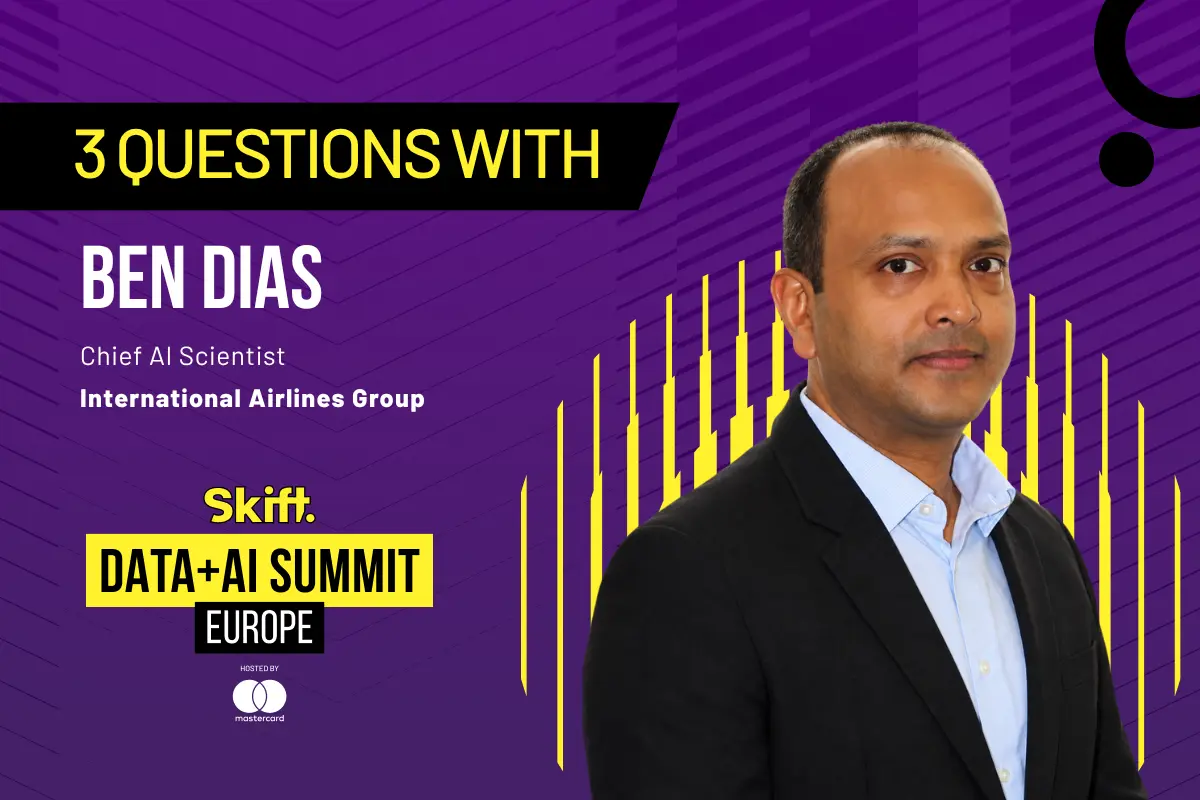
According to Ben Dias, IAG’s Chief AI Scientist, the answer is deceptively simple yet remarkably disciplined: you start with a single airline.
Ahead of his keynote appearance at the upcoming Skift Data + AI Summit Europe in London on October 6, 2026, Dias offered an exclusive look into IAG’s pragmatic methodology. Rather than attempting a sweeping, monolithic technology deployment across all four major airlines simultaneously, IAG champions a philosophy of localized proof-of-concept, incremental scaling, and strict regulatory alignment.
This in-depth feature explores IAG’s strategic blueprint for artificial intelligence. We examine how the group navigates Europe’s stringent regulatory landscape—including the EU AI Act and GDPR—while embedding machine learning directly into the hands of aviation experts to optimize everything from aircraft maintenance to operational resilience.
Detailed Chronology: The Evolution of IAG’s AI Strategy
To understand how IAG approaches artificial intelligence today, it is necessary to examine how the group’s digital maturity has evolved over the past decade. As digital data generation expanded exponentially across ticket sales, loyalty programs, baggage tracking, and flight operations, IAG recognized that uncoordinated, localized data experiments would lead to operational silos.
Phase 1: Siloed Experimentation and Fragmented Data (2016–2019)
In the early days of corporate machine learning, individual airlines within the IAG portfolio operated relatively autonomously. British Airways might trial a predictive pricing algorithm, while Iberia experimented with customer service chatbots. While these localized projects generated isolated insights, they lacked cross-brand synergy. Data was trapped within legacy systems, and the absence of a unified AI governance framework meant that lessons learned at one airline were rarely shared with another.
Phase 2: Centralizing Expertise and Establishing the Chief AI Office (2020–2022)
Recognizing the need for a cohesive strategy, IAG established a centralized data and AI leadership structure. By appointing specialized leadership—including Ben Dias as Chief AI Scientist—the group began to centralize top-tier technical talent while maintaining close operational ties to individual operating companies (OpCos). This period was defined by the creation of foundational data pipelines, cloud migration strategies, and the normalization of data across different airline reservations systems.

Phase 3: The "One Airline, Then the Group" Methodology (2023–Present)
Moving away from massive, multi-year tech overhauls that frequently suffered from scope creep, IAG refined its deployment model. Under Dias’s direction, the company adopted a strict "prove-then-scale" framework. Under this model, any new AI capability—whether generative AI text generation, dynamic scheduling optimization, or predictive maintenance tooling—is deployed first within a single controlled environment (such as Vueling or Aer Lingus).
Once the value is empirically proven, the baseline is established, and operational kinks are ironed out, the solution is systematically scaled across the rest of the IAG family. This methodology drastically reduces capital waste, accelerates time-to-value, and minimizes the risk of operational disruption in mission-critical aviation environments.
Supporting Context & Metrics: The Aviation AI Landscape
The aviation sector represents one of the most data-dense yet operationally fragile industries on earth. A single delayed flight can trigger a cascading domino effect of crew repositioning issues, missed passenger connections, and compounding financial penalties. Consequently, the integration of artificial intelligence is no longer viewed as a luxury; it is an economic and operational imperative.
The Scale of IAG’s Operations
To fully appreciate the challenge facing Ben Dias and his data science team, one must look at the sheer scale of International Airlines Group:
- Passenger Volume: Over 115 million passengers transported annually across global networks.
- Fleet Size: Nearly 600 aircraft operating thousands of flights daily.
- Destinations: Over 250 destinations spanning Europe, North America, Latin America, Africa, and the Asia-Pacific region.
- Diverse Business Models: Ranging from premium network carriers (British Airways, Iberia) to regional/hybrid carriers (Aer Lingus) and ultra-low-cost carriers (Vueling).
Market Dynamics and Economic Pressures
Post-pandemic travel demand has surged to historic highs, yet European carriers continue to grapple with persistent macro-environmental headwinds:
- Air Traffic Control (ATC) Constraints: European airspace is notoriously congested, frequently disrupted by strikes, weather events, and structural capacity limitations.
- Environmental Mandates: The European Union’s "Fit for 55" package and ReFuelEU Aviation initiatives require airlines to aggressively track, report, and reduce their carbon footprints.
- Cost Pressures: Jet fuel price volatility and rising labor costs squeeze operating margins, making operational efficiency paramount.
According to recent aviation technology research, carriers that successfully integrate predictive AI into their maintenance and scheduling workflows can reduce unplanned aircraft downtime by up to 30% and optimize fuel burn by 2–4%. For a group of IAG’s magnitude, efficiency gains of this scale translate to hundreds of millions of dollars in annual bottom-line impact, alongside substantial reductions in carbon emissions.
Official Statements and Industry Insights
Speaking ahead of the Skift Data + AI Summit Europe, Ben Dias provided critical commentary on the philosophy guiding IAG’s digital roadmap. His insights offer a masterclass in enterprise technology adoption.
On Proving Value Before Scaling
When asked about the single most important factor for successfully scaling AI in travel operations across European markets, Dias was unequivocal:
"The single most important factor is starting with a real business problem and proving value before scaling. At IAG, we’ve found it’s far more effective to begin with one airline, establish a baseline, learn what works, and then expand across the Group. Trying to build the full solution from day one often slows progress. By scaling incrementally, you generate value faster and gain insights that improve the solution as it grows."
This sentiment directly challenges the silicon-valley myth that enterprise software must be built globally on day one. By treating each airline as an agile sandbox, IAG de-risks multi-million-dollar technology investments.
Navigating the EU Regulatory Maze
Europe possesses some of the most rigorous technology and data protection regulations in the world, headlined by the General Data Protection Regulation (GDPR) and the landmark EU AI Act. Rather than viewing these frameworks as restrictive red tape, IAG has integrated compliance directly into its product lifecycle.
Discussing the regulatory impact on deployment, Dias noted:
"Regulation has reinforced the importance of governance from the start. With initiatives such as our AI Creative Studio, legal compliance, intellectual property considerations and responsible AI governance were built into the design process from day one. That approach gives us confidence to scale successful use cases across multiple markets and brands."
By baking compliance into the architecture of tools like the AI Creative Studio—which assists marketing and creative teams across IAG brands—the company ensures that intellectual property rights, data privacy, and algorithmic transparency are never treated as an afterthought.
Augmentation Over Automation: Empowering Aviation Experts
A central theme of Dias’s vision is the relationship between human expertise and machine intelligence. In an industry where split-second safety decisions dictate outcomes, fully autonomous black-box AI is neither practical nor desirable.
Instead, IAG positions AI as an advanced cognitive co-pilot:
"The biggest opportunities are where AI helps experts make better decisions in highly complex environments. In aviation, that could mean optimising maintenance planning, improving operational resilience or helping teams evaluate millions of potential scenarios faster than would otherwise be possible. The real value isn’t replacing human expertise. It’s combining that expertise with AI to help people make better decisions, faster and with greater confidence."
Whether evaluating real-time weather routing alternatives, predicting component wear-and-tear before a part fails, or managing crew rosters during major airport disruptions, IAG’s models are designed to present human operators with actionable, data-backed recommendations rather than unilateral directives.
Future Outlook: What Lies Ahead for Travel Operators
As the travel and aviation sectors look toward the horizon, the lessons emerging from International Airlines Group provide a vital playbook for digital transformation in legacy-heavy industries.
Key Takeaways for Enterprise Operators
- Embrace Modular Scalability: Avoid the trap of enterprise-wide deployments from inception. Isolate problems within a single business unit, validate the return on investment (ROI), refine the product, and only then roll it out across the broader corporate family.
- Design for Compliance from Day Zero: With regulatory bodies actively enforcing frameworks like the EU AI Act, legal and ethical guardrails must be embedded in the software development lifecycle. Retrofitting compliance is exponentially more expensive and time-consuming.
- Focus on Human-in-the-Loop Co-pilots: The most lucrative applications of enterprise AI do not eliminate human labor; they augment human cognition. By empowering experts to parse millions of operational scenarios in seconds, companies unlock unprecedented agility and resilience.
The Road to London 2026
Industry professionals looking to dive deeper into these methodologies will have the opportunity to hear Ben Dias live at the Skift Data + AI Summit Europe on October 6, 2026, in London. Dias will be joined by a distinguished cohort of travel and hospitality technology leaders—including Filip Filipov of OAG, Peer Bueller of KAYAK, Sheena Varma of Amex GBT, and Nicolas Maynard of Accor—to discuss how data intelligence is reshaping the future of global travel.
As IAG continues to refine its "one airline, then the group" approach, the aviation giant is proving that disciplined, human-centric innovation is the ultimate flight path to sustainable digital success.


