



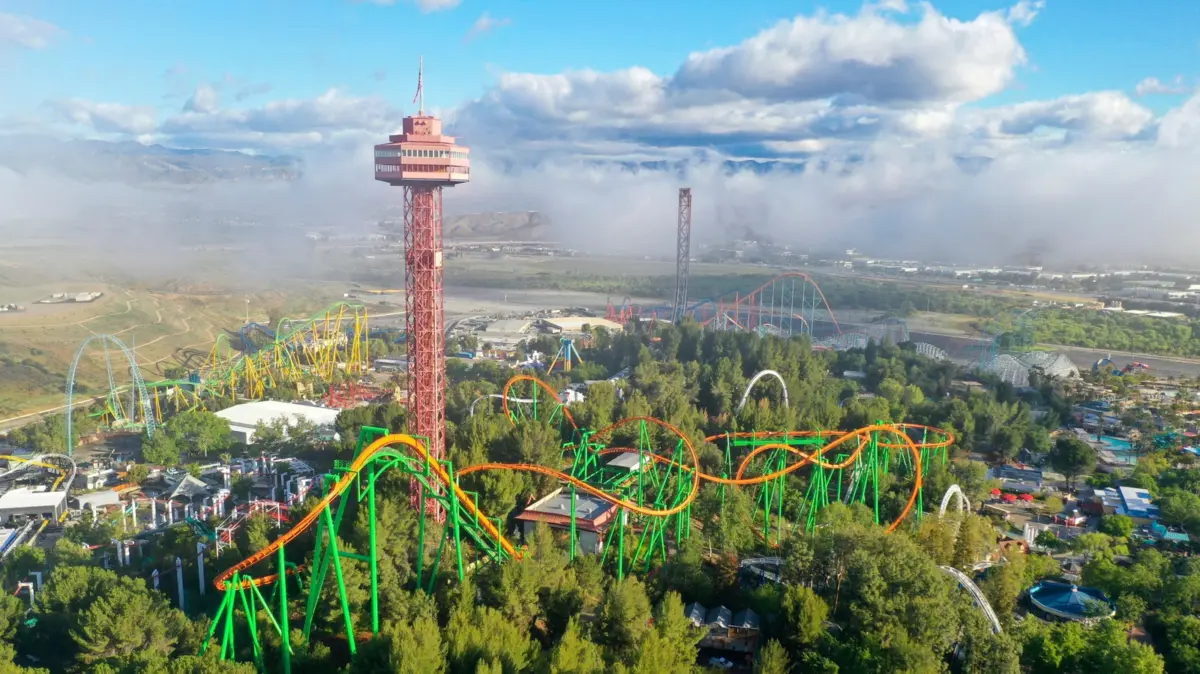
VALENCIA, CALIFORNIA — In a stunning announcement that has sent shockwaves through the global amusement park community, Six Flags Magic Mountain has confirmed the permanent closure of its world-famous, pioneering roller coaster, X2.
The decision follows a turbulent summer marked by a temporary suspension of operations, a scathing national media investigation into severe neurological trauma, and mounting legal pressure. Park President Brian Oerding announced the retirement of the iconic attraction, signaling an abrupt end to the 24-year run of what was once hailed as a crowning engineering marvel of modern theme park history.
While X2 consistently passed regulatory and mechanical safety inspections throughout its lifespan, the accumulation of severe injury reports—culminating in more than 100 complaints and ongoing litigation—ultimately forced the hand of park executives. The closure marks a monumental shift for Six Flags Magic Mountain, stripping the Valencia park of one of its most defining thrill-machine flagships.
Executive Overview: The Fall of a Pioneer
For more than two decades, X2 stood as a bucket-list destination for adrenaline junkies visiting Southern California. Renowned as the world’s first "fourth-dimensional" (4D) roller coaster, it redefined the boundaries of kinetic design by allowing passenger seats to rotate 360 degrees independently of the track.
However, the very mechanics that made X2 a marvel of innovation—its ferocious, unpredictable choreography, blistering speeds, and violent rotational forces—ultimately proved to be its undoing.
Following a temporary shutdown in July 2026, investigative reports published by major news outlets brought long-simmering safety concerns into the national spotlight. Legal representatives and medical experts linked the ride to life-altering traumatic brain injuries (TBIs), severe hemorrhages, comas, and even fatalities. Faced with eroding public trust and an impending wave of legal liabilities, Six Flags made the calculated decision to permanently decommission the ride rather than attempt a rehabilitation.
Detailed Chronology: From Revolutionary Debut to Sudden Demise
2002: The Birth of the 4D Revolution
When the ride originally opened in January 2002 simply as "X," it revolutionized the amusement park industry. Developed by Arrow Dynamics, the concept was radical: riders sat in winged seats suspended on either side of the track, and a secondary rail system rotated those seats independently through a series of unprecedented inversions and face-down drops.

The ride promised an entirely new sensory experience. However, the prototype nature of the hardware meant it was plagued by operational downtime, frequent maintenance hurdles, and early passenger complaints regarding rough transitions and aggressive headbanging.
2007–2008: The Rebirth as X2
Recognizing both the popularity and the mechanical challenges of the original design, Six Flags poured significant capital into a massive overhaul. In 2008, the ride reopened as X2.
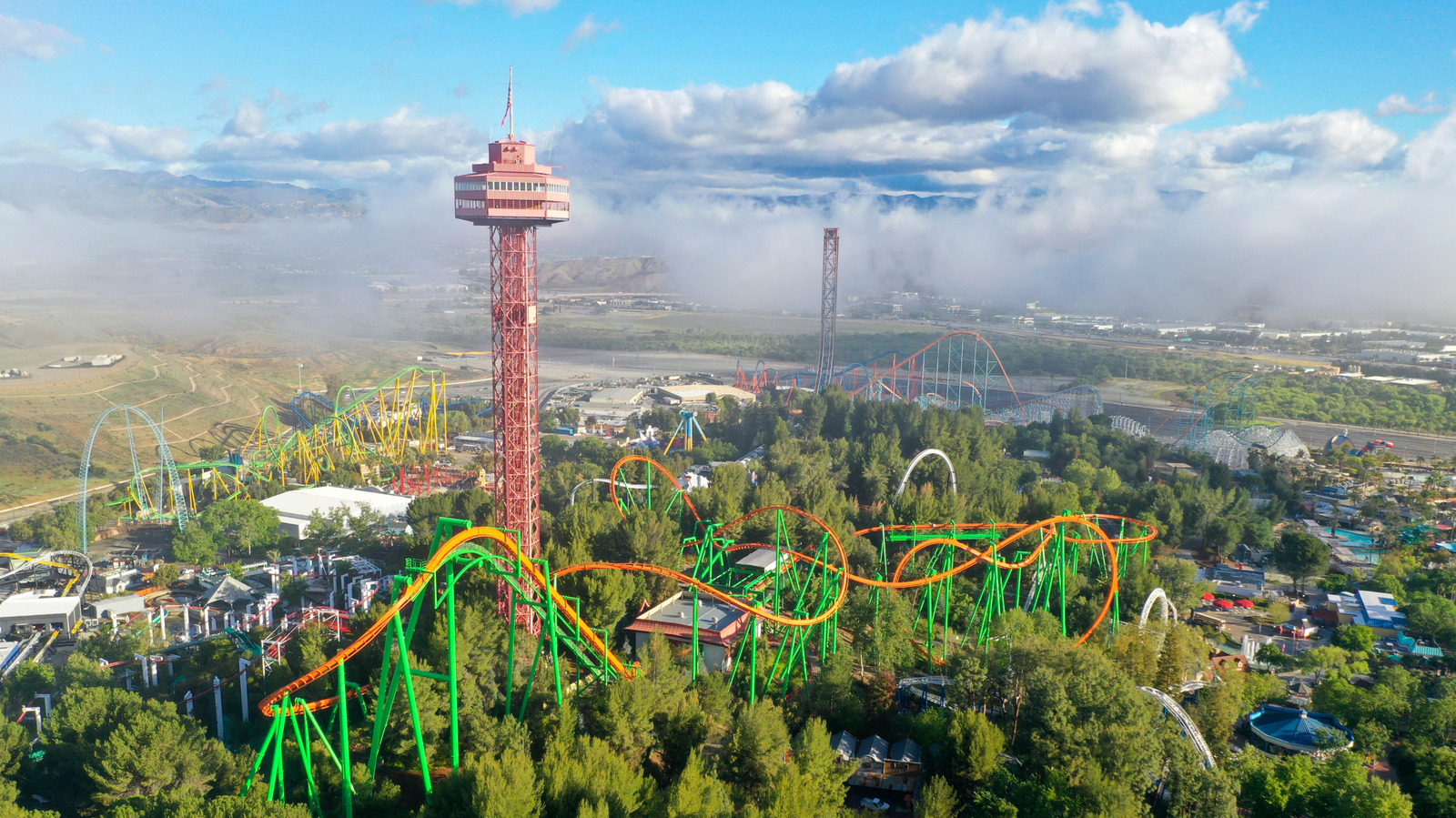
The multimillion-dollar refurbishment introduced lighter, redesigned trains intended to smooth out the ride experience, alongside onboard audio systems, specialized flame effects, and a vivid red-and-black paint job. X2 reached staggering performance metrics: a 215-foot drop at a 88-degree angle, top speeds reaching 76 miles per hour, and a 3,600-foot track featuring radical inversions, sudden drops, and whipping rotational forces. To coaster enthusiasts, it was an unmatched masterpiece of sensory overload. To critics, it remained an unforgiving physical gauntlet.
July–August 2026: The Breaking Point
The beginning of the end came swiftly in the summer of 2026. Following mounting medical incidents, Six Flags Magic Mountain quietly paused operations on X2 in July 2026 for evaluation.
The pause broke open a Pandora’s box of scrutiny. In August 2026, an exhaustive investigative report published by CNN exposed a disturbing pattern of severe traumatic brain injuries and fatalities tied to the ride over the previous decade. Medical documentation obtained by investigators—including evaluations from neurosurgeons who operated on two women suffering from brain hemorrhages following a July 2026 ride—pointed directly to "rapid acceleration-deceleration events" experienced on X2 as the primary catalyst for the catastrophic injuries.
September 2026: The Final Curtain
Faced with unmitigated fallout, Six Flags management confirmed the permanent retirement of the coaster in September 2026. Park President Brian Oerding issued a public statement addressing the decision head-on.
"While X2 consistently passed a multitude of safety tests, we have decided to close the ride because we believe it’s the right thing to do," Oerding wrote. "Ride safety is a cornerstone of our business, and when we see guest confidence affected, we take it seriously."
Supporting Context, Metrics, and Legal Realities
The closure of X2 is not an isolated incident in the modern theme park landscape, but it stands as one of the most high-profile casualties of rider safety litigation in recent history.
The Legal Battleground
The legal fallout is anchored by the Dordick Law Corporation, which has spearheaded lawsuits on behalf of multiple riders claiming permanent, debilitating injuries sustained on the attraction. During public briefings, representatives for the law firm revealed they had been quietly inundated with more than 100 complaints from former riders detailing sudden neurological damage, cognitive impairments, strokes, and spinal trauma linked to the ride’s violent kinetic forces.
Medical experts have increasingly zeroed in on the biomechanics of extreme roller coasters. Unlike traditional coasters where lateral and vertical G-forces are predictable, a 4D coaster subjects the human head and neck to compound rotational acceleration. When a rider’s seat flips backward or forward at high speeds while simultaneously dropping at 76 mph, the brain can violently impact the interior skull wall—a phenomenon akin to high-speed vehicular collisions or contact sports concussions.
Ride Metrics at a Glance
To understand the extreme physical demands X2 placed on the human body, one must look at its raw technical specifications:
- Initial Drop Height: 215 feet (at a near-vertical 88-degree angle)
- Maximum Speed: 76 miles per hour
- Track Length: 3,600 feet
- Design Feature: 360-degree independently rotating seats (4D technology)
- Operational Lifespan: 24 years (2002–2026, with a major overhaul in 2008)
Official Statements and Industry Impact
The industry reaction to X2’s demise is deeply polarized. On one hand, safety advocates and legal experts have lauded Six Flags for prioritizing human welfare over brand nostalgia, noting that the mounting body count and severe neurological injuries left the company with no ethical alternative.
On the other hand, the roller coaster enthusiast community—often referred to as the "coaster community"—has expressed profound grief. X2 was widely considered a Holy Grail for thrill-seekers hunting for absolute extremity.
In his blog post addressing the closure, Park President Brian Oerding acknowledged this complex legacy: "We recognize the special place X2 holds in the coaster community. It earned a passionate following among ride enthusiasts who appreciated its daring design and groundbreaking engineering."
Social media channels lit up immediately following the announcement. On X (formerly Twitter), loyal patrons shared memories of making X2 their very first stop upon entering the gates. "This was my favorite ride. Was always the first one I went on too," posted one dedicated fan. Another wrote: "Sad to see it go, but I think it’s the right move. Hopefully, this clears the way for another world-class, safer coaster to take its place."
Future Outlook: The "Thrill Capital of the World" Moves Forward
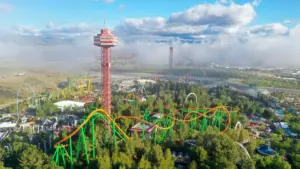
Despite the loss of its most infamous marquee attraction, Six Flags Magic Mountain retains its crown as the "Thrill Capital of the World." The Valencia property boasts an expansive portfolio of world-class roller coasters, including Tatsu, Full Throttle, West Coast Racers, and Xenon. Park officials have not yet announced what will replace the sprawling plot of land currently occupied by X2’s massive steel framework, though industry insiders speculate that a state-of-the-art, high-capacity coaster free of violent rotational whiplash will eventually take its place.
Meanwhile, the Southern California theme park landscape is undergoing a broader evolution. Visitors seeking thrills in the greater Los Angeles area now have fresh alternatives:
- Universal Studios Hollywood officially debuted its first high-speed outdoor roller coaster in September 2026 (Fast & Furious: Hollywood Drift), drawing massive crowds.
- Disney California Adventure continues to anchor the Anaheim market with high-demand, family-friendly thrill rides like the Incredicoaster, though it remains among the most expensive theme park destinations in the United States.
As the physical dismantling of X2 begins, the ride’s legacy will forever be etched in amusement park history. It stands as a cautionary tale of the delicate balance between technological ambition and human physiology—proving that even the most exhilarating innovations must ultimately yield to the uncompromising demands of guest safety.