








Executive Overview
The conversation surrounding automotive safety has historically been defined by incremental hardware breakthroughs. From the mandatory integration of seatbelts following decades of public health advocacy to the federally mandated deployment of airbags in the late 1990s, safety standards have evolved through a combination of engineering ingenuity, regulatory pressure, and hard-earned empirical data. Yet, these historical milestones—while saving millions of lives—have consistently proven to be double-edged swords. Airbags, designed to cushion high-impact collisions, carry inherent risks of severe secondary trauma, such as compound fractures, demonstrating that physical safety innovations often introduce their own distinct spectrum of harm.
Today, the automotive industry stands on the precipice of an even more profound paradigm shift: the transition from passive mechanical protection to active computational oversight via artificial intelligence. Leading this contentious frontier is Tesla’s Full Self-Driving (FSD) technology. With Elon Musk boldly claiming that advanced autonomous software could theoretically mitigate up to 90% of global traffic fatalities—a staggering potential saving out of roughly one million annual worldwide deaths—the stakes could not be higher.
However, this transition introduces complex moral, economic, and operational dilemmas. As Tesla rolls out FSD V14 on newer models like the 2026 Tesla Model Y, drivers and analysts alike are forced to grapple with a paradoxical landscape: a system capable of immaculate highway navigation and tireless vigilance, yet one mired in debates over commercial monetization strategies, real-world reliability, and the ethical implications of withholding advanced safety features behind a subscription paywall. This investigative feature explores the trajectory of automotive safety, the lived realities of autonomous supervision, and the looming question of whether autonomous driving technology will ultimately follow the open-source legacy of the three-point seatbelt or remain a heavily guarded, proprietary asset.
Detailed Chronology: From Mechanical Restraints to Autonomous Neural Nets
To understand the current debate surrounding Tesla’s FSD V14, it is essential to trace the historical timeline of automotive safety and how regulatory bodies and automakers have historically handled life-saving innovations.
The Evolution of Passive Safety (1950s–1990s)
- 1959: Volvo engineer Nils Bohlin patented the modern three-point seatbelt. In a historic act of corporate and humanitarian altruism, Volvo made the patent freely available to all competing automakers, recognizing that universal adoption outweighed proprietary advantage. This single decision established a precedent for safety-as-a-standard rather than a luxury add-on.
- September 1, 1991–1998: Spurred by the Intermodal Surface Transportation Efficiency Act of 1991, the United States set a firm legal framework culminating in the mandatory inclusion of dual front airbags in all new passenger vehicles sold in the U.S. by September 1, 1998.
- The Real-World Toll: While statistics validate the life-saving nature of airbags, their explosive deployment mechanics have historically resulted in collateral damage. Incidents involving fractured wrists, facial trauma, and internal injuries underscore the reality that safety interventions often trade catastrophic outcomes for survivable, albeit severe, mechanical trauma.
The Rise of Autonomous Software (2020s)
- Mid-2023: Tesla shifts its manufacturing paradigm by equipping all new production vehicles with upgraded high-resolution cameras and advanced onboard computer hardware, laying the physical foundation required to process complex neural network architectures like the burgeoning iterations of FSD.
- April 8, 2026: Elon Musk publicly asserts that Tesla’s iterative FSD architecture possesses a safety ceiling so dramatically elevated above human capability that it could theoretically eliminate up to 90% of global traffic fatalities.
- June 9, 2026 (A Personal Case Study): In Madison, Wisconsin, a real-world collision highlights the cognitive fallibility of human drivers versus automated systems. Operating a 2018 Tesla Model 3 under FSD, a driver intervened at an intersection and manually overrode the vehicle to run a stop sign, resulting in a perpendicular collision with an inattentive motorist. The incident underscores a central thesis in autonomy research: human-machine handoffs during high-stress scenarios frequently induce catastrophic errors that automated software, left uninterrupted, would have successfully avoided.
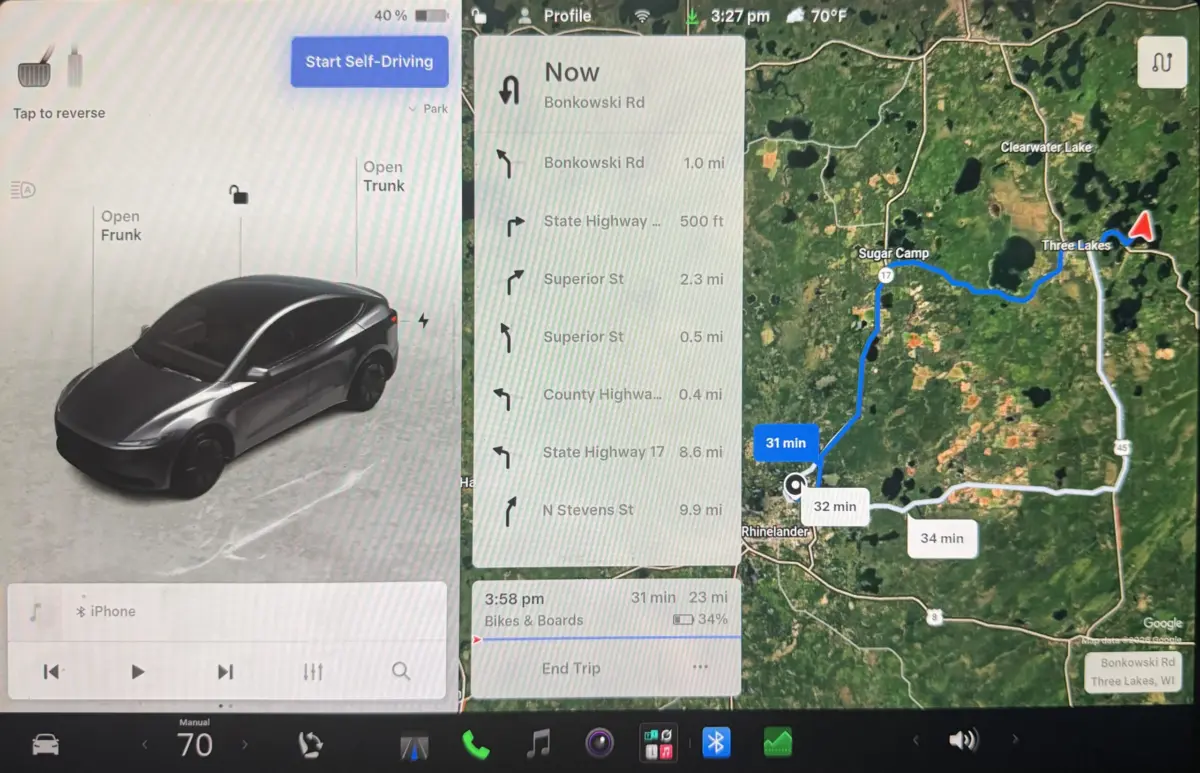
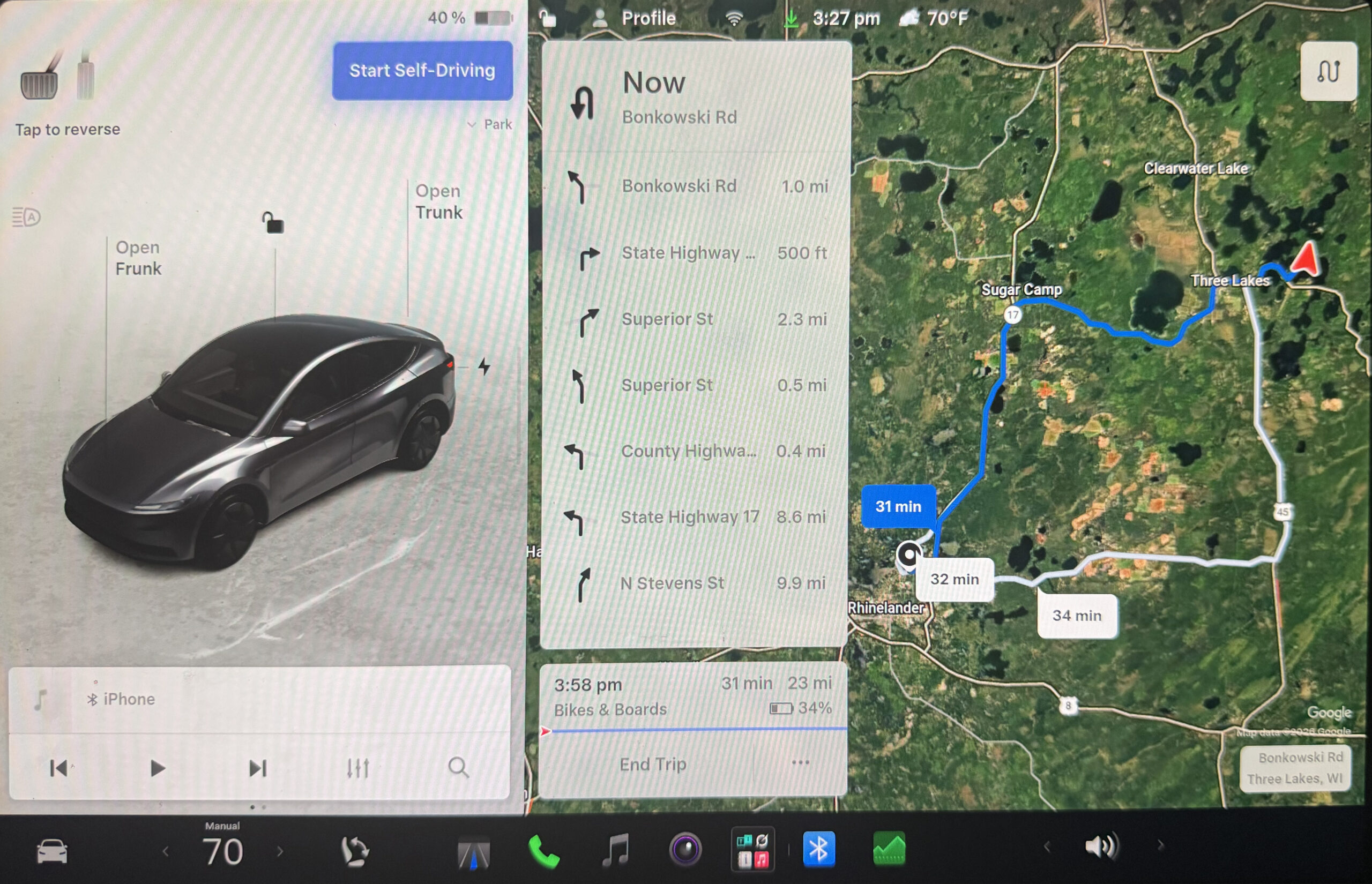
- June 11, 2026: Field testing and technical evaluations of the 2026 Tesla Model Y running FSD V14 at locations such as Camp Hasler in Three Lakes, Wisconsin, showcase the expanding operational domain of camera-based neural navigation.
Supporting Context & Metrics: The Mathematics of Risk and Reward
The debate over autonomous driving cannot occur in a vacuum; it must be anchored against the stark backdrop of current national and international traffic safety data. In the United States alone, the National Highway Traffic Safety Administration (NHTSA) reported an estimated 36,640 traffic fatalities in 2025. When contextualized globally—where roughly 370,000 lives are lost annually in the U.S. and nearly a million worldwide—the imperative to disrupt the status quo becomes glaringly apparent.
Human Error vs. Machine Consistency
Human drivers are consistently compromised by variables that autonomous systems inherently bypass:
- Chemical Impairment: Driving under the influence of alcohol or drugs remains a leading catalyst for fatal collisions.
- Distracted Operation: Texting, adjusting infotainment systems, and general cognitive fatigue degrade reaction times.
- Microsleeps: Fatigued drivers frequently experience momentary lapses in consciousness behind the wheel.
By contrast, an artificial neural network does not experience biological exhaustion, emotional distress, or chemical impairment. Data emerging from autonomous fleet operators—including recent safety disclosures from Alphabet’s Waymo, which reported nearly 1,000 avoided injuries—suggests that autonomous driving stacks empirical advantages over human-led transit.
Yet, the counter-narrative persists. Tesla’s proprietary approach relies exclusively on a vision-based neural network system (omitting lidar and radar sensors). Critics argue that while economical and scalable, all-camera configurations struggle fundamentally in degraded weather conditions, such as heavy blizzards, torrential downpours, or sun glare. Furthermore, because Tesla treats its safety and autonomy data as proprietary, independent researchers lack access to comprehensive, transparent, end-to-end telemetry on disengagements and system-induced accidents.
Official Statements and Industry Perspectives
The commercialization of FSD has triggered intense debate within the clean tech and automotive industries regarding corporate responsibility, monetization, and moral defensibility.
The Subscription Model vs. Universal Safety
A central point of contention involves Tesla’s commercial strategy. While charging a $99 monthly subscription fee for FSD, the company simultaneously altered its standard equipment packages. Several months ago, Tesla removed automatic lane centering—a basic, historically proven driver-assistance and safety feature—as a standard inclusion across its new vehicle lineups, effectively reallocating it behind the FSD paywall to drive software adoption.
This strategy has drawn sharp criticism from consumer advocates and industry analysts. On one hand, supporters argue that Tesla has invested billions of dollars into supercomputing infrastructure, massive neural net training datasets, and engineering salaries. A continuous revenue stream is viewed as a necessary mechanism to fund ongoing research and development, ensuring the software rapidly evolves past its current limitations.
On the other hand, critics pose a sobering ethical question: How is it morally defensible to withhold potentially life-saving automated safety features behind a recurring financial barrier? If FSD statistically reduces the likelihood of severe accidents, conditioning access on a monthly subscription creates a tiered safety system where protection from traffic fatalities is economically stratified.
The Hardware Legacy Debate
Industry experts frequently draw parallels to Nils Bohlin’s 1959 seatbelt patent. Volvo’s decision to open-source the three-point seatbelt accelerated global adoption and saved countless lives. The question facing Tesla today is whether it will eventually follow a similar path:
- Will Tesla be morally required to make FSD standard equipment on all newly manufactured vehicles?
- Will the company eventually be obligated to license or offer FSD software at minimal cost to any manufacturer willing to install compatible hardware?
While Tesla made a monumental leap by opening its Supercharger network—now standardized across North America as the North American Charging Standard (NACS)—replicating that openness with software autonomy remains legally and economically fraught. Competing manufacturers remain deeply skeptical of Tesla’s camera-only methodology, asserting that redundant sensor suites utilizing lidar and radar are non-negotiable for true safety parity across all geographical and meteorological conditions.

Future Outlook: Navigating Toward V15 and Unsupervised Horizons
Four months into driving the 2026 Tesla Model Y equipped with FSD V14, real-world user experiences paint a picture of a technology standing firmly on the cusp of maturity, yet still encumbered by critical edge cases.
The Reality of "FSD Supervised"
Regulatory compliance and software limitations require Tesla to market the system explicitly as "FSD Supervised." While highway performance under V14 has achieved an exceptional level of smoothness and reliability—prompting speculation that highway driving may shed the "supervised" qualifier as early as version V15—urban environments continue to present hurdles. Navigational challenges persist at complex stoplights, intricate lane selections, and during low-speed parking maneuvers at trip endpoints.
The horizon of autonomy raises profound futuristic inquiries:
- When will the software achieve sufficient reliability to allow truly unattended operation (texting, sleeping, reading)?
- When will parents be able to deploy their vehicles to autonomously retrieve children from school?
These milestones require not only continuous training across billions of edge-case traffic scenarios on Tesla’s massive supercomputers, but also a fundamental shift in regulatory acceptance and public trust.
Conclusion: A Defining Moral Crossroads
As automotive technology hurtles toward the latter half of the 2020s, Tesla finds itself at a historical crossroads. The transition from passive mechanical safety—exemplified by seatbelts and airbags—to proactive computational autonomy represents the most significant leap in human mobility since the invention of the internal combustion engine.
Whether FSD ultimately becomes a universal, standard-issue public safety utility or remains an exclusive, premium software ecosystem will depend as much on corporate ethics and regulatory intervention as it does on raw computational progress. Ultimately, if the statistical projections hold true and autonomous systems can indeed mitigate hundreds of thousands of annual tragedies, the ultimate cost of delay will be measured not in dollars, but in human lives.