






Executive Overview
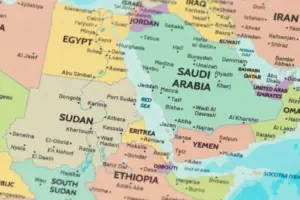
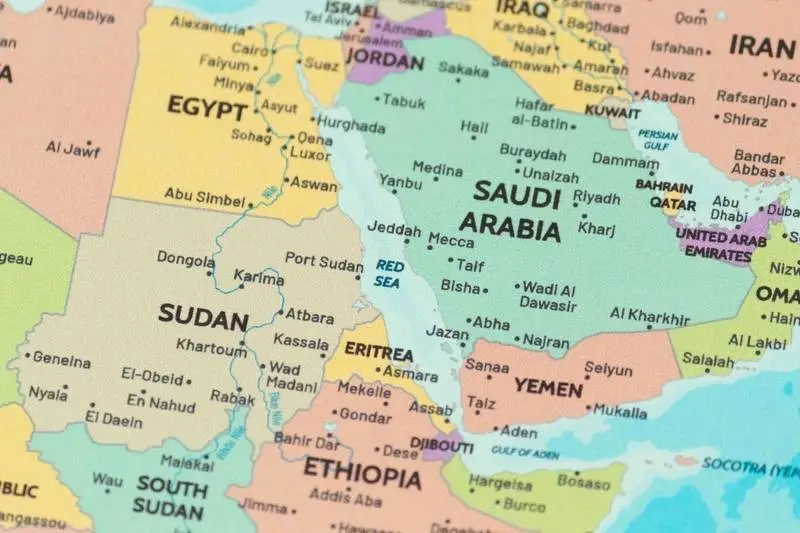
Amid escalating geopolitical tensions in the Middle East, Italian Defence Minister Guido Crosetto has issued an urgent appeal for a significantly bolstered naval presence in the Red Sea. The call comes in response to rapid territorial and tactical advances by Iran-backed Houthi rebels along the Yemeni coastline, which threaten the Bab el-Mandeb Strait—one of the world’s most critical maritime chokepoints.
Expressing deep frustration with what he termed "European bureaucracy," Crosetto revealed that Italy is preparing to deploy its own naval assets unilaterally, refusing to wait for a sluggish European Union consensus. The Italian government’s proactive stance underscores the high economic stakes for Rome: approximately 40 percent of Italy’s national maritime trade relies on the Suez Canal and the Bab el-Mandeb passage.
Currently, the EU’s defensive maritime security mission, Operation Aspides, is struggling to meet the scale of the threat. According to Crosetto, Italy and Greece are bearing the primary burden of securing these waters. As Houthi forces consolidate their positions and the wider U.S.-Iran shadow war continues to choke traffic through the Strait of Hormuz, the maritime shipping industry faces a compounding crisis that threatens global supply chains, energy security, and European economic stability.
Detailed Chronology
The current maritime security crisis in the Red Sea is the product of a rapidly evolving conflict that has transitioned from localized skirmishes to a systemic threat to global trade.
[Late 2023] ----------------> [Feb 2024] -----------------> [Recent Weeks] -------------> [Present]
Houthi drone/missile          EU launches Operation        Houthis capture key          Italy prepares
attacks begin on shipping     Aspides to protect transit   coastal territory            unilateral naval mission
The Genesis of the Crisis
Following the outbreak of the Israel-Hamas war in late 2023, the Iran-backed Houthi movement in Yemen initiated a campaign of drone, missile, and boarding attacks against commercial vessels in the Red Sea. Asserting that their targets were limited to ships associated with Israel or its allies, the militia effectively disrupted traffic through the Bab el-Mandeb Strait, forcing global shipping conglomerates to reroute vessels around Africa’s Cape of Good Hope.
The Multilateral Response
In response to the growing threat, the United States launched Operation Prosperity Guardian in December 2023. Seeking a distinct, defensive mandate focused purely on escorting commercial vessels rather than striking land-based Houthi targets, the European Union established Operation Aspides in February 2024. Italy, Greece, and France formed the operational backbone of this mission, deploying advanced air-defense frigates to intercept incoming aerial threats.
Tactical Escalation and Coastline Advances
In recent weeks, the strategic calculus shifted dramatically. Houthi forces launched a series of ground offensives along the Red Sea coast, capturing key positions and consolidating control over critical vantage points overlooking the Bab el-Mandeb Strait. This rapid territorial advance has allowed the group to deploy short-range anti-ship missiles, radar systems, and fast attack craft closer to the shipping lanes, severely compressing the reaction time for naval air-defense systems.

Rome’s Impatience and Unilateral Pivot
Recognizing the immediate threat posed by these coastal advances, Italian Defence Minister Guido Crosetto publicly criticized the operational pace of the European Union. On Thursday, Rome announced that it was preparing an independent naval deployment to the region. Crosetto stated that while Italy’s public pressure had prompted some movement within the administrative framework of Operation Aspides, the scale of the deployment remained dangerously inadequate. Consequently, Italy chose to bypass the traditional EU decision-making apparatus to secure its national interests.
Supporting Context & Metrics
The Bab el-Mandeb Strait is a narrow waterway—measuring just 18 miles (29 kilometers) wide at its narrowest point—connecting the Red Sea to the Gulf of Aden and the Indian Ocean. Its strategic geography makes it highly vulnerable to asymmetric warfare, as shore-based weaponry can easily target passing vessels.
                  BAB EL-MANDEB STRAIT (18 miles wide)
   [ Yemen Coast / Houthi Controlled ]  ---> [ Threat Zone: Missiles, UAVs, Mines ]
   ================================================================================
   [ Commercial Shipping Lanes ]        ---> [ 7% of Global Oil / 40% of Italian Trade ]
   ================================================================================
   [ Djibouti / Horn of Africa ]        ---> [ Western Military Outposts ]
The Economic Toll on Italy
The disruption of this trade artery has a disproportionate impact on Mediterranean economies, particularly Italy. According to Assarmatori, one of the premier associations representing Italian shipowners, approximately 40 percent of Italy’s total maritime trade passes through the Suez Canal and the Bab el-Mandeb Strait.
When shipping lines divert around the Cape of Good Hope, vessels must travel an additional 3,000 to 3,500 nautical miles. This detour adds 10 to 14 days to transit times, resulting in:
- A dramatic spike in fuel consumption and operational costs.
- A severe shortage of empty shipping containers in European ports.
- Skyrocketing maritime insurance premiums, which have increased tenfold for vessels transiting high-risk zones.
| Metric | Normal Route (Via Suez) | Rerouted Route (Via Cape of Good Hope) |
|---|---|---|
| Average Transit Time (Asia to Italy) | ~20-22 Days | ~32-36 Days |
| Additional Distance | Baseline | +3,000 to 3,500 Nautical Miles |
| Fuel Costs per Voyage | Baseline | +$400,000 to $1,000,000 USD |
| Insurance Premiums | Standard | Up to 1.0% of Hull Value per Transit |
Global Energy and Commodity Impacts
The Red Sea corridor is equally vital to global energy security. Data from the commodities analytics firm Kpler indicates that petroleum volumes transiting the Bab el-Mandeb Strait accounted for approximately 7 percent of total global oil output in June. The disruption of these flows has forced a realignment of energy markets, with European refineries scramble-buying crude from West Africa and the Americas to offset delayed Middle Eastern deliveries.
Compounding Maritime Chokepoints
The threat in the Red Sea does not exist in a vacuum. It is compounded by ongoing tensions in the Strait of Hormuz, where Iranian naval forces and Islamic Revolutionary Guard Corps (IRGC) assets have periodically seized commercial tankers. With traffic through Hormuz already depressed due to the broader geopolitical confrontation between the United States and Iran, the closure or severe restriction of the Bab el-Mandeb Strait threatens to simultaneously choke both of the primary maritime arteries connecting Europe to Asian markets.
Official Statements
Defence Minister Guido Crosetto
Speaking to Reuters, Defence Minister Guido Crosetto—a key political ally of Prime Minister Giorgia Meloni—expressed frustration with the international community’s response to the crisis.
"After what I said, something moved within Aspides, but we need more ships. The only nations really supporting security efforts are Italy and Greece."
Crosetto declined to specify the exact number of additional vessels required to secure the vast maritime sector, but emphasized that the current force posture is insufficient to counter the threat.
Addressing his decision to initiate unilateral Italian naval preparations, Crosetto warned against the dangers of institutional inertia:
"We decided to act because we do not want the response to be held back by European bureaucracy. Delays in decision-making in a theater of active conflict could lead to a rapid deterioration of the situation on the ground."
Industry Reaction: Assarmatori
The shipping industry has rallied behind the Italian government’s decisive stance. Stefano Messina, President of Assarmatori, praised the defense ministry’s proactive policy, framing it as a necessary defense of national economic sovereignty.
"The Italian Navy, which has demonstrated great expertise and preparedness in this area, is capable of operating while awaiting decisions that the European Union will take regarding the Aspides mission."
Messina added that Italian shipowners had been pleading for robust military escorts for months, warning that without a permanent and aggressive naval presence, Mediterranean ports risk being bypassed by global shipping alliances in favor of Northern European hubs.
Future Outlook
The strategic standoff in the Red Sea represents a turning point for European defense policy and global maritime security. Several key dynamics are expected to shape the conflict in the coming months:
The Viability of Operation Aspides
The future of the EU’s maritime security architecture hangs in the balance. If other major European powers—such as Germany, Spain, and France—do not commit additional high-end air-defense assets to Operation Aspides, the mission risks becoming functionally obsolete. Italy and Greece cannot indefinitely patrol the entire southern Red Sea and Gulf of Aden alone.
                        [ Crisis Escalation ]
                                  |
         +------------------------+------------------------+
         |                                                 |
[Scenario A: EU Integration]                      [Scenario B: Fragmentation]
- Member states reinforce Aspides                 - Italy & Greece act unilaterally
- Unified command structure                       - Fragmented escort operations
- Successful deterrence of Houthi threat          - Shipping lines permanently bypass Suez
Tactical Shift to Coastal Defense Interdiction
As Houthi forces entrench themselves along the Yemeni coast, the tactical challenge for naval forces will shift from intercepting high-altitude ballistic missiles to countering low-altitude, high-speed threats. This includes sea-skimming cruise missiles, explosive-laden unmanned surface vessels (USVs), and suicide drone swarms. Naval vessels deployed to the region will require advanced electronic warfare capabilities and close-in weapon systems (CIWS) to survive in these highly congested waters.
Long-Term Supply Chain Realignment
Should the Bab el-Mandeb Strait remain a high-risk zone for the foreseeable future, the temporary rerouting of cargo ships around Africa could become permanent. This shift would require global logistics companies to restructure their supply chains, potentially leading to:
- The near-permanent inflation of shipping rates.
- A decline in the strategic importance of Mediterranean transshipment ports.
- Increased pressure on European manufacturers to nearshore production facilities, reducing reliance on just-in-time shipping from Asia.
Escalation Risks with Iran
The concentration of Western naval forces in close proximity to Iranian-backed militias carries a continuous risk of miscalculation. Any direct engagement that results in significant Houthi casualties, or conversely, a successful strike on a Western warship, could draw the United States and its European allies into a direct, kinetic confrontation with Iran. Such an escalation would likely close the Strait of Hormuz entirely, triggering a global energy crisis.